
BY SASHA LAPOINTE
Republished with permission from Indian Country Today Media Network.
When a friend brought over a copy of The Revenant I was more than willing to host a viewing party. I was thrilled at first for the typical reasons. It’s always a treat, as an indigenous person, to see First Nations or indigenous characters actually portrayed by indigenous or First Nations actors. Natives playing Natives. Kudos Hollywood! There’s been some slow progress there.
I was also ecstatic because one of my best friends was texting me from the red carpet. My friend, a fellow student at the Institute of American Indian Arts, an amazing artist, and indigenous activist was accompanying First Nations actress, Melaw Nakehk’o to the famous Chinese Theater for the Hollywood premier. I beamed with pride, "Look," I’d announce shoving my phone into peoples’ faces. "That’s my friend! Next to Tom Hardy!" I was beside myself with joy. Two powerful Indian women were strutting the red carpet, getting their photos taken, answering the, "What are you wearing," and, "Tell us about the dress," questions. It felt like an important time in history.
I threw a movie party in my living room. With a fire in the fireplace, assorted appetizers and warm, winter-themed cocktails I buckled in with a roomful of friends for the snow drenched and violent ride through the Northwest Territories. Each frame was breathtaking, each panning scene striking. The presence of such astonishing nature helped to anesthetize the horror. And I’m not talking about the bear. It’s not about the bear. I’m not saying the bear was not horrifying. It absolutely was. Seeing Leonardo DiCaprio’s character, frontiersman Hugh Glass, flung like a broken rag doll by a grizzly was horrific. But it wasn’t the bear that made me flinch.
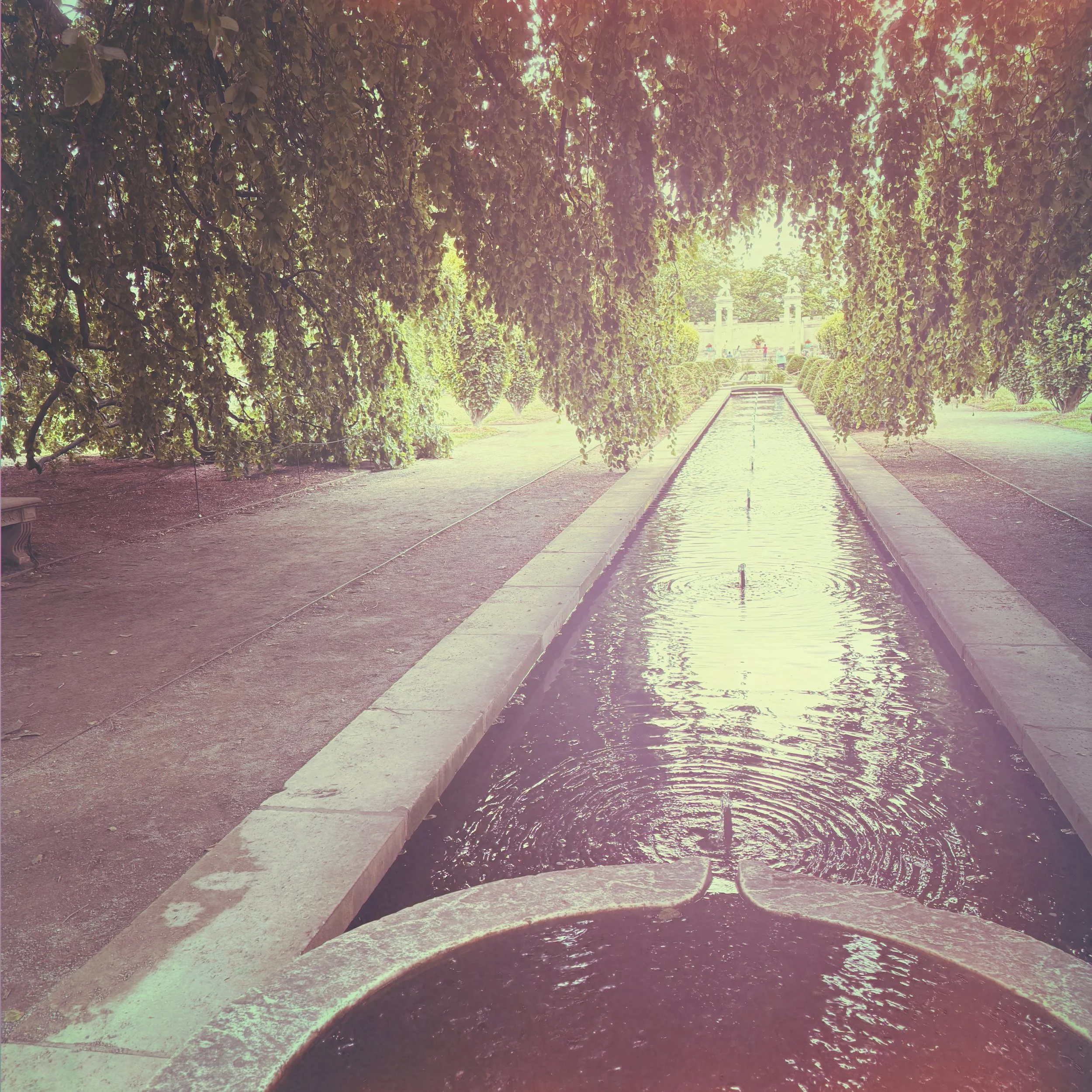
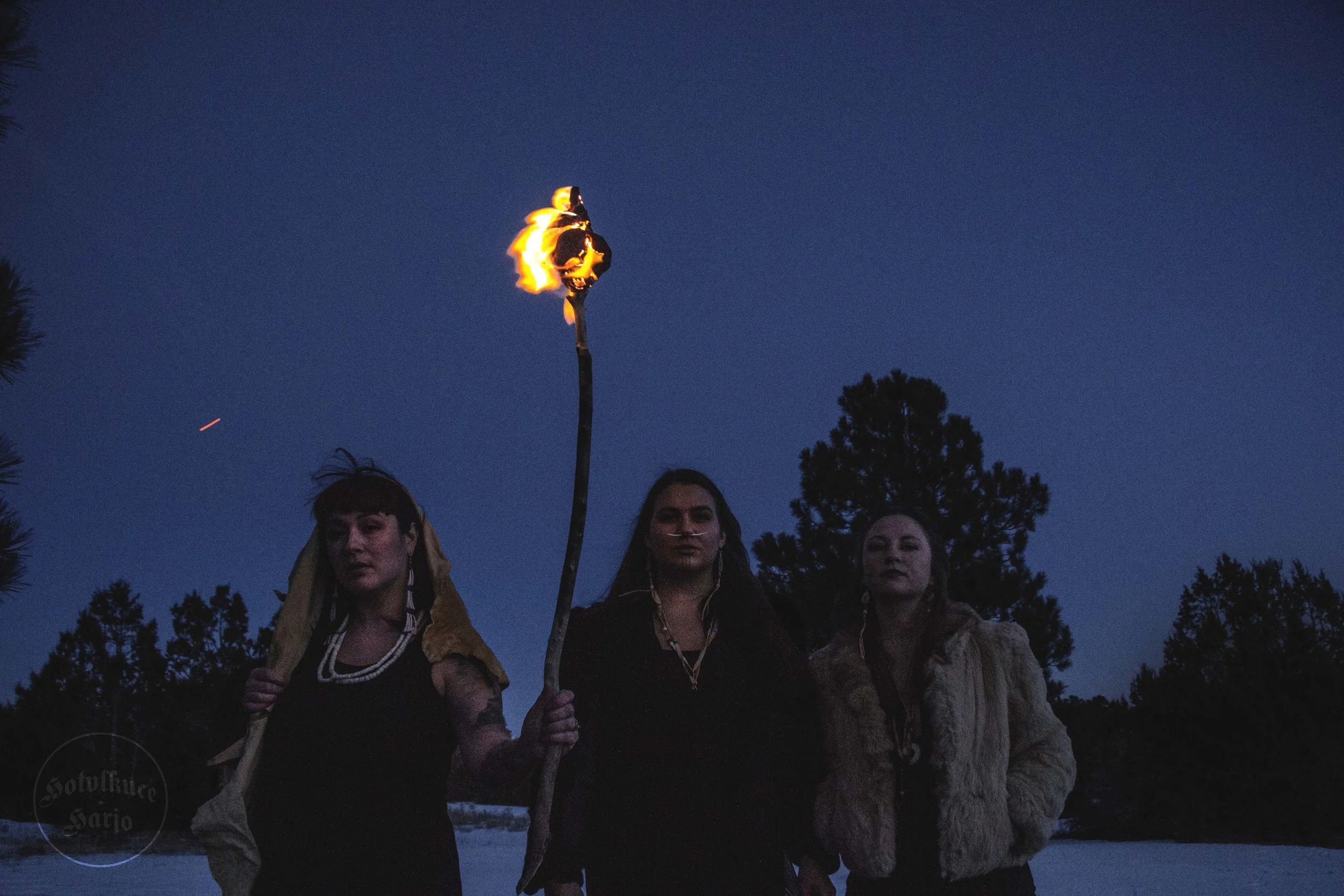
After seeing "The Revenant," Sasha LaPointe and her friends captured these images of themselves. As LaPointe says "there is a power in visibility." (Photo by Hotvlkuce Harjo)
Those haunting and dream-like moments where we are transported through Glass’s memory, portray the horror of a history of violence against indigenous people. While my friends squirmed and gasped at the grizzly bear attack, I found myself fidgeting in my chair and averting my eyes from those visions of bones piled to the sky, of villages burned to the ground. I flinched every time a Native person fell, having been stabbed, bludgeoned, or shot down. Something about the violence rooted in reality was nearly unbearable for me.
There is something massively different in these kinds of scenes compared to the Hollywood disasters that have attempted this in the past, but failed miserably. For example I felt nothing for the lanky, blue, fairy-aliens of Avatar when they lost Home Tree. Why? Because it was ridiculous. Because comparing my ancestors, my history, my emotional and historical trauma to Ferngully is ridiculous. It’s like Hollywood wants to dress up our very real pain in a magical costume. It’s like the world can’t take it otherwise. The Revenant didn’t play any tricks, use any gimmicks. The pain was real. The history and the reality of it raw and unfiltered. But this isn’t why The Revenant was hard for me.
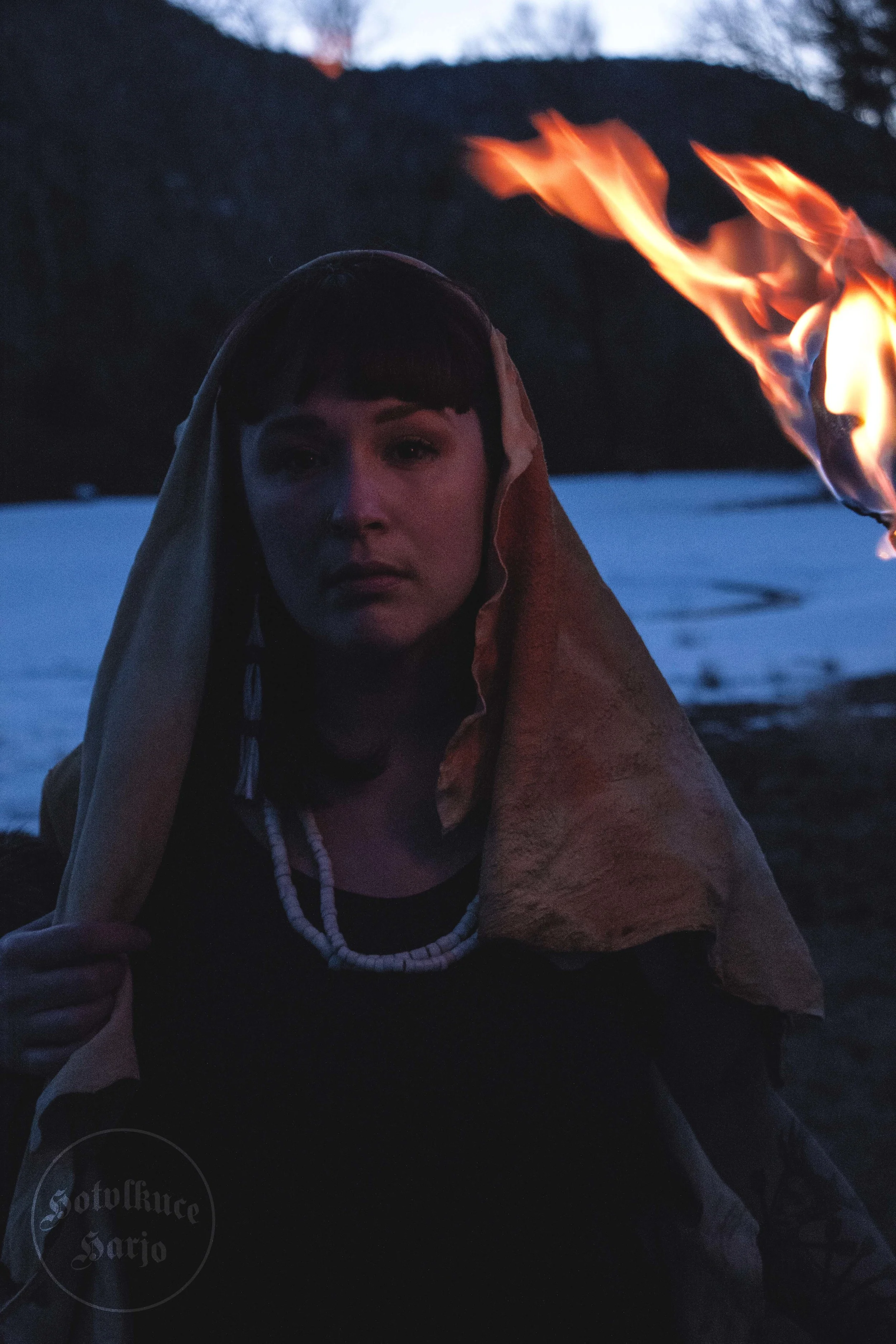
After seeing "The Revenant," Sasha LaPointe and her friends captured these images of themselves. As LaPointe says "there is a power in visibility." (Photo by Hotvlkuce Harjo)
I forged ahead. I gasped. I awed at the cinematic splendor. I desperately tried to make sense out of whatever Tom Hardy was saying. I enjoyed the film with friends. I anxiously awaited the screen debut of my friend’s friend, a woman I didn’t know, but felt some connection to based on the massive excitement we felt collectively. My friend’s friend played Powaqa, an Arikara leader’s daughter who has been kidnapped by one of the groups of French or American trappers. The movie spends a great deal of time in searching for Powaqa. With each failed rescue, the anticipation for her arrival grew.
I probably had a cracker smeared with brie to my lips or perhaps a mouthful of winter ale when I heard the Frenchman speak, when I read the English translation on the bottom of the screen. Scrolling across the snow were the words: "Bring me the girl."
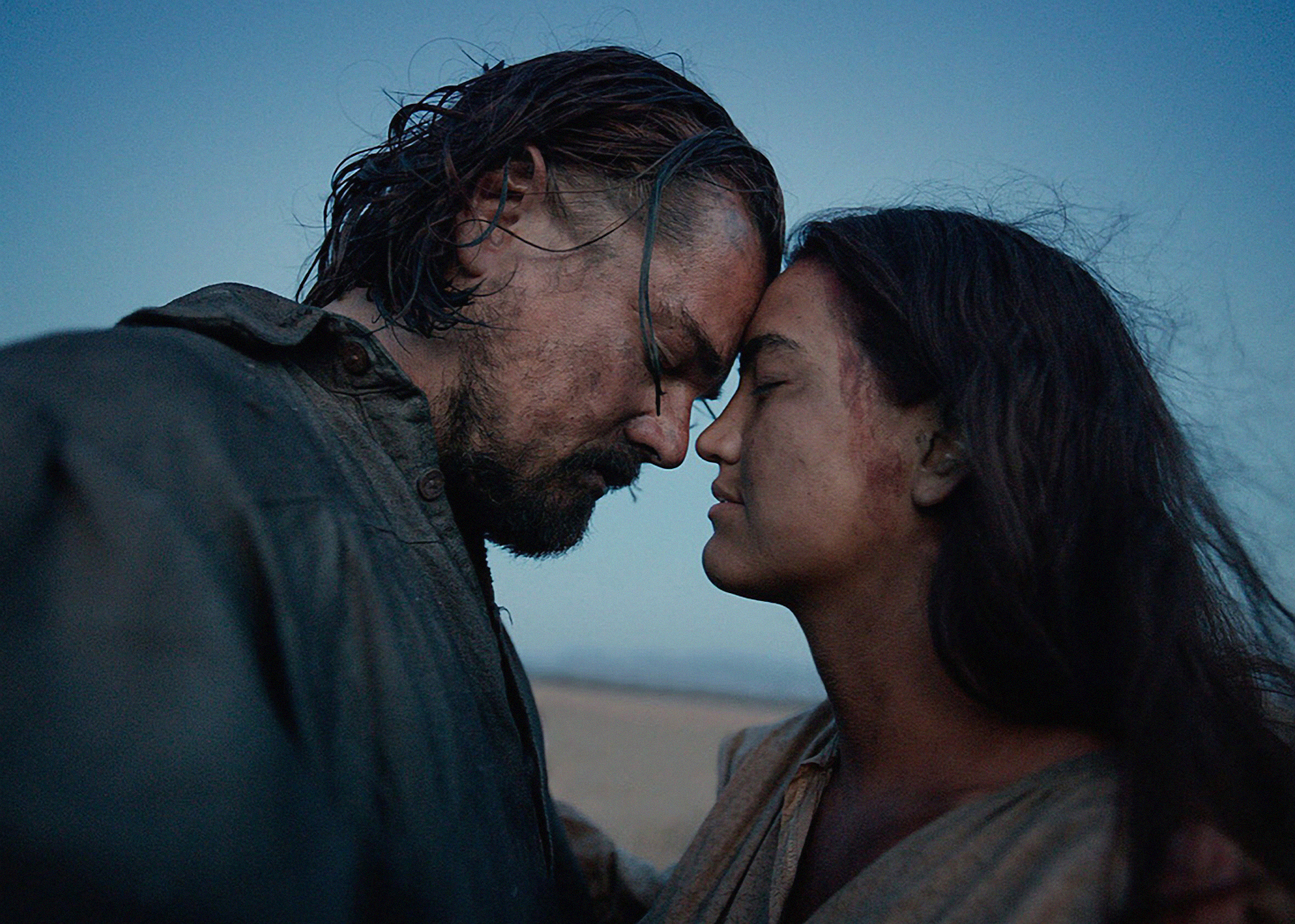
After seeing "The Revenant," Sasha LaPointe and her friends captured these images of themselves. As LaPointe says "there is a power in visibility." (Photo by Hotvlkuce Harjo)
I don’t remember much after that. As is the nature of my trigger, my descent into emotional blackout is not something I’m usually conscious of. Later I was told I stood up when the rape scene began. I exited the living room calmly and silently. I texted a childhood friend. When my partner found me in the kitchen I was trembling over the sink, face streaked in tears, bottle of dark rum tipped back and pouring down my throat as I stood shaking in the moonlight coming in through the window. I remember almost none of this. I don’t remember if he held me, if he took the bottle from me, if he walked me back to the couch, or if I walked back on my own. I don’t remember the rest of the film, not one moment of it. I couldn’t make it through it, though I attempted or pretended to. I do remember concerned looks from my friends. And one of their attempts to console me, "Sasha," he said, "It’s okay, she got him. She castrated that French bastard. She got her revenge!" I don’t remember if I was courteous or polite, I’d like to think I was. I’d like to think I was gracious for my friend’s words, his attempt at kindness.
"Bring me the girl." That was the last clear thing I remember before falling into a downward spiral of bad memories and the nightmare of trauma. Powaqa enters the scene. She says nothing. When we see her she is bent against the trunk of a tree as the French captain violates her. Perhaps it is the nature of the assault. Perhaps it is just the right recipe of scene, of tree, of lighting, that has triggered my own memory of assault. Whatever it is, I am ruined, unable to finish the film.
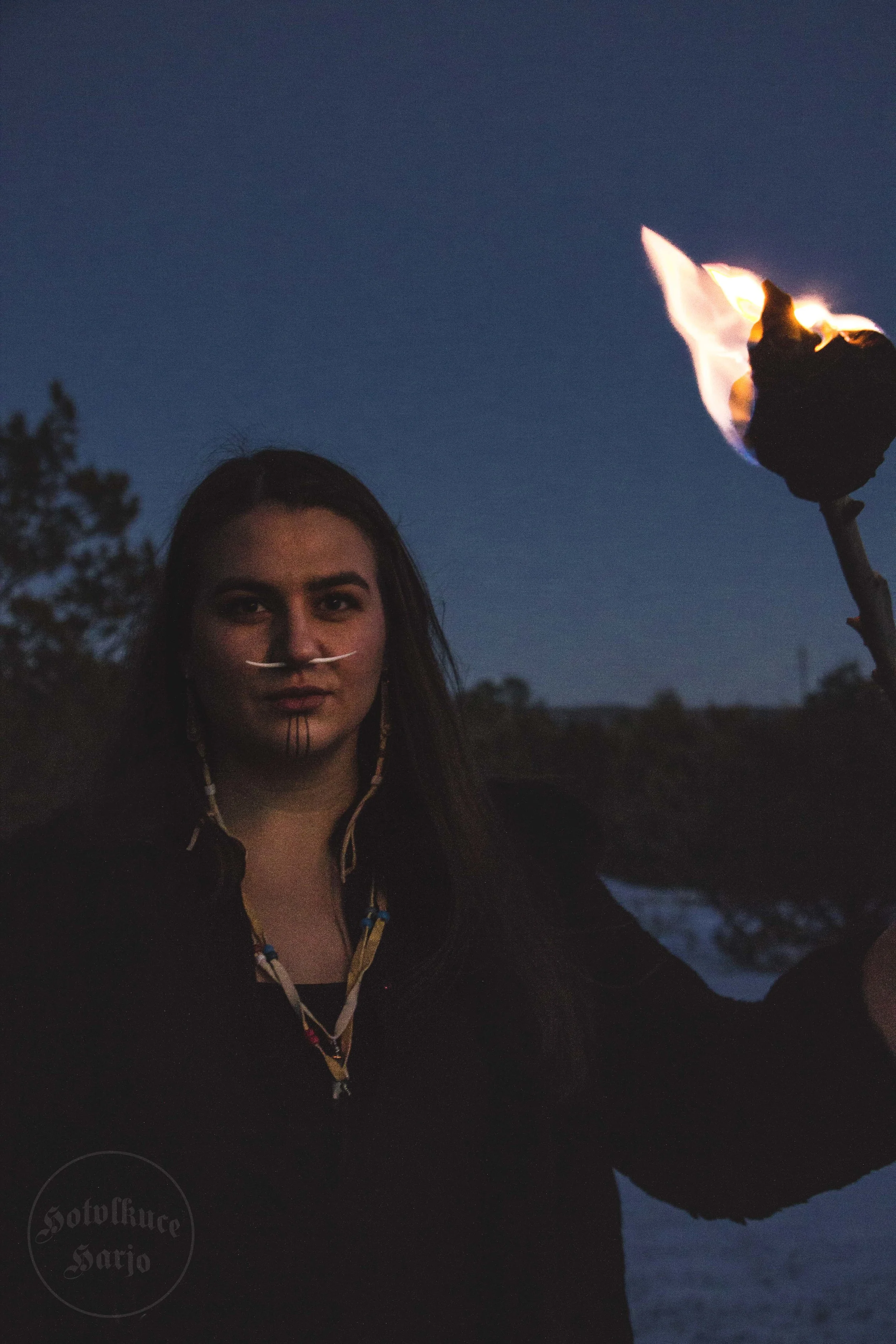
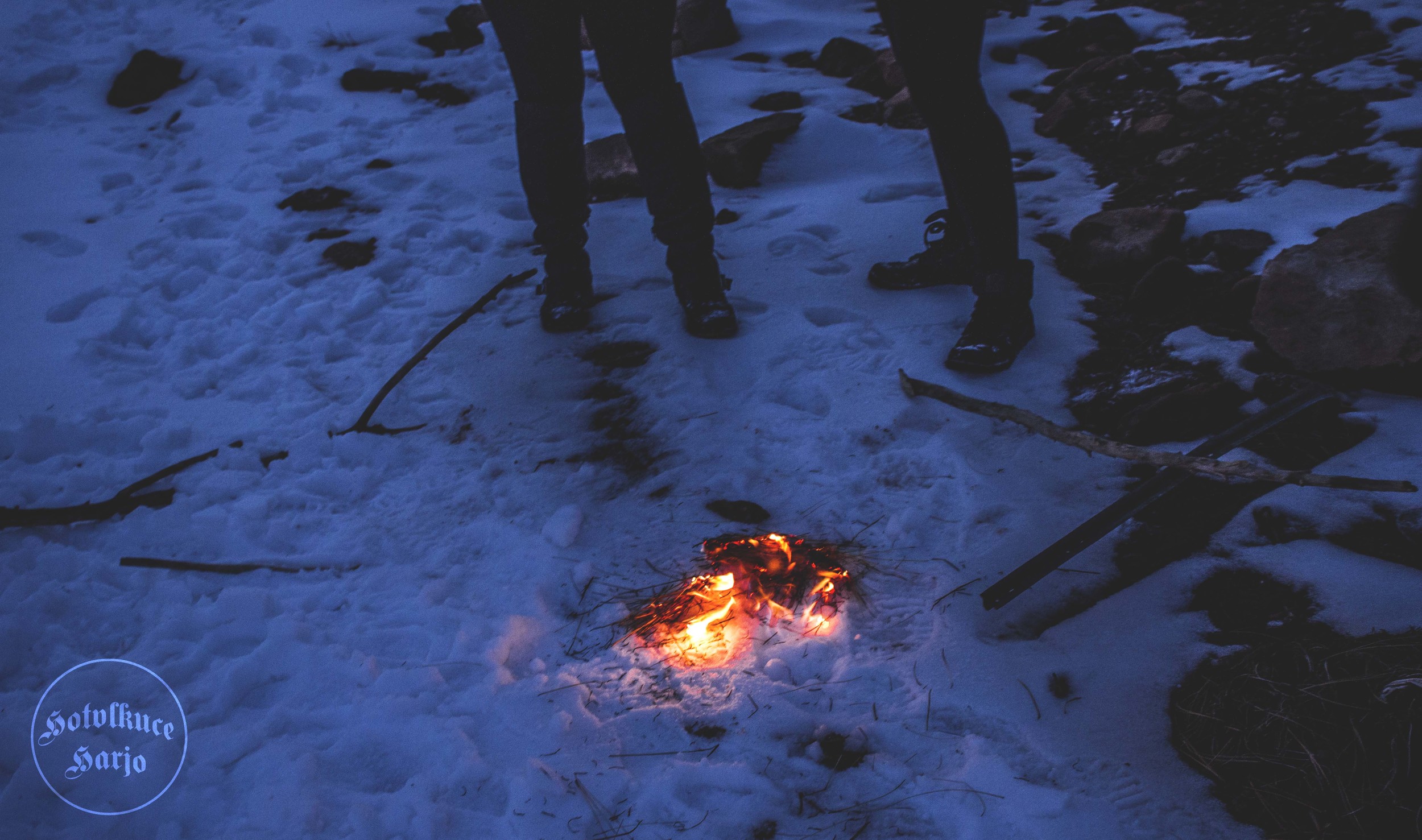
After seeing "The Revenant," Sasha LaPointe and her friends captured these images of themselves. As LaPointe says "there is a power in visibility." (Photo by Hotvlkuce Harjo)
I spend the next day or two in a triggered state, a PTSD fog. I try to make sense of my own reaction. I text my friend. The one still giddy from her stroll down the red carpet, her brushing elbows with Tom and Leo. "The Revenant really messed me up," I say. "I think we need to talk about it."
"I know." She responds almost immediately, "I know."
My friend has tanned moose hide with the actress who plays Powaqa. They have attended Indigenous Women’s conferences together in the Northwest Territories. She’s held the actress’s children.
When we talk about it, the scene that has affected us both so intensely, my friend asks, "Do you remember her expression? It was her face…" She trails off and I struggle to remember the blurry parts of my viewing experience. Of course. It comes to me quickly. Powaqa’s face is empty as she is violated, as the French captain stands behind her, as she is shoved against the tree. Her face is wiped of any emotion. I have goosebumps and feel lightheaded when I think of it, the absence of fantasy. There is no Hollywood, choreographed rape scene. No big fight, no shrieking, no scratching, no scrambling to get free. There is only the reality of that expression. Those dead and empty eyes. The face of a woman taken over, defeated, if only for a moment.
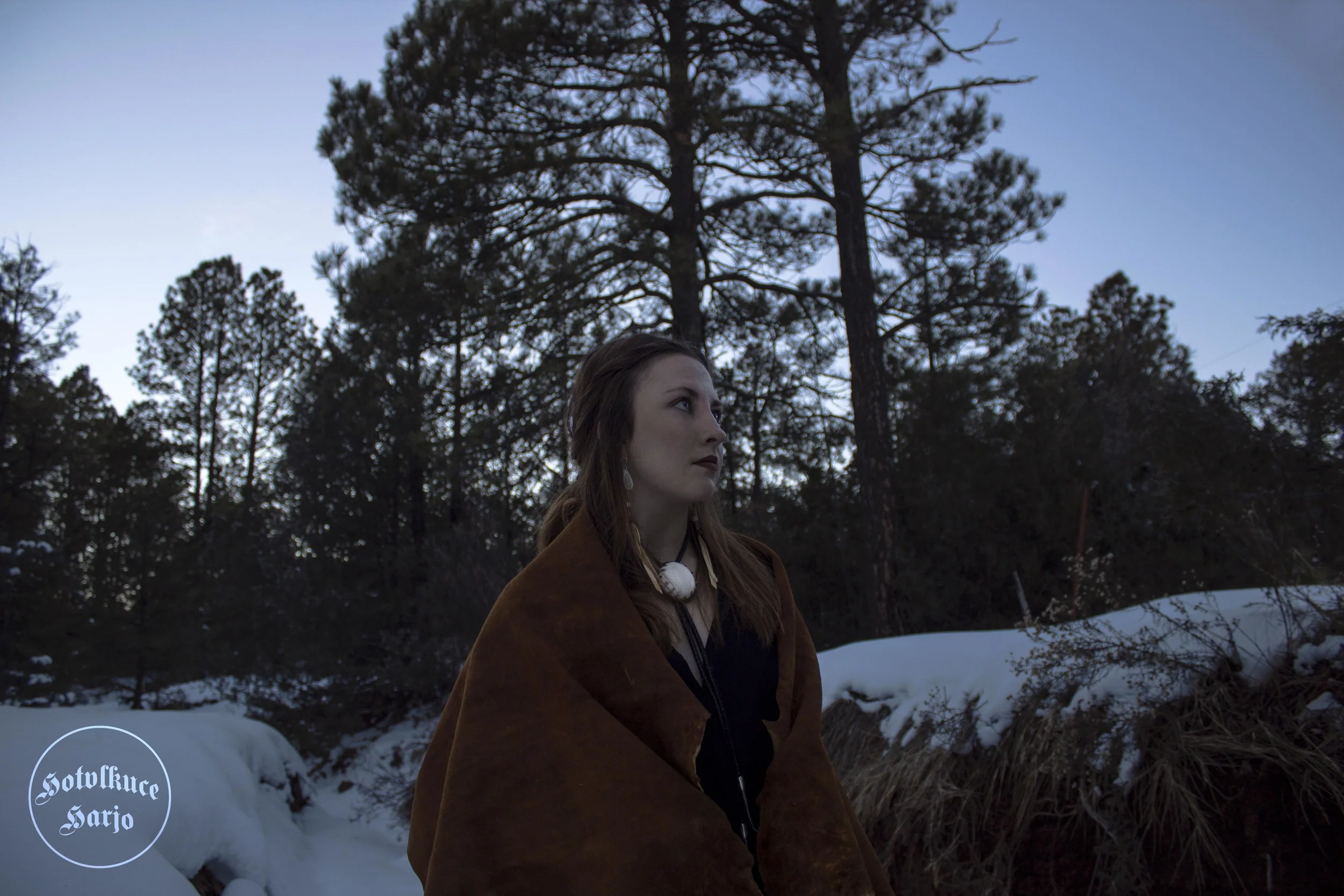
After seeing “The Revenant,” Sasha LaPointe and her friends captured these images of themselves. As LaPointe says “there is a power in visibility.” (Photo by Hotvlkuce Harjo)
As indigenous women, we realize facing that scene was facing a mirror held up to ourselves. It was seeing the reality of our own trauma, the ways we have endured it. The ways we have survived it. It’s suddenly much bigger than myself. It’s bigger than my friend. It isn’t simply the connection to assault, to sexual violence that we share, but rather the portrayal of violence against indigenous women captured in just a few short seconds on the screen. That is what makes us hold our breath, tap our fingers in anxiousness, excuse ourselves to the restroom to avoid it, to wait until the scene is over. Her face reminds us that there is a highway in Canada known as the Highway of Tears, named after the many disappearances of women (mostly indigenous) reported along its vast expanse. It reminds us of the large numbers, the cases of assault against Native women. It is facing generations of surviving, of historical trauma, of memory distilled into a short scene and watching it release from within our bodies and float out into the world. All rape scenes are hard for me, but this one, this one is the raw and brutal truth that still exists today. There are no bells or whistles. There is no falseness to this scene. No dramatization. This one cuts to the bone and exposes us, because we are still being attacked, still being murdered, still going missing. We are still disappearing.
We decide we have to see the film again, together. We decide that together we can face it. The theater is packed and it seems an act of magic that the group of us, seven in total, are able to sit in one long row together. We make it through. In solidarity we face the violence, the sadness, the truth of it. In the dark of the theater I lean forward and sneak a glance at us: Gwich’in, Nooksack, Kaska, and Creek. All women, all together, all on the front lines of this moment and facing it with arms locked and strong.
This time I am able to be present. This time I feel the arms of my sisters around me. Together we face the mirror and together we are reminded of why it is so significant that we are here, in the world, and visible.
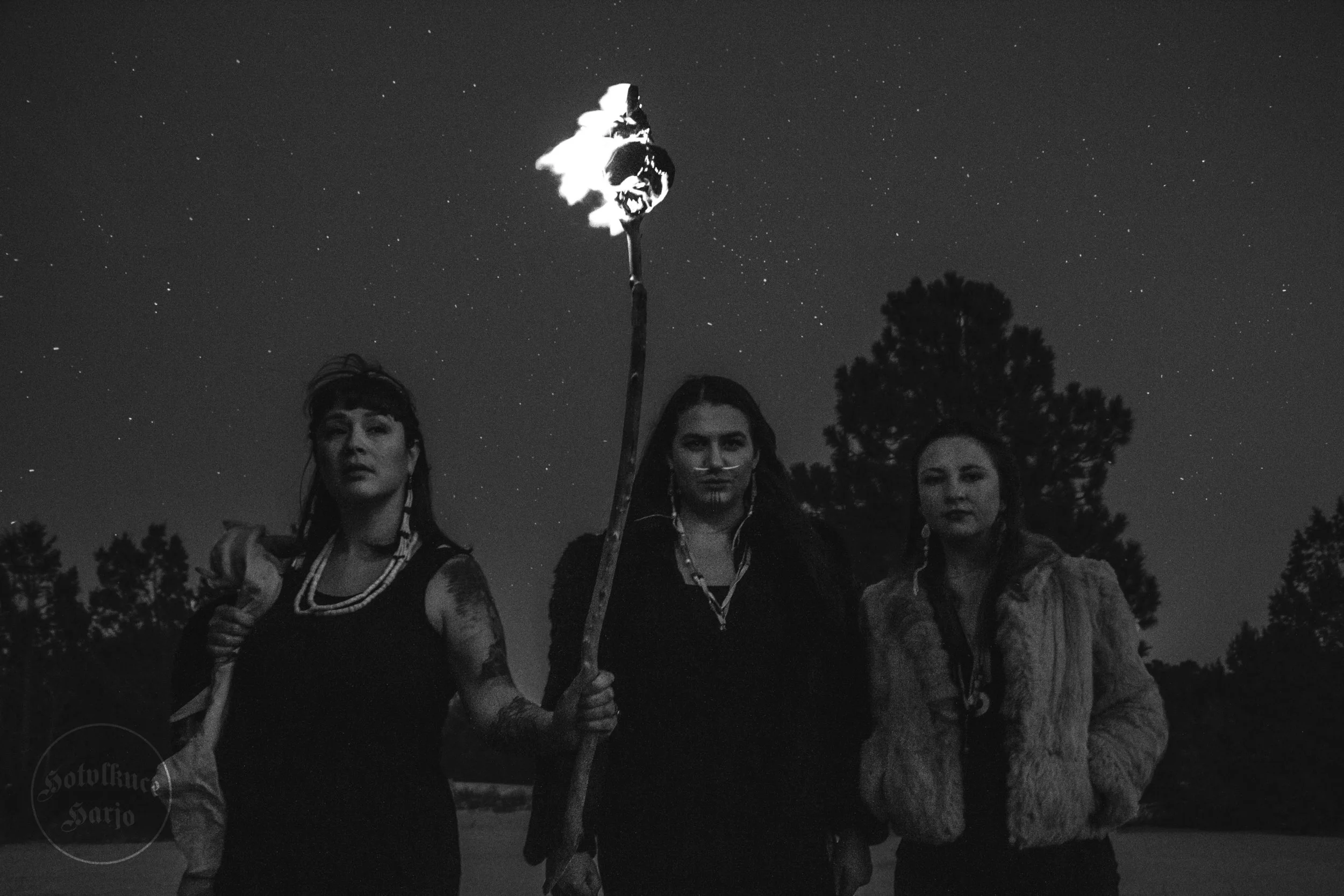
After seeing “The Revenant,” Sasha LaPointe and her friends captured these images of themselves. As LaPointe says “there is a power in visibility.” (Photo by Hotvlkuce Harjo)
At the end of The Revenant, Powaqa returns. This is a detail I overlooked during my episode of PTSD, when I first watched the film. She appears on horseback, reunited finally with her father and her tribe. She sits tall and regal, looking down at the bloodied Hugh Glass, and rides on, to safety, to surviving.
My friends and I find this scene both healing and devastating. It is cathartic, in a way, to see this woman survive, to see her ride to safety. It acts as a tonic to the wounds we carry, a thing that makes the hurt endurable. But as we file out of the theater, quiet in the wake of the film, we all feel it, the absence of our own resolutions, our missing happy endings. The missing endings of the women never found, never rescued. Where are our fathers? Are they scouring the lands for us? Are they burning villages to the ground for us? Where are our warriors now? Now, that we are slowly becoming visible?
Sasha LaPointe, Coast Salish/Nooksack, is pursuing her MFA in creative writing at the Institute of American Indian Arts.
Hotvlkuce Harjo, Mvskoke (Creek), is pursuing her BFA in photography at the University of New Mexico.