• Home
  • indulge
  • new poetry
    • About Luna Luna
    • resources
    • search
  • editor
  • dark hour
  • submit
Menu

luna luna magazine

  • Home
  • indulge
  • new poetry
  • About
    • About Luna Luna
    • resources
    • search
  • editor
  • dark hour
  • submit
delicious new poetry
'the doors of the night open' — poetry by Juan Armando Rojas (translated by Paula J. Lambert)
Nov 29, 2025
'the doors of the night open' — poetry by Juan Armando Rojas (translated by Paula J. Lambert)
Nov 29, 2025
Nov 29, 2025
'we can be forlorn women' — poetry by Stevie Belchak
Nov 29, 2025
'we can be forlorn women' — poetry by Stevie Belchak
Nov 29, 2025
Nov 29, 2025
'I do whatever the light tells me to' — poetry by Catherine Bai
Nov 29, 2025
'I do whatever the light tells me to' — poetry by Catherine Bai
Nov 29, 2025
Nov 29, 2025
‘to kill bodice and give sacrament’ — poetry By Kale Hensley
Nov 29, 2025
‘to kill bodice and give sacrament’ — poetry By Kale Hensley
Nov 29, 2025
Nov 29, 2025
'Venetian draped in goatskin' — poetry by Natalie Mariko
Nov 29, 2025
'Venetian draped in goatskin' — poetry by Natalie Mariko
Nov 29, 2025
Nov 29, 2025
'the long sorrow of the color red' — centos by Patrice Boyer Claeys
Nov 28, 2025
'the long sorrow of the color red' — centos by Patrice Boyer Claeys
Nov 28, 2025
Nov 28, 2025
'Flowers are the offspring of longing' — poetry by Ellen Kombiyil
Nov 28, 2025
'Flowers are the offspring of longing' — poetry by Ellen Kombiyil
Nov 28, 2025
Nov 28, 2025
'punish or repent' — poetry by Chris McCreary
Nov 28, 2025
'punish or repent' — poetry by Chris McCreary
Nov 28, 2025
Nov 28, 2025
'long, dangerous grasses' — poetry by Jessica Purdy
Nov 28, 2025
'long, dangerous grasses' — poetry by Jessica Purdy
Nov 28, 2025
Nov 28, 2025
'gifting nighttime honey' — poetry by Nathan Hassall
Nov 28, 2025
'gifting nighttime honey' — poetry by Nathan Hassall
Nov 28, 2025
Nov 28, 2025
'A theory of pauses' — poetry by Jeanne Morel and Anthony Warnke
Nov 28, 2025
'A theory of pauses' — poetry by Jeanne Morel and Anthony Warnke
Nov 28, 2025
Nov 28, 2025
'into the voluminous abyss' — poetry by D.J. Huppatz
Nov 28, 2025
'into the voluminous abyss' — poetry by D.J. Huppatz
Nov 28, 2025
Nov 28, 2025
'an animal within an animal' — a poem by Carolee Bennett
Nov 28, 2025
'an animal within an animal' — a poem by Carolee Bennett
Nov 28, 2025
Nov 28, 2025
‘in the glitter-open black' — poetry by Fox Henry Frazier
Oct 31, 2025
‘in the glitter-open black' — poetry by Fox Henry Frazier
Oct 31, 2025
Oct 31, 2025
'poet as tarantula,  poem as waste' — poetry by  Ewen Glass
Oct 31, 2025
'poet as tarantula, poem as waste' — poetry by Ewen Glass
Oct 31, 2025
Oct 31, 2025
'my god wearing a body' — poetry by Tom Nutting
Oct 31, 2025
'my god wearing a body' — poetry by Tom Nutting
Oct 31, 2025
Oct 31, 2025
'Hours rot away in regalia' — poetry by Stephanie Chang
Oct 31, 2025
'Hours rot away in regalia' — poetry by Stephanie Chang
Oct 31, 2025
Oct 31, 2025
'down down down the hall of mirrors' — poetry by Ronnie K. Stephens
Oct 31, 2025
'down down down the hall of mirrors' — poetry by Ronnie K. Stephens
Oct 31, 2025
Oct 31, 2025
'Grew appendages, clawed towards light' — poetry by Lucie Brooks
Oct 31, 2025
'Grew appendages, clawed towards light' — poetry by Lucie Brooks
Oct 31, 2025
Oct 31, 2025
'do not be afraid' — poetry by Maia Decker
Oct 31, 2025
'do not be afraid' — poetry by Maia Decker
Oct 31, 2025
Oct 31, 2025
'The darkened bedroom' — poetry by Jessica Purdy
Oct 31, 2025
'The darkened bedroom' — poetry by Jessica Purdy
Oct 31, 2025
Oct 31, 2025
'I am the body that I am under' — poetry by Jennifer MacBain-Stephens
Oct 31, 2025
'I am the body that I am under' — poetry by Jennifer MacBain-Stephens
Oct 31, 2025
Oct 31, 2025
goddess energy.jpg
Oct 26, 2025
'Hotter than gluttony' — poetry by Anne-Adele Wight
Oct 26, 2025
Oct 26, 2025
'As though from Babel' — poetry by Fox Henry Frazier
Oct 26, 2025
'As though from Babel' — poetry by Fox Henry Frazier
Oct 26, 2025
Oct 26, 2025
'See my wants' — poetry by Aaliyah Anderson
Oct 26, 2025
'See my wants' — poetry by Aaliyah Anderson
Oct 26, 2025
Oct 26, 2025
'black viper dangling a golden fruit' — poetry by Nova Glyn
Oct 26, 2025
'black viper dangling a golden fruit' — poetry by Nova Glyn
Oct 26, 2025
Oct 26, 2025
'It would be unfair to touch you' — poetry by grace (ge) gilbert
Oct 26, 2025
'It would be unfair to touch you' — poetry by grace (ge) gilbert
Oct 26, 2025
Oct 26, 2025
'Praying in retrograde' — poetry by Courtney Leigh
Oct 26, 2025
'Praying in retrograde' — poetry by Courtney Leigh
Oct 26, 2025
Oct 26, 2025
'To not want is death' — poetry by Letitia Trent
Oct 26, 2025
'To not want is death' — poetry by Letitia Trent
Oct 26, 2025
Oct 26, 2025
'Our wildness the eternal now' — poetry by Hannah Levy
Oct 26, 2025
'Our wildness the eternal now' — poetry by Hannah Levy
Oct 26, 2025
Oct 26, 2025
work from home hygge

5 Gentle Work From Home Tips When Times Are Tough

March 18, 2020

BY LISA MARIE BASILE

Working from home, especially due to the Coronavirus quarantine, asks us to come up with gentle work and focus strategies that integrate rest, creativity, socialization, and self-kindness.

I’ve been a full-time, work from home freelancer for the past two years — a reality that has its beautiful ups, lonely downs, immense privileges (freedom, the ability to care for my chronic illness) and intense drawbacks (health insurance issues, pay cycle problems). I have learned what works and what doesn’t, and have felt everything from the sting of isolation to the beauty of taking a yoga-with-my-cat break.

First, let’s address the stigma around working from home. People sometimes think work-from-home employees are lazy, aren’t actually working or can sleep all day and take two-hour lunches. That we aren’t stressed or concerned for money (?!). In short, it’s true that there is great privilege in working from home, but work is work. And the best freelancers know that it’s not a free-for-all nor an opportunity to slack off. It requires delicate balance and recalibration, just as any job does.

Now that so many of us are working from home due to COVID-19, I’m hearing people say that it’s not as easy as it seems — that they feel frustrated, cooped up, adrift, unable to focus, at a loss for routine, undisciplined, lonely, and [insert adjective]. But more than that, everyone is trying to focus as a deluge of frightening news reports roll in.

In response, here are some ways to holistically and gently integrate work, life, and today’s changing reality.

Adapt to change mindfully.

View this post on Instagram

A post shared by lisa marie basile (@lisamariebasile) on Mar 17, 2020 at 9:37am PDT

How do we adjust to all of this rapid change? In one week, we’re dining out and seeing friends. The next, we’re losing our jobs, in our houses all day every day, and stocking up on food. It’s a lot. We have to mindfully navigate these changes. Now’s the time to take stock of what’s important to you day to day (talking to friends? Eating healthfully?). You’ll also want to keep (or adapt) routines that feel healthy and comforting (eating a healthy breakfast? Doing yoga each day for one hour?) and make your house the safe space you need in order to comfort you through anxious, dark, and isolating moments. Keep what feels good to you, and build from there, integrating your workspace tools and job duties into your home-life. Some ideas:

  • Create one specific space where you work. This creates a healthy separation between work and life. Make it as similar as you can to your office space.

  • Prioritize daily tasks. Besides work, what else matters? What do you do ‘normally?’ Try to adapt those same behaviors. For example, I swim once per day, usually in the morning. I can’t in quarantine, so instead, I plan to do a workout at that same hour. For those of you who take a break at the office around 12, try to replicate that at home. Creating mirrored actions helps us make sense of rapid change, and you can always switch them out if you find something else you like to do better!

  • If you feel like you’re missing out on a post-work routine (a local pub, hanging with a friend, walking around the park before heading home), try to create a similar-ish routine you can do when you close the computer — and do close the computer. Working from home is not an invite to work all night, even if it seems tempting.

Building a morning ritual to soothe the nervous system.

Because you don’t have a built-in routine — up at 7, on the train by 8, at the desk by 9, for example — you have to create your own routine. This is where discipline comes in. If you don’t want to work all damn day and night, or you want to leave time for projects and pleasures, you’ll need to work from your set hours. Sure, you might snag an extra 45 minutes of sleep, but being at your computer in the morning (if that’s what’s expected of you or not) can help create a sense of responsibility.

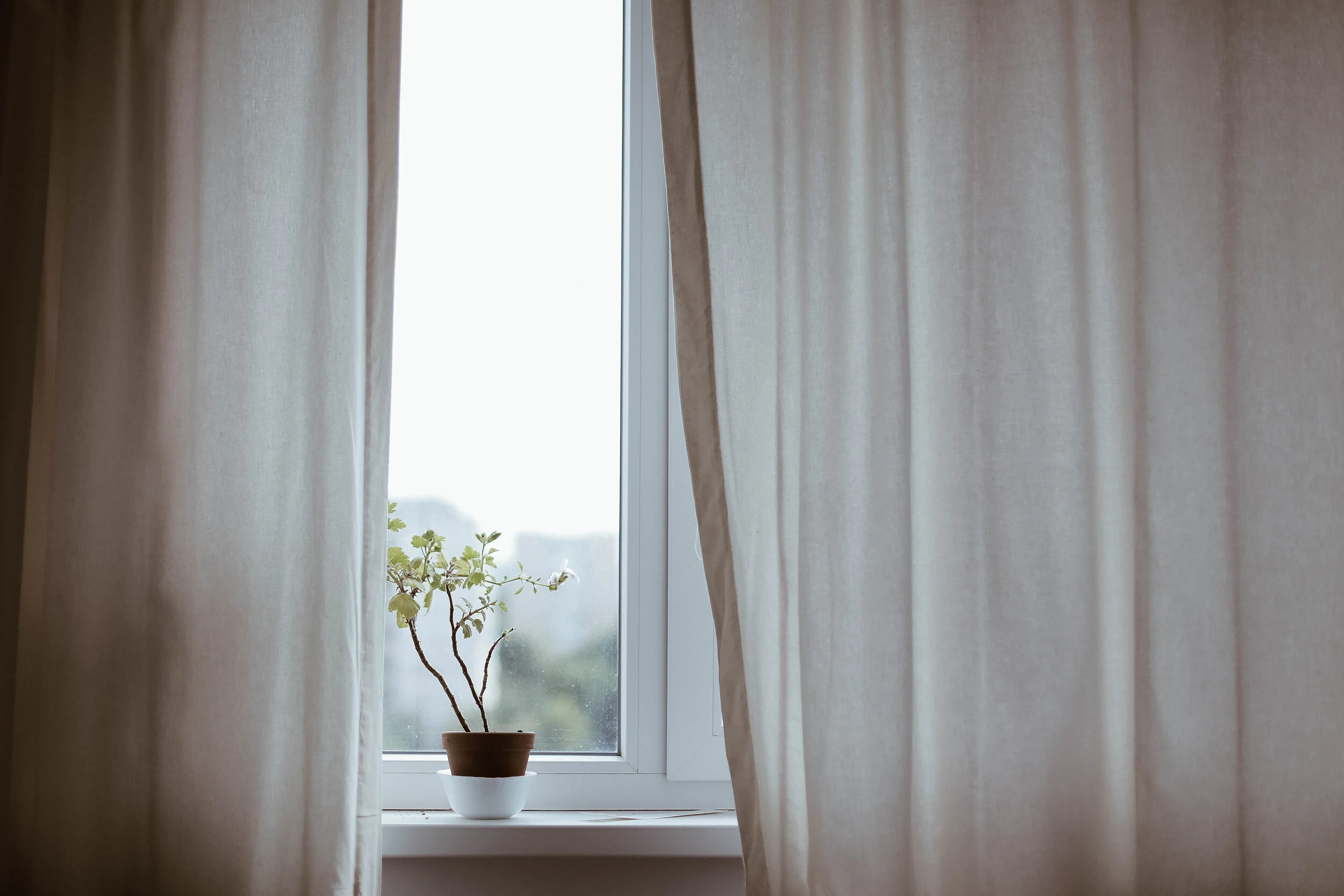
Start your morning with a ritual: stretching, pulling a tarot card, meditating, making a cup of coffee, listening to some music as you shower, standing at the window or porch and absorbing the light, and slowly logging on. Go inward. Wake up your senses. Be deliberate and soothing. It’s especially important now to be a little slower, be a little more intentional. Your parasympathetic nervous system may already be shot, so it’s important to show your body that the morning can be soft and calm. You want to set your day’s tone with self-kindness.

Rest when you need to. Seriously.

One of the benefits of working from home is the ability to simply lay down for 15 — vertically, at a window, wherever. You don’t have to hide-nap in a stall at the office. Even though we have bills to pay (those of us who are privileged to keep our jobs right now, of course), now is the time to balance our ability to do more with resting.

In a sense, the earth is asking us a serious question. The earth is asking us to slow down, to listen, to be more in-tune, to stop pushing so hard — our bodies, the planet, our factories, our workers, our minds. To just be. To just be. Because we are not infallible. We are not eternal. We are natural things that have become selfish enough to think we are omnipotent. We are not. We, like trees, need water and light and time to grow. We bend toward others. We have a language. We bloom. We rot. We are bearing witness, as witness trees do, to the doom that can happen when we don’t listen or care for others.

Working from home, especially during a quarantine time when you’d ordinarily be out or meeting friends or at business meetings, may feel like an invitation to finally do and be everything. To finally learn Spanish. To finally finish that novel. And while these things may comfort you in the dark moments, capitalism’s greedy hands ought not make us feel we’re not being or doing enough.

Do what you can to survive. But rest. Heed the earth and sleep if you need to — especially if you’re sick. Take the time to breathe. To be alive. To watch your animals gaze up at the sunlight through a window.

Build focus by integrating movement, art, and breath into your day.

View this post on Instagram

A post shared by lisa marie basile (@lisamariebasile) on Mar 8, 2020 at 1:37pm PDT

You’re working from home. You’re trying to focus. You’re reading the news, crying, and then trying to Slack your boss in some sort of legible manner. They are probably home trying to be a good boss, trying to stop the kids from crying, trying to do their best, too. The Pomodoro technique is one I’ve been using since forever because it’s doable, forgiving, and realistic. I used to do it in the office, but now I do it even more at home, where distractions are abundant.

The Pomodoro technique allows us 25 minutes of focus, and then a short break. After that, I will do something soothing. I’ll do a few minutes of yoga, watch a few minutes of ASMR, doodle carelessly into a journal, or do a breathing practice (breath in for 4 seconds, hold the breath for 7 seconds, and exhale for 8 seconds). I also created a sacred writing prompt journey (for free!) here, if you prefer to write.

While this may seem pandering or ridiculous (after all, humans need to work!), the reality is this: We won’t do our best if we can’t focus, if we’re chaotically stressed, if we’re giving our all to a job and not taking care of ourselves — especially in a time of crisis.

Create time for socializing.

For people in offices, endless meetings can take a toll. They can usually be summed up in an email, anyway, right? At WeWorks, we duck into telephone booths as if any human interaction will cause us to explode. We’re over-saturated. But in quarantine, we’re suddenly forced to listen to our own footsteps, missing the human interaction of a normal workaday. Even when we’re not working, the missing becomes extra real. We are social creatures. Here’s what you can do:

  • Organize a FaceTime chat with a friend or friends

  • Start a group text with friends to share funny pictures or memes

  • Send videos versus texts with friends. Seeing faces helps our brains feel more connected.

  • Write a long letter or email to a friend

  • Watch YouTube vlogs; even having a voice in the background is helpful psychologically

  • Do a poetry readings or Q&A session on Instagram

  • Schedule a phone call with someone special once or twice a week

  • Start a Facebook group for a specific community

  • Dive into the land of podcasts


Lisa Marie Basile is the founding creative director of Luna Luna Magazine, a popular magazine & digital community focused on literature, magical living, and identity. She is the author of several books of poetry, as well as Light Magic for Dark Times, a modern collection of inspired rituals and daily practices, as well as The Magical Writing Grimoire: Use the Word as Your Wand for Magic, Manifestation & Ritual. Her work focuses heavily on trauma recovery, writing as a healing tool, chronic illness, everyday magic, and poetry. She's written for or been featured in The New York Times, Refinery 29, Self, Chakrubs, Marie Claire, Narratively, Catapult, Sabat Magazine, Bust, HelloGiggles, Best American Experimental Writing, Best American Poetry, Grimoire Magazine, and more. She's an editor at the poetry site Little Infinite as well as the co-host of Astrolushes, a podcast that conversationally explores astrology, ritual, pop culture, and literature. Lisa Marie has taught writing and ritual workshops at HausWitch in Salem, MA, Manhattanville College, and Pace University. She is also a chronic illness advocate, keeping columns at several chronic illness patient websites. She earned a Masters's degree in Writing from The New School and studied literature and psychology as an undergraduate at Pace University. You can follow her at @lisamariebasile and @Ritual_Poetica.

In Wellness, Social Issues Tags working from home, work from home, wfh, coronavirus, covid19
Comment

The Age of Coronavirus—And What This Means for Us

March 18, 2020

Joanna C. Valente is a human who lives in Brooklyn, New York. They are the author of several books, including Marys of the Sea, #Survivor (2020, The Operating System), and Killer Bob: A Love Story (2021, Vegetarian Alcoholic Press). They are the editor of A Shadow Map: Writing by Survivors of Sexual Assault and received their MFA in writing at Sarah Lawrence College. Joanna is the founder of Yes Poetry and the senior managing editor for Luna Luna Magazine. Some of their writing has appeared in The Rumpus, Them, Brooklyn Magazine, BUST, and elsewhere. Joanna also leads workshops at Brooklyn Poets. joannavalente.com / Twitter: @joannasaid / IG: joannacvalente / FB: joannacvalente

Read More
In Personal Essay Tags essay
Comment
hygge stillness

Coronavirus Anxiety and The Practice Of Sitting In Uncertainty

March 17, 2020

BY LISA MARIE BASILE

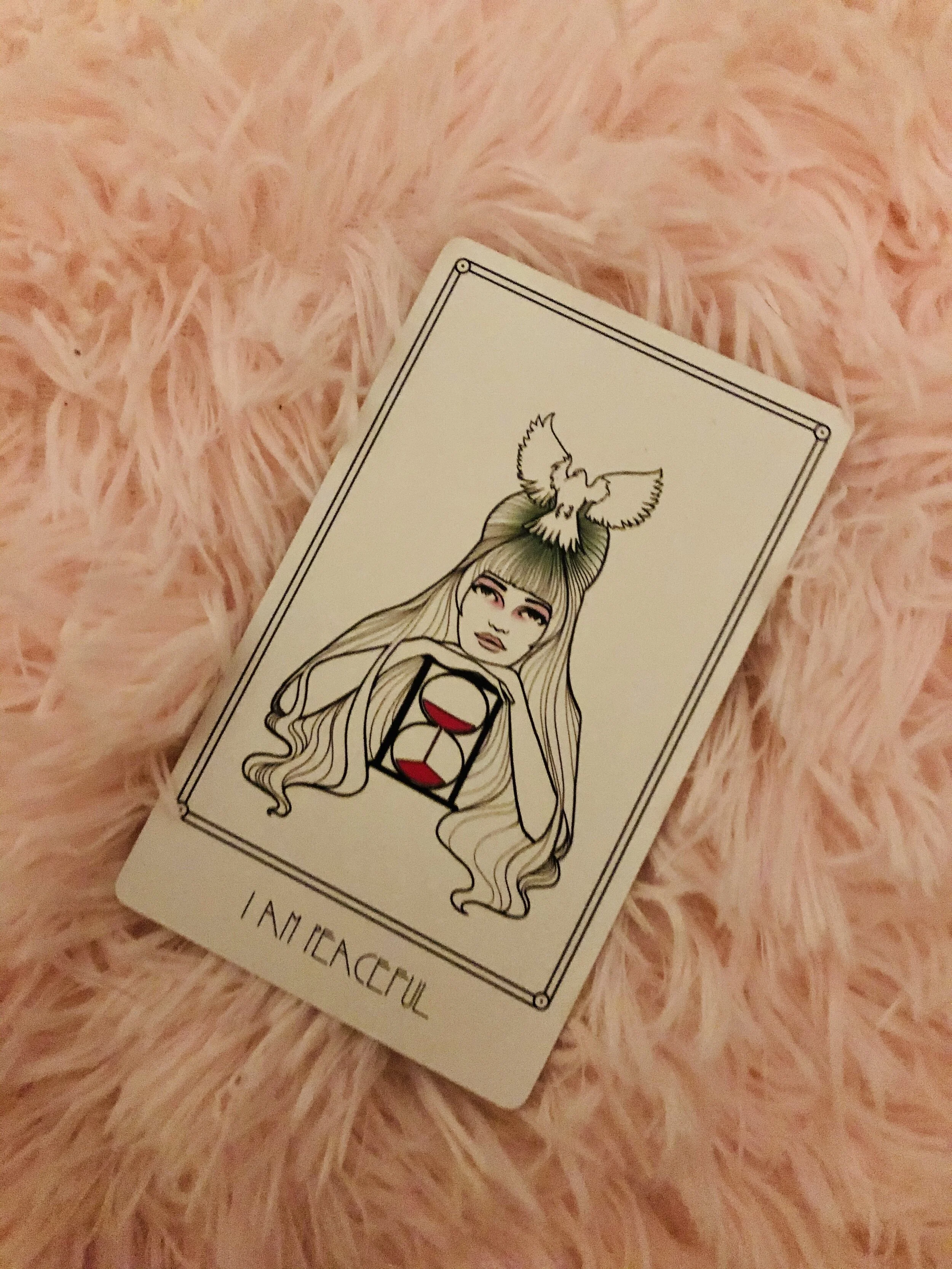
In my Amenti Oracle Deck, I pull the card for I am peaceful. I asked the deck, of course, what I was supposed to take away from this experience in quarantine. I’m just human. I don’t know. I don’t even know if I’m ready to learn a lesson. I do know that, as a writer, I am compelled to write it all down. To take notes through this thing. To keep a diary of what I’ve seen. I have a feeling this will shape us. Maybe I want to be present for it.

IMG_3166.jpeg

I know that for all of us, it’s been hours and hours of dread through insomnia-filled nights perusing the web, guzzling every wave of new information, letting the anxiety take over. I know that in our private Luna Luna community group, there’s a lot of worry. Everyone, the globe over, is panicking, and you can feel it. From space, I wonder if you can feel a buzzing strange energy emanating through our atmosphere. I wonder if you can feel it through all sorts of tragedies.

I am currently experiencing all the symptoms — perhaps it’s the flu or bronchitis. Perhaps worry leads me to be sicker than I should be. I sit in bed or wander my apartment, wondering how best to handle this new normal. Looking outside at New York City, its streets empty and silent (but it’s pubs still full at night, people’s faces inches from one another, before the city finally closed itself down), I wonder what the earth is trying to tell us.

I wonder why we are so resistant and stubborn. I wonder why we think ourselves invincible. Is the fear of death itself so big and so deep that we run toward it?

If you live with an immunocompromised body as I do, at some point you stop clutching illusions of infallibility. You have learned some time ago that your body is an engine running on wayward wheels. You have learned to avoid the subway poles and handshakes. You have learned that each day is a new preciousness. And if you’re anyone else, you probably have a friend or a lover or a parent or grandparent who is at high risk of getting very sick if they do contract a virus, or this virus.

The body is a fragile ephemeral thing, and it must bend toward the pew of nature. And yet, we resist, making it hard to survive.

My point is that we have to lean into this new situation. We have to or else we disappear. We literally have to because there is no other choice. We have to face that this is dark and hard and there will be (and is) global grief at the end of it all.

We’ve seen the memes about our grandparents going to war, which are somehow supposed to shame us into feeling comfortable during quarantine? I think it’s a false correlation. We can honor and respect history and the tragedies that have occurred while being uncomfortable with the things that befall our societies today. It isn’t just about quarantine or being bored inside the house or watching Netflix or reading books. It’s about watching how society reacts to chaos, how politicians act too late or use xenophobic language during an outbreak, about the power of contagion and how ignorance and selfishness lead to community spread. It’s about infrastructure, school children not going to school, poor people not being able to buy food, homeless people having no shelter-in-place, shelves being completely empty, people who have lack of accessibility, elderly people without family. It’s about not being sure. It’s about uncertainty. It’s about death. And it’s about grief, which we haven’t, as a global community, even dealt with yet.

There is so much validity in being fearful and anxious during this time.

If you are out there wondering what will happen, wondering how we got to this point, you’re not alone. If you are watching videos of beautiful Chinese or Italian people singing out of their windows or on their balconies into empty streets, their voices echoing through the night in act of communal conjuring, you are not alone.

What the Amenti Oracle card told me about being peaceful was this:

Finding peace and stillness in the midst of chaos is a challenge, but it’s one that we must meet. We can choose to spend the entire day in worry — and it would not be invalid if we did. Our finances, our health, and our stability are at risk. But we can also choose to take back a few minutes for ourselves, to sit in silence, to just be alive, to just surround ourselves with the things that bring us pleasure and joy.

Mine are books and plants. My cat. Blankets. I like to sit at the window and just look out, even if I just see another building. I like to write little notes. I like to set up an altar. I like to clean my space and give it love. I like to make tea and watch the heat dance above the liquid. I like to listen to the birds in the morning. I like to wonder what they’re thinking about all this free space.

I like to pretend that I am a stone in the sea. I am smooth and I am turned over and over and over again as I am moved by the waves. I have no choice but to be a creature of the sea. And that great dark mother, with all her mystery and all her might, pushes me about. But I am eternal and I am still whole. I can worry about the waves, or I can let them take me. There is value in both. There is value in anxiety — because it helps us grow and it helps us become empathic toward others. And there is value in stillness and acceptance and learning to fill the time alone or isolated, with nothingness. It’s not meant to be comfortable. It’s meant to be what it is, which is a breath, a pause, a being. An opportunity to just be — in between the shadows.

Maybe I don’t need to write it all down or understand it or provide thoughts or hope to others. Maybe I shouldn’t be writing this post. Maybe I just need to be, to lean into the unknowing and the mystery and uncertainty.


Lisa Marie Basile is the founding creative director of Luna Luna Magazine, a popular magazine & digital community focused on literature, magical living, and identity. She is the author of several books of poetry, as well as Light Magic for Dark Times, a modern collection of inspired rituals and daily practices, as well as The Magical Writing Grimoire: Use the Word as Your Wand for Magic, Manifestation & Ritual. Her work focuses heavily on trauma recovery, writing as a healing tool, chronic illness, everyday magic, and poetry. She's written for or been featured in The New York Times, Refinery 29, Self, Chakrubs, Marie Claire, Narratively, Catapult, Sabat Magazine, Bust, HelloGiggles, Best American Experimental Writing, Best American Poetry, Grimoire Magazine, and more. She's an editor at the poetry site Little Infinite as well as the co-host of Astrolushes, a podcast that conversationally explores astrology, ritual, pop culture, and literature. Lisa Marie has taught writing and ritual workshops at HausWitch in Salem, MA, Manhattanville College, and Pace University. She is also a chronic illness advocate, keeping columns at several chronic illness patient websites. She earned a Masters's degree in Writing from The New School and studied literature and psychology as an undergraduate at Pace University. You can follow her at @lisamariebasile and @Ritual_Poetica.
In Social Issues, Wellness, Poetry & Prose Tags coronavirus, covid-19, covid19, virus, pandemic, stillness, meditation
Comment

A Playlist to Keep You Company

March 17, 2020

Joanna C. Valente is a human who lives in Brooklyn, New York. They are the author of several books, including Marys of the Sea, #Survivor (2020, The Operating System), and Killer Bob: A Love Story (2021, Vegetarian Alcoholic Press). They are the editor of A Shadow Map: Writing by Survivors of Sexual Assault and received their MFA in writing at Sarah Lawrence College. Joanna is the founder of Yes Poetry and the senior managing editor for Luna Luna Magazine. Some of their writing has appeared in The Rumpus, Them, Brooklyn Magazine, BUST, and elsewhere. Joanna also leads workshops at Brooklyn Poets.
joannavalente.com / Twitter: @joannasaid / IG: joannacvalente / FB: joannacvalente

Read More
In Music Tags music
Comment
tracy queen

Support Tracy Queen: A Weird, Wild, Sex-Positive Graphic Novel

March 9, 2020

LISA MARIE BASILE IN CONVERSATION WITH LYNSEY GRISWOLD

“Tracy Queen is a lot like those, in that it celebrates the s*x-positive* values and the labor of s*x** workers...Except it's weirder. It’s about a woman who makes adult entertainment for a living, loves her life...and is BFFs with a raccoon! And also creates a race of cyborg-clone warriors to protect her from the forces of mainstream p0rn and her own criminal past…You know. Normal stuff.”

 —LYNSEY G.,VIA KICKSTARTER

Can you tell us a little bit about Tracy and her story? What was Volume 1 about?

Tracy is a love warrior. I'm using a term I first heard from Madison Young—an adult performer, director, and producer who's also an author, performance artist, coach, and overall amazing human being. Madison described herself that way, and requested that the cameo appearance she'll be making in Tracy Queen's later volumes be called that as well. I realized that "love warrior" is exactly the right description for Tracy herself.

Tracy Queen is a character that I originally based on someone I knew in my own life, and who deepened and became bigger and more real as I wrote her story. She starts Volume 1 of her 8-volumes journey having lived her whole life under direction from other people. She's always been told what to do. And, unfortunately, that's brought her a life mired in violence. In Volume 1, she realizes that she no longer wants to hurt people. At the behest of her new best friend—a talking raccoon who's her new roommate—she breaks free of her violent past and sets off to make a future that's more focused on pleasure. She discovers adult webcamming as a means of income, but also as a liberating and empowering experience.

In Volume 2, "Dangerous Experiments," which we're Kickstarting now, she continues down her path toward freedom and sexual enlightenment when she decides to start filming sex scenes with partners. It's her response to having a face-to-face encounter with a very ugly truth that some people think women's bodies and sexuality can be owned by anyone but the women themselves. It's also her way of deepening her commitment to showing the world that empowered women can have sex, enjoy it, and own the footage.

There's a lot more to come, including lots more sexual discovery, higher stakes in the struggle against the forces of darkness, cameos from a bunch of fantastic adult performers, and eventually a climactic battle between Tracy's own cyborg-clone fighting force and an army of porn stars brainwashed against her by an evil porn kingpin... But that all comes later.

Who is your dream reader? Or, who would fall in love with this series?

Folks with a penchant for weird, pulpy, sci-fi could enjoy this series, because there is a lot of bizarre, over-the-top junk science that's a total delight! But Tracy's story goes really deep into the ways in which internalized misogyny can keep women living as lesser-than when they're capable of so much more. And sometimes that "more" is being open about their sexuality, even profiting on it. So I think anyone with an interest in the intersection of feminism and sex work will find a lot to enjoy...as long as they're into some truly weird shit, also.

“Folks with a penchant for weird, pulpy, sci-fi could enjoy this series, because there is a lot of bizarre, over-the-top junk science that's a total delight! But Tracy's story goes really deep into the ways in which internalized misogyny can keep women living as lesser-than when they're capable of so much more. And sometimes that "more" is being open about their sexuality, even profiting on it. “


Where are you coming from, as a creator, with these stories? Can you tell us a little bit about yours and Jayel's background?

I've been writing about the intersection of feminism and sex work, with a focus on pornography, for well over a decade. I started as a reviewer for adult films, then moved into criticism, interviews, journalism, curation, even documentary filmmaking on these topics. I've written an award-winning memoir—Watching Porn—about everything I've from about the adult entertainment industry, and I've stacked up some pretty impressive bylines with mainstream magazines. I even won a Feminist Porn Award for my one of my films! Tracy Queen is really, in many ways, my opus on all I've learned and seen, particularly on the ways that consumers interact with sex work and porn. Although Tracy's journey is deadly serious and deeply nuanced, it's shadowed by unbelievable, gonzo weirdness that feels necessary in order to lure mainstream readers into a deep conversation around sexuality's place in our culture.

My partner in this venture, Jayel Draco, is a lifelong, brilliant visual artist who had primarily worked in visual effects, animation, and fantasy art before we met. When I started telling him about Tracy Queen, however, he knew he needed to be a part of it. It was a stretch for him to approach illustrating a comic that would require him to draw a woman being sexual—repeatedly—without overtly objectifying her. And, I've got to say, I've been stunned at the work he's put out. Tracy is so alive in his illustrations! He started out working with a live model so that he could be sure he was getting the proportions right from the beginning. He didn't want to do what so many comics artists do—accentuate all the "sexy" parts of a woman's body instead of showing what a real person looks like. Once he'd established how Tracy looked from about a zillion different angles and in every position imaginable (sexy ones included), he was able to bring her personality and a feeling of realness to every panel he's created. It's been a huge pleasure to work with him on this!

How can people support your art?

Right now through March 20, we're Kickstarting Tracy Queen, Volume 2: Dangerous Experiments. It's the second of what will eventually be eight volumes in this series. We successfully Kickstarted Volume 1 in late 2018, and we've noticed a big difference in the online climate between then and now: It's a lot harder to get our links to the Kickstarter campaign seen on social media! If anyone here has read about the passage of FOSTA/SESTA at the federal level, they'll know that the past year has seen a chilling effect on discussions about sexuality online, because websites are now being held responsible for their users' content. That means that, if people are talking about sexuality in a way that's illegal (e.g. sex trafficking), the website that hosted their conversation is liable. Which is ridiculous! Talking about sexuality, pleasure positivity, consensual sex work, and so on is not the same as talking about sex trafficking. The differences between these topics are vast, and it's harmful to people on both sides of that divide to treat those conversations the same way.

But I digress. The upshot is that, since our campaign links to and necessarily uses terms like "sex" and "pornography", we are being deep-sixed by social media platforms and search results. We're technically allowed to post the content, but social media platforms and search engines then conveniently "forget" to show the content to anyone. We haven't even been able to pay to have our posts seen my more people! It's massively frustrating.

So, the best way that people can support Tracy Queen right now, aside from backing the Kickstarter (and getting sweet rewards!) is by helping us to get the word out! Every link share, every blog post, every podcast shout-out, every awkward mention at a fancy dinner party...it all helps us get closer to our goal and spreading the idea that sex shouldn't be shameful!

SUPPORT THIS PROJECT HERE.

In Poetry & Prose, Art, Social Issues Tags tracy queen, graphic novel, jayel draco, lynsey griswold, lynsey g, feminism, sexuality
Comment

6 Books to Read This Year

March 9, 2020

Joanna C. Valente is a human who lives in Brooklyn, New York. They are the author of several books, including Marys of the Sea, #Survivor (2020, The Operating System), and Killer Bob: A Love Story (2021, Vegetarian Alcoholic Press). They are the editor of A Shadow Map: Writing by Survivors of Sexual Assault and received their MFA in writing at Sarah Lawrence College. Joanna is the founder of Yes Poetry and the senior managing editor for Luna Luna Magazine. Some of their writing has appeared in The Rumpus, Them, Brooklyn Magazine, BUST, and elsewhere. Joanna also leads workshops at Brooklyn Poets. joannavalente.com / Twitter: @joannasaid / IG: joannacvalente / FB: joannacvalente

Read More
In Poetry & Prose Tags review, books, christina rosso, elae, constantine jones, maurice sachs, richard howard, rachel rabbit white, erin khar
Comment
PINK CLOUDS

For Protection, A Poem by Arielle Hebert

March 2, 2020

BY ARIELLE HEBERT

For Protection

Because you are not what loves you
or what you waste your love on;

protect yourself from the lies you believed,
each time she claimed she was clean.

Go to the ocean, gather a cat’s paw shell, pine
needles, a body thrashing in water. Bottle it up.

Let this brine sit for as long as you can.
Hold your breath. This tonic is not

for forgetting (never forget: the tattoo
you share, an apple, hers mottled,

bruised from tying off). This is a shield
made from the need to move on.

Before you drink, picture her
hands, empty of you.

Arielle Hebert Is a poet based in Durham, NC, with roots in Florida and Louisiana. She holds an M.F.A in poetry from North Carolina State University. Her work has appeared or is forthcoming in Nimrod Journal, Willow Springs, Grist, Crab Orchard Review, and Redivider, among others. She won the 2019 North Carolina State University Poetry Contest selected by judge Ada Limón. She was nominated for Best New Poets Anthology in 2017. She was a finalist for New Letters 2017 Literary Awards and a semi-finalist for the 2016 Pablo Neruda Prize for Poetry hosted by Nimrod Journal. She is the director of operations and helps books come to life at Blair, a nonprofit publisher focused on emerging and underrepresented voices. Arielle believes in ghosts and magic.

In Poetry & Prose, Magic Tags arielle hebert, poetry, protection spell
Comment

3 Films to Watch When You’re in the Mood for Something Strange

February 26, 2020

Kailey Tedesco is the author of These Ghosts of Mine, Siamese (Dancing Girl Press) and the full-length collection, She Used to be on a Milk Carton (April Gloaming Publications). She is the co-founding editor-in-chief of Rag Queen Periodical and a member of the Poetry Brothel. She received her MFA in creative writing from Arcadia University, and she now teaches literature at several local colleges. Her poetry has been nominated for the Pushcart Prize. You can find her work in Prelude, Bellevue Literary Review, Sugar House Review, Poetry Quarterly, Hello Giggles, UltraCulture, and more. For more information, please visit kaileytedesco.com.

Read More
In Art Tags movies, horror, film
Comment
Unsplash

Unsplash

An Ethereal, Dreamy Pisces Season Playlist

February 25, 2020

BY LISA MARIE BASILE

This is a playlist for foggy mornings, for pre-sleep dream rituals, for long baths, for crying therapy, for the long, winding trip down the river Lethe. It’s music for the flowers, it’s music for the lakeside, it’s music for poetry writing and love letters. It’s music for the gauzy soft sorrowful threshold. It’s music for gilded gold and doves. It’s music for disorientation and sweetness.

We and our partners use cookies to personalize your experience, to show you ads based on your interests, and for measurement and analytics purposes. By using our website and our services, you agree to our use of cookies as described in our Cookie Policy.

Lisa Marie Basile is the founding creative director of Luna Luna Magazine, a popular magazine & digital community focused on literature, magical living, and identity. She is the author of several books of poetry, as well as Light Magic for Dark Times, a modern collection of inspired rituals and daily practices, as well as The Magical Writing Grimoire: Use the Word as Your Wand for Magic, Manifestation & Ritual. Her work focuses heavily on trauma recovery, writing as a healing tool, chronic illness, everyday magic, and poetry. She's written for or been featured in The New York Times, Refinery 29, Self, Chakrubs, Marie Claire, Narratively, Catapult, Sabat Magazine, Bust, HelloGiggles, Best American Experimental Writing, Best American Poetry, Grimoire Magazine, and more. She's an editor at the poetry site Little Infinite as well as the co-host of Astrolushes, a podcast that conversationally explores astrology, ritual, pop culture, and literature. Lisa Marie has taught writing and ritual workshops at HausWitch in Salem, MA, Manhattanville College, and Pace University. She is also a chronic illness advocate, keeping columns at several chronic illness patient websites. She earned a Masters's degree in Writing from The New School and studied literature and psychology as an undergraduate at Pace University. You can follow her at @lisamariebasile and @Ritual_Poetica.

In Art, Music, Magic Tags pisces season, pisces, zodiac, astrology, pisces playlist, playlist, sad music
Comment
Via Darya Lozhkina ASMR

Via Darya Lozhkina ASMR

An ASMR Starter Pack For Mental Health, Magic and Relaxation

February 25, 2020

BY LISA MARIE BASILE

I’ve been turning to ASMR (it stands for autonomous sensory meridian response) for years now. At first, I felt it was bizarre, if not downright creepy. Who are these people whispering into a camera, playing pretend, talking to no one, in love with small sounds?

But as time went on, I realized that I loved it. Needed it. And benefited from it. I felt the warm, gushy, sparkling “tingles” that it induces, as though someone were kissing my neck, brushing my hair in bed, or telling me a secret, their almost-almost touching. It’s not sexual. It’s intimate. It’s not horny, it’s sensual. There is a beautiful difference, where one confronts and inhabits emotional honesty and comfort.

And as someone with a chronic illness that attacks various parts of my body, the need for slow living, intentional activity, and stress management became ever clear to me. And with the long workdays, commutes, family issues, and other draining experiences my community experiences, I know that we all need time to ourselves (that said, not everyone will experience ASMR or like it!).

At times, downtime can feel lonely. Books and music help, of course, but there’s medicine in connection. This is why humans are drawn toward group ritual, poetry readings, covens, church groups, comedy shows, libraries, even social media — we are social creatures. We want to experience the fullness of being alive, but sometimes we just need others around us. We crave their energy, their being, the comfort of knowing someone is there. Intimacy — the right kind of intimacy and connectedness — is healing. There are certain situations where the solace of other people can be accessed and managed in a perfect environment: ASMR. This is especially true for introverts or highly sensitive people, who empathically crave the energy of others but are over-stimulated or exhausted at the thought of having to perform.

With ASMR, we get to watch a video — a certain near-ness to people that we can control — while taking some time for ourselves. It’s a closeness, an almost-embarrassing intimacy, a lulling quiet.

There is an abundance of anecdotal and some clinical research around ASMR’s benefits (including an ASMR ‘University’ devoted to normalizing and understanding the art and science of ASMR), many pointing to a decrease in cortisol, reduction in heart rate, and a reduction in feelings of sadness. It offers many of the same benefits of meditation and mindfulness — and when watching it I often feel I’m in a woozy, soft womb, sonically massaged into a gentle hypnotic state.

I always see comments under ASMR YouTube videos from people experiencing anxiety, stress, or PTSD — the chronically ill, veterans, the grieving, students, overworked employees, tired parents. These people form a community of insomnia-laden, solace-seeking souls who simply want to feel comforted and seen by another human being. How is that weird? It’s bizarre not to want comfort.

ASMR, after all, is not just about the whispers. It’s about that one-on-one personal attention. At the end of it all, we’re all little children in some way, yearning for love and calm. ASMR provides a temporary stasis — and a FREE tool that can be accessed anytime.

My favorite ASMR artist — often called the “mother of ASMR” is Emma WhispersRed. Her book, Unwind Your Mind: Harness the power of ASMR to sleep, relax and ease anxiety, explores the magic of ASMR — a read I highly recommend (you can learn more about the book below. Emma is a generous, kind spirit whose ASMR spans everything from elaborate role-plays to simple makeup videos. Her words are a balm to us all, and I think her book is not just a book about ASMR, but necessary addition to the conversation on mental health, wellness, and the human condition.

The ASMR videos that I love happen to be created by some veritable maestros of sound and softness. You’ll find that each artist has their own vibe and focus (some are super playful and magical, while others very serious; many are cinematic and others are more lo-fi).

Here are a few of the ones I simply adore, all for different reasons. You’ll find you like certain tones, energies, and “trigger” (or ASMR actions).

WhispersRed

The ASMR Psychologist

Peace and Saraity ASMR

Goodnight Moon ASMR

Angelica ASMR

Latte ASMR

Chiara ASMR

Boheme and Chella ASMR

Glow ASMR

Toni Bomboni ASMR

Silver Hare ASMR

Lune Innate

Arasulé ASMR

Fairy Char ASMR

Gentle Whispering

ASMR Requests

Darya Lozhkina ASMR

In Magic, Wellness Tags asmr, asmr videos, Mental Health, mental health, relaxation, wellness, insomnia, sleep, meditation
Comment

Fiction by Claire L. Smith

February 25, 2020

Claire L. Smith is an Australian author, poet and filmmaker. Centered in genres such as gothic horror and dark fantasy, her work has been featured in Moonchild Magazine, Dark Marrow, Peculiars Magazine, The Horror Tree and more. Her debut novella entitled 'Helena' will be released via Clash Books in October 2020.

Read More
In Poetry & Prose Tags Claire L. Smith, fiction
Comment
chris--zgCuQYRCsZQ-unsplash.jpg

Poetry by Olivia Cronk

February 22, 2020

BY OLIVIA CRONK

To mouth such sickness such intense discomfort (but mere discomfort, not something grander), just very pervasive consuming intrusive, the stomach bad of thinking of

having sprayed perfume in the vicinity of a glass of water


the water on a lower surface
a lower cylinder of flat silk on which things could get caught
not “things,” rather: droplets of the perfume: chemical, bodily


worrying over had the water’s silk lip caught the spray, could the water no longer be drunk.


Then the sickness of knowing it’d be
simply poured out,
both possible directions of water-movement
absolutely upsetting


nauseating in fact

~

Even in knowing in the dream that all books already contain the world miniature,
I was more convinced by more thrilled by impressed with

the machine:


it was an xray machine that mapped the skeleton in some way comparable to how the
chalk line snaps down when one is employing a chalk reel in an as yet uncomposed space

a kind of flash-puff of definition

and somehow I thought this to replace books and other gossip

but language that is used to gawk must be made sculptural

and an erased distance instantly produces a kind of archive:


my ma and I sitting at a bank desk, having not slept, my father dead for a mere twenty hours, we told the eyeball-ish lady sitting across from us that we just needed to change the paperwork

in an awful but intoxicating tunnel of shimmer-noise, I can somehow see, in the far away, a kind of microscope/telescope image:

slow old scarlet lips
right next to, as if looking at,
a 1950s christmas elf doll on a brass shelf
in a nest of tinsel
lips looking at it

Olivia Cronk is the author of Womonster (Tarpaulin Sky, June 2020), Louise and Louise and Louise (The Lettered Streets Press, 2016), and Skin Horse (Action Books, 2012). With Philip Sorenson, she co-edits The Journal Petra. 

In Poetry & Prose Tags poetry, olivia cronk, the journal petra
Comment
Photo: Joanna C. Valente

Photo: Joanna C. Valente

An Excerpt of Constantine Jones' Book 'In Still Rooms'

February 21, 2020

Constantine Jones is a Greek-American thingmaker raised in Tennessee & currently housed in Brooklyn. They are a member of the Visual AIDS Aritst+ Registry & teach creative writing at CCNY. Their work has been performed or exhibited at various venues across the city & their debut hybrid haunted house novel, IN STILL ROOMS, is forthcoming via The Operating System on March 4th, 2020. It is currently available for preorder.

Read More
In Poetry & Prose Tags constantine jones, prose
Comment

Poetry by Kristian Macaron

February 18, 2020

Kristian Macaron resides in Albuquerque, NM, but is often elsewhere. Her poetry chapbook collection is titled, Storm. Other fiction and poetry publications can be found in The Winter Tangerine Review, Ginosko Literary Journal, Medusa’s Laugh Press, The Mantle Poetry, Philadelphia Stories, Gaygoyle Magazine, and Asimov’s Science Fiction. She is a co-founding editor of the literary journal, Manzano Mountain Review. View her work at Kristianmacaron.com

Read More
In Poetry & Prose Tags Kristian Macaron, poetry
Comment
tiffany lin

Tiffany Lin In Conversation With Vi Khi Nao

February 17, 2020

TIFFANY LIN IN CONVERSATION WITH VI KHI NAO

VI KHI NAO: In your video presentation, you said at 3:33 that “as artists you have to come from an authentic place.” How do you define authentic here, Tiffany? And, what is an example of inauthenticity in an artist? When I think of authentic, I think of sincerity, meaning it arrives or derived from the heart.

TIFFANY LIN: I define authentic as something derived from a lived experience. Every creative endeavor should be produced from a place of honesty. Creating any type of cultural artifact should be done in earnest. The world is already too cluttered with lies manufactured by disingenuous and profit-driven motivations. Keeping your creative space true is an exercise in freedom.

Photo by Jeff Barnett-Winsby

Photo by Jeff Barnett-Winsby

In this particular video, the question was asked specifically in reference to the Illustration courses I am teaching this semester. Illustration is often spoken about as an entirely separate discipline from contemporary art. Maybe this happens because it’s perceived as being too commercial or a willing player in the capitalist machine. Or perhaps its subject matter deemed too trivial and visual execution frivolous and decorative. But if that is what speaks to the artist in question, and it offers an avenue for creative release, my role as an educator is to support and steer them through that independent journey. When I say inauthentic, a broad example is a creative brief from an art director that deadens your soul. It is something to be executed - a means to an end - and serves the client, but may not necessarily challenge the artist or consumer. There are those who are content with this relationship, but it does not align with my personal ideas of what it means to be an artist. In successful commercial projects, the artist has found positive symbiosis with the larger vision that matches their visual language.

On a personal note, I’ve taken on a few projects I didn’t care about or were misaligned with my moral values; it was very apparent in the outcome. I’m now in a position where I have more agency in the projects I choose to take on. And I understand that in itself is a type of privilege, to be able to perform outwardly in an “authentic” fashion as opposed to taking on a voice that is not my own.

(I don’t know if that made any sense).

VKN: (It does make sense) What were those projects, Tiffany? Could you describe them? What have you learned from that misalignment? And, could it have been prevented? If one were to arrive from a place devoid of necessary privilege? Could you foresee an artist be both capitalistic and authentic? Or are they paradoxical and oxymoronic?

TL: I worked on a few fashion-related projects where I was told to respond to explicit “target audiences” / “demographics” that were determined by the art director. Everything was based on market trends. At one point, I was told I drew “too much like a man” and that this would not do well in women’s apparel. I found this creative direction troubling as it suggested that women had a “natural” tendency toward a particular aesthetic, one of frills, curves, and maximalism. I find this view repulsive. Common sense should lead us to conclude that none of this is innate or specific to gender, rather companies have found ways to profit off of antiquated views of gender with bogus “for her” branding. Have you ever been frustrated by gendered marketing “for her,” where functional objects are embellished with extraneous accents because they think they’ll sell better? And that a young woman, seeing the male-counterpart-item, streamlined and plain, comes to understand her place in the world as an accessory. I take no issue with people who prefer this, but it should not be bound to gender.

This attitude can be prevented if we have art directors and creative people who can push beyond gender normativity and dare to think beyond profit margins. Yes, I think an artist can be both capitalistic and authentic, though I probably would probably keep them at arm’s length. Artists face the most difficult Faustian bargains. For some it does not sit well and completely disrupts their creative process. For others, the financial success outweighs the optics of “selling-out” and from a practical level, may allow them to live more comfortably and provide form themselves/their progeny in a better way. For others, fame, glory, and attainment of wealth is all they ever wanted.

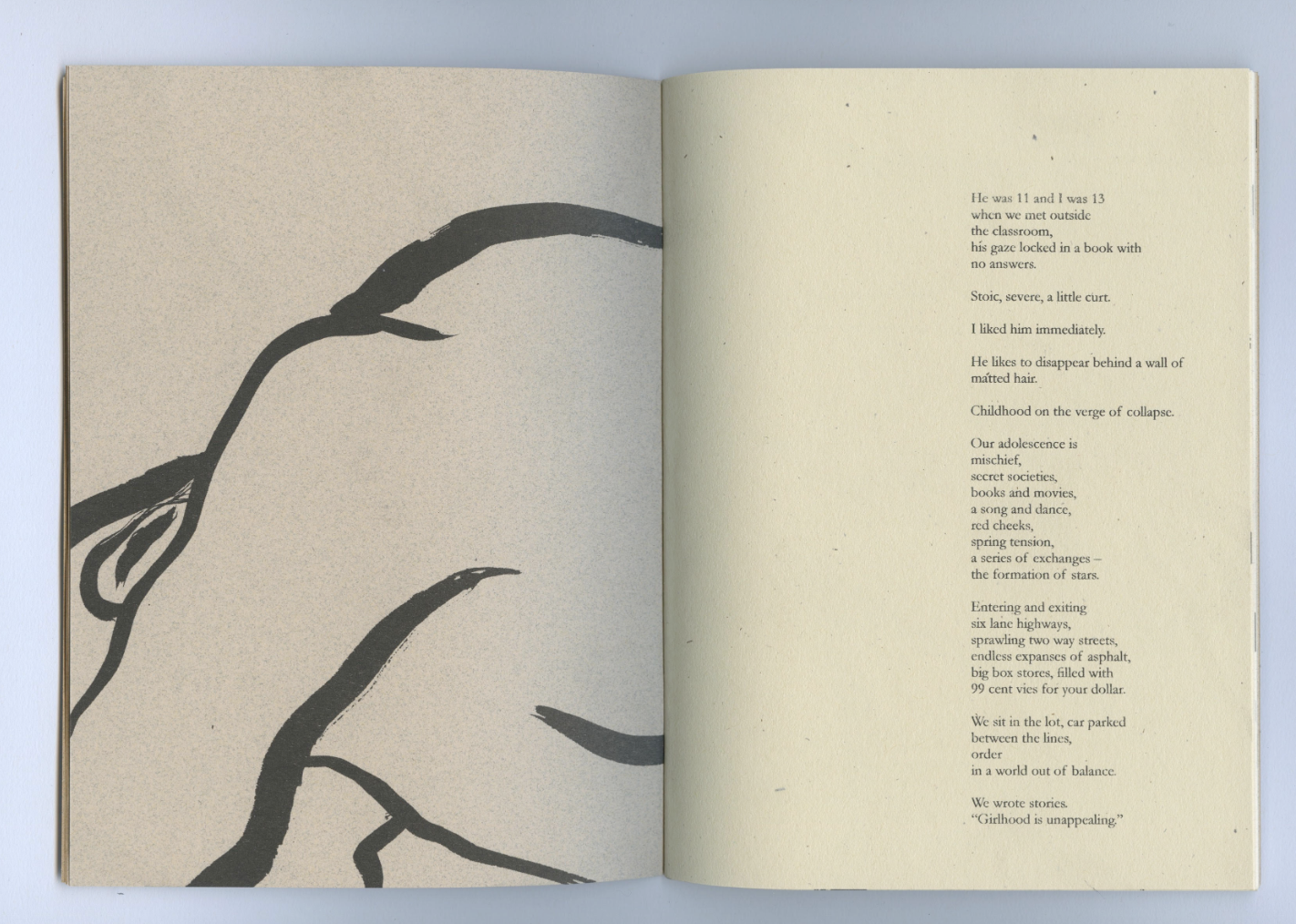
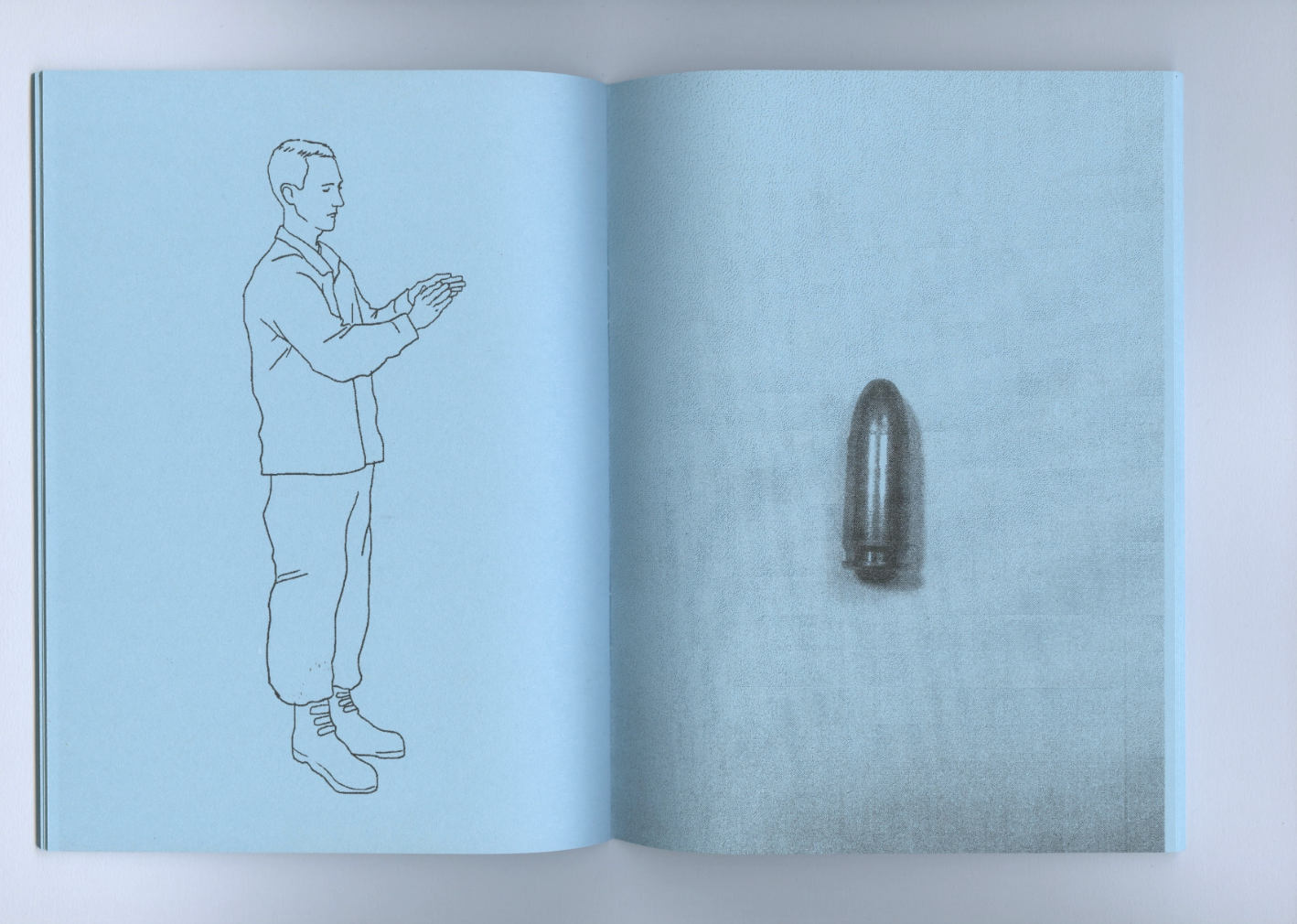
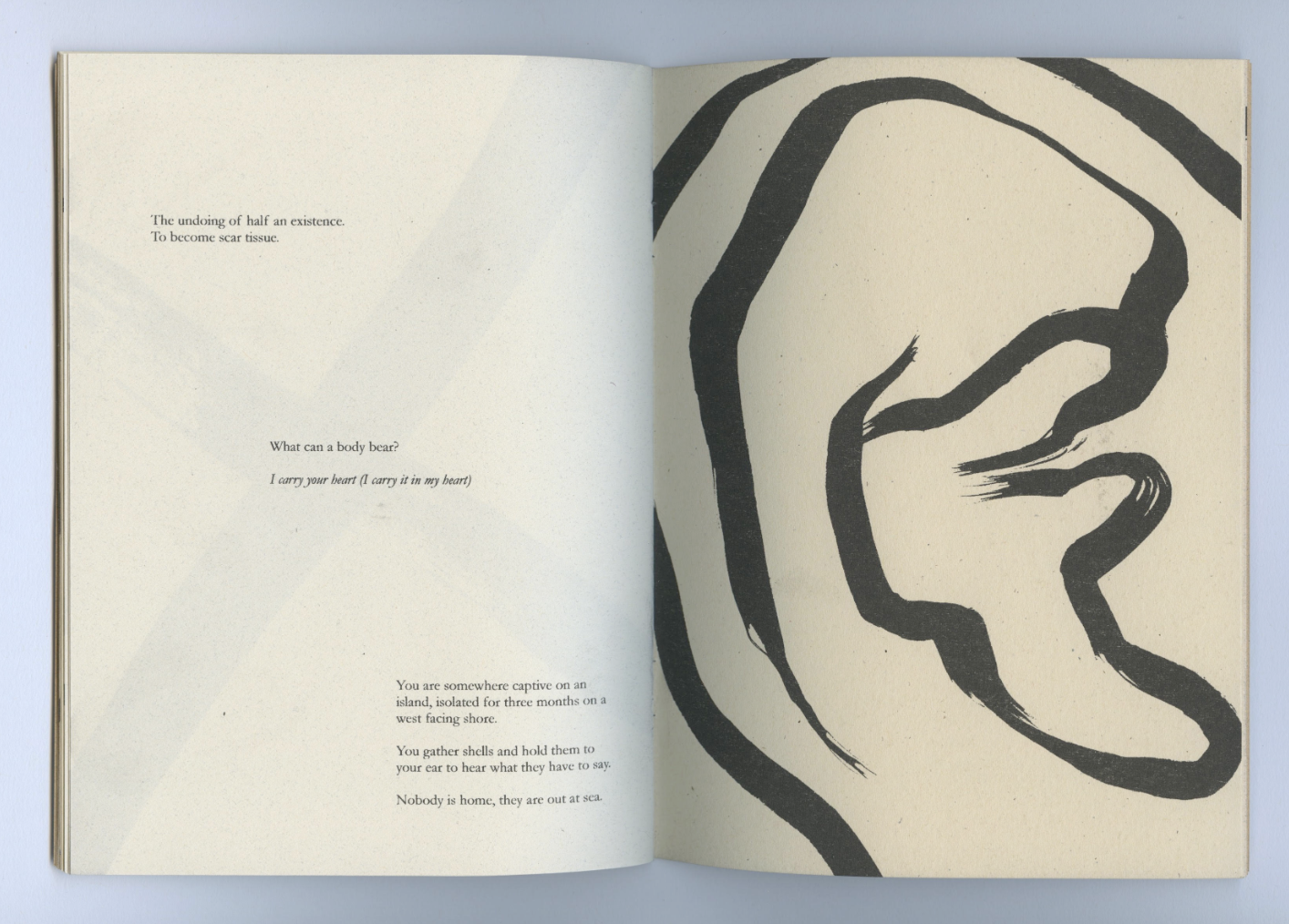
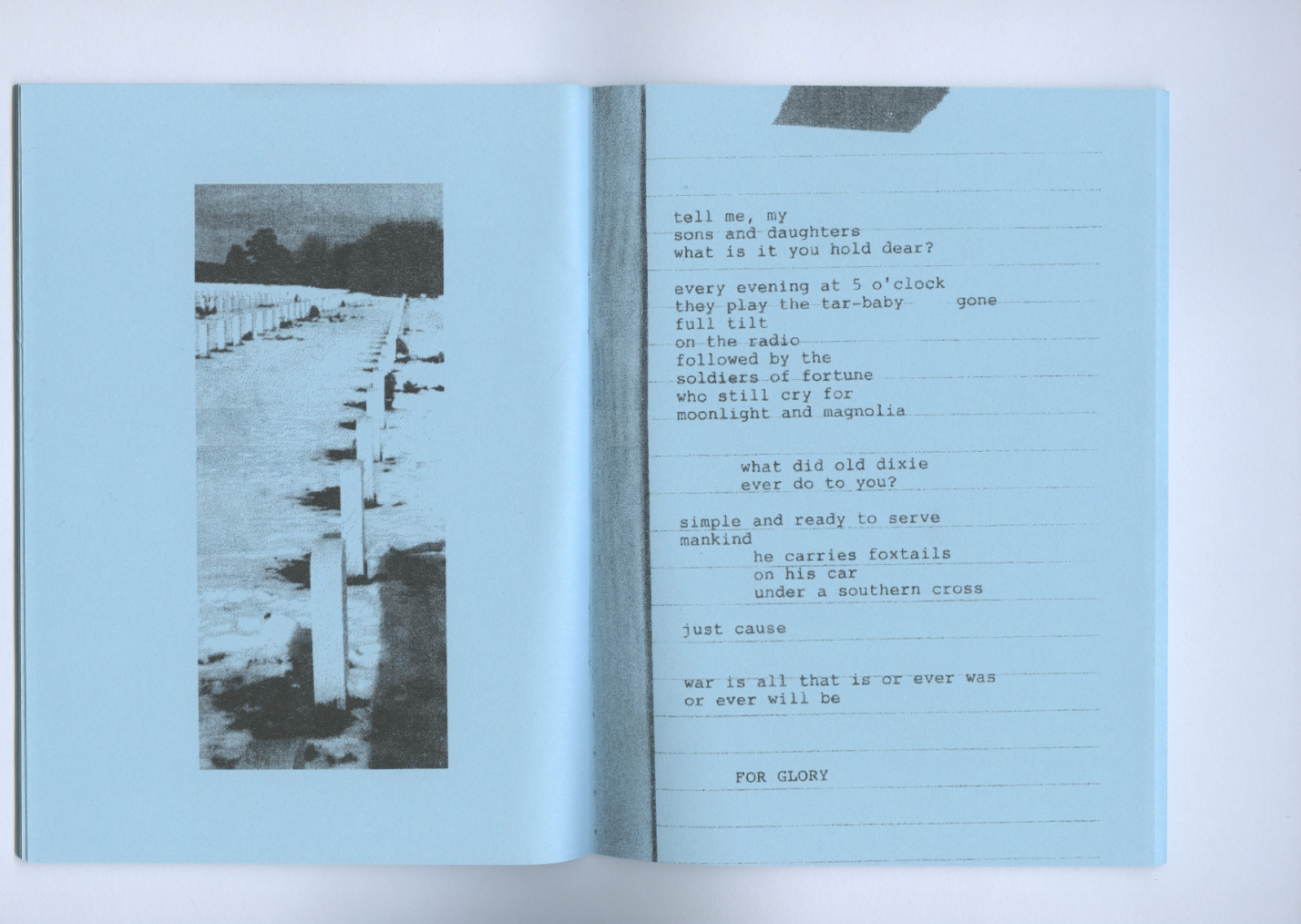
Screen Shot 2020-02-17 at 5.31.28 PM.png Screen Shot 2020-02-17 at 5.31.34 PM.png Screen Shot 2020-02-17 at 5.31.39 PM.png Screen Shot 2020-02-17 at 5.31.44 PM.png Screen Shot 2020-02-17 at 5.31.49 PM.png Screen Shot 2020-02-17 at 5.31.54 PM.png Screen Shot 2020-02-17 at 5.32.09 PM.png


VKN: In your bio, it’s written that “through drawing, writing, and performance, her [Tiffany Lin] work investigates the nebulous distinction between want, need, and desire in context of political and capitalist spectacles. What have you discovered, so far, about want, need, and desire? Has your investigation surprised you? Redefine your aesthetics? Or has it ever misguided you? What kind of growth do you imagine for a consumer of your work to experience through your investigation? Do you wish that they de-consume? Or overconsume?

TL: I’ve discovered that one of the unifying themes between want, need, and desire is hurt. Or a sense of loss, emptiness. Whether it is for want of food, water, shelter to the more surface desires such as luxury goods, there is a sense that without said object that the subject is lacking and incomplete. I specify political/capitalist spectacle because I think it’s important to contextualize my practice in the 21st century where the amount of advertising we consume is unfathomable. Codes are created to predict our behavior. The market wants to be our psychiatrist. They know are deepest insecurities and a greatest wish; if they don’t, they’ll try to manufacture it in the deepest recesses of your mind. These psychological operations are not new, but they have reached new levels of saturation with advances in technology and communication.

My investigation has surprised me but not in ways I anticipated. Many of my works are derived from formal/informal interviews with leading questions, and the impact of Donald Trump’s election in 2016 was palpable in people’s responses to what they “wanted” out of a President, or what they “needed” to happen to fulfill their lives. These conversations often turned ugly because there is a thread within the American psyche that suggests all good things come to those who work for it. Though that dream has proven to be a fallacy over and over again, I find that the working class (like my parents, who fully believe in the Dream) do not ever discredit the state or larger systems. An easier psychological solution to pivot their anger and resentment toward their fellow man. My initial response was to balk and grow angry, but I learned from this logic that our narratives of want are rooted in so much more than consumer goods and quality of life, but rather notions of agency that allows the ideal “American citizen” to fully self actualize. What is a citizen anyway?

I have been misguided for sure, mostly in that the conversations were almost always emotional in having to contend with heavy realities - drug addiction, food and housing insecurity - what could an artist truly offer to resolve these problems? Can a work of art feed the hungry? There are days where I think art is useless. Other days I think it is the only thing that will save and outlive us.

My hope is that people view my artwork and feel greater empathy toward others. That somehow, through the reinterpretation of public vs. private sector vernacular, people question their relationship to consumerism and nation. Yes, generic beauty pageant response but I believe in WORLD PEACE. Once people develop more genuine connections with one another they may ultimately “de-consume” material objects as interpersonal relations take priority, but that is not my explicit goal.

VKN: Your visually performative, “patriotic” chaplet “A Manual by Codes” is both tender and technical, visually ascetic and sharp, didactic and irreverent, and exhibits many shades of political and personal inquiries and it (possibly rhetorically) asks, “tell me, my sons and daughters what is it you hold dear? So if I may ask the book to ask you: tell me, Tiffany Lin, what is it you hold dear?”

TL: I hold dear the elements to which I belong. I like to remember we’re carbon made - my found family, blood family, strangers. When making the chaplet, I wanted to rethink justifications surrounding war and violence. When is sacrifice acceptable? What loss hurts the most and why? The book is a reminder that at the end of the day, you, like me, like her, like him, like they, like it - shit, piss, bleed, and will die. Mortality anchors the work.

Screen Shot 2020-02-17 at 5.35.42 PM.png

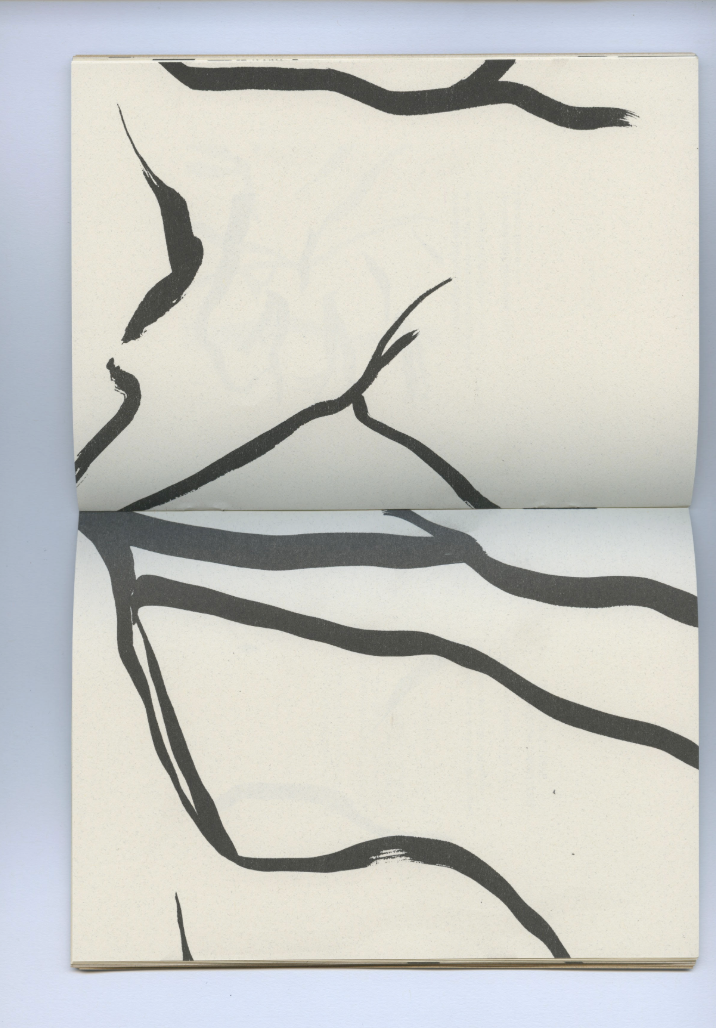
VKN: Can you talk about this illustration? Can you talk to us about your process of creativity? From the seed of conception to its end product? What is the one thing that you have learned from the process? Or what would empower you to refrain? Or do you tackle all of your visual works with some impulsion and immediacy?

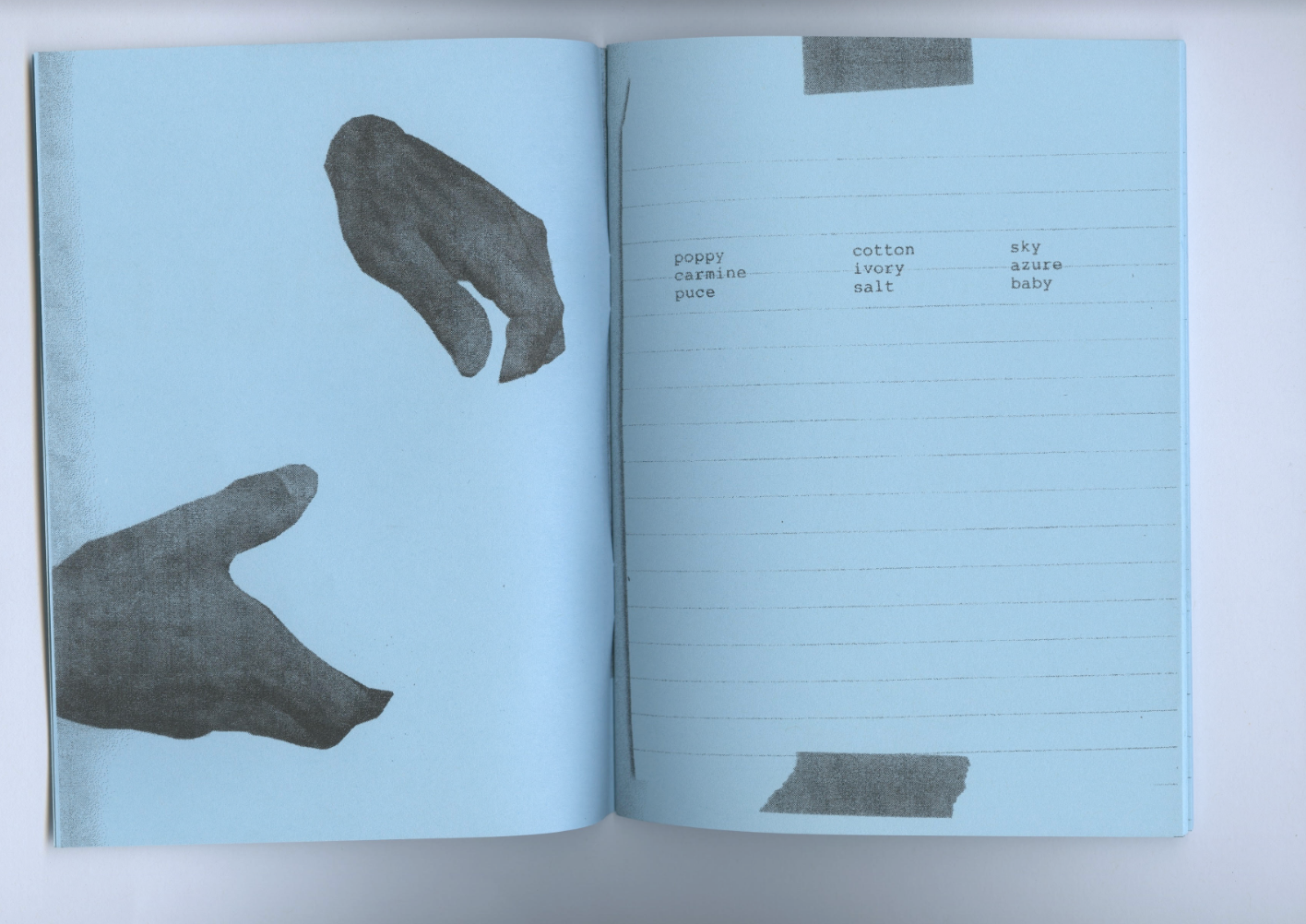
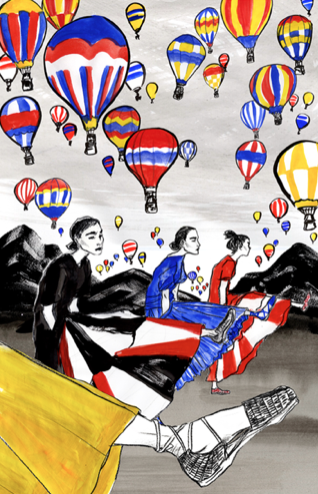
TL: This editorial work was created as a response to a Lifestyle Illustration assignment in graduate school. I chose to work with Hermes’ Resort 2017 line (here). Each work (illustration, performance, writing) starts with drawing as a meditative and experimental practice. In this case, since I was responding to a prompt, I was more cognizant of color palettes and visual ambiance that would not distract from the clothing and elevate it in a playful and appetizing way.

I first work in analogue media and scan each component for more creative flexibility when I transfer it to a digital platform. Especially when working with a client that may change their mind quickly about placement, colors, or nitpick angles and stray hairs, it’s nice to be able to edit the piece quickly without tearing your hair out about having to redo an entire painting from scratch.

Impulse and immediacy are words that resonate with me. There is something critical in that first mark - conviction and confidence become lost the more you belabor the form. My media of choice is ink, crayon, charcoal, and gouache. Textures are often done by hand and retain a feeling of a living, breathing image to an otherwise dead mark rendered soulless by digital software. However, integrating digital tools into illustration has allowed me to continue working in this manner while still being efficient in the way things are moved around. Think of it as constant digital collage.

VKN: You work in a variety of mediums (lithography, drawing, painting, performance, a census collector), which one could you live without? Meaning, which medium or medium of expression would make the engine of existence worthy of adding more fuel, spare parts, or appetite for posterity. I used to think art is dead, but when I sit with your work, I have arrived to a small conclusion that art doesn’t always have to be overarching or dramatic - that it could speak or excel in the language of subtlety. An excellent example of this is your chaplet/chapbook titled “BECOMING, a letter” - it’s very poetic, compassionate with an element of un-enslaved detachment, and massively encouraging in the sense, place, and its time of acceptance. Can you talk about this book? Can you talk about the design of the cover? Two circles in ochre(?) and two smaller circles connected by one line? Does it reflect or is it in conversation with this linguistic line, “Two necessary shifts in orbit.” And, could you talk more about the significance of this tenderness, “Darling, There are no lies between us, only nervous hesitation toward an awakening.”

TL: I can’t live without drawing - it is the foundation of everything I do. I’m a big fan of sketchbook experimentation. It is how I think out loud.

In terms of what is more has fallen out of use, I have not worked as a true printmaker (as in working collaboratively with another artist) in a few years. I realize I am better suited to executing my own projects. However, lithography taught me important life lessons about patience, process, consistency, and the art of failure.

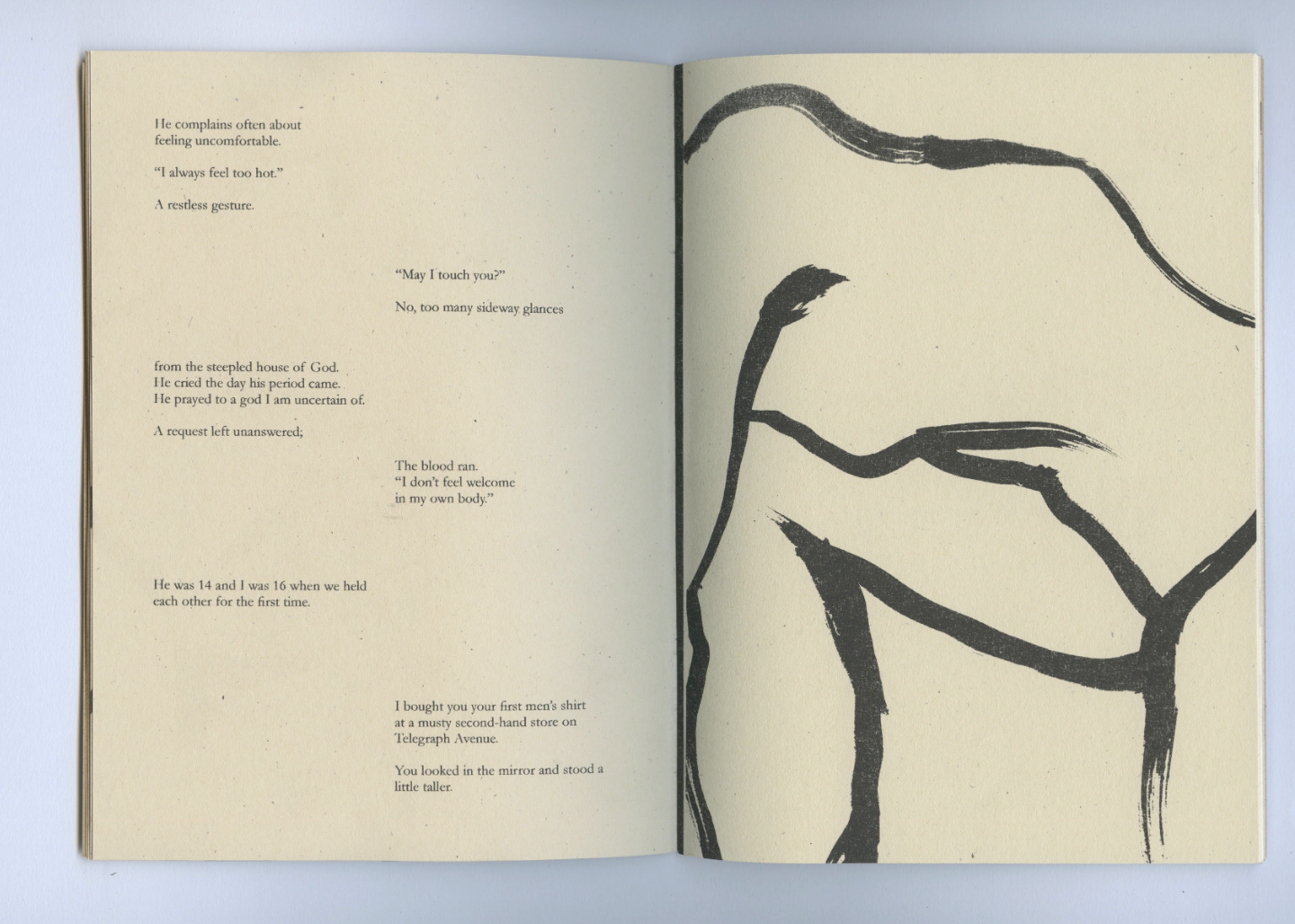
The book is probably my most emotional and intimate work to date. I wrote the initial text in 2015 when my partner (at the time) was at a major psychological low in grappling with his gender dysphoria. I wrote the essay as a way to acknowledge his desire to transition from female to male, to live his life as a man. I remember him telling me that transitioning is an imperfect solution to one’s material reality.

The cover is a diagram of binary stars, meaning two stars that orbit around a central mass. Our universe is dominated by multiple star systems, meaning the stars are bound together by gravitational force, even after they die. From our vantage point, they appear as one star but are actually two (or more) in constant rotation. I think it is an apt metaphor for me and my ex-partner’s relationship. We still remain very close to this day.

It’s a relationship I have difficulty defining, especially in conventional (see: BASIC) predominantly heterosexual/straight spaces. How to describe a love that is so completely and utterly unconditional? To me it speaks of the power of queer love that transcends bodily reality. Yes, the diagram is in conversation with that line as the orbits never truly “shift” but they may grow further apart or closer together over time, sometimes transferring mass to the other.

That last line is about intuition and knowing. We separated in Philadelphia in the summer of 2016 and he left behind a letter apologizing for “lying” to me about his desire to transition. But I do not see it as a lie. I see him for who he is, who he desires to be. We both knew something was amiss but neither of us had the language or resources at the time to articulate what he needed to “awaken” and arrive at his true expression of self. We grew up together. He is my best friend. He is a much more joyous person following his transition and that has been an amazing experience to see.

VKN: If I may extract some practical wisdom from you, what is the best way to deal with economic hardship, Tiffany? If you could advise from an artist to another?

TL: I don’t have a good answer to this one. The best thing I can advise is to stay honest with yourself, surround yourself with good people (and I mean ACTUALLY GOOD PEOPLE - it will take time to intuit), keep creating work and follow what feels right. Your confidence will waver from time to time, that’s ok. Acknowledge that the path of an artist is difficult; it is not linear and therefore infinite in possibility. It is possibly the most overwhelming industry to be in. Yes, you’ll have to hustle. Know that some days you will have to compromise but always take care of yourself. Too much top ramen will destroy you. Couch surfing will eventually wear you down. When I was working five (stupid) jobs in San Francisco, a mentor kept telling me that “The sword is forged in the fire.” If I were to get really nitty gritty, I would say find a job that can get you by but never lose focus. Wait tables, gut the gig economy for whatever it's worth, pawn your jewelry, roll the dice - but remember to nourish and feed your creative process. Persist!!

VKN: If Andy Warhol kept your most brilliant art piece and then informed you later that he lost it when in fact he didn’t, would you shoot him with a pistol like Valerie Solanas? What would you do to him for betraying you or leading you on? In other words, what is the best enactment of (nonchalant) revenge on another? Another artist? If there is such a thing as a casual, nonchalant venom.

TL: Yes, I would shoot him. But maybe that would be too easy.

Perhaps it would be more poetic to concoct a more elaborate plot, a long term defamation campaign.

But in more seriousness, I’d probably let it go. Revenge and bitterness take up too much mental energy. I’d rather redirect my energy into happier things. But therein lies the nonchalant revenge you speak of - achieving success despite the setbacks and thievery!

VKN: Which one would you choose? A door a window? In other words, what is your ideal romantic love? TL: Door. Clear entrance and exit strategy.

Two people coming together and understanding the terms of engagement.

Secure infrastructure.

VKN: Do you don’t think the window has the same clear exit strategy?

TL: It involves too much glass shattering.

VKN: What is your favorite kind of sofa? Or what is the sexist art object you have ever laid eyes on? In your eyes, what is the best Asian artist working on any medium today? This is non-sequitur, but I was preparing for this interview and I accidentally studied this other woman’s art/design (http://www.tiflindesign.com) who shared the same first and last name with you (lol), and I did wonder for a second if you have ever reached out to other Tiffany Lins in the world and ask if they are willing to collaborate with you on an artistic feat/project?

TL: [ UPDATE! ] Since conducting this interview, I caved and bought a sofa off of craigslist. It’s very modern and has shaker furniture elements. It is not very practical for sleeping on but is firm and keeps me alert while I read.

Sexist art object… is everywhere… I can’t decide. Am I supposed to sit on it?

Haha, yes, down the line I would like to create a video series around “common” names, mostly among 1st and 2nd generation Americans - popular combinations like Tiffany Lin or Christine Lee, Grace Kim, Maria Rodriguez, Andrea Gutierrez, etc. I would have them face the camera and say “My name is [INSERT NAME HERE] and I am a public menace.” My twin is named Tiffany Lin, she is 5 days older than me and grew up in the same neighborhood. She currently works as a nurse. Our parents are derived from the same practical Taiwanese stock, giving us names that were easy to pronounce and would allow us to assimilate more easily into American society.

Best Asian artist… Mel Chin is a pretty cool dude.


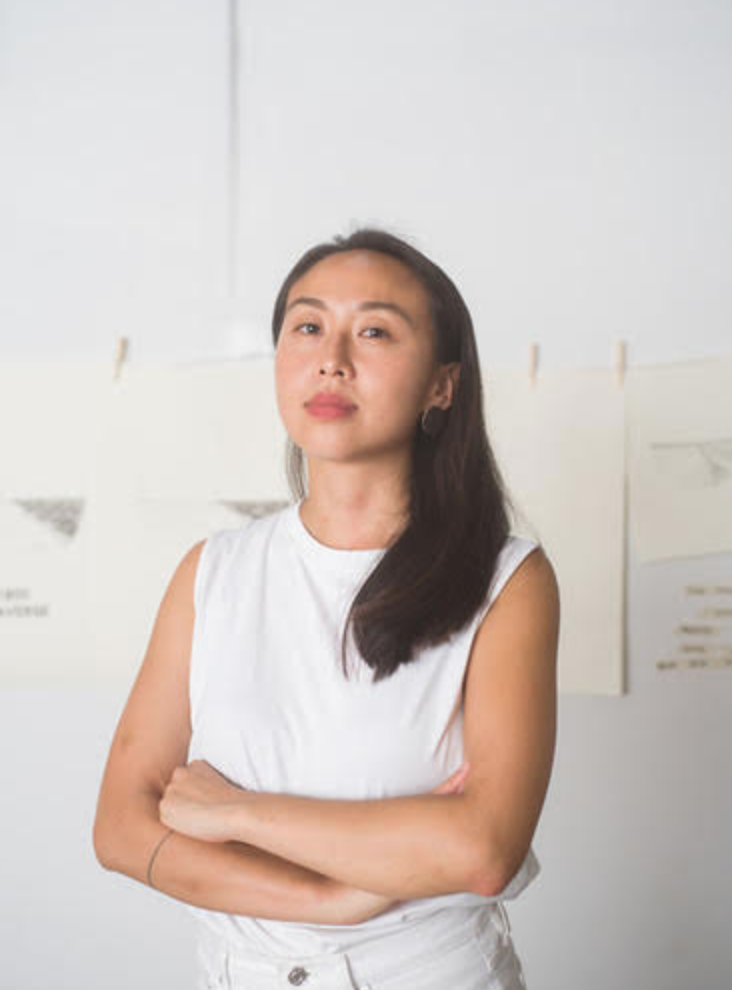
Tiffany Lin is an interdisciplinary artist, educator, and wordsmith. Her projects investigate nebulous distinctions between want, need, and desire in context of capitalist spectacle and corporeal intimacy. She holds an MFA from the Maryland Institute College of Art in Illustration Practice and a BA in Gender & Women’s Studies and Psychology from the University of California, Berkeley. Lin currently lives and works in Las Vegas, NV where she joins the Department of Art at the University of Nevada, Las Vegas.

VI KHI NAO is the author of Sheep Machine (Black Sun Lit, 2018) and Umbilical Hospital (Press 1913, 2017), and of the short stories collection, A Brief Alphabet of Torture, which won FC2’s Ronald Sukenick Innovative Fiction Prize in 2016, the novel, Fish in Exile (Coffee House Press, 2016), and the poetry collection, The Old Philosopher, which won the Nightboat Books Prize for Poetry in 2014.  Her work includes poetry, fiction, film and cross-genre collaboration. Her stories, poems, and drawings have appeared in NOON, Ploughshares, Black Warrior Review and BOMB, among others. She holds an MFA in fiction from Brown University, where she received the John Hawkes and Feldman Prizes in fiction and the Kim Ann Arstark Memorial Award in poetry. 


In Art, Interviews Tags Vi Khi Nao, Tiffany Lin, art
Comment
← Newer Posts Older Posts →
Featured
‘in the glitter-open black' — poetry by Fox Henry Frazier
'poet as tarantula,  poem as waste' — poetry by  Ewen Glass
'poet as tarantula, poem as waste' — poetry by Ewen Glass
'Hours rot away in regalia' — poetry by Stephanie Chang
'down down down the hall of mirrors' — poetry by Ronnie K. Stephens
'Grew appendages, clawed towards light' — poetry by Lucie Brooks
'do not be afraid' — poetry by Maia Decker
'The darkened bedroom' — poetry by Jessica Purdy
'I am the body that I am under' — poetry by Jennifer MacBain-Stephens
instagram

COPYRIGHT LUNA LUNA MAGAZINE 2025