


Alex Vigue is a queer writer from a small town in Washington State. He has a bachelor’s degree in creative writing from Western Washington University and has been recently published in Peach Mag, Chronotope, and Homology Lit. His debut chapbook “The Myth of Man” was published by Floating Bridge Press. He is the co-host of Literary Merit, a queer podcast about celebrating guilty pleasures in media.
Read More
Poetry by Laura Linart
Laura Linart is a poet and writer based in New York City. Her poems have appeared or are forthcoming in publications such as Green Mountains Review, The Rumpus, Pembroke Magazine and 580Splits. Say hi to her on Twitter or IG @Pennyscientist
Read More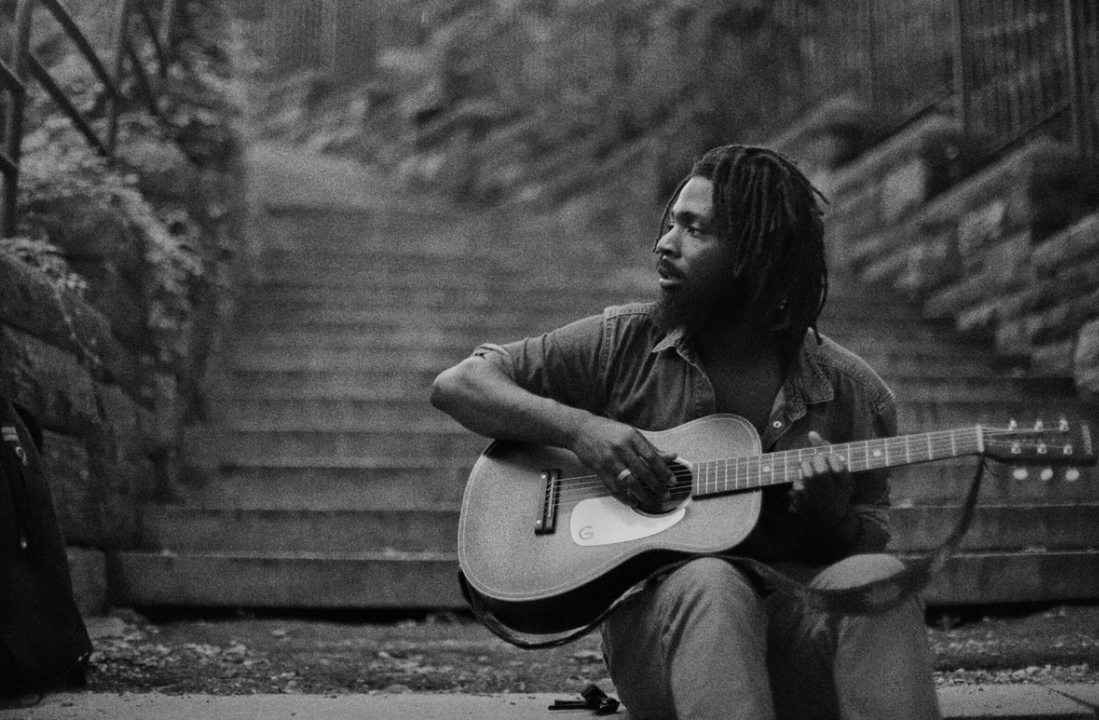
Marcus Jade
Listen to Marcus Jade's Chilling New Album
Joanna C. Valente is a human who lives in Brooklyn, New York. They are the author of several books, including Marys of the Sea, #Survivor (2020, The Operating System), and Killer Bob: A Love Story (2021, Vegetarian Alcoholic Press). They are the editor of A Shadow Map: Writing by Survivors of Sexual Assault and received their MFA in writing at Sarah Lawrence College. Joanna is the founder of Yes Poetry and the senior managing editor for Luna Luna Magazine. Some of their writing has appeared in The Rumpus, Them, Brooklyn Magazine, BUST, and elsewhere. Joanna also leads workshops at Brooklyn Poets. joannavalente.com / Twitter: @joannasaid / IG: joannacvalente / FB: joannacvalente
Read More
Get Cozy with This Winter Playlist
Joanna C. Valente is a human who lives in Brooklyn, New York. They are the author of several books, including Marys of the Sea, #Survivor (2020, The Operating System), and Killer Bob: A Love Story (2021, Vegetarian Alcoholic Press). They are the editor of A Shadow Map: Writing by Survivors of Sexual Assault and received their MFA in writing at Sarah Lawrence College. Joanna is the founder of Yes Poetry and the senior managing editor for Luna Luna Magazine. Some of their writing has appeared in The Rumpus, Them, Brooklyn Magazine, BUST, and elsewhere. Joanna also leads workshops at Brooklyn Poets. joannavalente.com / Twitter: @joannasaid / IG: joannacvalente / FB: joannacvalente
Read More
5 Books I'm Excited for in 2020
BY JOANNA C. VALENTE
Here’s a small peak into what 2020 has in store for us, thanks to these wonderful authors and small/indie presses (and of course, stay tuned for more lists for upcoming books). Check out this list for five other books.
Kelly Grace Thomas - Boat Burned (YesYes Books)
It’s hard not to be excited by a book blurbed by Paige Lewis, sam sax, Jennifer Givhan, and Tiana Clark - all poets I adore. Sax wrote, “In this remarkable inaugural collection, Kelly Grace Thomas reminds us water is where we are from, water is what we are made of, and water is where we’ll return.” That’s enough to convince me.
Read an excerpt here:
“They say tell me
a story and you never know
the right way to spill.
This is the one where you
and your father tied
yourselves to dark. Sailed
all night to make it
to Florida. Holding only a memory
of sleep. This was the biggest
goodbye.”
Nelson Simón (translated by Lawrence Schimel) - Itinerario del olvido / Itinerary of Forgetting (Skull + Wind Press)
I’m so excited about this collection (and this press!). As the press wrote on the site, the book is “ a sixteen-part series from Nelson Simón’s award-winning collection A la sombra de los muchachos en flor, which won both the Julián del Casal Poetry Prize from La Unión de Escritores y Artistas de Cuba and later the Premio de la Crítica Literaria. Itinerary of Forgetting is Simón’s first publication in English and has been translated by Lawrence Schimel. Simón’s work tackles both homosexuality & politics (an act both bold and brave for an openly gay writer in Cuba in the late 90s) while at the same time situating itself within the lyric traditions of both Cuba and the larger Spanish-speaking world.”
Kerrin McCadden - Keep This to Yourself (Button Poetry)
McCadden’s collection deals with family and grief, which is a world all of us know well. Her poetry cuts through the body like a knife slicing an apple that isn’t an apple. You can experience this for yourself, and read a poem here:
“Sometimes I pray. Want to know what else? That first day?
I stayed home and left my students with a substitute
who got mad at them when they cried. I also did that. “
Arhm Choi Wild - Cut to Bloom (Write Bloody)
I’ve been a reader of Wild’s work for some time now, and it’s always been powerful, full of wisdom, and unafraid. So, naturally, I’m excited for this monumental collection to come out. The book centers around identity, survival, trauma, and what it means to be American.
Read a poem of Wild’s here:
“It is for the cost of loving this country,
of finally feeling like I fit in,
like I have found the people
to whom I belong.
Gay people don’t exist in Korea,
and I am holding back a tongue
that could break this mirage
because seeing men not afraid to hold hands
and fix each other’s ties is too beautiful—
beautiful like a kiss
in the naked soft of morning,
beautiful like a mother
welcoming her daughter home.”
Abayomi Animashaun (editor) - Far Villages: Welcome Essays for New and Beginner Poets (Black Lawrence Press)
Give more more books about writing. They’re so essential for everyone at every stage in their writing life, and are so often underrepresented and/or talked about. For beginners, we all need a guide. But for writers of experience, they can get us out of own heads.
Joanna C. Valente is a human who lives in Brooklyn, New York. They are the author of Sirs & Madams, The Gods Are Dead, Marys of the Sea, Sexting Ghosts, Xenos, No(body), #Survivor: A Photo Series (forthcoming), and A Love Story (Vegetarian Alcoholic Press, 2021). They are the editor of A Shadow Map: Writing by Survivors of Sexual Assault and the illustrator of Dead Tongue (Yes Poetry, 2020). They received their MFA in writing at Sarah Lawrence College, and Joanna is the founder of Yes Poetry and the senior managing editor for Luna Luna Magazine.
5 Books to Watch Out for in 2020
Joanna C. Valente is a human who lives in Brooklyn, New York. They are the author of several books, including Marys of the Sea, #Survivor (2020, The Operating System), and Killer Bob: A Love Story (2021, Vegetarian Alcoholic Press). They are the editor of A Shadow Map: Writing by Survivors of Sexual Assault and received their MFA in writing at Sarah Lawrence College. Joanna is the founder of Yes Poetry and the senior managing editor for Luna Luna Magazine. Some of their writing has appeared in The Rumpus, Them, Brooklyn Magazine, BUST, and elsewhere. Joanna also leads workshops at Brooklyn Poets. joannavalente.com / Twitter: @joannasaid / IG: joannacvalente / FB: joannacvalente
Read More
A Review of Kristin Garth's 'Shut Your Eyes, Succubi'
BY MONIQUE QUINTANA
Kristin Garth’s chapbook, shut your eyes, succubi ( Maverick Duck Press, 2019) , is both delightful and frightening, a conjuring of girlhood with a form inclined to romance-- the sonnet. A prolific sonneteer in a digital age, Garth understands that while some memories seem as distant as old TV sets and radio fuzz, certain characters are bright and alive and fun in our psyche and they turn up in the most opportune places.
This was the first time I read poetry with handwritten annotations, which added a poignant whimsy to the experience. As I moved further and further into the poems, each character seemed to be linked together by the same dark energy. In “Eat Me”, objects, fashion, and delicacies push each line to a sexual moment. There is no meek girl Alice of yesteryear, rather a woman who has autonomy in a scene. Stripped of masquerade, she dominates and commands as a true queen of hearts.
Two other standout sonnets are “ Claudia” and “Veruca Wants”. Both pieces reckon with the image and the sentiments of the brat girl, a girl decked with material things, who is much too grown-up for the world that she lives in. “Claudia” tells of Interview with the Vampire’s doomed enfant, a character who remains elusive in both Rice’s novel and the cinematic dreamscape of Neil Jordan’s 1994 take: “ Resolve to keep her safe at hand, but she / is something you don’t understand .”
The poem seems to acknowledge that we, the grand audience, both love and detest Claudia because she’s an unlikable girl, but also our beloved. Like “Claudia”, “Veruca Wants” made me take pause and look back at my girlhood. When I was small and I asked for material things or complained about things that were making me unhappy, my grandmother called me “Veruca” and waited for the sweet and stoic parts of me to return. Garth’s sonnet carries the want for decadence over to womanhood: “ Men / who’ll jump before she screams.” The sonnet plays with the idea that we create the very decadence that we need. It’s not the reaching for rich things, but when we’re compelled to articulate desire to the point of screaming.
Monique Quintana is the author of Cenote City (Clash Books, 2019) and holds an MFA in Creative Writing from CSU Fresno. Her work has appeared in Winter Tangerine, Queen Mobs Tea House and Acentos Review, among other publications. She is a Senior Editor at Luna Luna Magazine, Fiction Editor at Five 2 One Magazine, and writes about Latinx literature at her blog, Blood Moon. You can find her at moniquequintana.com
Every Body Has Ghosts by Cate McGowan
BY CATE MCGOWAN
Every Body Has Ghosts
Below a yellowed tree,
weeds fringe the driveway’s
borders. Anoles pump.
They jut, and the bigger
lizards skitter along
the yard’s edge. While
daylight’s needles stitch
threads up the spathodea,
seven DeKay’s snakes slue
like scarves through
the new ivy. Though
it’s already five o’clock,
I haven’t heard from you
yet. Not this week.
Not this month. You’re
gone without a word.
So far, only green silence.
Someone next door opens
a second floor window,
and a toddler shrieks
and shatters the stillness.
The child’s cry skylarks
the mimosa, shrinks,
then dissipates through
the evening’s haze. I shake
out our wet clothes.
In the breeze, the clothesline
snaps my red blouse
as it dances, my empty sleeves
waving in the wind to no one.
Cate McGowan is a fiction writer, essayist, and poet. Her work appears or is forthcoming in Norton's Flash Fiction International, Glimmer Train, Crab Orchard Review, Tahoma Literary Review, Crab Fat Magazine, Ellipsis Zine, Barrelhouse, Shenandoah, Into the Void, Louisville Review, Atticus Review, Vestal Review, Unbroken, and elsewhere. A native Georgian, McGowan's an Assistant Fiction Editor for Pithead Chapel and is pursuing her Ph.D. She won the 2014 Moon City Short Fiction Award for her debut short story collection, True Places Never Are, published in 2015, and her debut novel, These Lowly Objects, is forthcoming from Gold Wake Press.
Setting, Nourishing, And Ritualizing Intentions That Stick
BY LISA MARIE BASILE
I’ve always responded poorly to “resolutions.” To me, change is always best when it’s gradual and backed up by deep emotional reasoning rather than, “well, it’s a new year. I better overhaul something.” Also, I’m a rebel and a known self-sabotager, so if you’re like me, that approach probably feels too authoritarian and unnatural.
So I decided instead to set several small intentions — all of which will add to a vision. They’re not hard or fast or misaligned with my ethics or values; rather, they’re small ideas that I can add to my each and every day.
My intentions for this year is to spend at least a portion of each day on stress management or self-care (this is naturally open-ended) and to recalibrate my health behaviors around food and alcohol (again, no hard or fast rules; rather, the intention is to be aware and to make changes). So, every day I ask myself: Why am I doing this? What is the emotional connection for me?
I did this because being a writer, editor, author, and freelancer is hard when I am managing a chronic illness and a relationship. I did this because in all of that I’ve lost myself a bit and, along the way, I lost a sense of healthfulness.
So, from me to you, here are the guidelines I keep in mind when setting and managing intentions.
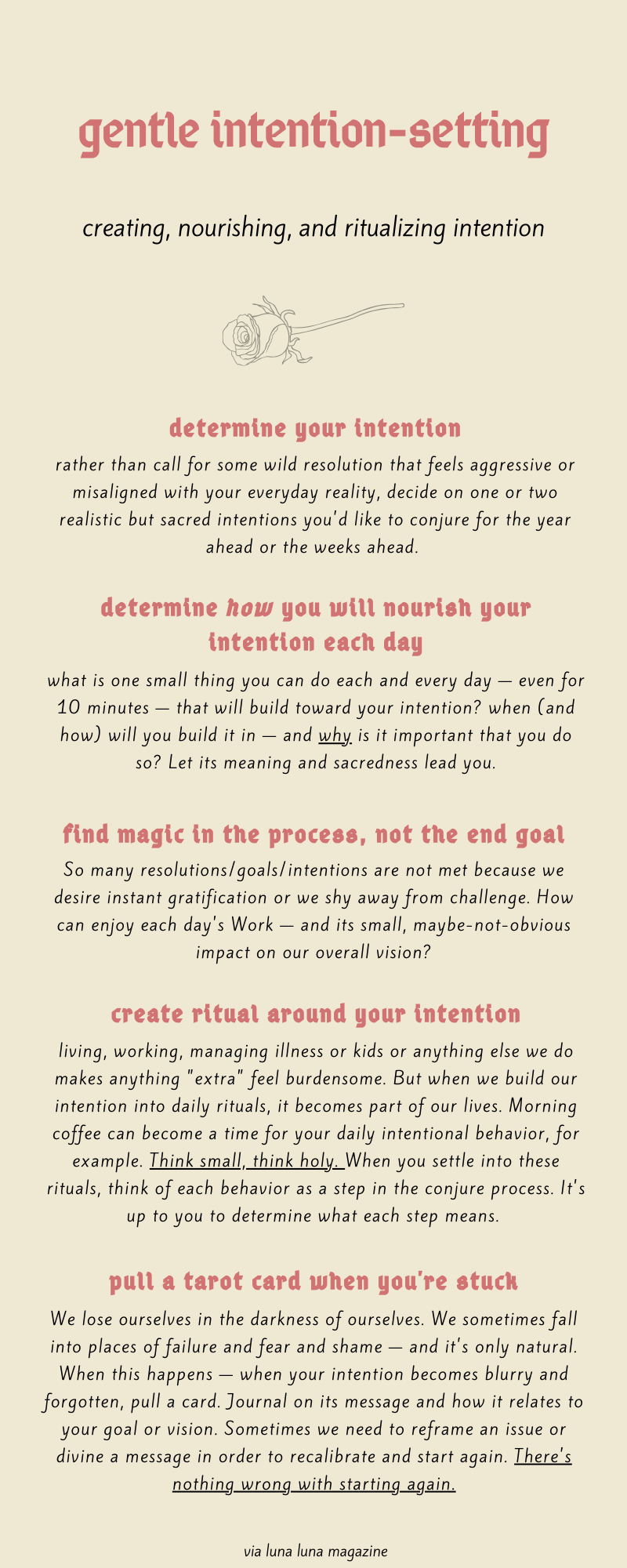
What are your intentions for the year ahead? Below, a downloadable infographic to use and keep on your end.
determine your intention
rather than call for some wild resolution that feels aggressive or misaligned with your everyday reality, decide on one or two realistic but sacred intentions you'd like to conjure for the year ahead or the weeks ahead.
determine how you will nourish your intention each day
what is one small thing you can do each and every day — even for 10 minutes — that will build toward your intention? when (and how) will you build it in — and why is it important that you do so? Let its meaning and sacredness lead you.
find magic in the process, not the end goal
So many resolutions/goals/intentions are not met because we desire instant gratification or we shy away from the challenge. How can we enjoy each day's Work — and its small, maybe-not-obvious impact on our overall vision?
create ritual around your intention
living, working, managing illness or kids or anything else we do makes anything "extra" feel burdensome. But when we build our intention into daily rituals, it becomes part of our lives. Morning coffee can become a time for your daily intentional behavior, for example. Think small, think holy. When you settle into these rituals, think of each behavior as a step in the conjure process. It's up to you to determine what each step means.
pull a tarot card when you're stuck
We lose ourselves in the darkness of ourselves. We sometimes fall into places of failure and fear and shame — and it's only natural. When this happens — when your intention becomes blurry and forgotten, pull a card. Journal on its message and how it relates to your goal or vision. Sometimes we need to reframe an issue or divine a message in order to recalibrate and start again. There's nothing wrong with starting again.
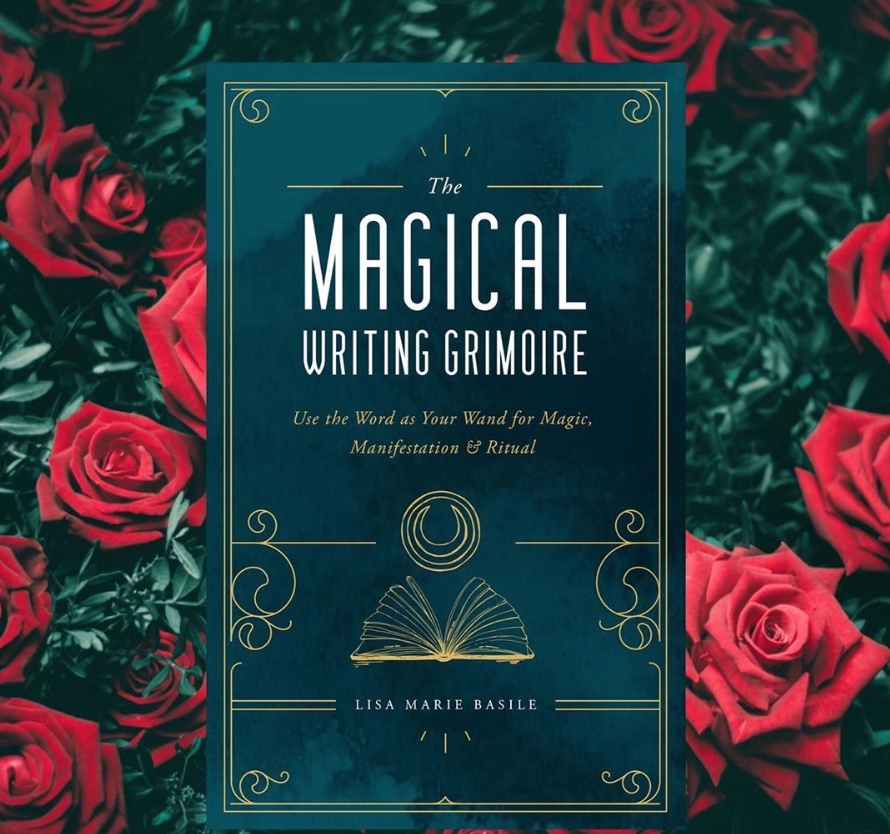
A Guide For Witches and Writers: "The Magical Writing Grimoire"
What Is The Magical Writing Grimoire? Is it for witches or writers — or both?
The Magical Writing Grimoire is a book of inclusive and accessible rituals and writing prompts for anyone who feels called to using words as a source of healing, empowerment, joy, generativity, and self-exploration. It is designed to integrate ritualistic living and to incorporate sacredness into our lives in meaningful and easy ways.
It’s for witches and non-witches (including people with secular beliefs, like myself), although of course it’s heavily based off the archetype of the witch: The witch, to me, is strong, rebellious, empowered, empathic, and bold as fuck. The witch is also conscious — of the self and others and the earth. So, it works heavily with archetypes and symbols, but it invites people who have specific beliefs to incorporate their beliefs into the work.
Really, the book is about tapping into and using your own power, your own voice, your own ideas.
It’s for writers and non-writers — anyone who is interested in the sacred, beautiful power of poetry or journaling or letter-writing, or timing writing practices to nature’s ebb and flow.
It also focuses heavily on shadow work — or unearthing the silenced, dark, shadowy parts of the self.
What will readers find within its pages?
Lots of rituals, lots of writing prompts, meditations, quotes from the most inspirational and wonderful people and writers, poems I wrote myself, glimpses into my personal life, and so much more. Plus, it’s really beautifully illustrated.
What is the inspiration behind The Magical Writing Grimoire?
The book was gestating in my mind for several years, but I didn’t know what its shape until the past year or so; I knew I wanted to write a writing guide — one that balanced the ritualistic with the pragmatic and every day, one that used writing as a form of magic. More than using the occult in order to generate writing, it’s about using writing to make your life more magical.
It starts with the word and ends with the word.
It’s deeply rooted in recovering from pain and trauma. When I was younger, the number one thing that got me through times of extreme trauma (family separation, foster care, CPTSD, financial instability, chronic illness) was writing. Writing gave me my voice back. It was a tool for reclamation. But more so, it was a tool for joy, creativity, and empowerment.
The ability to write is a privilege for many of us, but it’s also a free tool that can help save us. I’ve seen writing help women in domestic shelters, college students move through self-esteem issues, and incarcerated individuals tell their story. It is something sacred in itself because with our words we are taking nothing and making it into something.
So I wanted to design a gentle but effective book that people — especially any marginalized community — could use to tap into their truth and self, in a way that felt right for them. It’s guided, but it allows space for reinterpretation and individuality so that anyone can tap in.
Is it similar to Light Magic for Dark Times?
It is, and it’s not. Like Light Magic for Dark Times, it is grounded in accessibility and inclusivity. It also offers different (but looser) chapter focuses, like manifestation, mindfulness, healing, conjuring your voice, creating a grimoire, and more.
Unlike Light Magic for Dark Times, it provides a much deeper dive in terms of the rituals and the writing prompts, and it’s filled with poetry and quotes to meditate on. It’s also much more about the process of long-term self-exploration (and excavation!) than about quick, one-off rituals for different purposes. I think the two actually pair super well together!
What are your beliefs?
I’m secular (for lack of a better, more nuanced word), so I don’t work with or believe in gods, goddesses, angles or other deities. However, I work closely with the natural world (especially the power and energy of water), shadow work, energy, archetypes, and symbols. For example, I see the elements as powerful tools, offering lessons and glimpses of the purity of aliveness — and I see the astrological signs as symbols of the human condition.
When does the book come out?
It’s born on April 21, so it’s a Taurus! But let’s be honest — it was finalized and sent to the printer during Scorpio season. It’s very much a Scorpio book — it’s dark, intense, powerful, and transformative. But, like a Taurus, it wants to find beauty, comfort, and artistry. And because it comes out in the Spring, it’s a great way to kick off the new year with energy, creation, and rebirth.
People are already saying some really kind things about it, and it’s included in a few Most Anticipated lists, like in Cunning Folk and over at Patheos by Mat Auryn.
PREORDER THE MAGICAL WRITING GRIMOIRE NOW!
If you do, send preorder proof of purchase to magicalwriting@quarto.com and you’ll receive downloadable prompts and magical poetry to power up your magic.
PS: Follow the book’s journey on Instagram at @Ritual_Poetica.

A Playlist to Start 2020 on the Right Note
Joanna C. Valente is a human who lives in Brooklyn, New York. They are the author of Sirs & Madams, The Gods Are Dead, Marys of the Sea, Sexting Ghosts, Xenos, No(body), #Survivor, (forthcoming, The Operating System), and is the editor of A Shadow Map: Writing by Survivors of Sexual Assault. They received their MFA in writing at Sarah Lawrence College. Joanna is the founder of Yes Poetry and the senior managing editor for Luna Luna Magazine. Some of their writing has appeared in The Rumpus, Them, Brooklyn Magazine, BUST, and elsewhere. Joanna also leads workshops at Brooklyn Poets. joannavalente.com / Twitter: @joannasaid / IG: joannacvalente / FB: joannacvalente
Read More
On Hope, Creativity, Spiritual Self-Care & Chronic Illness
BY NICOLETTE CLARA ILES
Throughout my adolescent and adult life, I have not known ‘wellness.’ In fact, mentally and physically I live with what would be described as ‘chronic illness’. Like the woodland hag who only knows the forest or the sea nymph who knows the depths of the sea only too well, I know illness. I also know joy in its fleetingness — the power of singing a favorite song from the top of your lungs — and what I often say has been a great addition to my coping toolbox: Creativity.
Living with various diagnoses, their forms changing and taking on new names with fresh manifestations quite often, the reality of living with them is grasping for hope.
Hope, by definition, could be seen as ‘wanting something else to happen’, but for those of us with chronic illness, we know that ‘something else’ is unlikely within our lifetimes. But there is such a thing as hope. For me, it is in creating.
Utilising my creativity has meant taking this gift, however it’s looked at, and turning it into something manageable. When there is little to ‘manage’ in a daily life of illness, something stirs within all that pain and suffering; call it magic, call it art, call it hope — or whichever name it goes by — but it is potent.
Within that potency, a vision. It can be what you hold onto during a flare up or an episode. Some call this self-care. While I view self-care as something instrumental for ourselves, there is that looming demon of capitalism, the industry of self-care or wellness — which doesn’t always find ways to include those of us whose way of being is not or can’t be, well.
So what can we do, as chronically ill people, to shine our light? It certainly is a hurdle to have your voice heard, when at times it can be near-impossible to speak it. That is why I speak the language of images and storytelling. With creative self-care, one can imagine whole worlds they wish to reside in, even if it’s from bed.
Amongst the various ways to approach creativity as a chronically ill person, I would advise to play around with that which works for you. In order to discover this creativity within, playful exploration is a key.
If you have a day where all you can do is very little, see what that little amount could entail — without pushing yourself beyond your limits. On days like this, I like to write not whole poems, but fragments. See how writing small passages of words looks upon paper, and how it feels to “get out” those words, no matter how short they may be.
It could be painting with the element of water by your bedside, or expressing how you’re feeling with the fire in your belly speaking out, but whatever it is, it is worthwhile.
In the most recent years of my illnesses, I have learnt some self-care strategies that don’t just include objects you need to buy. Sometimes, in the worst pain, we may already have some of the tools we need.
Panic attacks taught me about the power of the breath, and how breathwork has the potential to be a free factor in self-caring for this painful body. The spirituality that arose from curiosity taught me that without factoring in the Mind, Body & Soul, these three main parts of ourselves can become out of balance. Physical pain teaches me not to push the boundaries of this body, and within that, how to be more compassionate.
A helpful breathing technique could be one that you create, or one that exists. I like to focus on the out-breath as it flows out. Time can stretch so much when we have so much of it to our hands, and focusing on the breath that exhales out of us can calm the nerves of the next inhale. Feel free to re-create your own version of this.
Visualisation, a type of magic to me, is also a meditative exercise I find useful. Visualise yourself being surrounded — if you feel called and safe to — by a peaceful light. As this “light” holds you in safety, visualise it calming all the tension of your soul and body. While we may not be able to “rid” ourselves of pain and illness, we can, if only for a moment, imagine these tense feelings washing away in that space.
Self-care, to me, comes from listening — to the body, the mind, and what rumbles within the soul. Ask yourself:
What do I need right now?
What have I needed?
Can I find that from where I am currently?
When you can listen to yourself, or feel listened to, it can be a soulful way of soothing all the ways we haven’t been listened to as people living with chronic illness. We owe it to ourselves to listen to our minds and bodies, in order to care for what we may need them to receive and feel.
Some of us may have less privilege or resources than others may. However, we do have the power of gifting ourselves our deepest desires in that which lifts us up. Find a story that resonates with you, and you are already the hero of that story, because you are fighting each day. You are listening to your own body, even if it’s screaming to be heard more than you’d like. That story holdS the archetype, the joining thread that guides you into caring truly for the self. The gift of being gentle to a chronically ill mind or body is one that will serve as the power we need to go forth in these lives.
Nicolette Clara Iles is a British-Jamaican photographic artist, witch, storyteller and lives with Schizoaffective Bipolar Disorder and Fibromyalgia. You can find their work via nicoletteclara.co.uk or @nicoletteclara on socials.
You can also support them via: Paypal.me/farmwitch
Satanic Seductress: A Conversation with Kristen Sollée
BY MADISON MCKEEVER
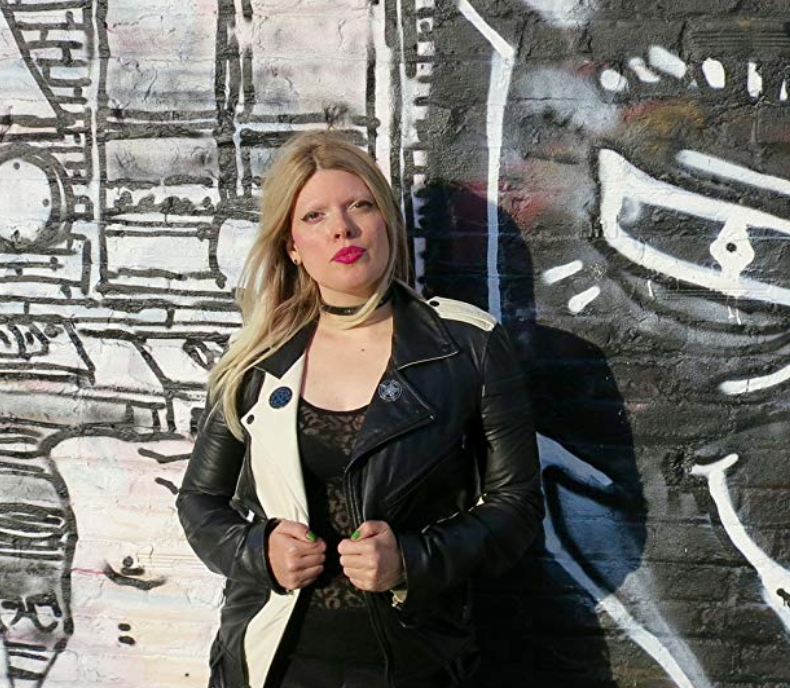
I’ve been fangirling over author and overall goddess Kristen Sollée ever since I first read her book, Witches, Sluts, Feminists: Conjuring the Sex Positive. Aptly named after just a few of the contested identities assigned to women who misbehave, Witches, Sluts, Feminists delves into the origins and intricacies of witch feminism and its intersection with reproductive rights, sexual pleasure, queer identity, porn, sex work, and many other topics.
From a historical perspective, witches have often been associated with specific cultural functions, either enchanting as feminist symbols of empowerment, or inspiring terror in a paranoid misogynistic Miller-esque fever dream. In recent years, witchcraft, magic, and other alternative spiritual practices have been the focus of increased attention and subsequent scrutiny, as people experiment and engage with feminism in all of its iterations.
Throughout her work, Kristen has spoken with countless activists, scholars, artists, and practitioners of witchcraft in order to enrich the public’s understanding of witch feminism and illustrate that witches in all forms, from Tituba to Stevie Nicks to Sabrina to The Hoodwitch, are powerful and relevant well beyond the month of October.
In addition to being a champion of female sexuality, Kristen is the founding editrix of the sex positive collective, Slutist (RIP), and is a gender studies lecturer at The New School. Her second book, Cat Call: Reclaiming the Feral Feminine: An Untamed History of the Cat Archetype in Myth and Magic was just released in September. Kristen herself is too fucking cool, whether she’s speaking out against SESTA/ FOSTA or rocking a killer purple lip on Instagram. She’s brilliant and generous enough with her time that earlier this year I had the pleasure of speaking with her about Witches, Sluts, Feminists, capitalism, and fighting for sexual liberation.
MM: How did you first become interested in the topic of witch feminism?
KS: It’s a long, circuitous story filled with both intention and magical intervention, but I’ve been interested in the occult since childhood, was raised by a feminist intuitive, and found my way to this subject first personally, and then professionally.
MM: What was the process of researching and writing this book like?
KS: Not pretty. Writing a book like this required confronting a lot of my own personal demons as I was interviewing dozens of people, scouring libraries and bookstores and websites for source material, and meditating on how I could do justice to a history so rife with pain and persecution that has been obscured and manipulated in numerous ways. It wasn’t something that was always fun or easy, but it was overall a joyful project to get to amplify voices that matter so much to me.
MM: In Witches, Sluts, Feminists, you polled 50 people about the definition of “witch,” and came back with a wide variety of answers. What’s your personal definition?
KS: The witch evades a single definition—that’s the beauty of the concept, really—but I will try! A lightning rod. A change-maker. A caretaker. Priestess of the persecuted. Harridan and hierophant. Rooted in the earthly and the astral. Fact and fiction, feminine and masculine, and so many things. The witch will forever be a shapeshifter.
MM: Do you think there is a generational/ geographical/ socio-economic connection to how the idea of the witch is viewed?
KS: Definitely. There are those who understand the witch to be an archetype of empowerment, those who see her as a Satanic seductress or a relic of religious persecution, and those who think she’s merely a cartoon hag to chuckle at on Halloween. It all depends on your own background and belief system and knowledge of the history.
MM: If you had to pick a witch or goddess that you’re most inspired by, who would it be?
KS: Oh there are so many, but I will pick a fictional one: Elvira. A witch who wields her sexuality in potent and playful ways. So many witches in fiction are so serious, she’s really a breath of fresh air. And a forever style icon as well!
MM: What are your “required reading” books for anyone looking to learn more about witch feminism?
KS: Silvia Federici’s Caliban and the Witch; Starhawk’s The Spiral Dance ; Maryse Conde’s I Tituba: Black Witch of Salem.
MM: Aside from reading, what are some resources for witches-in-training who are looking to educate themselves about practices, lineage, and history?
KS: Your local occult shop, or, if you don’t have one, The Hoodwitch’s online community. There are infinite folks to follow online, too, but some of my faves for inspiration and education in addition to @thehoodwitch are @themexicanwitch; @iamsarahpotter; @jaliessasipress.
MM: Do you see witch feminism as a lifestyle, a religion, or a hobby that can be shelved and called upon at times when it’s needed? I’m thinking primarily of practicing witchcraft in the age of Trump, and how many feminists are calling upon chanting, intention candles, hexes, and crystalogy as self-care rituals to heal from oppressive and toxic masculine government forces. Does witchcraft look different depending on what it’s needed for?
KS: Absolutely. Everyone’s spiritual and political practice looks different. There is no one way to use these powerful tools. Some folks don’t believe in mixing their witchcraft and their politics. Others believe witchcraft is specifically for healing and fighting oppression in the personal and political realms and that you cannot separate the two.
MM: Why do you think witches are so trendy right now? Is it because so many people need an ideology that centers around empowered women? Is it a form of escapism? Or are people just looking for a source of spiritual healing in a world that increasingly feels more and more hopeless?
KS: All of the above.
MM: How do you feel about the intersection in recent years between witchcraft and capitalism? In Witches, Sluts, Feminists you highlight multiple voices in the witch community and the disparate opinions on the topic, but you also point out that, “the witch is ‘the embodiment of a world of female subjects that capitalism had to destroy’ in order for the reigning economic order to triumph” (132). What are the implications of capitalism co-opting witchcraft without educating consumers about the origins of their purchase? (ahem, Sephora)
KS: I am quoting Silvia Federici there, but yes, it is very necessary to address capitalism’s co-optation of witchcraft and the occult, particularly when workers (often women in sweatshops around the world) are actively harmed in the making of “witchy” products and when closed, indigenous practices are being stolen from in the process. That’s not witchcraft, it’s exploitation.
MM: What are your feelings on Trump’s ironic and often repeated use of the term “witch-hunt” in reference to himself and the media? I think the linguistic significance of this is fascinating based on what it entails, historically- speaking.
KS: Like much of what Trump says, it’s a horrendous distortion of historical fact. It also goes to show how much misinformation there is about what “witch hunts” actually were—and are today.
MM: One of the popular phrases that has gotten circulated across social media and throughout women’s marches in the last year reads (in some iteration), “Nasty Women are the granddaughters of the witches you couldn’t burn.” Considering this and the prevalence of witch and goddess energy within the #metoo movement, do you think the spiritual and the political can intersect for the greater good?
KS: Absolutely, as long as the spiritual doesn’t become dogmatic. There still has to be room for spiritual and religious dissent and plurality or we’re no different than the religious right.
MM: I’m fascinated by the sexual connotations of American witch history, how witches were seen as harnessing an impure (ie. un-Christian) sexual appetite, and how the deeply patriarchal nature of early New England allowed this ideology to perpetuate until people were put to death. Can you speak more about how and why you think a deep-seated fear of female sexuality exists?
KS: Patriarchal religion—in America’s case Christianity—is at fault for this one. When you have an origin story that places female desire as the root of pain and suffering (hello, Eve) you’re not off to a very good start, you know?
MM: Why do you think the world seems to be threatened by sexually enlightened womxn, or womxn who unabashedly identify as sluts? Are sluts viewed as a threat to masculinity because subverting the terminology pushes back against the misogyny of our government and world?
KS: Being unapologetic about your sexuality or your body as a woman or a person on the feminine spectrum remains so radical because it counters everything that patriarchal society dictates about the masculine dominating the feminine.
MM: Are “witch,” “slut,” and “feminist” synonymous terms?
KS: No, I don’t think so, although there is great overlap between them depending on culture and context. To me, they are beautifully complex, complimentary terms.
MM: Do you think the meteoric rise of witches will continue indefinitely?
KS: Witches may not be splashed across The New York Times forever, but they certainly aren’t going anywhere anytime soon. And thank goddess for that.
Madison McKeever is a writer based in New York City. She probably wants to ask what your favorite book is. She's passionate about true crime, Timothee Chalamet's sartorial decisions, Instagram cats, and talking about the orgasm gap. Find her @thesleepygirlscout
A Poem By Khalisa Rae
BY KHALISA RAE
Tea Party at the Cemetery
We built a haunting in the silent spaces,
buried a living thing in my childhood baby dolls
and music box ballerinas’ splitting their limbs to stay
in step, Dancing Bear books and ice skates rest
on the shelves now covered in dust just
wanting to rest, but the rot keeps them up.
We buried a breathing thing here—
a coffin for each memory we didn’t dare
dig up. Spirits lurking
around every pageant queen trophy
and all the trinkets we used to convince her she
was a girl, innocent girl. A jewelry box filled
with twenty years of secrets. Things no one
dared to tell.
This door has been locked and shut;
a locket on the dresser to remind us that memories
are best kept away and private.
Photographs of me smiling, but wanting to
shutter and run. No one could tell
I was waiting for the day to escape the porcelain faces,
the Minnie Mouse pink patterned sheets and curtains,
The repetitive tv static and terror that only
resides in my head now.
I remember my 17th birthday,
how I was so ready to run free
from the carousels and tutus,
run away from the thought of home.
I peeked inside my room for the last time
before leaving; I could have sworn I saw
them all dancing, drinking tea
on the graves.
Khalisa Rae is a native of North Carolina and is a graduate of the Queens University MFA program. Her recent work has been seen in Glass Poetry, Brave Voices, Hellebore, Honey & Lime, Tishman Review, the Obsidian, Anchor Magazine, New Shoots Anthology, Red Press, Roses Lit, among others. She was a finalist in the Furious Flower Gwendolyn Brooks Poetry Prize and a winner of the Fem Lit Magazine Contest, White Stag Publishing Contest. She is staff editor for Kissing Dynamite and Carve Magazine. Her forthcoming collection, Ghost in a Black Girls Throat is forthcoming from Red Hen Press in 2021. She is also the newest writer for B*tch Media and Out/Body Magazine.
5 Meaningful Gifts for the Magical Thinkers in your Life
Kailey Tedesco's books These Ghosts of Mine, Siamese (Dancing Girl Press) and She Used to be on a Milk Carton (April Gloaming Publications) are both forthcoming. She is the editor-in-chief of Rag Queen Periodical and a performing member of the Poetry Brothel. Her work has been nominated for the Pushcart. You can find her work in Bellevue Literary Review, Hello Giggles, UltraCulture, Poetry Quarterly, and more. For more, please visit kaileytedesco.com.
Read More