

BY FRAYLIE NORD
When I was 12, I came home to discover my father’s car with its doors flung open. From the front seats, two pairs of legs stretched onto the pavement. The radio was on low, and I could hear laughter followed by a clink of glass on glass. This was how my father celebrated an ersatz out-of-body death, five years prior to the real thing.
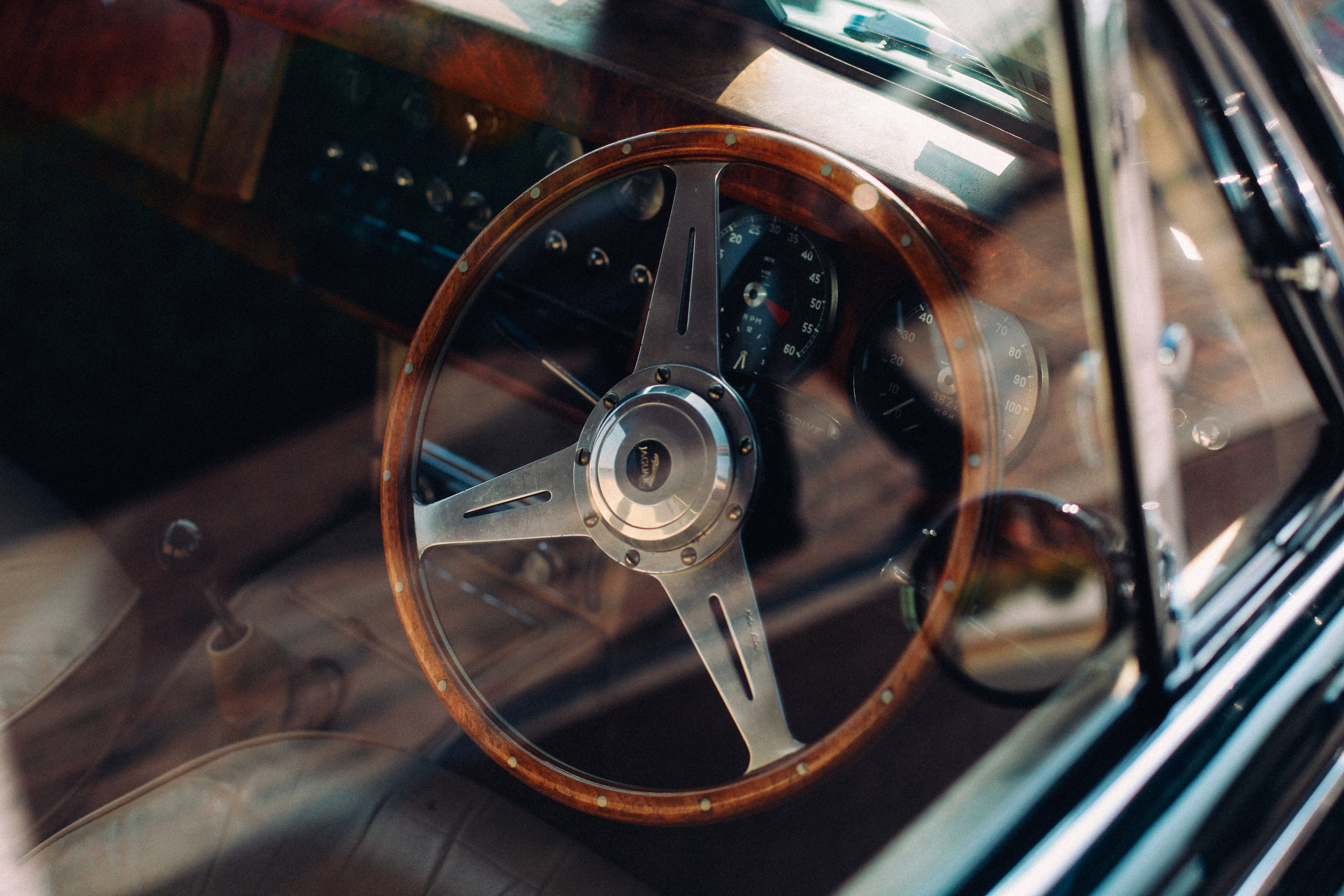
My father was about to junk his 1983 Volvo DL sedan. The junk man would arrive the following day and haul the car to some unknowable place. But first, my neighbor joined my father in proper eulogy over scotch and Beethoven.
The car was an embarrassment. The body had rusted from beneath, and if you slammed the door too hard, bits of paint would flutter like dandruff. I bristled when inside in this ignoble can, but my father delighted at the loyalty of a thing that had carried him so far.
Down the street, my friend’s father drove a Delorean—a real dazzler from which my body would emerge, triumphant and alien-like, at the mouth of school dances.
When I asked my father if he would ever consider an upgrade, he narrowed his eyes and said, "Mr. K is just showing off."
The day after the death of the Volvo, my father drove home in a dark, automatic Mercedes—a severe and dictatorial looking thing I would eventually inherit. I grew to love the Mercedes for its anachronisms, but my grandfather T-boned it into a pole several years later. He survived, thank god, but the Mercedes did not. Another car in the arsenal of heaven.
*
My father was born in 1950, the son of a veterinarian and a housewife fond of furs. His earliest years were spent in Brighton Beach until the family moved to New Jersey. He had one younger brother, now estranged from the family. He studied medicine. He married twice. There was me, but before that there was my half-brother—a child for whom my father felt a lifelong debt, a child who grew up between two houses.
Pediatricians work long hours, and my father was no exception. He carried one of those plastic beepers that whisked him to the hospital at odd hours. On Sundays, he would dictate patient letters into a cassette player. One paragraph in every letter went as follows: The chest is clear, and the heart sounds normal. The abdomen is soft and non-tender. I cannot remember an encounter with a murky chest or an abnormal heart. There’s poetry in repetition. I have a hard time remembering my father’s voice, but when I try to recall it, I hear this.
My father supervised bedtime. He would invent late-night stories about two grizzlies named Mush and Greezle, inspired by the great stuffed-up creatures in the Museum of Natural History’s Hall Of North American Mammals. They were not unlike Of Mice and Men’s George and Lennie—tethered by a near-primal love in the face of bodily and environmental obstacles—except they were bears shouldering bear problems.
The classic story concerned a fishing trip: they are standing in a rushing river when Greezle catches a fish with his paws. But the fish slips from his grasp, flies into the air, and lands on Mush’s head. The fish flops around for the sake of charade before it is lunch, and Mush and Greezle return home, aching limb to limb from laughter.
I think my father knew I was getting too old for it when I started asking questions like "what happens if Mush dies," or "what if Greezle doesn’t want to be a bear anymore."
"Come on," he would say. "Where did you learn to talk like that?"
*
My father died of a heart-attack—a swift and merciless fate that nobody saw coming. When friends of mine would stammer for ways to reinvent I’m sorry for your loss, I would tell them that my father’s death helped me grow up in a pretty quick way. Or that exposure to trauma made me a more interesting person. Or a better writer. Or morbidly curious, who knows. I was joking, but not entirely.
I miss my father every day. These spaces of grief are episodic and often mundane. There’s the not-so-weird stuff, the first-chapter fodder of a self-help book. I cried in the basement of my freshman dorm after watching Braveheart with strangers. I disliked Mel Gibson, but I knew my father admired the film’s bravado and unflinching sense of masculinity. (He had a thing for cinematic male idols). I have trouble when brides dance with their fathers or when young dads scoop their children onto their shoulders.
I don’t believe I’ve ever cried at his headstone. I remained silent at the funeral. I bury myself indoors on Father’s Day.
Every year, my mother lights a yahrzeit candle in my father’s memory, and there’s a plaque engraved with his name on our synagogue wall. She has yet to remove his jackets from the hall closet, despite needing space for her own things. She decorates his grave with small stones from our yard. She wears his sweaters and the jewelry he gave her for birthdays and anniversaries.
When I’m home and restless, I model the jackets in the middle of the night. I used to swivel in my father’s chair and open his desk drawers before my mother started locking the door to his office.
This past summer, she asked why I could not make space for her sadness, why I refused to talk about him.
I didn’t have an answer. I couldn’t say that to be singular with my grief gave me comfort and clarity. Selfishly, I wished she could grieve like I did—alone and with no need for reciprocity. That we could maintain our own rituals in our own spaces—concerning jackets, stones, drawers, and candles.
*
There’s a man named Walter who fixes antique clocks in a cluttered storefront on West 10th. I’ve been taking my watch to his shop for minor repairs as long as I’ve lived in New York. Sometime in August, the eleven fell off, cursed to wander my watchface. It got stuck between other numbers and lodged into corners. I wanted to derive some sort of meaning out of this, but mostly it amused me to say that my eleven had fallen off—like some absurd corporeal ailment, but deeply, it upset me. The watch was my father’s, and I couldn’t stand to see it broken.
"Do you take this anywhere else?" Walter asked.
"No, only to you."
"Good. Because the face of a watch is like the face of a person." He returned the repaired watch with both hands.
Walter charged me $10 to fix the eleven, for which I paid cash. I thanked him and told him the watch had been my father’s. And before I could tumble through its full genealogy, how my father’s watch is the most important object in my possession, how it was ten years that month, I said goodbye, hurried out the door, and sobbed like a maniac beside a nearby bodega.
*
My father was an uncomplicated man, all things considered. He’d read political biographies on an Adirondack chair with his hat flipped backward, claiming it kept his neck from getting sunburnt. He ordered tongue sandwiches at the deli. He kept a framed letter from George H.W. Bush under the spare bed but never hung it. He inserted shoehorns into every pair of dress shoes. When I was seventeen years old, the bewildered dry cleaner handed me his last pressing of identical white shirts, free of charge. My father was a man of habit. He was stubborn, loving, and died far too young.
I’m no stranger to grief’s prescriptive royal flush: denial, anger, bargaining, depression, acceptance. Deceptively linear in nature and seemingly divorced from context, these categories miss the murkiness of a thing so big and wild. It’s a thing that creeps like a shadow in the middle of the night, lives in the crevices of objects and memory, and arrives, uninvited, to dinner tables and dormitory basements again, and again, and again.
Writing this seems obvious to me, but it took a decade to get here. I want to go back to my mother’s house and shred the self-help book that she mailed me in college. It was a well-intentioned gift, but it implied I was doing sadness all wrong. At the time, I had no desire to endure a subtext of what a stranger believed to be my reality. I simply wanted to live through it.
I want to go back and remind my father that I love him, and I’m sorry he left when I was such a bratty teen. I’d admit I enjoy classical music but prefer bourbon over scotch, that I grin at every Volvo on every street, and I realize Deloreans are dumb and should stay in the movies where they belong. He would reassure me in a fatherly way, telling me I had handled everything just fine. Maybe he would see a bit of himself. Maybe he would admit that everyone likes showing off, even just a little, regardless of which way your car doors choose to open.
Fraylie Nord lives and works in Brooklyn, New York. Her writing has appeared in Armchair/Shotgun, Tin House Flash Fridays, Volume 1 Brooklyn, Oblong Magazine, and elsewhere.