
• Home
  • indulge
  • new poetry
    • About Luna Luna
    • resources
    • search
  • editor
  • NYC reading
  • dark hour
  • submit
Menu

luna luna magazine

  • Home
  • indulge
  • new poetry
  • About
    • About Luna Luna
    • resources
    • search
  • editor
  • NYC reading
  • dark hour
  • submit
delicious new poetry
'I will give you horses' — poetry by Johannes Göransson
Mar 28, 2026
'I will give you horses' — poetry by Johannes Göransson
Mar 28, 2026
Mar 28, 2026
'Darling, clean up your heart' — poetry by Lavinia Liang
Mar 28, 2026
'Darling, clean up your heart' — poetry by Lavinia Liang
Mar 28, 2026
Mar 28, 2026
'am I the lonely wicked one' — poetry by Lindsay Lusby
Mar 28, 2026
'am I the lonely wicked one' — poetry by Lindsay Lusby
Mar 28, 2026
Mar 28, 2026
'flowers of hell, bonded in glitter' — poetry by Katie Doherty
Mar 28, 2026
'flowers of hell, bonded in glitter' — poetry by Katie Doherty
Mar 28, 2026
Mar 28, 2026
'it is the scent of death and it is a wolfish girl' — poetry by Lena Kinder
Mar 28, 2026
'it is the scent of death and it is a wolfish girl' — poetry by Lena Kinder
Mar 28, 2026
Mar 28, 2026
'plotting like a diabolical orchid' — poetry by Laura Cronk
Mar 28, 2026
'plotting like a diabolical orchid' — poetry by Laura Cronk
Mar 28, 2026
Mar 28, 2026
'even in wilds, it sins' — poetry by Ann DeVilbiss
Mar 28, 2026
'even in wilds, it sins' — poetry by Ann DeVilbiss
Mar 28, 2026
Mar 28, 2026
'I birth my own being' — poetry by Nichole Turnbloom
Mar 28, 2026
'I birth my own being' — poetry by Nichole Turnbloom
Mar 28, 2026
Mar 28, 2026
'vespiaries brooding combs of quietness' — poetry by Susan Irvine
Mar 28, 2026
'vespiaries brooding combs of quietness' — poetry by Susan Irvine
Mar 28, 2026
Mar 28, 2026
'What comes after happiness?' — poetry by Robert McDonald
Mar 27, 2026
'What comes after happiness?' — poetry by Robert McDonald
Mar 27, 2026
Mar 27, 2026
‘the pale seam of spillage’ — poetry by Amanda Gaines
Mar 27, 2026
‘the pale seam of spillage’ — poetry by Amanda Gaines
Mar 27, 2026
Mar 27, 2026
'an assailing miasma' — poetry by Sadee Bee
Mar 27, 2026
'an assailing miasma' — poetry by Sadee Bee
Mar 27, 2026
Mar 27, 2026
' ghost of cinnamon, wet dog & bog blood' — poetry by Trista Edwards
Mar 27, 2026
' ghost of cinnamon, wet dog & bog blood' — poetry by Trista Edwards
Mar 27, 2026
Mar 27, 2026
'Make of me a piecemeal mound' — poetry by Matthew Gustafson
Mar 10, 2026
'Make of me a piecemeal mound' — poetry by Matthew Gustafson
Mar 10, 2026
Mar 10, 2026
'the fever always holds' — poetry by Abbie Allison
Mar 10, 2026
'the fever always holds' — poetry by Abbie Allison
Mar 10, 2026
Mar 10, 2026
'those petty midnights' — poetry by Zoë Davis
Mar 10, 2026
'those petty midnights' — poetry by Zoë Davis
Mar 10, 2026
Mar 10, 2026
'my dear vesuvius' — poetry by jp thorn
Mar 9, 2026
'my dear vesuvius' — poetry by jp thorn
Mar 9, 2026
Mar 9, 2026
'In the doom tunnel' — poetry by Melissa Eleftherion
Mar 9, 2026
'In the doom tunnel' — poetry by Melissa Eleftherion
Mar 9, 2026
Mar 9, 2026
'Love me as a wilderness' — Ruth Martinez
Mar 9, 2026
'Love me as a wilderness' — Ruth Martinez
Mar 9, 2026
Mar 9, 2026
'lost in the  rapture of man' — poetry by Ian Berger
Mar 9, 2026
'lost in the rapture of man' — poetry by Ian Berger
Mar 9, 2026
Mar 9, 2026
'Stop trying to write something beautiful' — poetry by Diana Whitney
Mar 9, 2026
'Stop trying to write something beautiful' — poetry by Diana Whitney
Mar 9, 2026
Mar 9, 2026
'I am a devotee' — poetry by Patricia Grisafi
Mar 9, 2026
'I am a devotee' — poetry by Patricia Grisafi
Mar 9, 2026
Mar 9, 2026
'come enflesh  our feast' — poetry by Haley Hodges
Mar 9, 2026
'come enflesh our feast' — poetry by Haley Hodges
Mar 9, 2026
Mar 9, 2026
'noonday I dive' — poetry by Karen Earle
Mar 9, 2026
'noonday I dive' — poetry by Karen Earle
Mar 9, 2026
Mar 9, 2026
'To eat dying stars' — poetry by Juliet Cook
Mar 9, 2026
'To eat dying stars' — poetry by Juliet Cook
Mar 9, 2026
Mar 9, 2026
‘same spectral symphony’ — poetry by Julio César Villegas
Jan 1, 2026
‘same spectral symphony’ — poetry by Julio César Villegas
Jan 1, 2026
Jan 1, 2026
'I think I know why I am looking at roses' — poetry by Stephanie Victoire
Jan 1, 2026
'I think I know why I am looking at roses' — poetry by Stephanie Victoire
Jan 1, 2026
Jan 1, 2026
'All the trees are you' — poetry by Barbara Ungar
Jan 1, 2026
'All the trees are you' — poetry by Barbara Ungar
Jan 1, 2026
Jan 1, 2026
'girl straddles the axis  of ancient  and eternal' — poetry by Grace Dignazio
Jan 1, 2026
'girl straddles the axis of ancient and eternal' — poetry by Grace Dignazio
Jan 1, 2026
Jan 1, 2026
'Talk light with me' — poetry by Catherine Graham
Jan 1, 2026
'Talk light with me' — poetry by Catherine Graham
Jan 1, 2026
Jan 1, 2026

Jenn Givhan on Representation, Creativity, and The Sacred

October 27, 2022

An interview with Jenn Givhan
by Lisa Marie Basile

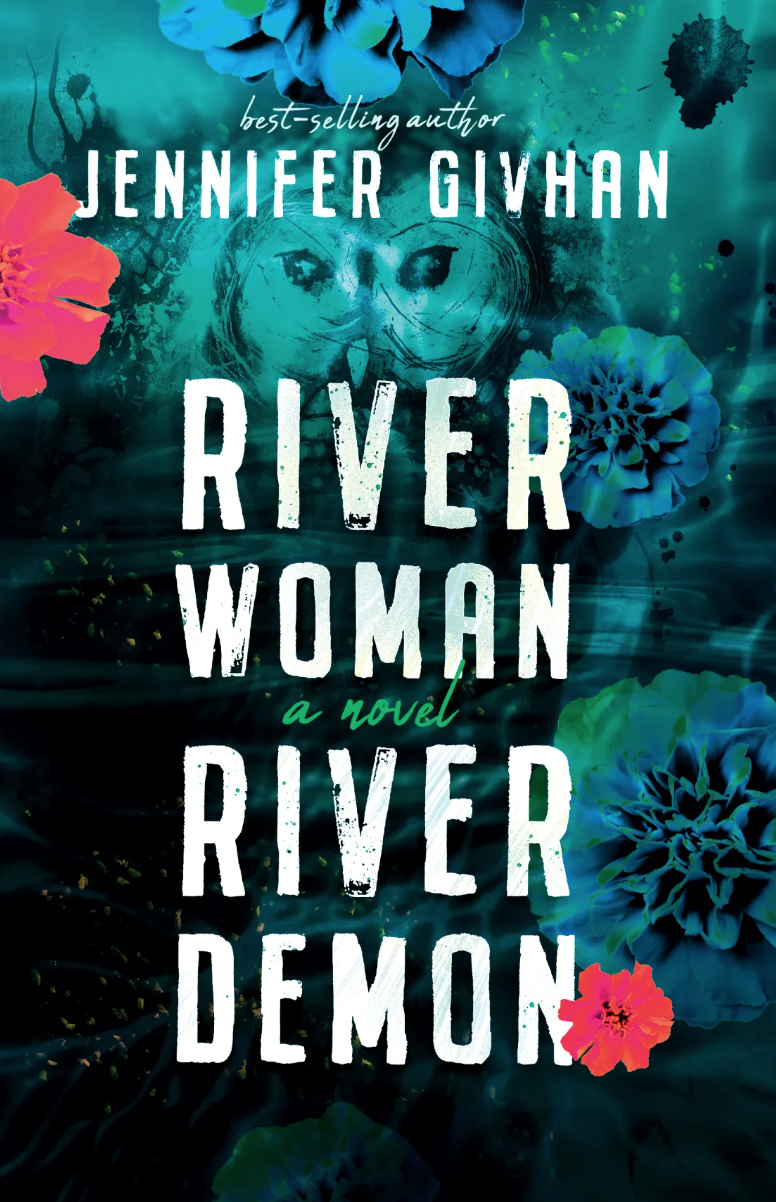
Jenn, welcome to Luna Luna! I am such a huge fan of your work — and am consistently inspired by your spirit, your ideas, and your literary and personal offerings of magic. Can you tell us all about your newest—incredibly beautiful and important—work, RIVER WOMAN, RIVER DEMON?

“Like the call to write, the call to love is ever about the marginal spaces that separate and bind us—the inky place that asks us to continue revising and reimagining, tying ourselves to this life, to each other, despite or perhaps because of the pain. ”
— Jenn Givhan

Eva Santiago Moon is a budding Chicana bruja—whose bruja mother died in childbirth, so Eva was raised by her conservative and well-meaning sister Alba, who isn't interested in their cultural roots of witchcraft but instead nurtures her family in the kitchen with traditional comida. Eva deeply wants a coven and mother/sister figures who likewise practice the ancient spiritual ways of brujería and curanderisma. When we meet Eva, she is the intensely depressed mother of two magickal, biracial children, a glassworking artist who hasn’t created lately, and the wife of a rootworking, hoodoo-practicing university professor, Dr. Jericho Moon, who owns a magickal shop that Eva affectionately calls "the circus" because she met him at one of his magickal showcases under billowing circus tents.

Eva is a strong, independent Latina mother deeply invested in her cultural roots but has lost her way. While many psychological thrillers focus on rich, white women, Eva is Chicana, lives in the Southwest, and is the mother of biracial children. This story focuses on the holistic spiritual and magickal practices of BIPOC people embodied through Eva and her husband, Jericho. When we meet her, she is at one of her lowest points, suffering from PTSD, depression, and a feeling of disconnect from her roots. 

I’ve found that folks of color, particularly Latinx and indigenous communities, are often marginalized and overlooked in the media and literature (although I’m excited to see much more representation in the witching communities with the rise of brujería in the mainstream). We want to see ourselves represented across the genres and not just in stereotypical roles.

Eva is a fully fleshed-out protagonist, not trying to be a perfect wife or mother, with flaws and troubles that are not necessarily connected to her ethnicity and some that are—just as real Latinx folks in this country. She drinks and says what is on her mind but profoundly loves her family. She is a woman who has lost her way and will find it, a mother struggling to care for her family while maintaining her self-worth during a terrifying murder investigation.

We’ve been told to believe that darkness within ourselves, any manifestation of shadow, is our enemy, but Eva’s dark path as a bruja is the dark night of the soul (la noche oscura del alma) that leads her to deep truths and understanding that will embolden and strengthen her if she can trust herself. We need to listen to our inner voice and our ancestors’ wisdom and not let ourselves be gaslit or steered off course by society or those with skewed or selfish agendas. This story is about believing in oneself and trusting the support system one has created. As Eva comes to understand—she is the spell. Her magick is not external but internal—she's had it all along.

“We’ve been told to believe that darkness within ourselves, any manifestation of shadow, is our enemy, but Eva’s dark path as a bruja is the dark night of the soul (la noche oscura del alma) that leads her to deep truths and understanding that will embolden and strengthen her if she can trust herself. ”
— Jenn Givhan

The inspiration for this story came from my childhood memories and PTSD, as well as a harrowing experience with a narcissistic abuser who had me all twisted up, and I wanted to show how even smart, talented, powerful, empowered women can be susceptible to these gaslighting serial abusers. As a practicing bruja who has healed both personal and ancestral trauma in myself and my family through brujería, I wanted to share the tools and practices that have strengthened and buoyed me in an accessible way. There are many wonderful nonfiction books on magical practices and witchcraft, but I’ve found that my magic is within my imagination, so I wrote a novel. 

The protective magick of this thriller is based on the actual practices of people of color, including my familial practices. It resists stereotypes even as it embraces many classic elements of psychological thrillers and magical realism — such as a character with a murky, traumatic past that blurs or muddles her grip on the present situation, a haunted character who misunderstands what the ghosts are trying to communicate, a strong woman who is being gaslit by at least one man in her life, and a woman who needs to embrace her power. When she does, she kicks some serious ass and rights major wrongs. There's also a focus on sisterhood and counting on other women rather than being jealous or turning to men for help, which all of the above stories and shows portray as well, though not necessarily together.

Even the Charmed reboot, which has so many amazing elements, tends to focus on mainstream Wicca as the central magick, even though the protagonists are strong BIPOC/Latinas. My story looks toward the magick of people of color—brujería,  curanderismo, hoodoo—even as it shares many commonalities with Wicca and other Western pagan practices and beliefs.

The use of folk magick of people of color in RIVER WOMAN, RIVER DEMON is portrayed as realistic throughout, with some magical realism elements common in Latinx literature and culture to offer a grounded and realistic presentation of folk magick while still allowing for the deeper resonances of metaphor that horror and supernatural thriller audiences have already come to expect by nature of the genre, such as giving into the subconscious where belief resides.
In other words, an audience who is already primed to believe that the dead can be conjured to help solve a murder mystery is also ready to suspend disbelief about other elements of folk magick – thus, I make a case for the metaphorical aspects of folk magick and how it helps protect people of color and isn’t just superstition. In this way, I’ve alchemically fused my thematic message within the structure of the work itself—creating, I hope, a place where belief feels organic and relevant. 

Can you describe your literary influences and inspirations? What is the through-line or framework through what and how you write?

My work tends toward magical realism and dark psychological motherhood that reflects on an often darker sociopolitical landscape, but the shadow work exists to reveal the light, and that’s always my goal–to shine that hopeful light amidst the darkness.  

Among my influences are Toni Morison and Ana Castillo, and some of my recent faves are Jesmyn Ward’s Sing, Unburied, Sing, and Victor LaValle’s The Changeling.  

In my witchy reading, I’ve enjoyed Stephanie Rose Bird’s books on hoodoo (perhaps especially Sticks, Stones, Roots, and Bones) and Juliet Diaz’s Witchery, which have helped me infuse and create my grimoire early on in my path. 

I've also been reading and watching ALL the psychological thrillers I can get my hands on since I was a teenager, and lately, especially books/stories like GONE GIRL and GIRL ON THE TRAIN, all the many countless iterations. But I repeatedly noticed how often the protagonists are white women who live in metropolitan areas, often wealthy or from wealthier backgrounds.

There are very few characters of color and even fewer with major roles. As a Latina/indigenous woman raising a multiracial family, I have often felt excluded from these psychological thrillers on a social/structural level, although I am deeply interested and invested in examining women's mental health and psychological issues, including how we’re perceived, treated, and stigmatized culturally. 

My goal for my writing is always to cast women of color in leading roles, active and empowered, fully constructed with flaws and issues outside stereotypes, which means that I am also interested in examining mental health issues in women of color. RIVER WOMAN, RIVER DEMON (like my second novel, JUBILEE) examines a Latina protagonist's PTSD, memory distortion, and anxiety—and contextualizes it in a larger patriarchal, abusive landscape. In many ways, I set out to write a Chicana Girl on the Train.  

“My goal for my writing is always to cast women of color in leading roles, active and empowered, fully constructed with flaws and issues outside stereotypes, which means that I am also interested in examining mental health issues in women of color.”
— Jenn Givhan

I’m always interested in showcasing how writers approach writing — including the hard stuff, the stuck stuff, the mundane struggles, the deep emotional Work that is often neglected in conversations around the craft. Can we peak behind the proverbial curtain of your general creative process? Do you adopt any rituals while or pre-writing?

As I connected with my indigenous and Mexican Ancestors and became more invested in brujería and curanderisma, I began cultivating spaces of honoring the sacred and divine within my home and creating portable altars that I could move throughout the house in a process organic to my creative rhythms and needs as a mamawriter, meaning, my mind/heart/flow has to be fluid and in-flux to allow for the rhythms of my day as they unfold (sometimes homeschooling the kids, tending sick kids, summer days, days my kids need or crave more attention from me, as well as days I’m more chronically ill and navigating self-care needs).

So, for instance, I might set up an altar on the side of the bath where I’m taking a hot Epsom salt soak to help alleviate some chronic pain or unwind after a tough day, mentally, physically, and spiritually. Honoring the sacred with a portable altar and altars throughout my home (my work/writing/teaching space) became a reminder that we carry the sacred within us, and it’s accessible to us anytime, anywhere.  

“Rest is creative. Rest is essential. Rest is sacred. ”
— Jenn Givhan

This also helped me forgive myself and eventually learn not to judge myself, so no forgiveness was needed because no wrong was committed when I could not write or perform a ritual or practice “self-care” in any other capacity than rest. Rest is creative. Rest is essential. Rest is sacred. 

Just as the altar’s sacred space reminds me of the goddess/Spirit/Ancestors within and around me, the altars remind me of the Muse available and accessible anytime, anywhere. The altar is an invitation to openness and receptivity. If we build it, the Spirits will come. But really, the Spirits are already all around us, ready and waiting for us to quiet ourselves enough to listen. So perhaps it’s more, if we build it, we will come to what the Spirits have already fashioned for us out of stars and earth and Universe and light and truth. 

In my writing, this willingness to listen to Spirit and not beat myself up that the material/concrete matter of the pub biz (publishing business) may not understand, accept, or want or applaud what I’m doing and what the Spirit/Ancestors bring me.

Because I deal with trauma-induced responses and depression and anxiety, I need a tangible reminder (lighting candles, holding crystals, and pictures of my Ancestors and Goddesses who sustain me, including Mother Mary and Frida and My Bisabuela and Coatlicue) so that I don’t feel so trampled upon that I stay down in the mud. If I’m down in the mud, Spirit is showing me the stardust to scoop up and bring back with me to the page.

The sacred that we honor (Goddess/Ancestors/Creator/Spirit) also exists within us. We honor ourselves when we honor the sacred. When we honor the sacred, we claim our value and worth as inherent and undiminishable. We are the fire we light, the crystal we hold, the prayer we utter. We are our Muse. 

In this interview series, I’ve been asking writers to share how their heritage, culture, or belief system shapes their work. How do you approach writing or creativity through these lenses?

As a Mexican-American/Chicana and indigenous writer from the Southwestern border, my work explores how we can create safe spaces through the traumas of mental illness, racism, violence, and abuse against women. I strive to speak the multivalent voices of women I grew up with: the mothers, daughters, childless women, aunties, and nanas who have become my voice.

My work concerns many Latina women's complex relationships with family—it is both a liberating and subjugating force, buttressing and repressive, mythical and real. I explore the guilt, sadness, and freedom of mother/child relationships: the sticky love that keeps us hanging on when we’ve no other reason but love. I read Beloved as a young teenager, and every day before and every day since has been marked by the idea that you are your own best thing.

Like the call to write, the call to love is ever about the marginal spaces that separate and bind us—the inky place that asks us to continue revising and reimagining, tying ourselves to this life, to each other, despite or perhaps because of the pain.

All my creative work tends to mother because it comes from a place of reclaiming and healing. My work recites my mother’s chant she sang to me and now I sing to my children when they’re hurt: sana sana colita de rana, si no sanas hoy, sanas mañana. Translated literally, it asks a frog’s tail to heal. Of course, a frog’s tail, if cut off, grows anew. My work asks for impossible healing. And then makes it possible.

Who are some writers or organizations that you’d love to shout out?

Authors Publish

Irena Praitis

Rigoberto González

The NEA

The PEN/Rosenthal Emerging Voices Fellowship

Van Jordan

Lynn Hightower

Leslie Contreras Schwartz

I could go on and on – I ADORE the writing community and am immensely grateful daily.

Was there an a-ha moment that led you to write or create? Was there an experience that reaffirmed what you do and why?

I was in the book section of Target perusing thrillers with my family and discussing cover art for my novel RIVER WOMAN, RIVER DEMON when a tween girl turned the corner and shyly asked, "Excuse me, but I overheard, are you a writer?" 

Me: "I am!”

Her: “Oh my gosh, that’s so COOL!”

So then, I asked her: "Are YOU a writer?"

She shrugged and said: "Well, I mean, kind of."

I looked at her with what I hoped was all the confidence I've pulled to myself since I was a young girl & said: "You ARE. I know you are."

Her: "You're right, I am."

This isn’t the moment I began writing, of course. This was just a few months ago. But our pasts, presents, and futures are connected, so imagine this is also me saying this to myself as a young, traumatized bruja, a young girl with no one to teach her or guide her in her Ancestral magic, but with a mama who loves her fiercely. Imagine this is Spirit holding this conversation in the seed of myself, waiting for the right season to bloom. Imagine that future bloom carrying me through the darkness.

My tween daughter Lina and I write middle-grade fiction together; we’re now finishing a novel to send to our agent, Rebecca Friedman. My daughter is the other future iteration of my creation that reminds me who I am—the Goddess with me always, within me, always, as a seed, an egg, waiting. Wise. Witchy. Wonderful.

What's your biggest piece of advice to someone who might be embarking on a creative journey like yours?

Mija, your journey is your own, and let no one veer you from the brightest light shining within yourself, guiding your way. You don't need anyone else's rules or guidelines, or input. Yes, we need companions and helpers and sisters and friends. Wise guides sometimes. Our Ancestors. The Spirits. 

But we are also our wise teachers. Versions of ourselves are yet to bloom. 

For too long, I've worried about what others think, and in the publishing biz, it's too easy to get steered off track and onto others' paths. In Capitalism, we're taught to pin our worth to earnings, product, output, and money. 

Even in the creative world, the contest and competitive and prestige models can make us forget what's truly important – always, always, the creating itself. 

As Eva says in RIVER WOMAN, RIVER DEMON:

"Many people think there is a clear-cut between lightwork and dark, the way so many misunderstand curanderas and brujas, thinking of healers versus Witches, as though healers are a positive force and Witches a negative. On the one hand are medicine folk, who pray to god and Mother Mary and the Saints and intercede to remove the malcontent of those who would use their power for darkness; on the other hand, are brujas who deal in curses and hexes and death.

The lines are not so drawn. Light and shadow are not binaries nor poles but are sourced from the same spring of energy.

When we stand beneath the cover of forest canopy away from the sun’s heat, the shadow that keeps us cool is not an entity created by itself, nor has the light ceased to shine.

Shadow can protect us. Darkness, too, has its blessings.

Brujas know this. Mama knew this."

What seems like a shadow path is sometimes necessary and invaluable. Trust yourself. Trust your light and shadow. Creation happens during both phases. Mija never stops creating. You are all of creation, waiting. Let go of fear. Let go of shame. Let go of anyone else’s opinions or advice. Let go of this advice. And create. 
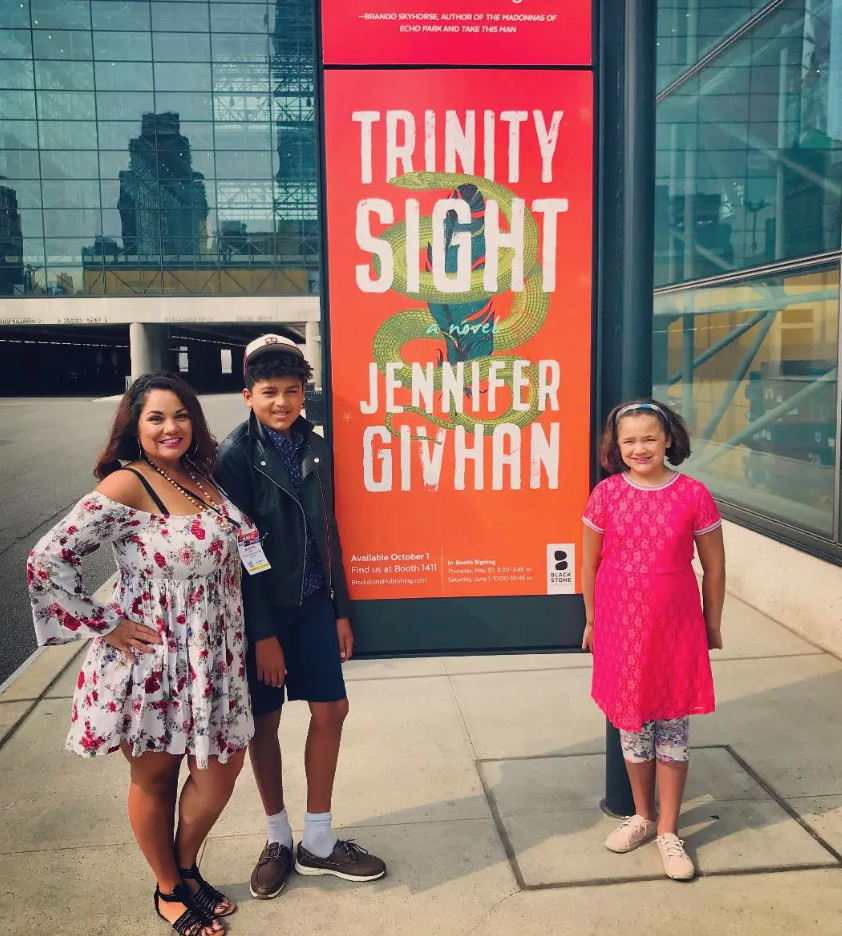
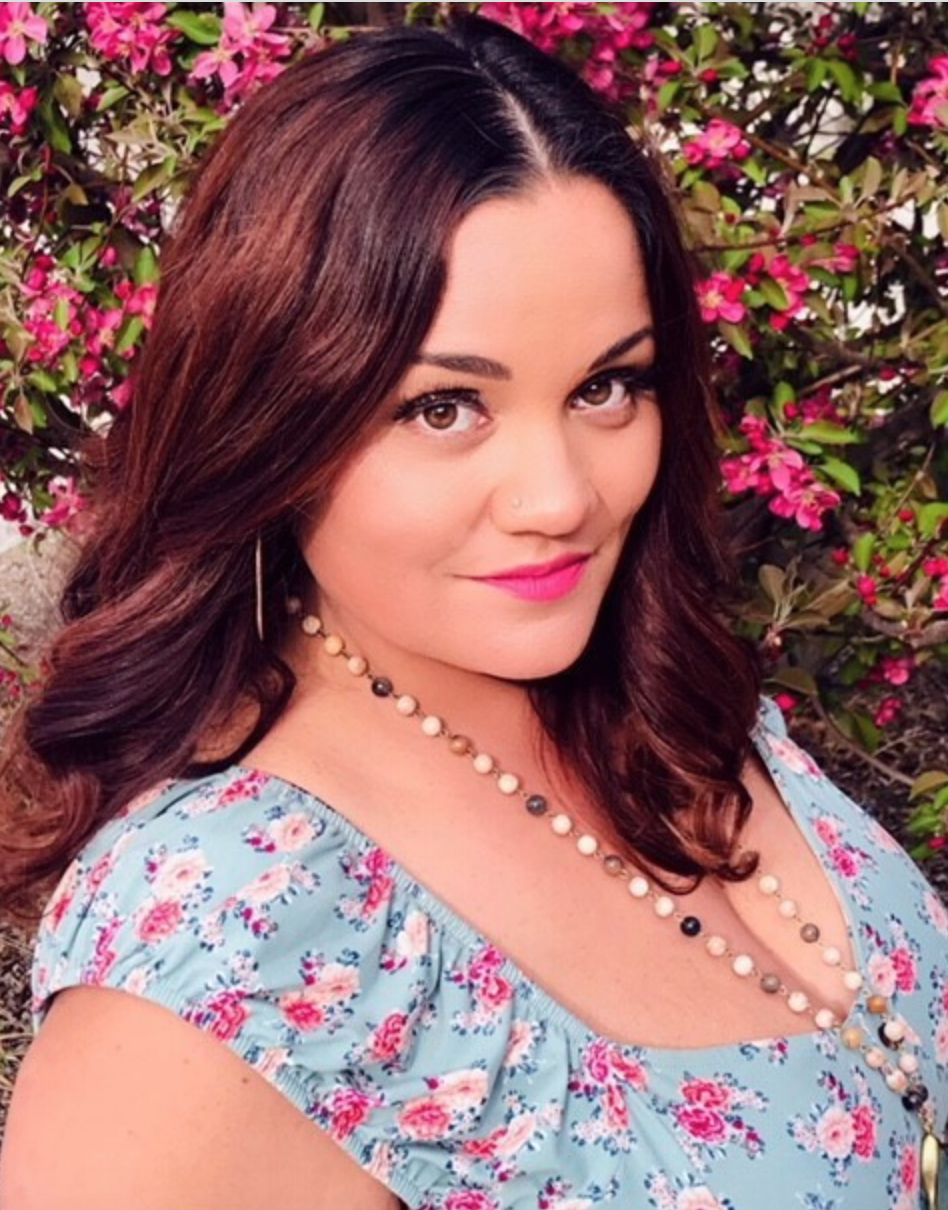
Jennifer Givhan is a Mexican-American and indigenous poet, novelist, and transformational coach from the Southwestern desert and the recipient of poetry fellowships from the National Endowment for the Arts and PEN/Rosenthal Emerging Voices. She holds a Master’s degree from California State University Fullerton and a Master’s in Fine Arts from Warren Wilson College. She is the author of five full-length poetry collections, including Rosa’s Einstein (University of Arizona Press) and the novels Trinity Sight and Jubilee (Blackstone Publishing), finalists for the Arizona-New Mexico Book Awards. Her newest poetry collection, Belly to the Brutal (Wesleyan University Press), and novel River Woman, River Demon (Blackstone Publishing), drop this fall 2022. Both new books draw from Givhan’s practice of brujería. Her poetry, fiction, and creative nonfiction have appeared in The New Republic, The Nation, POETRY, The American Poetry Review, TriQuarterly, The Boston Review, The Rumpus, Salon, and many others. She’s received the Southwest Book Award, New Ohio Review’s Poetry Prize, Phoebe Journal’s Greg Grummer Poetry Prize, the Pinch Journal Poetry Prize, and Cutthroat’s Joy Harjo Poetry Prize. Givhan has taught at the University of Washington Bothell’s MFA program and Western New Mexico University and has guest lectured at universities across the country.

Jenn would love to hear from you at jennifergivhan.com, and you can follow her on Instagram, Facebook, and Twitter for inspiration, writing prompts, and transformational advice.
In Interviews Tags Jenn Givhan, River Woman, River Demon, river woman river demon
Comment

3 Poems by Sharon Mesmer

October 27, 2022

BY SHARON MESMER

Sharon Mesmer's most recent poetry collection is Greetings From My Girlie Leisure Place (Bloof Books). She's also the author of several fiction collections, most recently, Ma vie à Yonago, in French translation from Hachette. Her essays have appeared in the New York Times, New York Magazine/The Cut, the Paris Review, American Poetry Review and Commonweal. She teaches creative writing at NYU and the New School.

In Poetry & Prose Tags Sharon Mesmer
Comment

Mary-Alice Daniel: "I Think of Poetry as Remaking An Original Cosmology"

October 21, 2022

An interview with Mary-Alice Daniel
by Lisa Marie Basile


I would love to hear all about your recent creative journey and pursuits and, of course, your coming books, A Coastline Is an Immeasurable Thing and Yale Younger Poets Prize winner Mass for Shut-ins. I love talking to writers who work across genres, especially. So let’s dive in. What’s happening creatively right now?

I considered myself primarily a poet till 3 years ago when I started my first book of prose, a nonfiction work that accidentally morphed into a memoir. It began as an inquiry into the hidden Black history behind the state of California, which was named after a Black warrior queen from 16th-century Spanish mythology. The book came to include the origin stories of my West African ancestors—then sprawled to encompass my immediate family’s migrations across 3 continents. A Coastline Is an Immeasurable Thing will be published by HarperCollins/Ecco Press on November 29th. It’s now available for preorder at major and independent bookstores.

While I was in the intensive editing endgame of my memoir, Rae Armantrout sent an email that changed my life. Mass for Shut-Ins, my first book of poems, and a project spanning a decade, won the Yale Younger Poets Prize. It’s coming out in March 2023, and I’m now in the frantic final stage of its own editorial process. Three warning signs illustrated within the manuscript headlined the press release announcing my win. Perhaps concerningly, that number has doubled to 6. I offer something obsessive, ominous. My favorite observation about the volume is: “What drew me to your book—the darkness made it stand out. True darkness.”

Mary-Alice Daniel via Instagram

Wow, what a response: “What drew me to your book—the darkness made it stand out. True darkness.”

As both a reader and writer, I have always been drawn to darkness myself, to the layers beneath what we reveal, to the uncomfortable, to the almost ineffable language of sorrow. How do you manage the dark when writing? Do you ground yourself, do you dive head-first into it, or does it alchemize into something else when you write about it?

For some reason, when I read this question, I was immediately reminded of a cheesy Bane quote in the last movie of the Dark Knight trilogy. Tom Hardy says, "You think darkness is your ally. But you merely adopted the dark. I was born in it, molded by it."

Probably because of the fundamentalist tenor of my religious upbringing, it's the nature of my brain to perceive everything as a preamble to the prospect (promise?) of Hell. I keep my fingers crossed that I'm wrong about that eventuality, but... it's a concern. Writing is one way I sift through the ideas of damnation and doomsday that I've internalized.

Can you tell us a bit about your general creative process? I’m interested in the quirks and rituals and obsessions writers have. Or, you know, maybe it’s mundane. Basically, how does the Muse exist within you?

I start worrying about some little idea that perplexes me. An absurd aspect of human nature; the oddity that is the English language (my second); the internal logic of a conspiracy theory or cult practice. I then spend literal years unpuzzling it, piece by piece. I’ll spend one whole day fussing over the punctuation of a single line; I’ll waste the entirety of the next day changing everything right back. There’s a natural byproduct of this waste, though; I learn things.

And what about your inspirations? Who are they, and how do they influence your work as a writer or creative? How might they have influenced your recent work?

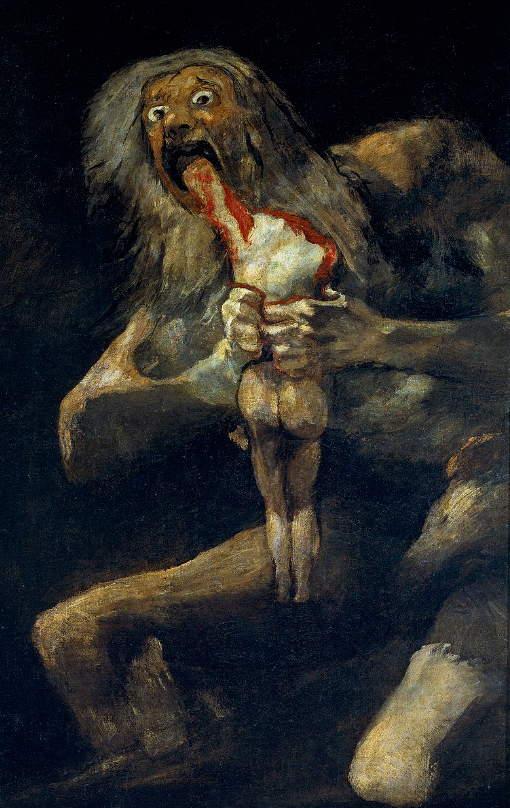
Francisco Goya’s Saturn Devouring His Son.

My favorite musician now is Sufjan Stevens. When I listen to him, I feel that connection between those who inherited an imposed faith, a fraught relationship with the spirits. It’s been with us both since birth, seen in our relatively unusual names. He was the Midwestern kid with a Muslim name; I have a Christian one despite my overwhelmingly Islamic ethnic group, the Fulani of Niger/Nigeria.

The most magnificent work of art I’ve ever seen is Goya’s Saturn Devouring His Son. A+ nightmare fuel.

The one book I recommend to people (I generally don’t) is Sum by David Eagleman. It presents 40 possible versions of an afterlife, written from the perspective of a neuroscientist with a sublime imagination, a whimsical style. When I’m up all night, harassed by the dread of death—I really, truly, honestly have to die one day?—every once in a while, I get almost excited for some great ride ahead.

Deadpan stand-up comedy is the soundtrack to all my writing sessions.

“I’ll spend one whole day fussing over the punctuation of a single line; I’ll waste the entirety of the next day changing everything right back. There’s a natural byproduct of this waste, though; I learn things. ”
— Mary-Alice Daniel

Throughout this interview series, I’ve been asking writers to share a bit about how their religion, culture, or heritage shows up in their work. What about for you?

If I do a reverse engineering of my work, I see that one of its most significant elements is syncretism, which I define as “the phenomenon of disparate religious traditions colliding.” My native tribe is nearly synonymous with Islam, but I was raised by Evangelical parents in what they made a field of “spiritual warfare.”

Around the ill-defined edges of this apocalyptic battlefield, the indigenous religions of Nigeria survive—within my family, mostly in the form of superstition and credence in curses. I think of poetry as remaking an original cosmology from these contrastive influences.

This is so powerful: "Around the ill-defined edges of this apocalyptic battlefield, the indigenous religions of Nigeria survive—within my family, mostly in the form of superstition and credence in curses. I think of poetry as remaking an original cosmology from these contrastive influences.”

Can you share one or two lines, or even a poem, that inhabits/gives life to this merging of influences?

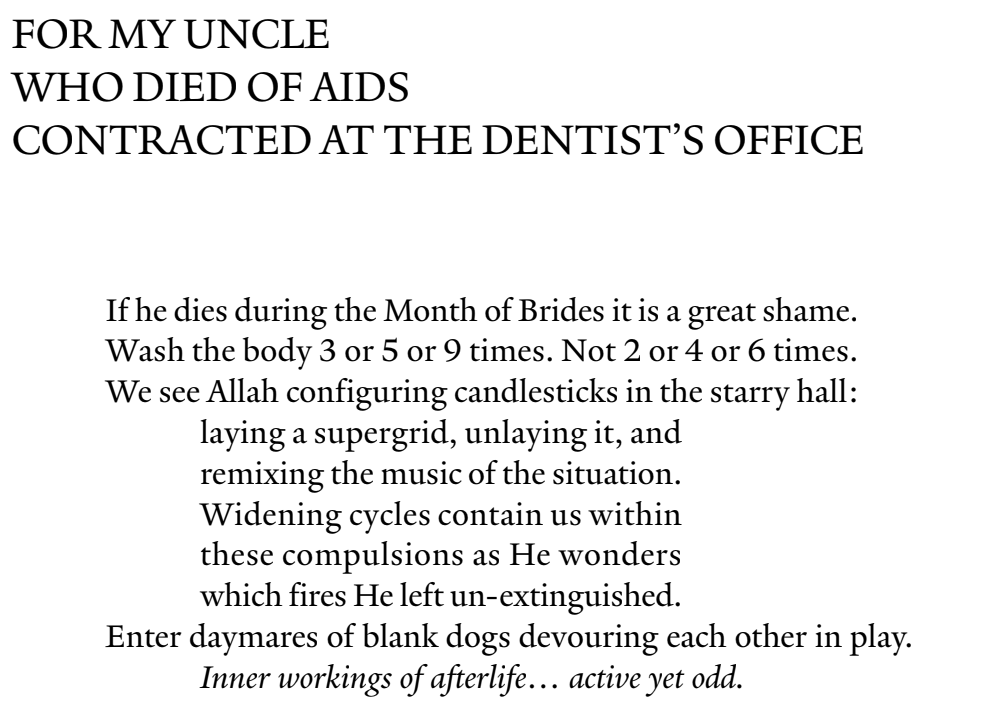
Mary-Alice Daniel: Here is an excerpt from "For My Uncle Who Died of AIDS Contracted at the Dentist's Office.”

Was there an a-ha moment that led you to write or create? Was there an experience that reaffirmed what you do and why?

“Around the ill-defined edges of this apocalyptic battlefield, the indigenous religions of Nigeria survive—within my family, mostly in the form of superstition and credence in curses. I think of poetry as remaking an original cosmology from these contrastive influences. ”
— Mary-Alice Daniel

When I lived in Connecticut for 3 of my tween years, I walked home in half-light. After school, 4 p.m., it was already getting dark. My portable CD player got me through those depressing walks: inside it spun the songs of Joni Mitchell, Paul Simon, and Fela Kuti. I wanted to sing lines like theirs. I can’t sing, so I write.

Who are a few contemporaries/mentors/writers who have made an impact on you?

Only 3? This is a really hard question. Of dozens, the first who come to mind are: poet Safiya Sinclair, who is my role model even though we’re the same age; Kwame Dawes at Prairie Schooner, who champions my work; Elizabeth Scanlon at American Poetry Review, who likes my weirdest stuff.

And finally, what might be your biggest piece of advice to a writer?

Find critics of your work who practice radical honesty. We all have blind spots; they are dangerous.


Mary-Alice Daniel was born in northern Nigeria and raised in England and Tennessee. After attending Yale University, she received an MFA from the University of Michigan and a PhD in English Literature and Creative Writing from the University of Southern California. Mass for Shut-Ins, her debut poetry collection, won the 2022 Yale Series of Younger Poets Prize. Her first book of prose, A Coastline Is an Immeasurable Thing: A Memoir (HarperCollins/Ecco Press) will be released on November 29, 2022.

In Interviews, Poetry & Prose Tags Mary-Alice Daniel, Yale Younger Poets Series, A Coastline Is an Immeasurable Thing: A Memoir
Comment

Candy Corn Saturdays by Mariana Louis

October 20, 2022

BY MARIANA LOUIS


Candy Corn Saturdays


My mother had a name for those rare autumn days. The days when you’d shuffle into the car in the gray of morning, shivering in your fall jacket as the trees flickered by, getting progressively golder, browner, redder, as you flew down the Grand Central Parkway toward the eastern coast. The days when the sun slowly pushed through the celestial gauze and opened up in easy yellow ripples of early afternoon that made you tear off your jacket and cast it away onto the car floor. The days when your braid would come undone strand by strand as you cranked down the window to gulp the warming sea-salted air and stare up at the hawks looping in lemniscates overhead.

The days when the best thing to eat was pancakes and strawberry syrup, your smiley face of eggs and sausage peeking over at you with their weepy, yolky eyes as you dropped at least $3 in quarters to the claw machine for a peach-colored stuffed puppy with blank, black beaded eyes. The days when you’d serpentine through those old Suffolk County roads, stopping off to place a stone on Jo-Jo’s grave before beginning the search for apples or pumpkins or gourds, always on the hunt for the reddest, the roundest, the weirdest one.

The days when you drove right into the roaring gaze of the setting sun, silently gnawing piece after piece of candy corn, as if afraid it would all disappear with the coming dark. The days when you forgot the dark, when you forgot the shadows that followed you along the edges, when you forgot the cold fear that had swallowed up your mother’s heart and the cold of winter that was closer than you could tell. The days when your own heart felt free to love, to be loved, as if love was the easiest thing that ever was, the safest thing, as if all of it was for you, because of you.

The days when you believed that you were special, but also simple, when you felt the preciousness of living, when you knew that there was no other meaning in your little life but to be alive inside of it, to meet the sun and sea and earth, to enjoy sweetness when you had it. The days when infinity was a long car ride under the naked sun in the chill of late autumn, and to be exactly as you were was all there was.

I should have always known my mother would die on a day like this. A day in late October when the crimson leaves of our old maple tree still held onto the branch, and when the sparrows that

lived in her hydrangeas chirped like it was summer though the purple flowers were long gone. A day when the wind was quiet, the sun shimmering and cool, the sky that perfect painted blue, and just a dollop or two of dense clouds passing overhead. A day when the light filtered in through the stained-glass stickers my mother had placed over every arched window, and the sweet century-old musk lifted up from the wooden floors. A day when all the years seemed to gather behind you and the world was all horizon ahead. A day when there was nothing left to do but witness. A day to watch as the rage slipped away, the guilt slipped away, when forgiveness was unspoken and easy. A day to at last break the cold barrier of touch, and take her hand as her yellow-ringed eyes opened and sank away. A day to whisper of love where love was thought to be lost.

My mother named those rare autumn days because such things must be named. The days when we are sparkling and alive, and then days we hold vigil in the shining hours of death. The days when we can look at what was through what is now and remember all of it with grace. The days when the angels that haunted us return to our side and fold their wings around the holy moment that is the most fragile and terrible and cherished thing we have known. The days when we know we are as special as we were once promised to be, and also becoming always more human. The days when we hold life as it is, warm and easy and true, and do not ask it to change, but know in a day, an hour, a minute, everything will.

Mariana Louis is a professional tarotist and spiritual educator, and a mystic of the human heart. After discovering the work of Carl Jung and exploring the psychology of soul, Mariana left her career as a musical theatre performer and returned to academia earn her master's degree in Western Intellectual Traditions, where she focused on archetypal transformations of the Divine Feminine and occult philosophies. She then began Persephone's Sister, a platform for psycho-spiritual wisdom, primarily through the lens of depth psychology and tarot. Mariana is also a part-time poet, lyricist, and aspiring novelist, delighting in the works of Rainer Maria Rilke, Hildegard von Bingen, and Paul Simon. She lives contentedly with her Taurus husband and two feline familiars in Astoria, Queens.

In Personal Essay Tags autumn, mariana lewis
Comment

Poetry by Ellen Huang

October 20, 2022

BY ELLEN HUANG

Lying Upon My Wings


They take a while to attach. I unfold

the wings out of the packaged chrysalis &

I tie the black string about my neck.

It covers me, in lightness and blue,

the weightless swish of new wings.

In this hollow, I dress for myself;

I let in the sun for the precious gift of time,

dance in the underground at midnight,

write cross-legged in the candlelit corner,

nest myself in the hunger for stories.

flickering ~ fleeting ~ necessary.

Bless this space on rainy days

when grey and softened edges are beautiful,

when the mist of not-knowing is soothing.

cloaked in a piece of the sky, I am enough.

I lie upon my wings and breathe story,

held together by lamp-lighting pursuits, by

the simple imagination of flight.

Ellen Huang (she/her) is an aroace lover of fantasy and writer of fairy tales. She reads for Whale Road Review and is published/forthcoming in The Madrigal, Moss Puppy Magazine, Gingerbread House, Honey Literary, celestite poetry, Love Letters to Poe, Lanke Review, K’in, Serendipity Lit, Enchanted Conversation, and more. She is currently working on a chapbook of fairy tales, a collection of diverse fantasy, and an anthology of asexual horror/supernatural stories. Follow @nocturnalxlight on Twitter or worrydollsandfloatinglights.wordpress.com.

Tags Ellen Huang
Comment

Poetry by Justin Groppuso-Cook

October 20, 2022

BY JUSTIN GROPPUSO-COOK

I Cried Enough


To fill a small plate, eyeshadow running over the lip. I cried
from the absence of an overdose, abuse. Consumed
with a tongue bittersweet, I cried longing: Let me
marinate in the sacred & the sin. Cook me on a open flame
of mistakes. I cried in cups of varying shapes to see
if the water would taste the same, the curvature of
my knees refracted. Submerged in a depression
of pooling ink, I bled through the page.
Cried a river to cross it to you, my butterfly: Lift me
to the surface, drift with me to shore. You see,
things grown cold take time to thaw; I’ve watched an icicle
tearing up. Weathered through with a breath of light—
the frost of my muscle tissue melting with memories
of evergreen, these spaces lost within restored.
I cried possession into my palms, pruned. My handprints
like a fossil. What is this waking? Cried mirth. I cried at birth.
Cried for my father who couldn’t for himself. Cried out for a name—
the darkness. Cried for consciousness. Cried Anubis. Cried
Lucifer, Medusa. Cried as I squeezed pomegranate beads
& rubbed them onto my face. I cried a whole spring for the tulips
& lotus to hold their own. The fire wept as well—you know,
a well I filled with disillusion, threw in my loose change.
I cried for too much love. For all of the above.
For what I have done with this body: split
my radius & cried for the chitin of one wing.
Cried a perpetual state of morning. For the sorrow
swollen like cumulonimbus. Thunder. Cried for what I thought
was a casket. Turns out: a chrysalis. Called that chrysalis
my eyelids—my pupil, a pupa breaking. What is?
This waking. Flooding with light my vision: photosynthesis.

Justin Groppuso-Cook is a Writer-in-Residence for InsideOut Literary Arts Project and Poetry Reader at West Trade Review. His poems have appeared or are forthcoming in Best New Poets 2022, Crab Creek Review, EcoTheo Review, Prometheus Dreaming, and Rogue Agent among others. He received the 2021 Haunted Waters Press Award for Poetry and has been twice nominated for the Pushcart Prize. His chapbook, "Our Illuminated Pupils", was a semi-finalist for the Tomaž Šalamun Prize (Factory Hollow Press). In 2022, he was a resident at Writing Workshops Paris. More information can be found on his website, www.sunnimani.com.

Comment

Poetry by Audrey Gidman

October 20, 2022

BY AUDREY GIDMAN

pillow talk


a crest of areola just above a hemline. plum cotton. window cracked open. lace curtains. my lover painting on the floor. paper cranes. silk thread. gold chain on her ankle. a bowl of dried roses. collarbones.

whiskey. a storm. a storm & a boat. when they leave. when they come back. striated granite. a ribcage.

gravestones. wrists. sparrows on a telephone wire. 4 o’clock in the morning. snow.

blood. chrysanthemums. heartbeats. snow.

birch trees. bare feet. their eyelashes. home. their eyelashes. home. a river.

stubbed toes. dry mouth. childhood.

a bowl of water on the ground. a bowl of water catching grief. a bowl catching grief like rainwater. bowl of water catching. catching water. catching grief. catching grief in a bowl. catching grief in a bowl like rainwater water. catching grief. hands full of water. catching it and then letting go.

bluebirds. a bluebird in a maple. a cardinal. birthing. then letting go.

loons on a lake at sunrise. accordions cutting loose over water. cutting loose through mountains. banjos plucking by a campfire. a long hug after such a long time. then letting go.

I turned myself into myself & was

—a lighthouse

—a locket

—a sinking ship

—water

—crows drifting by on their backs

—starting fires in the dark

—braiding dandelions into chains & unbraiding them

—a corridor

—a condor

—a window

—a field

—something else


note: title borrowed from a line in Nikki Giovanni’s “Ego Tripping (there may be a reason).”

Audrey Gidman is a queer poet living in Maine. She serves as chapbooks editor for Newfound and assistant poetry editor for Gigantic Sequins. Her chapbook, body psalms, winner of the Elyse Wolf Prize, is forthcoming from Slate Roof Press.

In Poetry & Prose Tags audrey gidman, nikki giovanni
Comment

Poetry by April Lim

October 20, 2022

BY APRIL LIM

Sonnet for the Cambodian Boat People


We are nothing but clouds stuck in the sea,
Whispering for winds that may never come,
How far do boats sail when they have to flee?
Keep the whispers to a quiet, no hums.

If we are caught, they kill us—No mercy,
Wild pirates with no laws at their core,
So keep mute, stay sharp, throats dry and thirsty,
They’ll slay the men and keep women as whores.

We’re almost ashore, 12 days and 12 nights—
Strangers at first, tied together by luck,
If we reach land, we’ll scatter: bird in flights,
To experience salvation awestruck.

Over jasmine and chrysanthemum sips,
I know our story will land on false lips.

Refugee Alchemy


Escape: 1.5oz of gold per body,
no guarantee of an intact soul, Conscious can never 
revert: War will 
transmute a human's mind.

Received: a familiar body that cannot essence
the same. Cannot pray without lying, without spilling 
tears into land: one 
exhumed of your father. 

Forge: matriarchal heirloom— 
gold wire, pebble gems.
Earth to your daughter's wrist. If she has to flee,
she will pay with this. 

Charm: silk spun red rioting
incense and gilded prayers, tighten
twines, blood slips loose snarling legacy
into her veins⁠— 

She: elixir of         salt      forest      prayers,
wears trauma like a birthright. Palms cradling full
moon spilling from lakeside reflection, she pools   
    into her skin.

April Lim is a Chinese Cambodian American writer from Houston, TX. She has a B.A. in Creative Writing from the University of Houston where she was awarded the Howard Moss Prize in Poetry and the Bryan Lawrence Prize in Poetry. She has received fellowships and scholarships from Tin House, Kenyon Review Writers Workshop, The Watering Hole, Martha's Vineyard Institute of Creative Writing, and elsewhere. Her poems have appeared or are forthcoming in Palette Poetry, Sweet: A Literary Confection, Bayou Magazine, and elsewhere. She is currently pursuing an MFA in Poetry at Oklahoma State University where she is an Editorial Assistant for the Cimarron Review.

In Poetry & Prose Tags April Lim
Comment

Before I Was Born by Kate Leffner

October 19, 2022

BY KATE LEFFNER

[content warning: domestic violence]

Before I Was Born

I finally left home when I was twenty-two. My father moved me to Boston so I could attend a master’s program and in two days, drove us six states in a pick-up truck from Wisconsin to Boston. I didn’t know how to drive and still don’t have a license, but since I’d always lived in cities as an adult, it never seemed to matter. It was summer when we left and when we passed through Chicago, hot and congested with tourists and buses, I started to roll down the window. Don’t, my dad told me. I’ll put on the air conditioner. I didn’t know how to say that I also just wanted to suck in breath from the city, just one last time. I attended undergrad in Chicago and I felt my chest tighten when we passed the apartment where I lived alone.

The apartment, more of a room than anything else, had felt like the inside of my mind. I kept it so clean, in the hopes of mitigating my panic attacks, that it barely looked like I lived there. I was obsessive about my eating, I thought that food was something that could also be kept clean, and only ate eggs, spinach, avocados, or nothing at all. When I first toured it with my father, the real estate woman whispered to me, “Seems like your daddy takes care of his little princess,” a line straight out of a B-rated movie.

“Are you sure you want to go?” my dad asked me. Right before I left, my mother raced out of the house with a weekend bag she had recently bought for herself. She pressed it to me with tears in her eyes. Take it, she said as memories flooded in. I saw her explaining Kierkegaard to me when I was a kid, drawing with pastels in the kitchen. I saw her screaming and my father punching a wall but when I blinked they were gone, buried deep. I thanked her and pressed the bag close.


Before I went to Chicago for college, my father said he’d get his shotgun during an argument. Afterward, I was claustrophobic and would take the stairs instead of the elevator, convinced strangers had guns in their pockets. In my first year of college, I sent my mother an email that said that I wouldn’t come home until my father went to therapy.

My mother told me to bring it up with my father. I did not. Instead, I would wait for my parents to pick me up for the holidays in the lobby with my bags under my arm and fresh cookies in a Ziploc bag.


In the parking lot of a gas station in Ohio, with the lamplight flickering on and off, my father nodded off. I read a romance novel my mother packed into my bag. It was about a woman who escaped a domestic violence relationship with her husband and fell in love with a policeman in a beach town. My mother read a lot of these books.

When the woman was in the bath, the ex-husband snuck into her house. The policeman appeared and pointed a gun at the ex-husband. The woman cried and the policeman held her gently and told her he loved her as the ex-husband was carted off to jail. When I was a kid, my mother closed the curtains when my father started to raise his voice. When I suggested we leave, go to a shelter, or call the police she told me that I didn’t understand what it was like out there, in those places. Even when he called us cunts and charged, sending us spiraling to the

floor, even then she told me not to call. Having a home, and private schools, gave us a certain safety, and the love we had for him, the intense empathy that started conversations: he was tired. He was overworked. He didn’t know how to handle his feelings because of the way he was raised. He didn’t hit us like that. At times, I would convince myself of these things and ask her to stay, fearful of the outside world, only to spiral into a panic that we had to leave, and then into a deep suffocating sense that there was nowhere we could go.

Often, I felt sorry for him because he couldn’t control himself. I remember holding him while he cried.

“Where are we?” my father said in his sleep. I shushed him. He told me to just leave him alone, God, why wouldn’t I just shut up? He needed to sleep.


I had a difficult time making friends. I felt that I was always missing cues, and the closeness I felt in my family felt impossible to replicate. How would anyone understand the incredible safety of hearing my mother affectionately call my father an asshole after a fight and hearing him laugh instead of scream? Or understand the fierce loyalty I felt toward my brother when he shoved my dad when he went to hit me?

My mother, when she was feeling particularly resentful, would say I was cold to others. When she was feeling more generous, she said I just didn’t know how to let people in. This changed in my first year of college. I fell in love with a woman in my Russian literature class. She was in her junior year and had a full-time job, gave out practical advice, and had a dry sense of humor. We wrote each other letters in the summer about Checkhov, Putin, and Dostoevsky, which felt like discussing my unformed thoughts, unspeakably intimate. Once one of the letters arrived right before my father started getting worked up and I remember holding the letter tight to my chest like a talisman while he shouted. I felt that the way my friend loved me and the way my father loved me were inexplicably different but I didn’t know how to articulate it. At night, I started Googling phrases I previously ignored: learned helplessness, Stockholm Syndrome, trauma. I circled around the word abuse but could not land. That was something that had happened to my mother and my grandma, to other women, to people whose fathers’ didn’t move them into apartments or cook them dinner at night. Wasn’t I too functioning to be abused? Wasn’t I too privileged?


The first time my father hurt me, I was five. It is one of the clearest memories I have. I was sick and my throat was scratchy. My parents were renovating their bedroom and were sleeping in the living room on a pull-out bed. I shook my father’s bare sweaty shoulder and his hand shot out and gripped my neck. He stood up fast and held me up in the air. I grabbed his hand and tried to speak, but couldn’t get anything out. His eyes were open but he made no sound and eventually my mother woke up and said his name. He let me down. Sleep apnea, my mother said the next day after furiously researching.


There was a bridge to pass over to get from New York to Massachusetts. My father laughed in a nervous way. He hated heights but loved nature and the mountains we passed through looked like something out of a magazine, green and purple, close enough to touch.

“It’s beautiful,” he said. “Why don’t we do more things like this?”

“I'm hungry,” I said, digging through my backpack.

“You are a brave, brave girl,” he said to me. He was crying. “How are you so sure?”

“I believe in God,” I said, though I didn’t and the words felt false on my lips. But it was something to say, something with power behind it. If I told him I believed in myself, it didn’t feel like something he would understand.

“You are braver than me,” he said. The comment should have made me feel closer to him, flattered even. Instead, it made me angry. I could feel him leaving in the way he didn't look in my eyes. I didn’t realize it would be this easy, all I would have to do was not need him, and suddenly he would become small and quiet.


In the apartment, he set up my DVD player and bed as I put away groceries.

“It’s ugly,” he said. “I can’t leave my daughter in a place like this.”

“I like it,” I said. “It’s okay.”

“It’s not,” he said. His face was red and it seemed as though I was both the daughter he wanted to protect and the one who put her in danger. I was both an extension of him and an enemy.

“Why are you never happy?” I said. At that moment I remembered a story I heard on a holiday with his family. When he was a kid, he wrapped his younger brother up in a blanket and threw him out of a window. Often I can’t tell what my father did or has done, there are too many stories that shift in his or his family’s retelling, and the uncertainty and the love I had for him kept it shrouded with confusion. But there was something about his reddening face that made me think of this story at that moment.

He stopped fighting his brother when he grew up. I had thought this was a sign of maturity, but now I wondered if it was because he could fight back. I had taken it so personally when he wanted to hurt me. I thought it was because I had been pushy or demanding. It was clear now watching him and the familiar narrowing lips that he had been battling something long before I was born.

When he left, he told me to text but I could see something had changed in his eyes.

“Sure,” I said and locked the door.


Years later, after my parent’s separation and his jail time, I learned to sleep in my bed throughout the night and got a new phone number. After I became someone else, poorer but self-efficient, an average girl fading into a street of people like at the end of a Meg Ryan film, it finally feels safe to let myself remember the things I liked about him: cooking squash and watching TV. In the aftermath, I let myself miss him.


Please consider making a donation to the National Coalition Against Domestic Violence.

Kate Leffner is a writer and marketing specialist in Boston, MA. Her writing focuses on intergenerational trauma, grief, queerness, and radical self-care. She has an MFA from Emerson College and has featured in The Femme Edition and The Dillydoun Review. She lives with her girlfriend and their two cats, Orchard and Phoebe.

In Poetry & Prose, Personal Essay Tags Kate Leffner
Comment

Poetry by Jordan Cameron

October 19, 2022

BY JORDAN CAMERON

imagined teacups

how can you see a memory that doesn’t belong to you?

with an earthbound combination of intuition and influence
thin floral air inspires blood / vessels for someone else to speak—
my very own seance

i listen and create a picture of a self i never knew
alone and pointing
know without thinking that she understands something you cannot

ask me to describe the smell of lilac
and i can only offer you the memory of open windows

Ask me about the taste of chamomile
and I can only describe the feeling it leaves in my newly warmed mouth
after it has disappeared down my throat.

I have imagined teacups
pink milk glass once served in your home

I breathe deep and answer with honey crackling from my throat
Redefined ectoplasm

The sweetness smothers me

But I am not afraid of drowning as you press your hands against my shoulders and whisper gurgling I
love yous

Until I return, gasping fresh lilac air
And rinse meaningful dregs from my cup


i came from the garden

“I feel a thousand capacities spring up in me….I am rooted but I flow.” - Virginia Woolf, The Waves

I reach into the soil, searching for bursting seeds
buried deep beneath the surface.
The soft and mealy earth parts around my fingers
and I am tangled in roots.

They return my grasp;
we are inseparable &
Underneath my skin
the roots substitute my veins

Someone else planted me here
Wanting more of a good thing
Heavy-headed pink returns, nodding to sleep in the rain

Long after the gardener left her home
I became part of the design
Like the painting in the stairwell
And the stains on the floor
I was there to see everything else change

How can I go on without spilling any blood?
The ritual calls for a sacrifice
and I oblige from below lilies of the Valley

I rise from the soil, searching for rolling skies
stretching far beyond the horizon.
The warm and crumbling earth clings to my hardened skin
and roots are tangled in me.


Jordan Cameron is a New Englander living in Philadelphia. She is a photographer and writer, exploring and expanding perception. Her work has been featured in Dream Pop Journal, Eclipse Lit, Ghost City Review, and elsewhere. She has exhibited her photography in Philadelphia and Abington, PA and her poetry has been nominated for the Pushcart Prize. You can find her on instagram and twitter at jordanofjune and on any given night walking around with a camera at sunset.

In Poetry & Prose Tags Jordan Cameron
Comment

The Hanged One Season, by Meg Wall Jones

October 6, 2022

BY MEG JONES WALL

The Hanged One Season


I don’t understand sleep: how it works, where people go, how anyone learned to travel in this manner. The closing of eyes, the quieting of mind and body, the ability to sink into that strange unknown world of mystery and memory, weaving souvenirs from our consciousness into tangled webs of sense and nonsense — it’s a skill I lack, a capacity for release that I have never been able to master. 

Photo by Meg Wall Jones

Sleep is a forced pause, a time of stillness and surrender. It’s a liminal space that still manages to feel commonplace for most; a regular part of daily cycles that provides comfort, recovery, clarity. Every night is an opportunity to slip into darkness, to find a gentle temporary death, to embrace liminality and adventure to far-off, unknown spaces within the self.

But most nights, I lie awake, alone, listening to sirens and alarms, the stirrings of the city outside my window, the side effects of so many people living in such a relatively small space. Most nights, I watch the stars come and go, the moon rise and fall, wait patiently for the sun to break the horizon and usher in a new morning. Most nights, I fail to find that strange, mysterious place, unable to reach the beckoning grasp of slumber and make my way into those shadowed lands.

Sleep doesn’t make sense to me. There’s no map to reference, no hand to hold, no path to follow. It’s just me and my insomnia against the eternal night, the twinkling stars and city lights, watching one another, uncertain of what to do next. Sometimes days go by before I find rest, before my body is so exhausted that it drags me under, before I stumble into that unfamiliar place and hope that eventually I’ll be able to claw my way out again.

Photo by Meg Wall Jones

In autumn, when the veil is thin, when the shadows have lengthened, when the nights slowly gobble up the hours and greedily swell with excess, sleeplessness becomes seasonal. The heaviness and humidity of the air slipping into crisp coolness, leaves slowly rotting into spectacular decay, shadows thickening and loosening. It feels correct to bear witness to the longer nights, to consciously wander through thoughts and ideas rather than getting swept up into memory. The world feels restless and I can explore my own mysteries, can make my own liminal space, can serve as a guide for those who haven’t been to this particular crossroads before. We all hover at the veil together, contemplating how and when we will pass through. 

It’s Hanged One season, autumn: a time of sacrifice and release, an opportunity to let something wither in the most beautiful way so that new growth can eventually emerge. The Hanged One is a necessary, inevitable clearing; the pause before winter’s Death, the moment when expansion ceases, when we observe what happens when our movement halts and our effort stills. It’s the deep breath before hibernation, the slackening of muscles, the willingness to take brittle air into our lungs and let it simultaneously soothe us and wake us up. What have we been doing, building, becoming? What have we been working towards, and where does this pause land in our own personal cycle? Who did we used to be? Where are we being called to let go of a dream, a pursuit, a version of self? And what happens if we don’t give that thing up easily, if we refuse to surrender?

Autumn is for harvest, for celebration – but it’s also for slowing down, releasing, honoring. Winter may be the full stop, the recovery, but autumn hints at the bend in the road, gives us daily reminders to contemplate the slow rot and decay that surrounds us. All that blooms eventually returns to the earth, dust to dust, year after year. Whether we cling desperately to summer or welcome winter with open arms, we have no control over the cycle, the seasons, the change. Either way, we become the Hanged One, powerless and patient, silent, observing: waiting for whatever comes next, even if we already know what is ending.

Photo by Meg Wall Jones

It’s strange but beautiful, not unlike all of those orderly, sleepy little deaths. Autumn isn’t bothered by our feelings or desires, our fears or uncertainties, and neither is sleep. It simply comes when it’s time, holds us in our waiting, lets us feel whatever we need to feel. Autumn lets us stand quietly, in awe of its power and grace, whether we’re ready to slow down or not.

Sleep, seasons, stillness, all feel out of my grasp these days. This strangeness that I feel every night when I crawl into bed, lying still, hoping that slumber won’t notice me creeping around the edges and trying to slip in silently, stealing a few hours of temporary death: it’s uncomfortable, difficult to define or describe. My mind and body, fighting a battle I don’t understand, unwilling to accept the reality of the Hanged One, wishing somehow to overcome exhaustion and live beyond cycles, beyond sleep.

Autumn reminds me that rebirth is always around the corner, that an awakening beyond the physical can happen at any part of the cycle, that giving up control can be a necessary breaking point rather than something to fear. 

Every morning, and every night, is a new chance to surrender. And perhaps this year, autumn’s shadows will help clear out my own.


In Poetry & Prose, Personal Essay, Magic Tags magic, tarot
Comment

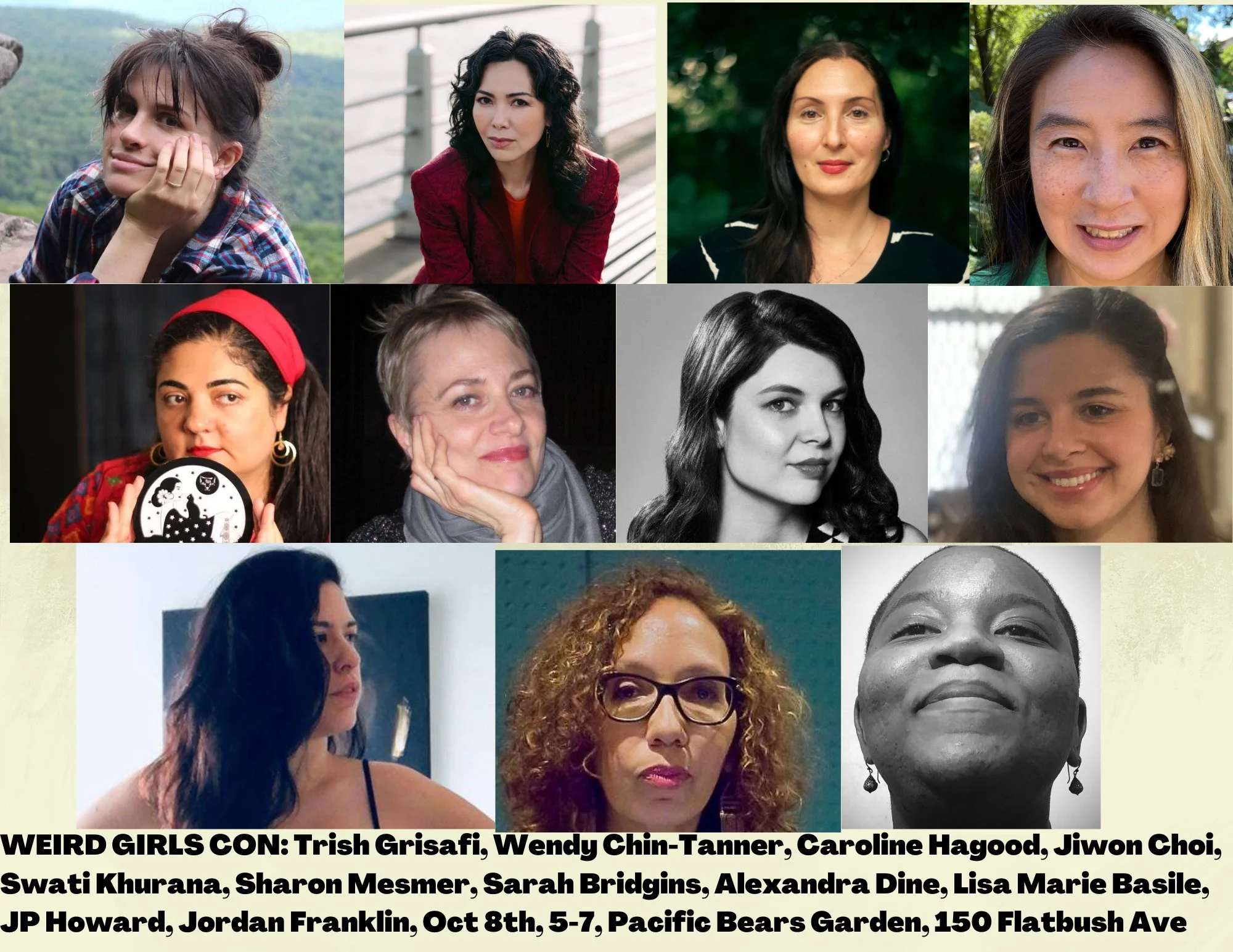
Caroline Hagood on Weird Girls and the Inner Monster

October 2, 2022

An interview with Caroline Hagood
by Lisa Marie Basile

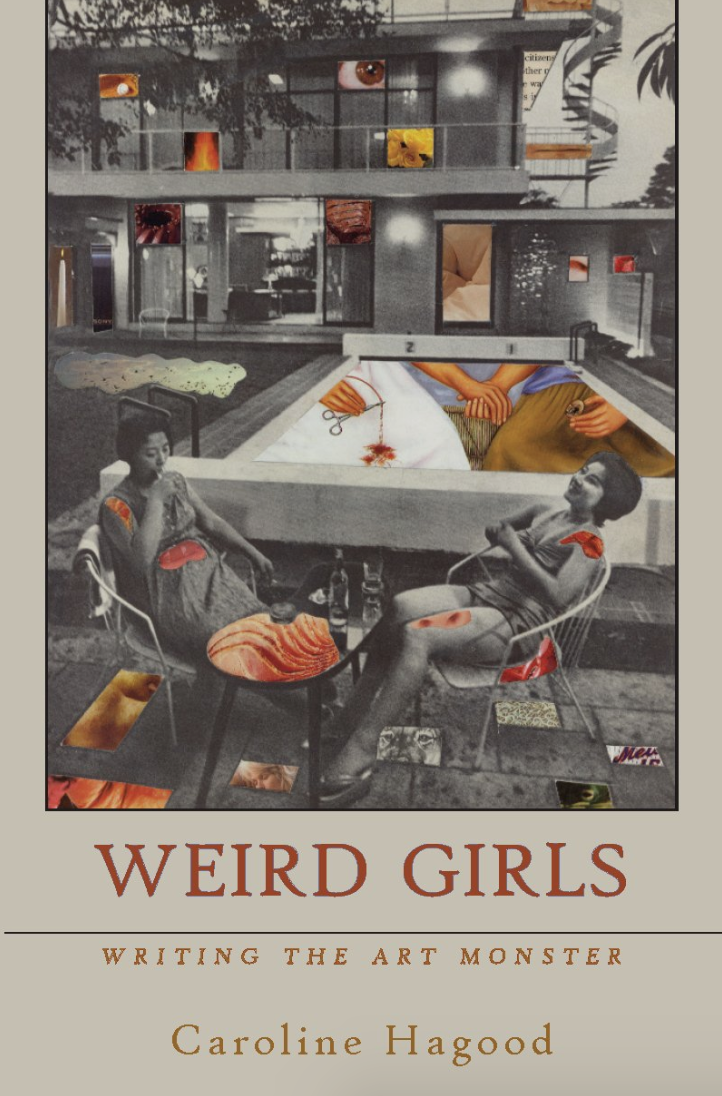
Lisa Marie Basile: Can you tell us all about Weird Girls: Writing The Art Monster? I am so intrigued by it (as a self-professed weird girl, of course) and so excited to read it. I’m also excited to read with you (and so many other incredible talents) at your reading event, Weird Girls Con.

Caroline Hagood: WEIRD GIRLS: WRITING THE ART MONSTER is an essay collection or book-length essay, depending on how you see it. It's a collection of different essays, but they all overlap, and circle back on one another. I was inspired to write the book since I've always been a weird girl, haha. But, seriously, after reading Jenny Offill's Dept of Speculation, I saw that so very many women writers were suddenly writing about the "art monster," or the writer who gets to focus monomaniacally, monstrously on his or her own work—but the catch was that the ones who usually got to do this were men. I have always been obsessed with the topics of creativity and monstrosity, and so this book came to be.

Ah! I'm so interested in the inner art monster — how it shows up, how it's praised, how it's rejected (so oft by men), and why it's so alluring. Sometimes, I think the inner monster is the only thing that keeps me writing — that fiendishness, that obsession. I especially sync with the art/creativity monster as a Capricorn Rising, the archetype that is often associated with obsessive Doing. It's interesting because on one hand, there's the oft-critiqued "girl boss" archetype — yet on the other, the obsessive, frenzied woman who wants to learn and do more is something that should be embraced. Why do you think so many people are exploring woman as art monster?

I love these questions so much. Yes, I absolutely share your fascination with the inner monster/the obsessive and passionate pursuit of art. It’s at the core of my writing practice. I think the woman who has had to fight tooth and nail for her creativity, and even the concept of the art monster, is as old as time, but I think Jenny Offill put a name (and connected story) to it in her 2016 novel Dept of Speculation.

Since 2016 I’ve been seeing women/femme/nonbinary writers grappling with this concept constantly. Then I think movements such as #metoo and sociocultural situations such as the way women and mothers have been impacted by COVID-19, for instance, coalesced with the whole art monster narrative to form a super-monster that’s trying to claw its way out of every text I pick up these days. I always pull this art monster out of there, and I’m so happy to see her.

Who are some of your artistic influences, and how do they appear or work their way into your own work?

I guess I would say I'm a fan of the obsessives when it comes to literature and creativity in general—the creators who just don't know where to stop, who exist in ways that are determined to be "too much," who write or film or paint in ways deemed to be "too much," and so forth.

I also love my hybrid people, those who write things where you go, "wait, is this a poem, a novel, an essay, and do I even need to know? Nope!" Those are my favorite works of art. I used to co-run a reading series called Kill Genre, and I have an upcoming panel with the same title because I guess that's my thing. :)

I also love hybrid people. I'm over strict genre separation and definitions, although I see why people often turn to them. What would you tell a writer who is anxious about or hesitant to cross-play or blend genres?

I would be like, “Wait, what is this genre you speak of? I’ve never heard of it.” Then I would quote Lady Gaga, “So there's nothing more provocative than taking a genre that everybody who's cool hates—and then making it cool.”

But seriously, I would invite this writer to step out of this limiting way of thinking of writing. I would say not to worry about playing with genre and, ideally, to focus on inventing her/his/their own new genre.

How does lineage or culture shape your work? It’s a question I ask every writer. I love to see how the threads come together.

My mother is a very powerful, wonderful, difficult woman who worships literature, and I really do think of myself as carrying on this piece of our family heritage. She was a businesswoman who wrote and painted on her own time and would take me outside to look at the moon at night to get inspired. I love her for this.

Can you share with us some of your writing rituals? What are the little things you do to collaborate with the Muse?

Well (and I'm pretty sure nobody at all will care about this little detail) I absolutely must have my hair up. I can't explain it, but I cannot write without this whole situation being taken care of. Then I really like to listen to weird jazz without lyrics because it inspires me without distracting me with words.

Then I know it always sounds creepy, but I like to look at the photographs I have of women writers around my work area, such as the one of Mary Shelley writing with a quill. If I don't feel in the mood to write, I just look over at them and it gets me going. They are my coven, and they don't even know they serve this purpose for me (the living ones I mean). I promise I"m not as creepy as I sound.

Um, looking at women writers. NOT CREEPY AT ALL. Gasp! I love it. This is a certain kind of summoning, an odd little ritual where you call forth their essence. Can you tell me why the Mary Shelley image speaks to you so much? Paint the moment for us. 

 I just love the concept of Shelley being dared to write a ghost story and creating this book about a monster who epitomizes the way I view creativity itself: monstrous, sewn together from the “bodies” of so many different artifacts, well-read, obsessive, creative, poetic, tender, full of longing, misunderstood, comedic, lonely.

Who are some contemporaries who have inspired or helped you in your creative journey?

When I was at Fordham, I felt very inspired and supported by what I called my creative writing ladies, professors who participated in the dark arts of, well, creative writing: Elisabeth Frost, Heather Dubrow, and Sarah Gambito.

Then, lately, I've been working with Patricia Grisafi on some really fun witchy projects. I was also recently bowled over by the kindness of Erika Wurth. I've never met her in person (we are "social media" close), but she was still incredibly generous with literary advice and contacts because that's what she believes in. And it's what I believe in, too, very much so.

Join the WEIRD GIRLS CON event
Saturday, October 8th from 5-7 PM EST
Pacific Bears Community, Brooklyn, NY

Caroline Hagood is an Assistant Professor of Literature, Writing and Publishing and Director of Undergraduate Writing at St. Francis College in Brooklyn. She is the author of the poetry books, Lunatic Speaks (2012) and Making Maxine’s Baby (2015), the book-length essay, Ways of Looking at a Woman (2019), and the novel, Ghosts of America (2021). Her book-length essay Weird Girls is forthcoming from Spuyten Duyvil Press in November. Her work has appeared in publications including Creative Nonfiction, LitHub, the Kenyon Review, Hanging Loose, the Huffington Post, the Guardian, Salon, and Elle.

In Poetry & Prose, Politics, Social Issues, Interviews Tags Caroline Hagood, Weird Girls, Weird Girls: Writing The Art Monster, Hybrid, Writing, Mary Shelley
Comment

Poetry by Robin Sinclair

September 29, 2022

BY ROBIN SINCLAIR


A Farewell Letter

One day, sooner than we're willing to prepare for

there will be one diagnosis too many for bones to carry

and the flesh will tumble to the floor.

Wooden railroad ties overtaken by the forest and

Annabelle, below the garden.

An eight line poem in a pocket, in an armoire,

perhaps tucked away within the wooden parlor grand

where I sang myself to sleep.

Robin Sinclair (they/them) is a queer, trans writer of poetry, fiction, and nonfiction. Their chapbook, SOMEONE ELSE’S SEX (Bull City Press, 2023), is about living and surviving as a damaged trans person in a damaged world. It is about sex, the commodification of queer history, the collateral damage of the closet, bigotry, finding love, and trying to heal. It is about queer liberation. All author proceeds are donated to the Transgender Legal Defense & Education Fund. RobinSinclairBooks.com

In Poetry & Prose Tags Robin Sinclair
Comment

A Playlist for Fall

September 7, 2022

We could all use some new tunes to celebrate my favorite upcoming season. From Cate Le Bon to Thee Sacred Souls, there’s a little something for everyone.

Read More
Comment

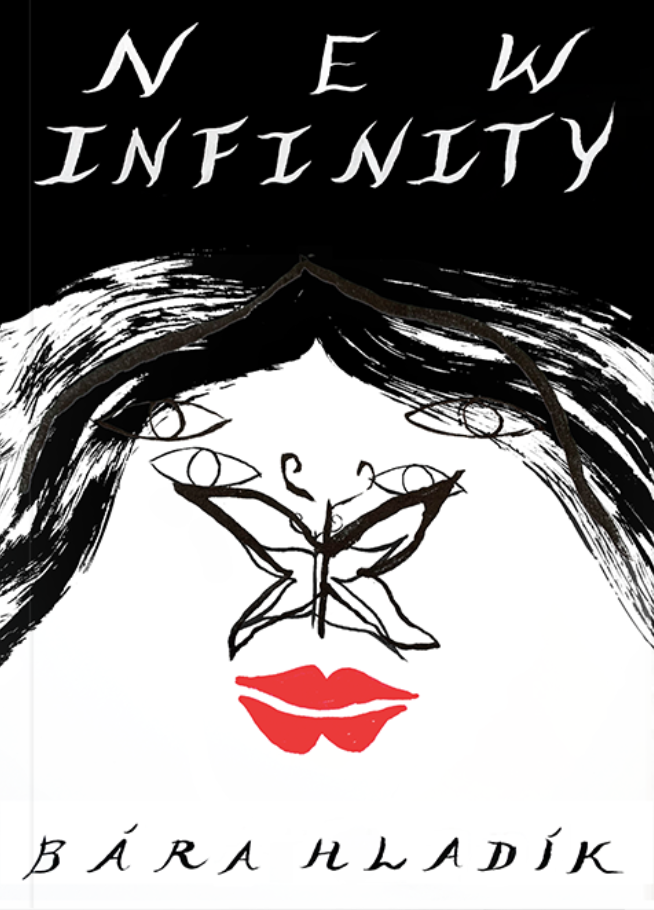
Bára Hladík on 'New Infinity,' Disability, & Folklore

September 2, 2022

AN INTERVIEW WITH BÁRA HLADÍK
BY LISA MARIE BASILE

Your newest book, New Infinity, so deeply speaks to me — not just as a reader and writer (and human!) but also as someone with Ankylosing Spondylitis. It’s so rare to see the very thing that’s changed one’s life come to shape in a literary setting — and done so beautifully. Can you tell us all about it?

My latest book is a hybrid experimental novella about a woman living with Ankylosing Spondylitis, a disease that I also live with. It is an ode to the existential experience of degenerative disease and a philosophical reckoning of a woman in pain. It chronicles moments of her life as she tries and fails to connect, have relationships and make ends meet. It ponders the meaning of existence, life, and failure as she gathers notes from medical literature and self-help books to understand her existence.

The book is inspired by ten years of living with the disease myself, and although fictionalized, the story draws from my own experiences. I created a nameless woman as a way to revisit myself, as well as observe her from a distance. The book blends surrealist stories with poems created from found medical literature, self-help books, books about the cosmos, and journals.

I was inspired to create a literary work that centred the woman in pain as philosophically and existentially significant. I wanted to take her out of the attic, and out of the trope of 'hypochondriac woman' so common in the history of literature, and create a literary work that not only expressed her experience accurately, but portrayed it as a radical experience that challenges the very structures of our society and philosophies.

I can't tell you how affirming it is to speak to another writer with Ankylosing spondylitis — and your writing about it is so potent! 

I've personally found the disease really hard to write about. At first, I thought "this is too specific to really share; no one will 'get' it." Over the years, though, I've realized how the disease had filled in so many of the cracks of my life....and it was nearly impossible to avoid writing about. 

This disease feels like it wants to trap you, physically and emotionally, and that is something that I have felt drawn to exploring in a literary sort of way. But it's been a long journey in figuring out how. What's the lesson? What's underneath the desire? How did you come to write about AS and pain and women, specifically, and was it hard for you to share something so intimate and challenging with the world? 

It means so much to me to hear that, thank you! Seeing your work about AS encouraged me to write more specifically about the disease and share publicly. It is definitely a challenge to write about the realities of Ankylosing Spondylitis. Most of the time I don't want to even share with the closest people in my life, so writing publically about it is hard.

But as you said, it is nearly impossible not to write about it. There are so many silencing and isolating aspects of living with this disease that in some ways I have a need to express a primordial scream of this unrelenting physical and emotional pain. Just as birds who made it through another night of darkness call out to each other in the morning, writing is a way to express existence. 

I turned to reading more and more as my illness took hold and I found I was reading a lot of philosophy. At the same time, most of the stories I encountered about illness, women were framed as 'hysterical' or 'hypochondriacs.' I wanted to challenge this narrative and write a story that centered the sick woman as a philosopher. A story where the experience of sickness was in fact a philosophical act that gives insight into the very meaning of existence. So while the disease is specific, the questions about existence are universal. 

Do you ever feel like disability gives you a new lens, a sort of expanded eye, through which to see the world anew? While illness may bind us (and others) in many ways, it also sort of necessarily stretches how we approach creativity and expansion.

For me, yes. I often feel that although my illness is difficult and painful, it also forces me to stop and deeply consider my place on this earth and in the cosmos pretty regularly. If it wasn't for the fact that at times I have to spend a lot of time recovering from basic tasks, I would be a pretty different person. I have become wiser, resilient, and in some ways more at peace with the chaos of the world.

It forces me to find transformation in the most minute of movements or motions, such as creativity or dreaming or simply breathing. Because I can't 'go for a run' to clear my head, I have to find other ways to move through emotions. This is the source of much of where my creativity is born. It is often in moments of pain in which I can only express existing.

Who or what are some of your recent influences?

This book is heavily influence by Slavic writers - Franz Kafka, Karel Čapek, Jana Benova, as well as surrealist/magic realist writers such as Jorge Luis Borges and Gabriel Garcia Marquez. My linguistic style definitely draws from the fact that Czech is my first language, and the way we play with structure, sarcasm and storytelling is much for fluid and malleable than english. I grew up reading Czech folk stories that blended magic and realism, and Czech new wave films that masterfully played with nihilism, sarcasm and surrealism. These influences all bleed into my work.

I love to learn about how culture or identity shapes a writer’s creative approach and work. I’d love to hear more.

My parents fled occupied Czechoslovakia shortly before I was born. Growing up in rural so-called Canada, my culture was often misunderstood as scary. I learned to walk through several co-existing worlds, always turning back and searching for where I came from. I grew up watching and reading Czechoslovakian books and movies, which are so creative, dark, mystical and wise. My parents are creative and resilient people, and I am constantly inspired by them. There is a saying, that Czechoslovakians have 'golden hands', in that we can create something out of nothing. This is from where I create, creating something out of nothing so that we may learn where we came from and where we are going.

What are some of the Czech folk stories that stayed/stays with you, and perhaps influences you as of late?

There are so many! Czechs are truly folklore encyclopedias. One of my favourites is the Vodník, who is a mythical slavic water spirit. He is a toad-like man, usually dressed in a tweed suit, who sits by the edge of a pond waiting for children to wander by so he can capture their spirits in tiny porcelain pots at the bottom of the pond. There are many great Czechoslovakian films about Vodník and his family, with shots of water people appearing out of sinks and toilets in tailored suits perfectly dry.

Do you turn to any sort of writing rituals or practices? I’m always so interested in how people approach their work and what that process looks like, especially when the writer creates across genres.

Much of this work was written in my head. With my illness, I am often bound by the limits of my body and must spend large amounts of time recovering. This means I am unable to move much for several days. So in these moments, I dream and write in my head. I imagine stories, themes, images. Often, the story is very formed once I hit the paper. I jot down notes of themes or ideas I want to weave throughout and then I sit down and write it start to finish. I then leave it be as I think through problems, and then I ruthlessly edit. Poetry is different. For me it is more of a ritual or practice. Many of the poems in my book were created by physically cutting up books that I found at the thrift store for under 5$.

I found medical books, self-help books, stories and beyond, then cut out individual words or sections of words. I did this all with meditation or images in mind. Then I would mix them into a special wine glass, and draw the cut words into a divinatory reading, similar to drawing playing cards or tarot cards. This practice is very specific and personal to my artistic work so this is all I will share here, but eventually, a poem would come to life.

Was there an certain ‘a-ha’ moment that led you to writing or creating? Was there an experience that reaffirmed what you do and why?

A babysitter once told me that I told her I was going to be a novelist when I was 7 years old. In grade 5, I was writing a story and every week the class would ask me to read the new chapter. It was a story about a family of six women surviving world war 3. Following these years I had a lot of doubt and anxiety as to where I was going or what I was doing, but thinking back to these moments always reminds me that this is part of me whether I resist it or not.

Who are some of the people you look up to or admire?

Thank you to disabled writers @leahlakshmiwrites @bighedva @pchza.

I’d love to hear one piece of writing advice that you think is essential for other writers.

Focus in on your work, your voice, your style. As much as we can learn from others, stay true to your vision. Be confident that what you are creating is important, even if you don't quite see how, yet. Do it for yourself. You're own satisfaction, sanity, passion, whatever. Do it for you.

Bára Hladík is a Czech-Canadian author, artist and facilitator.

Lisa Marie Basile is the founding editor of Luna Luna Magazine. She’s also the author of a few books of poetry and nonfiction, including Light Magic for Dark Times, The Magical Writing Grimoire, Nympholepsy, Andalucia, and more. She’s a health journalist and chronic illness advocate by day. By night, she’s working on an autofictional novella for Clash Books.

Her work has been nominated for several Pushcart Prizes and has appeared in Best Small Fictions, Best American Poetry, and Best American Experimental Writing. Her work can be found in The New York Times, Atlas Review, Spork, Entropy, Narratively, and more. She has an MFA from The New School.

In Poetry & Prose, Interviews Tags Bára Hladík, disability, ankylosing spondylitis, disability poetics, novella, new infinity
Comment
← Newer Posts Older Posts →
feed me poetry
Featured
'quiet grandfathers  in dark tuxedos' — poetry by Scott Ferry
Scott Ferry
Poetry 2025
'quiet grandfathers in dark tuxedos' — poetry by Scott Ferry
Scott Ferry
Poetry 2025
Scott Ferry
Poetry 2025
'made a deal / with Azrael' — poetry by Triniti Wade
Triniti Wade
Poetry 2025
'made a deal / with Azrael' — poetry by Triniti Wade
Triniti Wade
Poetry 2025
Triniti Wade
Poetry 2025
'The birth of a body that never unraveled' — an excerpt by Hillary Leftwich
hillary leftwich
Poetry 2025
'The birth of a body that never unraveled' — an excerpt by Hillary Leftwich
hillary leftwich
Poetry 2025
hillary leftwich
Poetry 2025
'Time's metronome blank' — poetry by Rehan Qayoom
Rehan Qayoom
Poetry 2025
'Time's metronome blank' — poetry by Rehan Qayoom
Rehan Qayoom
Poetry 2025
Rehan Qayoom
Poetry 2025
'There is no choir on the mountain' — poetry by Dawn Tefft
Dawn Tefft
Poetry 2025
'There is no choir on the mountain' — poetry by Dawn Tefft
Dawn Tefft
Poetry 2025
Dawn Tefft
Poetry 2025
'to anoint the robes' — poetry by Timothy Otte
Timothy Otte
Poetry 2025
'to anoint the robes' — poetry by Timothy Otte
Timothy Otte
Poetry 2025
Timothy Otte
Poetry 2025
'a stone portal in the woods' — RJ Equality Ingram
RJ Equality Ingram
Poetry 2025
'a stone portal in the woods' — RJ Equality Ingram
RJ Equality Ingram
Poetry 2025
RJ Equality Ingram
Poetry 2025
'crooked castle wanting' — poetry by Lindsay D’Andrea
Lindsay D’Andrea
Poetry 2025
'crooked castle wanting' — poetry by Lindsay D’Andrea
Lindsay D’Andrea
Poetry 2025
Lindsay D’Andrea
Poetry 2025
'earth’s marble cage' — poetry by Annah Atane
Annah Atane
Poetry 2025
'earth’s marble cage' — poetry by Annah Atane
Annah Atane
Poetry 2025
Annah Atane
Poetry 2025
'silent, Sunday morning' — poetry by Nathalie Spaans
Nathalie Spaans
Poetry 2025
'silent, Sunday morning' — poetry by Nathalie Spaans
Nathalie Spaans
Poetry 2025
Nathalie Spaans
Poetry 2025
'this strikes me as a Rorschach' — poetry by John Amen
John Amen
Poetry 2025
'this strikes me as a Rorschach' — poetry by John Amen
John Amen
Poetry 2025
John Amen
Poetry 2025
'the sky violent' — poetry by Robert Warf
Robert Warf
Poetry 2025
'the sky violent' — poetry by Robert Warf
Robert Warf
Poetry 2025
Robert Warf
Poetry 2025
'O, to bloom, to arch open' — poetry by Karen L. George
Karen L. George
Poetry 2025
'O, to bloom, to arch open' — poetry by Karen L. George
Karen L. George
Poetry 2025
Karen L. George
Poetry 2025
'Love is a necessary duty' — poetry by Tabitha Dial
Tabitha Dial
Poetry 2025
'Love is a necessary duty' — poetry by Tabitha Dial
Tabitha Dial
Poetry 2025
Tabitha Dial
Poetry 2025
'the doors of the night open' — poetry by Juan Armando Rojas (translated by Paula J. Lambert)
Paula J. Lambert, Juan Armando Rojas
Poetry 2025
'the doors of the night open' — poetry by Juan Armando Rojas (translated by Paula J. Lambert)
Paula J. Lambert, Juan Armando Rojas
Poetry 2025
Paula J. Lambert, Juan Armando Rojas
Poetry 2025
'we can be forlorn women' — poetry by Stevie Belchak
Stevie Belchak
Poetry 2025
'we can be forlorn women' — poetry by Stevie Belchak
Stevie Belchak
Poetry 2025
Stevie Belchak
Poetry 2025
'I do whatever the light tells me to' — poetry by Catherine Bai
Catherine Bai
Poetry 2025
'I do whatever the light tells me to' — poetry by Catherine Bai
Catherine Bai
Poetry 2025
Catherine Bai
Poetry 2025
‘to kill bodice and give sacrament’ — poetry By Kale Hensley
Kale Hensley
Poetry 2025
‘to kill bodice and give sacrament’ — poetry By Kale Hensley
Kale Hensley
Poetry 2025
Kale Hensley
Poetry 2025
'Venetian draped in goatskin' — poetry by Natalie Mariko
Natalie Mariko
Poetry 2025
'Venetian draped in goatskin' — poetry by Natalie Mariko
Natalie Mariko
Poetry 2025
Natalie Mariko
Poetry 2025
'the long sorrow of the color red' — centos by Patrice Boyer Claeys
Patrice Boyer Claeys
Poetry 2025
'the long sorrow of the color red' — centos by Patrice Boyer Claeys
Patrice Boyer Claeys
Poetry 2025
Patrice Boyer Claeys
Poetry 2025
'Flowers are the offspring of longing' — poetry by Ellen Kombiyil
Ellen Kombiyil
Poetry 2025
'Flowers are the offspring of longing' — poetry by Ellen Kombiyil
Ellen Kombiyil
Poetry 2025
Ellen Kombiyil
Poetry 2025
'punish or repent' — poetry by Chris McCreary
Chris McCreary
Poetry 2025
'punish or repent' — poetry by Chris McCreary
Chris McCreary
Poetry 2025
Chris McCreary
Poetry 2025
'long, dangerous grasses' — poetry by Jessica Purdy
Jessica Purdy
Poetry 2025
'long, dangerous grasses' — poetry by Jessica Purdy
Jessica Purdy
Poetry 2025
Jessica Purdy
Poetry 2025
'gifting nighttime honey' — poetry by Nathan Hassall
Nathan Hassall
Poetry 2025
'gifting nighttime honey' — poetry by Nathan Hassall
Nathan Hassall
Poetry 2025
Nathan Hassall
Poetry 2025
'A theory of pauses' — poetry by Jeanne Morel and Anthony Warnke
Jeanne Morel, Anthony Warnke, collaborative poetry
Poetry 2025
'A theory of pauses' — poetry by Jeanne Morel and Anthony Warnke
Jeanne Morel, Anthony Warnke, collaborative poetry
Poetry 2025
Jeanne Morel, Anthony Warnke, collaborative poetry
Poetry 2025
'into the voluminous abyss' — poetry by D.J. Huppatz
D.J. Huppatz
Poetry 2025
'into the voluminous abyss' — poetry by D.J. Huppatz
D.J. Huppatz
Poetry 2025
D.J. Huppatz
Poetry 2025
'an animal within an animal' — a poem by Carolee Bennett
Carolee Bennett
Poetry 2025
'an animal within an animal' — a poem by Carolee Bennett
Carolee Bennett
Poetry 2025
Carolee Bennett
Poetry 2025
goddess energy.jpg
Anne-Adele Wight
Poetry 2025
'Hotter than gluttony' — poetry by Anne-Adele Wight
Anne-Adele Wight
Poetry 2025
Anne-Adele Wight
Poetry 2025
'As though from Babel' — poetry by Fox Henry Frazier
fox henry frazier
Poetry 2025
'As though from Babel' — poetry by Fox Henry Frazier
fox henry frazier
Poetry 2025
fox henry frazier
Poetry 2025
'See my wants' — poetry by Aaliyah Anderson
Aaliyah Anderson
Poetry 2025
'See my wants' — poetry by Aaliyah Anderson
Aaliyah Anderson
Poetry 2025
Aaliyah Anderson
Poetry 2025

COPYRIGHT LUNA LUNA MAGAZINE 2025