• About Luna Luna
    • readings
    • dark hour
    • resources
    • search
  • read
  • peruse
  • submit
  • editor
  • workshops
Menu

luna luna magazine

  • About
    • About Luna Luna
    • readings
    • dark hour
    • resources
    • search
  • read
  • peruse
  • submit
  • editor
  • workshops
delicious new poetry
Writing Prompts for Threshold Times
September 4, 2026
Writing Prompts for Threshold Times
September 4, 2026
Read more →
September 4, 2026
'come lie by me in the pasture' — poetry by Renee Kalagayan
September 3, 2026
'come lie by me in the pasture' — poetry by Renee Kalagayan
September 3, 2026
Read more →
September 3, 2026
'In this world I kept happening' — poetry by Oladejo Abdullah Feranmi
September 3, 2026
'In this world I kept happening' — poetry by Oladejo Abdullah Feranmi
September 3, 2026
Read more →
September 3, 2026
'the azaleas all make gruel out of me' — poetry by Anya Johanna DeNiro
September 3, 2026
'the azaleas all make gruel out of me' — poetry by Anya Johanna DeNiro
September 3, 2026
Read more →
September 3, 2026
'silk and rivers' — poetry by Zavi Kang Engles
September 3, 2026
'silk and rivers' — poetry by Zavi Kang Engles
September 3, 2026
Read more →
September 3, 2026
'death and a mountain view' — poetry by Emily Brandt
September 3, 2026
'death and a mountain view' — poetry by Emily Brandt
September 3, 2026
Read more →
September 3, 2026
'the incense of my bed chamber ' — poetry by Katja Jackson
September 3, 2026
'the incense of my bed chamber ' — poetry by Katja Jackson
September 3, 2026
Read more →
September 3, 2026
'bruises confettied as raspberries' — poetry Chelsea Fonden
September 3, 2026
'bruises confettied as raspberries' — poetry Chelsea Fonden
September 3, 2026
Read more →
September 3, 2026
'you were obsessed. a monster.' — poetry by Kathleen Hellen
September 3, 2026
'you were obsessed. a monster.' — poetry by Kathleen Hellen
September 3, 2026
Read more →
September 3, 2026
'Seas of her marooned organs' — poetry by Shon Mapp
September 3, 2026
'Seas of her marooned organs' — poetry by Shon Mapp
September 3, 2026
Read more →
September 3, 2026
'a ghost house of Sicily' — poetry by Edvige Giunta
September 3, 2026
'a ghost house of Sicily' — poetry by Edvige Giunta
September 3, 2026
Read more →
September 3, 2026
'Are the clouds full of well-water?' — poetry by Johanna E. Hall
September 3, 2026
'Are the clouds full of well-water?' — poetry by Johanna E. Hall
September 3, 2026
Read more →
September 3, 2026
'seals her-self in the confession box' — poetry by Spencer Keene
September 3, 2026
'seals her-self in the confession box' — poetry by Spencer Keene
September 3, 2026
Read more →
September 3, 2026
'bloody with sunset' — poetry by Will Cordeiro
September 3, 2026
'bloody with sunset' — poetry by Will Cordeiro
September 3, 2026
Read more →
September 3, 2026
'dream in locusts' — poetry by Vi Ly
August 15, 2026
'dream in locusts' — poetry by Vi Ly
August 15, 2026
Read more →
August 15, 2026
'plastic chair, watermelon, generator exhaust, benzene' — poetry by Hana Saad
August 15, 2026
'plastic chair, watermelon, generator exhaust, benzene' — poetry by Hana Saad
August 15, 2026
Read more →
August 15, 2026
' I am brutally killed by daffodils' — poetry by Emily Tong
August 14, 2026
' I am brutally killed by daffodils' — poetry by Emily Tong
August 14, 2026
Read more →
August 14, 2026
'violet scabbing on ankle backs' — poetry by Lexi Rosen
August 14, 2026
'violet scabbing on ankle backs' — poetry by Lexi Rosen
August 14, 2026
Read more →
August 14, 2026
'it was something more gory' — poetry by Caroline O'Connor Thomas
August 14, 2026
'it was something more gory' — poetry by Caroline O'Connor Thomas
August 14, 2026
Read more →
August 14, 2026
'I’ll accept delight’s gloom' — poetry by Hazelyn Aroian
August 14, 2026
'I’ll accept delight’s gloom' — poetry by Hazelyn Aroian
August 14, 2026
Read more →
August 14, 2026
'every hour is one long suffering' — poetry by Anne Halsey
August 14, 2026
'every hour is one long suffering' — poetry by Anne Halsey
August 14, 2026
Read more →
August 14, 2026
'a terrible countenance for what nourishes' — poetry by I Echo
August 14, 2026
'a terrible countenance for what nourishes' — poetry by I Echo
August 14, 2026
Read more →
August 14, 2026
'I am the aftermath' — poetry by Taylor Hamann Los
August 14, 2026
'I am the aftermath' — poetry by Taylor Hamann Los
August 14, 2026
Read more →
August 14, 2026
'as if landscapes verdant' — poetry by Kacey Martin
August 14, 2026
'as if landscapes verdant' — poetry by Kacey Martin
August 14, 2026
Read more →
August 14, 2026
'a wasp  giving itself to the fig' — poetry by Elaina Edwards
August 14, 2026
'a wasp giving itself to the fig' — poetry by Elaina Edwards
August 14, 2026
Read more →
August 14, 2026
'ghosts in hair follicles' — poetry by Trish hopkinson
August 14, 2026
'ghosts in hair follicles' — poetry by Trish hopkinson
August 14, 2026
Read more →
August 14, 2026
'roses among men' — poetry by Amy Thatcher
August 14, 2026
'roses among men' — poetry by Amy Thatcher
August 14, 2026
Read more →
August 14, 2026
Writing prompts for a fever dream summer
August 3, 2026
Writing prompts for a fever dream summer
August 3, 2026
Read more →
August 3, 2026
'bloodsponge rubies & wicked diamonds' — poetry by Emily Murman
August 3, 2026
'bloodsponge rubies & wicked diamonds' — poetry by Emily Murman
August 3, 2026
Read more →
August 3, 2026
'beauty is the last thing before death' — poetry by Francis de Lima
August 3, 2026
'beauty is the last thing before death' — poetry by Francis de Lima
August 3, 2026
Read more →
August 3, 2026
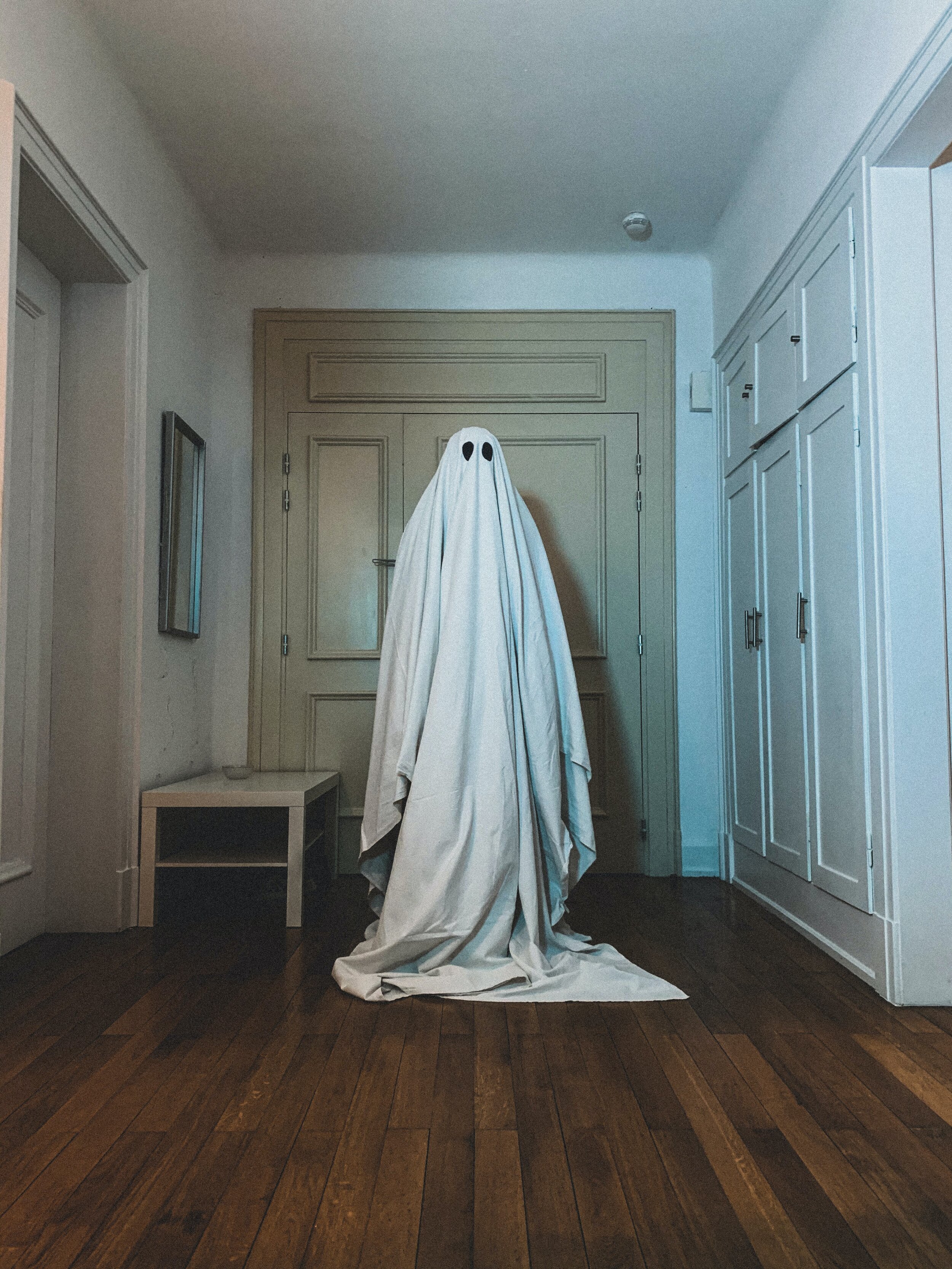
Florian Lidin via Unsplash

Florian Lidin via Unsplash

Homespun Haints Is Your New Fave Ghost Story Podcast

October 5, 2021

BY ALEXANDRA COHL & BECKY KILIMNIK

Becky Kilimnik is the co-host and producer of the podcast Homespun Haints, an interview-style and storytelling podcast that celebrates the oral tradition of storytelling as an art form—with ghosts. Throughout its inception, Becky has also pulled from her other expertise as an artist and musician; she composes and plays all of the original music on the podcast and creates original artwork to accompany each episode. Now in their third season and with over 25,000 downloads, Becky and her co-host Diana Doty have cultivated a space where people can feel comfortable sharing and processing the paranormal experiences they have had.

Listen to: Korean Folklore, Death Days, and the Haunted Queens Apartment, or Quarantined With A Ghost

And, as someone who grew up in an Appalachian town and who has deep ties to the art of storytelling, Becky applies both her personal history and her Anthropology degree from Northwestern University to these interviews and in the pre- and post-production stages to really capture just how personal and unique these ghost stories can be. The podcast delights listeners in both expected and unexpected ways: fulfilling the desire for a creepy tale while also inviting laughter, self-reflection—and sometimes tears—with the stories that are told. 

You’ve said before on your podcast (specifically the episode with professional storyteller Dr. Hannah Harvey) that “The tradition of storytelling as a celebrated art form is so uniquely Appalachian” and that “It doesn’t seem to have the same weight given to it culturally in other parts of the country.” I’d love to start there: What was the moment (or moments) where you really began to realize this and what were those major differences? 
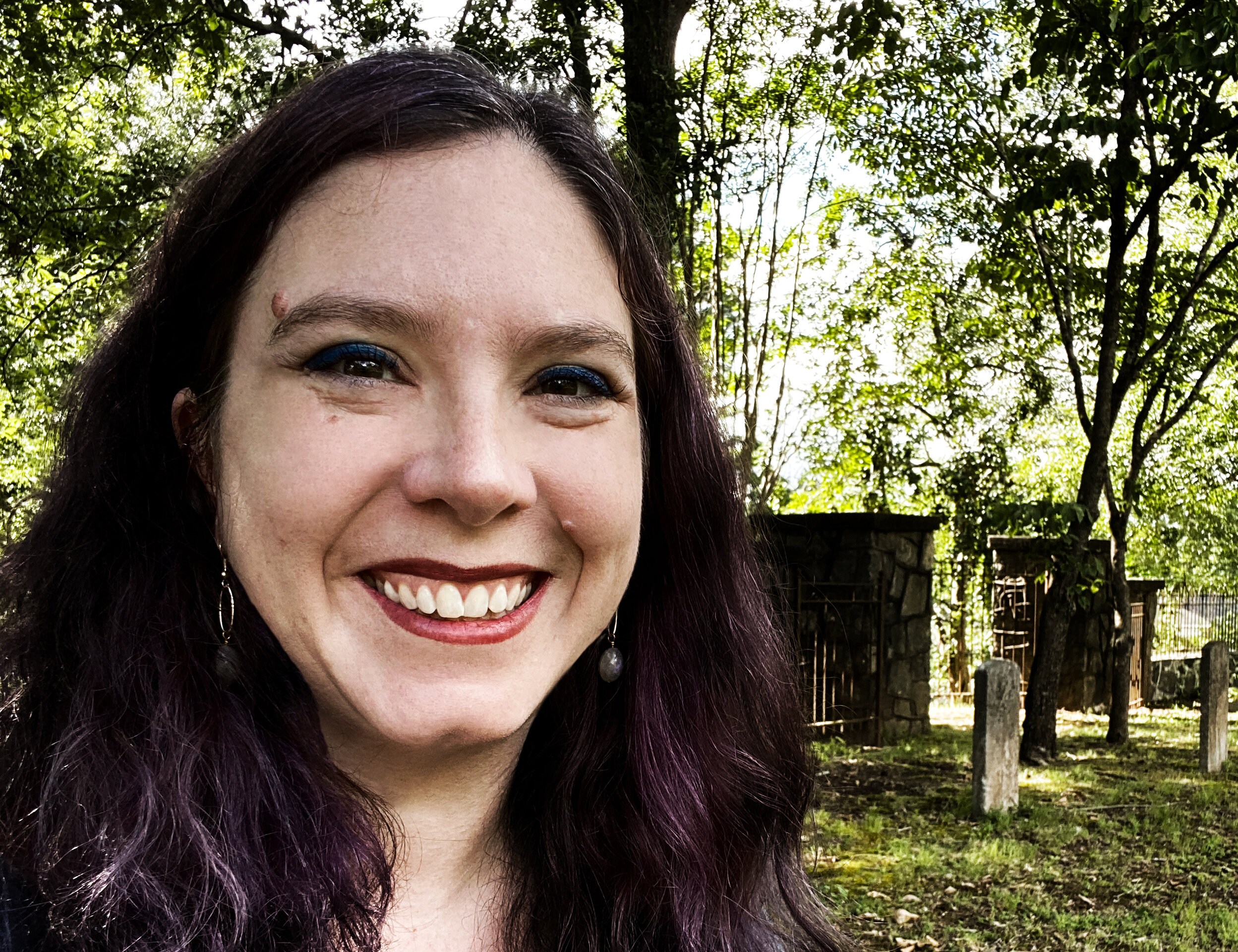
Becky Kilimnik

Becky Kilimnik

I spent the first part of my life in northeast Tennessee with only limited exposure to other parts of the world. When I turned seventeen, however, I moved to Chicago to go to college. My first year there, I slowly began to realize there were no storytelling festivals to attend, and no one talked about “storytelling” as a fun pastime. Of course, people there tell stories, just like people all over the world tell stories. And Chicago itself is an amazing hub for two very unique types of storytelling: improv comedy and jazz music. But, the cultural emphasis (which evolved from the combined traditions of Scottish, Irish, and African immigrants and Cherokee residents of the area) on non-scripted orality, practiced in front of a mirror, performed on stage or in front of peers, fluid and changing with every performance, for both the purposes of entertainment and sharing of knowledge, didn’t exist in the same form. And I found the same to be true in other places in America that I’ve lived as well.

Do you remember the first time you heard a ghost story? If so, what was it, and how do you feel like it started to shape who you are today?

I don’t think I could tell you the first ghost story I heard! Honestly, I think my mother was telling me ghost stories before I could even talk. I do remember the first time I heard a professional storyteller tell a ghost story, though. It was at a music workshop I was attending in Jonesborough, TN (I’ve been playing violin since I was four years old so I did a lot of these such workshops), and they hired a storyteller to entertain us during our first night there. I remember her handmade, brightly colored costume that hung off of her arms in twisted strips and how pieces of her costume would whip around her as she gestured.

I also remember the gasps of my little sister as the storyteller moved about the stage, telling us about the woman who ate her own body as she nearly died of hunger one cold winter night. In the story, the woman’s husband finally came back to their log cabin with a deer for dinner, but the woman, now nothing but an animated skeleton, leaped out from behind the cabin’s door and consumed him, too. And that was the end of the story. 

At first, I hated the story because I wanted more. I wanted to know if the skeleton woman still wandered the mountains in search of food (of course she did!). I wanted to know what happened next and if the storyteller made the story up herself or pulled it from folklore. But then I realized that none of those things really mattered in a good oral story. The story often ends at the climax; there is no resolution. And the art of the story itself is not in the following of a traditional short story structure—the art is in how the story is told. The drama behind the storyteller’s movements and the inflections in her voice.

At that moment I was instantly in love with storytelling. The ability to entertain and enrapture large groups of people merely with words and gestures seemed like pure magic, and I knew it had to be something I incorporated into my life.

 Tell me a little bit about the origin story of Homespun Haints; what prompted the idea for it, why you chose the format for the podcast that you did, and how you see it differing from other paranormal-based podcasts.
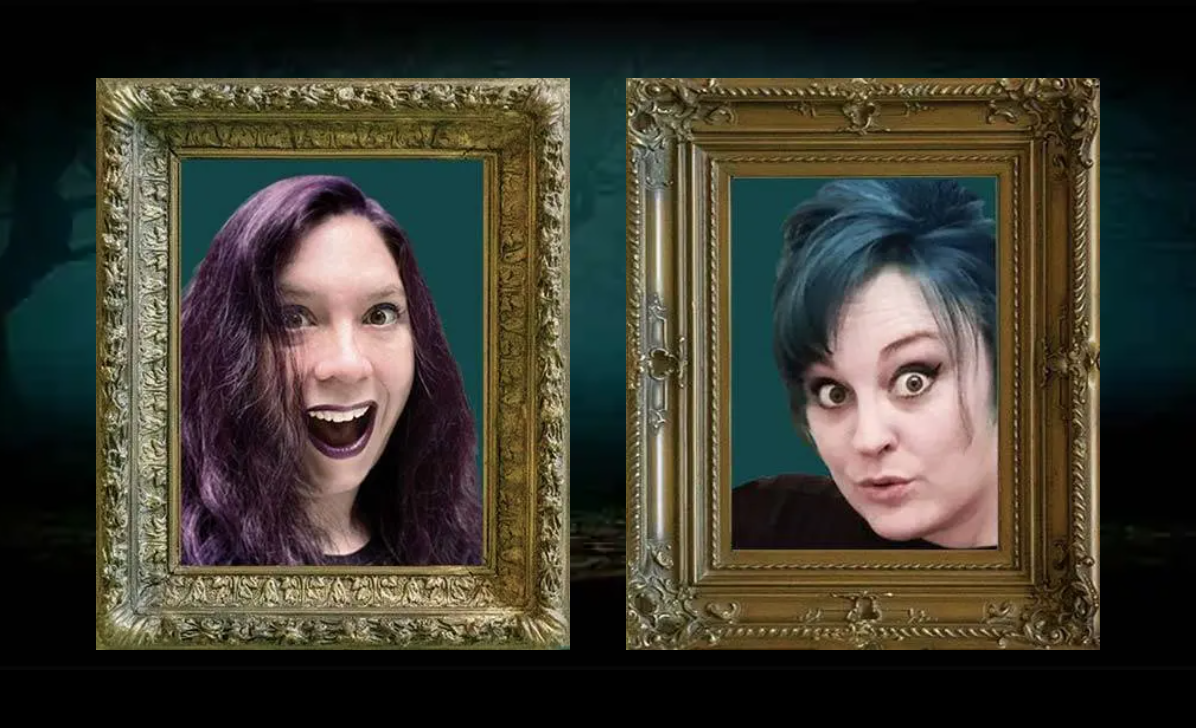
Homespun Haints

Homespun Haints

One of the first things I’ve always asked people when I meet them is “do you have a ghost story?” I’ve always been intrigued by the way people interpret events in their lives that they can’t quite explain. It makes us vulnerable and human, and no matter how people carry themselves, when they start to talk about a ghost encounter they’ve had, they reveal their soul to the world. As far back as I can remember, I’ve had an insatiable hunger for those stories and those moments.

I wanted to find a way to capture those points in time where the person telling their story bears their deepest fears to an audience and connects with their listeners in a profound way. I initially considered starting this project as a written blog, but then I remembered the storytelling traditions from my hometown, and I realized I had to do something that was linear (and oral), experienced moment by moment by the listener as the story unfolded. Podcasting presented itself as the perfect solution. Because of my musical background, I already had experience with recording and editing audio. The rest just took some planning and research. 

I feel this podcast is different from other traditional paranormal podcasts because our primary focus is storytelling. Even though all of our stories must be ghost stories to fit with our brand, their magic comes not just from the events within the stories but also from how the story is told and how we react to those stories emotionally. We consider what we’re doing to be more of an art form than anything else.

Oftentimes, your episodes can be a mix of serious, spooky stories, along with dark (and sometimes light!) humor. Why is that approach so important to you and your co-host, Diana Doty? Why not go the “uber spooky” route? 

Initially, we did think of going down the “uber spooky” route, but our personalities got in the way. We started throwing humor in because we couldn’t help ourselves! And I think that’s fine. It wasn’t a planned approach or branding initiative; it’s just who we are. Our listeners have told us that a lot of what they like about our show is how genuine we are behind the mics, and we enjoy just being ourselves—weird, spooky women who love to laugh.
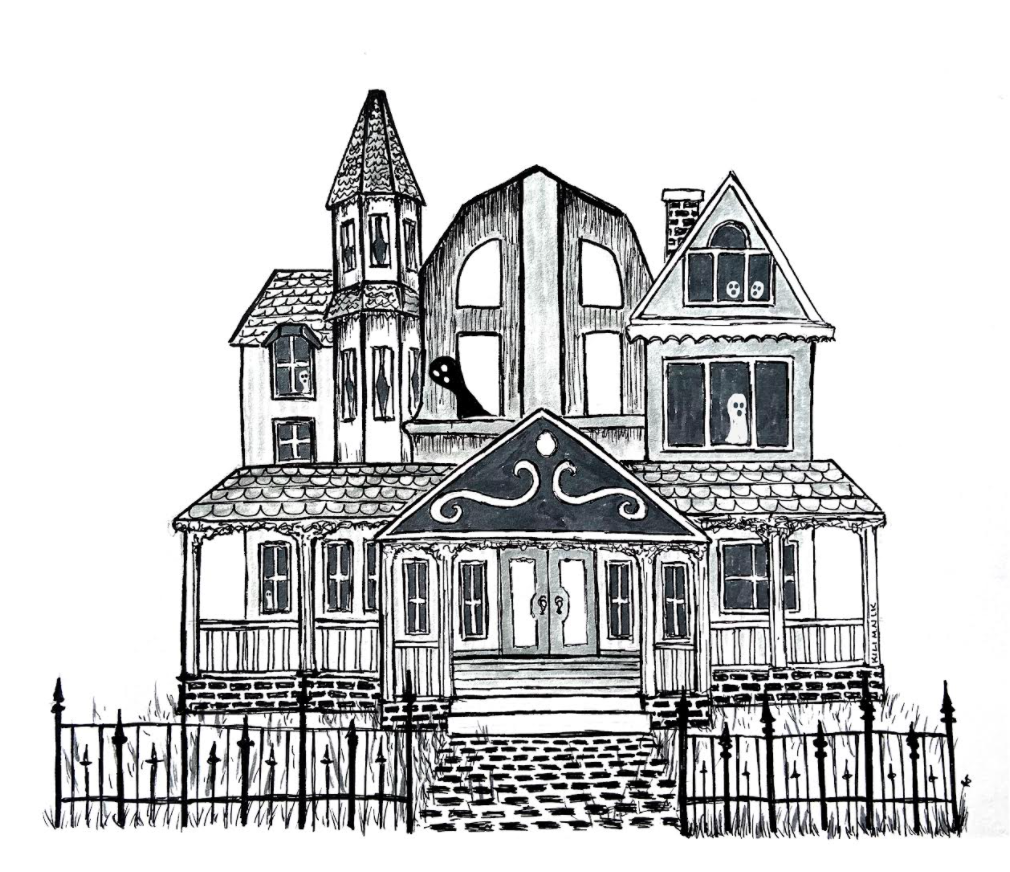
By Becky Kilimnik

By Becky Kilimnik

Plus, a good story is always better if you access more than one emotion while listening to it. A scary story is just a scary story. But a story that makes you laugh, cry, and cover your head with a blanket is going to stay with you for a long time. We want to provide warmth, humor, and fear, and create a well-rounded experience for all of our listeners, no matter what their comfort level with the paranormal is.

You’ve also expressed that in mainstream American culture, the paranormal community (such as who is invited on these types of podcasts) can often times be very whitewashed. Why do you think that is, and what have been the ways that you’ve worked to change that on your own podcast?

If you go on a ghost tour or look up the famous ghosts at a historic site, the stories you’ll hear are disproportionately about rich white people. If you hear about a person of color, especially about an enslaved person, the story may be completely made up or altered to make it more palatable to a white audience. Though plenty of stories have been told in all communities throughout the ages, these sanitized, white-centric stories are the ones that have more often had the advantage of being written down and shared across different types of media.

As storytellers and story-preservers, Diana and I want to do whatever we can to preserve stories from all communities, especially communities that have had their stories lost in the past.

It’s been a little bit of a struggle, I’ll be honest. When we started the podcast, we turned to our friends and family to serve as guests for the show. And many of those people are in very professional jobs and were uncomfortable talking about their ghost stories in a public setting. Many of our guests from the start chose to come on only with our assurances that their anonymity would be protected. When we did start reaching outside of our own circle for guests, we wanted to be sensitive to the fact that, when we have a guest on our show, we know they are doing us a favor. We needed to have a large enough listener audience to provide significant value to our guests in exchange for their time. We promote whatever projects our guests are involved with on our show and in our show notes, so the larger our audience, the larger the value of that exposure is.

Now that we are large enough that we can provide that value, we’ve really set an initiative for this season to seek out more people of color to come onto our show and share stories with us. Part of that work is ensuring that we are creating a space where people of color and their voices will feel safe and respected, so we’re also very upfront with our guests about this initiative; that we want to share diverse viewpoints that much of our audience may not even have considered or know about.

Ghost stories are both entertainment and history, both of which are, unfortunately, very whitewashed in mainstream media and literature. If you’d like to learn a little more about this, I suggest watching the documentary Horror Noire on Shudder, which discusses the evolution of Black actors and characters in the horror fiction genre. Also, there is a great episode of A History of Ghosts called “The Whitewashed Ghost” that discusses the psychology behind the white-centric ghost tour.

LISTEN TO: Filipino Folklore: Manananggal, Engkanto, and Duwende, Oh My! or Sometimes There’s Just Ghosts, on Appalachian Storytelling

I know that you and your co-host really encourage people to share their truths on your podcast—that it isn’t a place to question people’s ghost stories but rather a place to affirm their experience of the world. In the many interviews you’ve conducted and the stories you’ve heard up to this point, what have you learned about the history of supernatural stories and their cultural significance? Has anything surprised you or contradicted what you believed when you first started this podcast?

Our biggest surprise has been how cathartic the storytelling experience can be for our guests! After telling us stories that they’ve kept pent up inside of themselves for years, many of our guests will burst into tears, thank us, tell us that talking to us is akin to therapy. We were not expecting that at all when we started out. We thought we were just going to be sharing some ghost stories; we didn’t realize how many people would benefit from having a place to dig deep into their own pasts, and share stories they didn’t realize they were hiding from. Our commitment to having a non-judgmental, safe space has really paid off in that regard!

Obviously, this isn’t the case for all of our guests. Some of them have told these same stories dozens of times before. But for those that haven’t, it speaks volumes about our culture’s attitude toward true supernatural experiences. Many guests tell us how they’ve experienced ostracization from society, ridicule from family members, even fear of losing their jobs, when they’ve revealed these stories to others. Which is sad when you consider how profound and life-changing some of these experiences have been for some of these people.

Again, this was something that really surprised me, as someone who grew up in an area where sharing ghost stories was just a way of life. I believe everyone should have the opportunity to share their story and should not be punished for seeing the world a little differently than their peers.

So, you do even more than co-host and produce the podcast. You also create original artwork, stop motion YouTube mini-stories, and the original music for each episode. Talk to me about the art first: for the episode artwork, what is the style, and how do you decide which piece out of the whole episode to express visually?
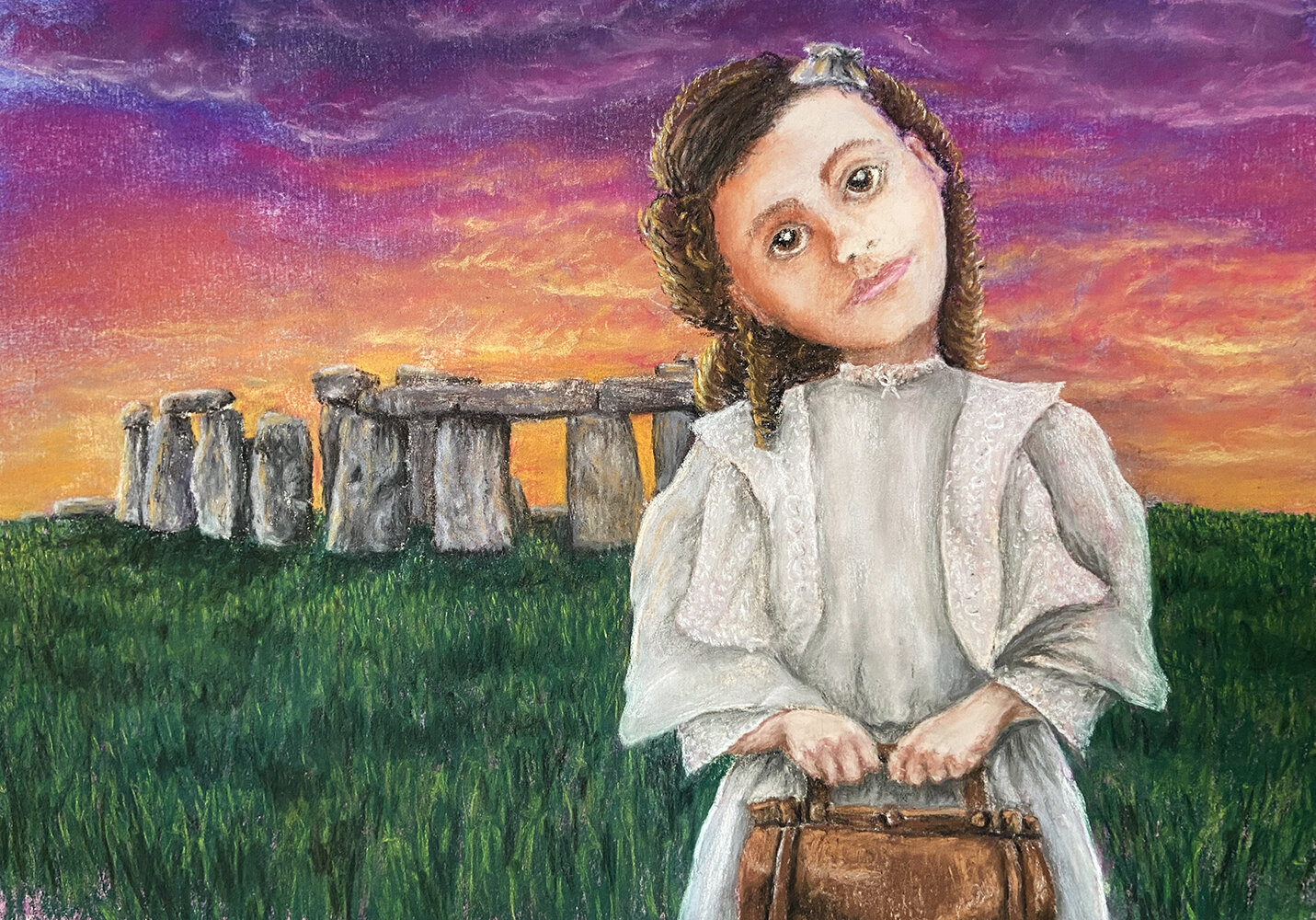
By Becky Kilimnik

By Becky Kilimnik

I would define my style as “quirky surrealism.” It’s not something I specifically developed; it’s just kind of what comes out of my hands. I began creating a piece of art for each episode because it seemed easier than hunting through stock photography sites for something that fit. I can’t tell you where inspiration for these things comes from—things just pop into my head and I try to replicate it. That’s how the initial pen and ink drawings started. I also began doing a few watercolor paintings as well because they were quick and easy and I could do them in color.

Toward the end of the second season, I started following some pop surrealism artists on Instagram (especially the paintings of Jesús Aguado @jm.aguado), and I became inspired by their work and wanted to try my hand at something similar. My first few works were a combination of oil pastel painting and drawing; pastel has always been my go-to medium for color, and I really enjoyed getting back into it. But, they’re messy and time-consuming, and my husband began grousing about the condition of our dining room as I was working. So, I thought I’d give acrylics a try. I’ve never used them before but I do remember watching my mother paint when I was a young girl, and I took to the medium right away. I’m really enjoying them and will probably stick with them for a while until I become bored and move onto something else.

As for what to express visually for each episode? I try to think of what piece of someone’s story would be the most visually impactful. When I picture the story, what do I see in my mind? And is it something I think I can pull off with a paintbrush? There’s not much more to it than that. The great thing about working with acrylics is that if I don’t like something that I started, I can always paint over it!

What about the YouTube channel? Why stop motion and how does this function as an extension of the podcast? 

Our stories are home-grown (hence the “Homespun” in Homespun Haints) but they’re also on the bizarre side. Therefore, I’ve steered away from doing anything too polished visually for the aesthetic of the podcast—I want it to retain a little of that slapped-together feel. 

I grew up in the eighties, when stop-motion animation was everywhere, from Claymation shows to special effects. For me, this technique always existed between the realistic and the strange. Plus, I do digital art all the time for my day job and it’s really relaxing to just stop and create with my hands.

Stop motion animation is also quirky, funny, and old-fashioned, just like many of the ghosts we talk about on the show. This style of animation also gives me a chance to create videos from hand-drawn components, just as the art that illustrates the episodes is hand-drawn. Every once in a while, I’ll accidentally get my thumb in a frame as I move pieces around and I just leave it. Those little mistakes just augment that homespun feel.

Now tell me about the music. What is the process behind creating the music for each episode and how does it impact the storytelling aspects of your podcast? 

I have several pieces of music that I’ve composed, performed, and produced that I use and re-use throughout the episodes. I generally change it a little from season to season (the first season was piano, the second was digital music, the third is the organ and violin). I came up with the theme song when we first started the show by messing around on the keys; everything since then has been some sort of variation on that theme.

Now for the more detailed answer. I’m a classically trained violinist with strong ties to the bluegrass fiddling of my home area. After I moved to Chicago, I became bored with classical violin and fiddling and started performing with progressive rock and glam rock bands. For eight years, I played in every bar throughout the Hyde Park, Rogers Park and Wicker Park neighborhoods. One stipulation for me being able to play with these groups was I had to learn how to improvise. When you’re hungry, you’ll learn how to do anything. So, I spent nearly a decade refining my improvisation chops. 

When I started the podcast, I had barely touched my violin for ten years. Hence, the piano. But quarantine altered everyone’s fate. I accidentally formed a band with some neighbors one drunken night, and before I knew what was happening, I was shredding on the old fiddle again. A few months later, I seem to have acquired a great deal of equipment, pedals, cables, and other strange musical items that just keep appearing in the living room. At one point, a Theremin even showed up.

Now, whenever we need new music for the podcast, I pull on those violin improvisation skills of yore. I’ll pull out my fiddle, go up to a mic, and mess around until something I like comes out. Then I create variations on that, and use editing software to mix, loop, overlap, and combine the tracks until it sounds like something that works with our show.

As for how it impacts the storytelling? I am committed to never using music to enhance or detract from our guests’ stories. Therefore, we only use it at the beginning, end, and interludes in the podcast. Music never flows over our guests’ words. I believe the story itself is enough and adding anything to it would be a disservice to the speaker’s words.

In the production, how do you manage to enhance the oral storytelling (with guests who may not always be natural storytellers) without stripping them of their individual voice? 

This is a tough one, but something I’m quite proud of. In a heavy edit, I may move pieces of someone’s story around so that it flows a little better—for instance, if someone accidentally tells the end first, and then says “Oh I forgot to mention….” I may even add extra spaces in between sentences to build suspense if a guest is nervous and speaking quickly. I will often remove excessive filler words (uh, um, like, you know). But I never touch colloquial language. I would never alter an accent. And, we always give the guest the opportunity to listen to their episode before it airs.

Most guests, however, do not require heavy editing. We’ve found that most people, whether they realize it or not, are natural storytellers. Most of our job is just to help them be comfortable, help them figure out a good starting point, and then sit back as the story flows out of them. 

What do you feel like folks outside of the paranormal community get wrong about it? 

Oh, that’s a tough question. I think there may be the assumption that people who enjoy paranormal stories or who are involved with paranormal events, are a bunch of “scary devil-worshipping creeps.” But in actuality, every single person we have met has been an amazing human being. I think people who love this stuff are used to being on the outside; they have a lot of empathy for anyone else who is used to not fitting in. And they’re just the nicest people ever. 

I think there’s also a belief that anyone who believes in ghosts is either completely ungrounded in reality or is trying to take advantage of gullible people (think common beliefs about fortune-tellers and palm-readers). My co-host, Diana, is a former physician with some pretty hefty scientific training under her belt, and our guests are down-to-earth people that just happen to have had some unexplainable experiences. When we’ve interviewed spiritual mediums (and we’ve had quite a few on the show), they are also very truthful about their abilities and their beliefs and have no intention of taking advantage of anyone. In general, we’ve found a great group of people, we’ve formed some strong friendships, and we’re so excited to be a part of such a warm and inviting community.
In Art, Interviews, Music Tags Diana Doty, Becky Kilimnik, ghosts, ghost stories, homespun haints, podcast
Comment
BoatBurned.jpeg

Burning the Boats that Brought Us Here: Madeleine Barnes Interviews Kelly Grace Thomas

October 5, 2021

BY MADELEINE BARNES & KELLY GRACE THOMAS

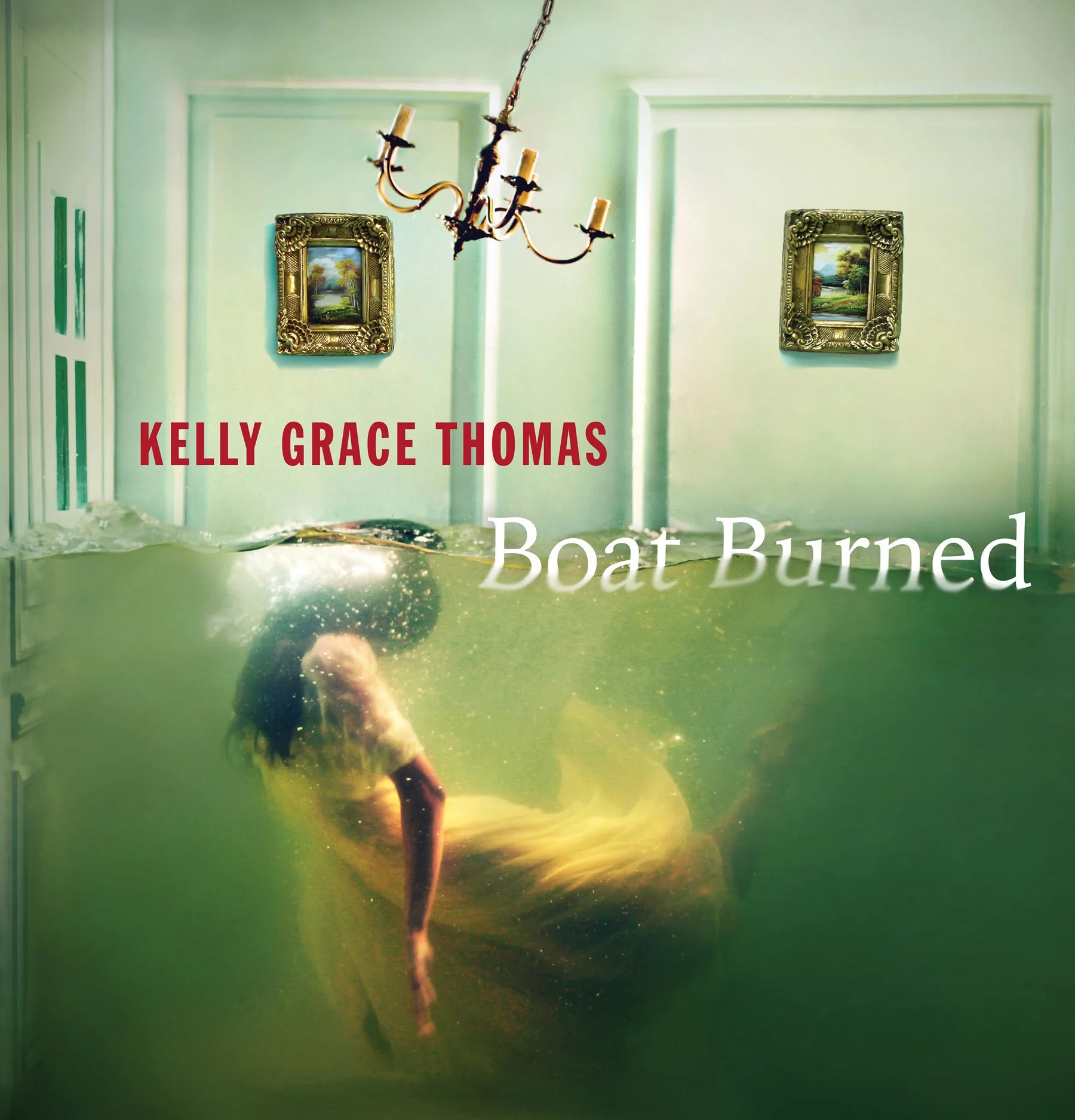
Boat Burned by Kelly Grace Thomas 
YesYes Books, 2020
110 pages, $16.20


In Boat Burned, Kelly Grace Thomas’ debut poetry collection (YesYes Books, 2020), we join a perceptive, vulnerable, authentic speaker in confronting and untangling the effects of generational and collective trauma on the body. In “Vesseled,” the first poem in the book, she writes: “He boarded me. I burned.” This truth is one she “can’t throw overboard,” and the ocean is her witness as she observes what remains of her. 

Thomas’ poetry invites us back to the sea, and its stillness invites us to reflect on tensions that cast shadows over our lives: chaos and order, self-punishment and worth, violence and liberation, trauma and recovery. The speaker desires “to divorce the earth,” and studies leaving “like a chart.” For Thomas, family is a synonym for “horizon.” In the speaker’s family, three women privately struggle with eating disorders but never talk about it—she longs to leave, but struggles to find the exit ramp. It is critical for her to go beyond the horizon, and through interrogations and deconstructions, she attempts to recover. She endures the mangling effects of self-surveillance; secrecy is a lack of oxygen.

Drowning remains a possibility, but the third and final section of the book reveals the beginning of the speaker’s journey toward a reconciliation with her body: “Body, why can’t I remember you / right? I know you’re no life / boat.” Here, the narrative transforms into one of triumph, asking us a critical question—when we are at sea, how do we want to drift? What structures and pressures make this choice ours and not ours?

In writing this book, Thomas endeavored to “recover from womanhood,” and in this interview, she reveals more about what this means to her. She also offers words of encouragement and gives thanks to poets who write about similar themes. She reminds us of all the ways that capitalism profits from our inability to love ourselves; self-love is a life-sustaining skill that no one teaches us. Reading her book, I was reminded of Alice Walker’s assertion that “telling and honoring the truth carries the possibility of transformation and delight.” Thomas uses both metaphor and direct language to deliver her truth. Her candid poetry strikes back against the layers of stigma, silence, and misinformation that compound trauma. “They can’t sink us,” she writes, “if we name ourselves / sea.”  

MB: Boat Burned (YesYes Books) openly examines private struggles with trauma and the body. You write with incisive clarity and strength about conditions that thrive in secrecy and are still stigmatized, even in literature. In “Where No One Says Eating Disorder,” you write about a family in which everyone is struggling privately: “When I was young, I pretended / we weren’t sick. Three women. / Three rooms.” We watch the woman in this family struggle in silence and isolation. The poem concludes, “We were so hungry / for anything / to love us back.” Why was it important to you to include your family members’ experiences of trauma and disordered eating in this book, real or imagined?

KGT: Plain and simple: I had to. This story, this struggle, is so much bigger than me. That was important for me to recognize share with readers. So many elements of disordered eating are shrouded in isolation and shame, and that’s what the disorder feeds on, how it survives. Eating disorders are sustained by silence. The less we talk or write about it, the sicker we remain. It took me years to admit that I was punishing myself and trying to control the world around me with food.

Carolina Public Health Magazine states, “A shocking sixty-five percent of American women between the ages of 25 and 45 have disordered eating behaviors, according to the results of a new survey sponsored by the University of North Carolina at Chapel Hill and SELF Magazine.” That means roughly every two out of three women struggle with this. There is so little education and prevention, let alone conversation. I wrote this poem to show readers that this disorder is one that affects many. Growing up, every woman in my household had an eating disorder. We did not admit this to anyone, not even to each other, until almost twenty years later. We spent two decades suffering in isolation. The important question is: Why? 

I’d always wanted to write openly about body image issues and eating disorders. This plagued me, but I worried that writing about my body made me a cliché. Women have been programmed to equate their appearance with their intrinsic worth. Industries thrive on women’s insecurity. The less we love ourselves, the more companies profit.  This narrative is changing, but progress is slow because these conversations are often had in private. It’s time to start figuring out how we can help—it’s time to heal. It felt irresponsible not to contextualize my own eating disorder within my family—all of us were suffering, yet felt so isolated.

MB: You’ve spoken in the past about metaphor, and this book does a wonderful job of using metaphor to describe a struggle with the body. You write, “I thirst for shelter / I have no faith in. My body: a church / where no one prays.” We watch the speaker “confuse body / for boat.” A mother “unzips the body. / Passes it down. You also show us that there are no metaphors for some aspects of living with an eating disorder. In “No Metaphor For My Mouth,” you write, “I have no more lines memorized. // Nothing dainty // to make you // weep.” Did you make conscious decisions about balancing metaphor with direct description in this book? Recovery-wise, what is the benefit of setting metaphor aside and facing the reality of an illness, however stark?

KGT: What a great question. I don’t think this balancing was conscious, but as I wrote, my writing became more direct. In “Where No One Says Eating Disorder,” it was important to me to depict silence before the first line. In my view, metaphor makes hurt accessible. Metaphor gave me the key to enter the house; it also gave me the hammer. Once inside the house, I could stare at the walls and try understand why I built them before tearing them down. 

When I first started to write poetry, I questioned lines that spoke directly. I thought that perhaps they lacked the musicality or depth necessary to capture pain. I have come to realize that there is nothing more vulnerable than letting a simple, direct statement hang in the air, unadorned. It lets readers look pain in the eyes.

MB: In the incisive poem “In An Attempt to Solve For X: Femininity As Word Problem,” you write, “The difference / between shame and guilt is showing / your work.” Shame and guilt continually provoke the speaker, who fights to “turn this shame to sanctuary.” In “At The Bar My Friend Talked of Bodies,” shame is a toxin: “No stomach can digest / shame: a congregation // of rocks. Patient in a / poisoned well.” Does writing play a role in mitigating or coming to terms with shame?

KGT: Yes, writing is an investigative path out of shame. We can’t conquer what we don’t understand. Just like fixing a crack in a foundation, I needed to find the first fracture. When compiling the collection, I noticed that many of my poems speak directly or indirectly about the shame I felt about womanhood, which in turn was linked to my body and perpetual guilt. I have listened closely to the world while taking notes on why shame can sometimes feel like an appropriate response to what the world tells women.

So often I am quick to swallow blame, and the lines you referenced are an attempt to show the reader I know what it is like to live as an apology. It was a chance to call myself out on the page, publicly, directly; it was a promise to write myself stronger. Boat Burned let me identify the guilt and find a path out of the shame. By the time I finished the book, I was no longer ashamed of who I am.

MB: In a recent interview published in [PANK], you spoke about water: “Water will always be stronger than boat. Stronger than gender. It is the hands that hold us, the mother that covers us, the power and grace, that allows us.” What is the relationship between water, control, fertility, and recovery in your work?

My relationship with water is one of the most important relationships in my life. There is a quote by Isak Dinesen: “The cure for anything is saltwater — sweat, tears, or the sea.” This is one of my core beliefs—we came from the sea, and my body and soul are always trying to return. 

Growing up, there was a lot of adventure and uncertainty in my life. There was bankruptcy, divorce, eviction, addiction, and of course, eating disorders. The water felt like the only thing that could hold me without making me feel like a burden. I spent a lot of time on boats, sometimes in the middle of nowhere with nothing to do but stare at the sea. Its steady quiet always returned my gaze, pulled me into the peace of a blue horizon, and challenged me to sit with what I was running from. I couldn’t have accessed this stillness without water.

I use water to think about the ebb and flow of life. The ocean holds an understated power. It breaks and breaks, yet still survives. Its breaking is inevitable. We cannot change or influence the ocean; we cannot prevent low tide. The ocean is not concerned with us, and I love that. I reach for water for strength, and to heal whatever is breaking within me. There is so much healing to be done, and water reminds me that healing and recovery are possible.

MB: Eating disorders are still deeply misunderstood and stigmatized. In what ways did you choose to push back against stereotypes or tropes surrounding eating disorders in your writing?

KGT: It is counterproductive to talk about shame and without mapping the origin. Women especially have been programmed to hate their bodies. In The Self Love Experiment by Shannon Kaiser, I read that a whopping 90% of women hate their appearances. This breaks my heart daily. Eating disorders are not only stigmatized but glamourized. In the media, eating disorders are portrayed as a phase. There are so many after-school-special-like tropes I wanted to avoid in my writing: the teenager working out until she passes out, the bathroom scale with its cold steely gaze. These tropes aren’t inaccurate—but so often, movies on this subject are made by people who don’t suffer from eating disorders, and they wind up creating caricatures of sufferers’ pain. Plot points can occlude the real story. Sometimes, a character’s eating disorder is “cured” in an episode or a season. 

After 20+ years, I still suffer from ED-related thoughts. Some people who have eating disorders think they are fat, which can lead to feelings to worthlessness, because this country and the media has linked body size to worthiness. We have also been told that shame isn’t sexy, so we punish ourselves further for feeling shame, which buries us further in stigma and silence. At 39, I am still struggling with the relationship I have with my body, which will continue unless I do the work of active unlearning and reprogramming. I am learning not shudder at bad lightning or inquiries about my weight. I want to show people that eating disorders are not rooted in vanity. They are rooted in feelings of unworthiness—so many feel unworthy love and so much more. 

Like so many people, I felt unlovable in the body I was in. I wanted to feel like I was worth something, and when I developed an eating disorder, I felt like it was making me worthy of the love I sought. When I would lose a lot of weight, I got lots of positive reinforcement. The problem is that this is an illness. It took me forever to admit that. 

MB: Are there any writers who deal with the body in their work in ways that influence you? Conversely, is there anything that frustrates you about other people write or talk about eating disorders?

KGT: There are so many poets who write about the body beautifully. One poem that comes to mind is Jennifer Givhan,’s “I Am Fat, & When You Read this Poem, You Will Be Too.” This poem should be required reading. I also think of the book Helen or My Hunger by Gale Marie Thompson, and To Know Crush by Jennifer Jaxson Berry. Courtney LeBlanc also writes about the body, disordered eating, and body dysmorphia. These poets are outstanding. It frustrates me when people view body image issues as temporary, like a haircut. I’m reminded of Lucille Clifton’s poem, “i am running into a new year.” She writes: “it will be hard to let go / of what i said to myself / about myself / when i was sixteen and /twentysix and thirtysix / even thirtysix.” At 39, I am still trying to heal, still trying to let go and forgive. People don’t understand that this is a long road.

MB: Section IV, the final section, has so much momentum—poems like “How to Storm,” “New/Port,” and “The Only Thing I Own” show us a speaker who finally allows herself to rage. She finds motivation to recover: “There is a part of me / worth keeping.” She implores the body: “Let’s hold each other // honest as wind.” In “Boat/Body,” you write, “I will not kneel / for a man’s affection,” and “They can’t sink us / if we name ourselves / sea.” Can you speak to your experience of writing section four, and the role of anger in both writing and recovery?

KGT: The last section of this book, which I view as a nod toward acceptance or forgiveness, was the hardest section for me to write. While in the middle of writing Boat Burned, I told a young woman friend that I was writing a collection of poems “to try and recover from womanhood,” and “to teach myself how to love myself.”

She asked me if it was working. I was honest and told her it wasn’t. At that point, I wasn’t sure it was possible to recover from womanhood through writing. But I knew that I couldn’t finish this collection in the same place I started. I needed to burn the boats that brought me here, and to walk away and never look back. So I kept on writing and revising until something inside me changed. Silence and subordination were no longer compelling. 

In every Speilberg movie, you never see the monster until the end. When we can’t see it, the monster remains terrifying. Writing the last section was about confronting the monster to make it less menacing. The more honest I got in these poems and the more I sent them into the world, the less scary these monsters became. When I am too afraid to address something in my life, I need to put it in a poem. A poem is the first step toward confrontation, the first brick in the road to recovery. This book took about 3 years to write. I am no longer the person I was when I started writing it. I had to chase the why, to unpack every lie I swallowed, to take off the sadness that wore me like a dress, before I could heal. 

 MB: You run a series called Body of Art where you talk to other poets about the body and its role in their work. Are there any takeaways from your conversations with other creators that stand out to you?

KGT: Oh my gosh, there are so many takeaways, the biggest one being that no one teaches us how to love ourselves. I believe that there is a direct correlation between loving oneself and leading a fulfilling, liberating, and conscious life. We learn Algebra and the Periodic Table, but no one teaches us how to love ourselves. Every day I study and practice how to be kinder gentler toward myself. Like so many around me, I need more practice. It shouldn’t be such a struggle, but it is. 

MB: Are there any words of encouragement that you might offer to a creative person who is struggling with an eating disorder? What you would tell someone who is on the verge of seeking treatment, but hesitating and doubting the value of their voice?

KGT: I would tell them that there is another side, but there will be a crossing over within yourself—you will need to decide that recovery is worth it. You will have to unlearn everything the world has told you. I would also shout from the rooftops: Write. About. That. Shit. I remember when “Where No One Says Eating Disorder” was published. I was flooded with messages from so many women saying things like, “You have no idea how much I relate to this.” Or “Thank you, no one ever talks about this.” Women ages 18-65 thank me every time I read a poem about an eating disorder. 

Whoever needs to hear this: You are not alone. You are not your reflection. You do not need to be what the world tells you to be. Talk and write about what you are going through. There is freedom in language. If you need someone to listen, find me on social media. I’m here if you ever want to talk about the other side. 

Kelly Grace Thomas is an ocean-obsessed Aries from Jersey. She is a self-taught poet, editor, educator and author. Kelly is the winner of the 2020 Jane Underwood Poetry Prize and a 2017 Neil Postman Award for Metaphor from Rattle, 2018 finalist for the Rita Dove Poetry Award and multiple pushcart prize nominee. Her first full-length collection, Boat Burned, was released with YesYes Books in January 2020. Kelly’s poems have appeared or are forthcoming in Best New Poets 2019, Los Angeles Review, Redivider, Muzzle, Sixth Finch, and more. Kelly is the Director of Education for Get Lit and the co-author of Words Ignite. She lives in the Bay Area with her husband Omid. www.kellygracethomas.com.

Madeleine Barnes is a doctoral fellow at The Graduate Center, CUNY. She is the author of You Do Not Have To Be Good, (Trio House Press, 2020) and three chapbooks, most recently Women’s Work (Tolsun Books, 2021). She serves as Poetry Editor at Cordella Magazine, a publication that showcases the work of women and non-binary creators. She is the recipient of a New York State Summer Writers Institute Fellowship, two Academy of American Poets Poetry Prizes, and the Gertrude Gordon Journalism Award. Her criticism has appeared in places like Tinderbox Poetry Review, Split Lip Magazine, and Glass: A Journal Poetry. www.madeleinebarnes.com.

In Interviews, Poetry & Prose Tags Madeleine Barnes, Kelly Grace Thomas, burning the boats
Comment
Image via Quintana

Image via Quintana

On Beaches this Autumn

September 24, 2021

BY MONIQUE QUINTANA

I keep dreaming of beaches, not night dreams, but daydreams. When I teach from home on Wednesday mornings, my throat hurts because I’m not used to talking for so long anymore. I feel my entire self squirm every time I open a new tab on my computer and a new window opens.

I live in the Central Valley of California, in a town where the heat settles like dust, even on the first day of autumn. It is simultaneously rural and urban.

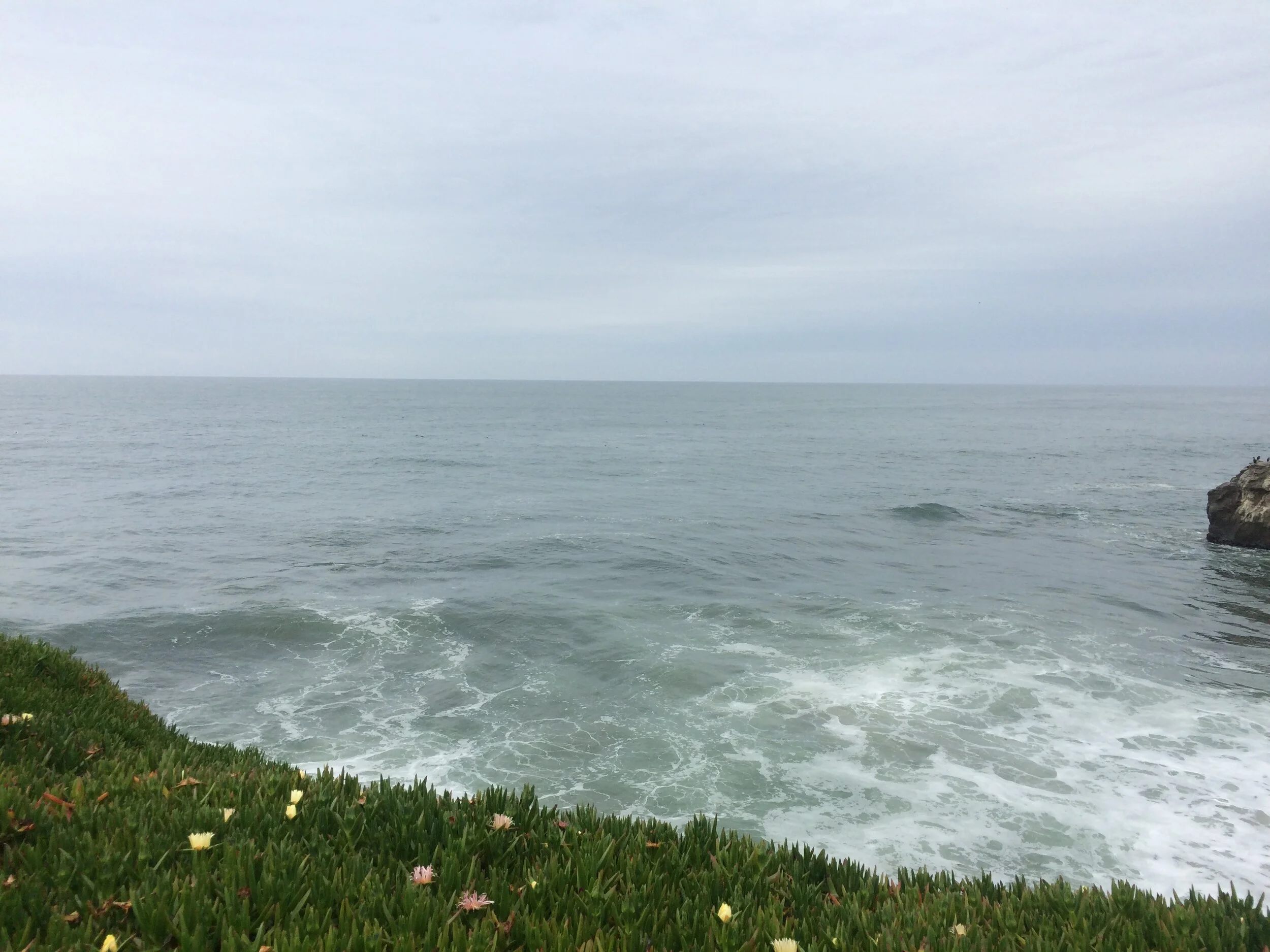
I daydream about beaches: Santa Cruz and Carmel by the Sea. I think about the last time I saw the sea. I think about how I scooped egg from its shell from my breakfast, packed neatly in a deep brown basket by the sea. I think about my dad buying me blackberry gelato after he and my mom split up. Before I knew what such a thing was and what I should be grateful for, my family setting food in my hands in the cold water breeze made me think of my death and shake.

I document everything I do on looseleaf paper—virtual meetings, missteps, canceled hotel reservations, and daily word count goals. I dream of beaches because they're so close to me. Past vineyards and rusted metal dinosaur statues. Past signs that say, Pray for Rain in large black letters. Two hours in either direction, and I'm there.

In Personal Essay Tags autumn, ocean, essay
Comment
Unsplash/Canva

Unsplash/Canva

Join Our Witchy Book Challenge!

September 3, 2021

This autumn, join our witchy Instagram & Twitter book challenge!


WHAT TO DO:

To celebrate autumn, we’re asking you to take a picture of your fave witchy read (any book you love, or that you’ve written) and tag #LLWitchyReads on Instagram and/or Twitter so we can find and see it. Bonus if you share a bit about why you love it and tag the author if possible. Authors love the love.


TAG:

Tag as many pics with #LLWitchyReads as you’d like. Just be sure you drop the hashtag in the caption, not the comment. You can also tag @lunalunamag.


WHAT COUNTS:

Nonfiction, grimoires, magazines, academic works, fiction, poetry - it’s all welcome! And hell, even though we’re focusing on reads, you can tag podcasts too! We’ll share them as well.

You can share books you love, books you’ve written yourself (please do!), and books that are brand new or canonical or basically unknown. Folk magic, trad witchcraft, poems inspired by the archetype of the witch — it all works; this is pretty open!

WHAT IS THIS FOR?

Book love, basically. Community. Crowdsourcing recommendations. We’ll be sharing & reposting these pics of books simply to send them love — *and* we’ll be compiling some of them in an article published in October, which aims to share our community’s fave witchy reads. We’ll be linking to those books on @bookshop_org so you can pick ‘em up.

NOTE: For some reason, tagging hashtags in Instagram comments is not letting us see them, so you’ve got to take a pic and use the hashtag on IG in the caption. You can post to Twitter too!

We’re hoping to see new books, your fave classics, & works by BIPOC & LGBTQIA+ authors, who are underrepresented in the witchy world of books.

Let’s spread some magic. 🤎🍂🙏🏽

In Poetry & Prose, Magic Tags Witchy Books, #LLWitchyReads
Comment
By Camille Brodard, via Unsplash

By Camille Brodard, via Unsplash

Poetry by Kiki Dombrowski

September 3, 2021

BY KIKI DOMBROWSKI

An Autumn Ceremony

Split yourself right down the middle:
celebrate academic and spiritual 
collision on a Saturday afternoon.
Leave the ritual early 
to make it to critique, arrive late.
Distract the class: release unbound
papers into the air, corners ripped 
out for gum and phone numbers. 
Have dirt on your hands from moving 
stones, smell like a bonfire, 
do not remove the moss and mulch
caught in the fibers of your sweater.

Let your hair be damp and wild,
weather is unpredictable and so are you.
When they ask where you’ve been
answer “An autumn ceremony. 
Persephone gave me inspiration.”
Write a note about the hawk 
that flew overhead with a snake 
dangling in its talons. Render 
metaphors about the snake
as an uncoiled noose rope. Keep chanting 
in your mind: you are a circle, 
within a circle. Shake a rattle.

Allow mugwort and tobacco to crumble
in the bottom of your book bag,
let it live in the creases of your notebook 
which is full of assigned poetry prompts, 
Mary Oliver quotes, circled stanzas 
and underlined verbs. Keep your mind in ritual: 
imagine the professor a magician, evoking
the spirits of stag, salmon, crow, and wolf.
Let the students close the ceremony
with a clap in each direction:
rituals and words are temporary 
and so are you. 

In Poetry & Prose Tags Kiki Dombrowski, autumn, autumnal, dark academia
Comment
Vlad Bagacian, via Unsplash

Vlad Bagacian, via Unsplash

Poetry by Dylan Krieger

September 2, 2021

BY DYLAN KRIEGER

the median

we couldn’t hold our breaths
the entire tunnel
so you told me your wish:
to be a different person
someone satiable
who knows how best to
scratch the itch of consciousness
well, little wide-eyed perfect puppy
i don’t know either
but i will dig my fingers
with utmost loving attention
into the skin behind your ears
for a million years
feed you bloodthirsty berries
from the lip of my paltry fountain
whatever doesn’t deserve you
i know full well, but i’ve worked hard
flown all over a dying empire
to tell you, to show you
the tragedy isn’t lost on me
i’m enlisting your balled spit
your half-lifted eyelid in orgasm
to write an alternate ending
pass a frantic notebook
back and forth laughing about
the private capacity for violence
in our passing glances over the median
eternally uncrossed between us
steering wheel shaking in both fists
like any moment we might
work up the worst courage
shatter the straight line
and kiss a cursed gear shift
into oncoming headlights

stay shelved

so many comrades in recovery, and here i am still mainlining dreams

as if across a crowded room, an angel might articulate my thought stream worm for worm

face-off too lush to get lost in the figures: ventriloquized incest, tin mood turned to snowmelt

when i hear you use apophatic correctly in a sentence, who you are is hard to miss

at the moment of corruption, the dial tone in your esophagus lasts forever

and all the germ-addled wounds are holy--that’s what the howling never tells you

explicitly, but it’s apparent whole forestfuls of woodpeckers get it, and we’re no different

thank the chaos for deciding to warm itself on our little spinning bonfire of lead

thank the hospital parking lot for reminding us childhood was canceled

from the start and yet it still feels fresh, mazel tov to our mutual collapse

i’ve been cosmically betrothed to one unmooring or another for so long wishing it were yours

i’ve been nine kinds of anemone, the plastic sixer rings skinning their predators

i’ve been the cliffs where anyone ignoring the weather’s warnings disappeared into the drift

but none of that would impress you, the usual terrors stay shelved

pages fingered to the point of crumble, and go ahead--i am helpless

to whatever feathers you next decide to pluck and spread

Dylan Krieger is writing the apocalypse in real time in south Louisiana. She earned her BA in English and philosophy from the University of Notre Dame and her MFA in creative writing from Louisiana State University, where she won the Robert Penn Warren Award in 2015. Her debut poetry collection, Giving Godhead (Delete Press, 2017), was dubbed "the best collection of poetry to appear in English in 2017" by the New York Times Book Review. She is also the author of Dreamland Trash (Saint Julian, 2018), No Ledge Left to Love (Ping-Pong, 2018), The Mother Wart (Vegetarian Alcoholic, 2019), Metamortuary (Nine Mile, 2020), and Soft-Focus Slaughterhouse (11:11, 2020). Find her at www.dylankrieger.com.

In Poetry & Prose Tags dylan krieger
Comment
unsplash-image-XOPjB-ojFgY.jpg

A Playlist for Fall

September 2, 2021

BY JOANNA C. VALENTE

As we fade into autumn within the next few weeks, I thought I’d round up what I’ve been listening to, with songs that celebrate and reflect on change.

In Music Tags music
Comment
Unsplash

Unsplash

Personal Essay As Bloodsport

August 25, 2021

BY LISA MARIE BASILE

Last night I happened on writer Deanna Schwartz’s Twitter conversation about selling trauma for a byline. Maybe you’ve seen it by now — it’s elicited all sorts of responses, which means it struck a vein. And it bled.

At first, I found myself feeling — what was it, exactly? — defensive. It’s my choice to sell my trauma if I want to! I don’t need a 21-year-old’s regret to muddy my experience. But I didn’t say that. I retweeted someone else’s eloquent response about the power of writing and then I logged off.

Of course, I kept thinking about it, in the dark, in bed. All those words, all that honesty, all that hunger to be a writer.

I remember those early writer days, swirling in some haze of poverty, confusion, and eagerness. Before MFA, writing was my heart language, and poetry was my truest identity. It alchemized the Me who’d been born of pain into some new Me, a transcendent thing. My work housed all of my secrets: the foster kid secret, the homeless shelter secret, the family addiction secret. It was my underworld, alit by passion. Poetry gave my suffering meaning, even if no one read it — and for a long time, I was alright with that.

Things changed when I was fresh out of MFA. I felt the pull to prove myself as a writer — to show that the $50,000 loan I’d taken out for graduate school was not all for naught. I was writing batches of freelance ehow.com articles for $3 or $5, and I was penning celebrity gossip blog posts about people I’d never heard of, for which I was underpaid. I never asked for more. Then I started this website. Writing became less of a thing that I was compelled by spirit to do and more of a thing I had to do. Or so I thought.

That beautiful byline? It was an illusory well in the desert. It was something other, better writers got to have.

Enter xoJane. Fuuuuuck. It was about 2013 or 2014, and I wanted that publication dopamine. I wanted to say, “I published this” and go about my day knowing the Internet housed a small piece of my soul and that everyone could walk past and glare at it, its maggots festering in publication glory.

I sold my traumas and ideas for, what, $50 a pop? I wrote honestly about not using birth control and got reamed out by family members who were “concerned for my wellbeing.” And then there were the “you’re a slut” emails (which, to be honest, trickle in every so often for no reason at all).

I talked about not having health insurance and being treated poorly at a hospital when I had a ruptured ovarian cyst. Although xoJane’s readership was mainly women, they were not interested in allyship. They had fangs and they were out for blood. Rather than compassion, most commenters fixated on the fact that I’d taken a hospital selfie. You’re not really sick. You’re lying. If you’re that sick, you don’t take a selfie. (I wonder what they’d think of the many chronic illness Instagram accounts today, which specifically document the experience of being ill).

This didn’t deflate me, though. This egged me the hell on. I wanted to drench these bloodsuckers in my pain, feed them the stinking abyss of my most personal wounds. Of course, this was a coping strategy, a way of justifying the fact that I’d put all of myself on the Internet to pay a sixth of my rent. I lived in a shitty apartment, mattress on the floor, three roommates — and every $50 was a $50 that could honestly change my life that month.

Eventually, I got a job at Hearst editing personal essays for The Fix, which solicited and pumped out personal essays to the various Hearst publications — mostly Cosmopolitan, Marie Claire, Good Housekeeping, and Redbook. This was probably the most stable and interesting job I’d had at that point, and I took it very seriously. In a sense, we were part of the personal essay pipeline, and I’d track views and clicks, curious to see what “performed” and what didn’t. We were sorely underpaying these writers to bare their souls — and if I could have paid them more, I would have.

In my heart, I believed that lending my editing skills to this platform was, in a way, helping these writers to bloom and grow through storytelling. I loved our writers. I gave my heart to their stories. I became their friends. But I’d be lying if I didn’t say that The Fix was part of the problem. It normalized bearing your grit and glory for very little pay — which often preys on the most vulnerable among us.

Publishing personal essays should not be a cavalier process; and these stories, in all their painful detail, should not be viewed as low-hanging fruit for clicks. Humans are at the other end of these stories, and we need to treat the process with humanity.

It’s not that I think Schwartz is entirely right, though, when she says, “Don’t sell your trauma and personal experiences at all! I sold mine for $300 and regret it. It's not worth the money and byline to feel like one essay is going to follow you around forever.”

I don’t think I’d say the same, even with my background editing personal essays and being burned at the stake online.

It’s that I hope more publications don’t exploit writers.

I think it’s a good idea to tell stories, to share your pain, and to normalize, through storytelling, the issues that society turns away from. Speaking aloud erases stigma and shame. It brings us together and creates a space of tolerance and support.

Personal essays are a sort of shadow work for the collective; they ask us to look within ourselves and cast the mirror out at society. It may be bloody, but ultimately, we all learn from it.

When I finally wrote my first personal essay about my foster care experience — for The Huffington Post — it was as though my albatross had finally moved on, taking a new form as something beautiful; my wound became my guiding light.

I was proud of this story. It led to a life of foster care advocacy, and even helped secured more bylines in The New York Times and Narratively. I believe that these stories helped me get book deals and create community. It gave me the writing life I always dreamed of (and, it turns out, was always working toward).

The difference between this piece and my work for xoJane was clear to me: I had taken the time to think about if and why I really wanted to publish this particular work. I had done it not under financial pressure. I was more mentally prepared for any backlash.

I can’t say I would have known how, when, or why to write my piece if I didn’t write all that garbage back then. I can’t say I would have become who I am without that.

Regret is a strong word. It’s a word that erases the climb, the journey, the necessity of discomfort.

I don’t regret any of it.

I think each writer gets to decide what feels right for them, and I don’t blame or shame any writer who feels the pull to publish. I know the power of money when you need it badly. And I know the hunger that comes with imposter syndrome and perceived competition and even self-competition. I also don’t think it’s fair to discount someone’s trauma if they had a bad experiencing publishing a personal essay. It’s personal.

The writing life is paved with strangeness, and curiosity and hunger often lead us down roads we might not have taken otherwise. Knowing how to bloodlet and for whom can help. But sometimes, you don’t know if it was worth it until you’re bleeding. And that’s okay.

In Wild Words Tags personal essay, xojane, regret, Writing, Writer Support
Comment
unsplash-image-MsOYT7teRdI.jpg

A Playlist for Spring & Summer

June 9, 2021

BY JOANNA C. VALENTE

Since it’s starting to get warmer here in New York, I decided to make a chill and calm playlist for the late spring and summer months. From Poly Styrene to Hania Rani, there’s something for everyone.

In Music Tags music
Comment
Screen Shot 2021-06-02 at 2.42.24 PM.png

The EVERMORE song according to your zodiac sign

June 2, 2021

When evermore came out, it built on a shared language that folklore offered us in a time when we deeply needed permission to grieve, to go inward, to bond over the blanket of soft sorrow that covered us all in 2020. Evermore remains a favorite to me — not only because of what it meant culturally but because I’ve spent so much time building worlds within it. One of those worlds is the cosmic.

Read More
In Music Tags taylor swift, evermore, evermore album, willow, folklore, folklore album
Comment
ankhesenamun-PDtJt8Cp-4Q-unsplash.jpeg

We Love Witch Craft Magazine's Seventh Issue

June 2, 2021

BY MONIQUE QUINTANA

Founded in 2015 by Catch Business and Elle Nash, the seventh issue of Witch Craft Magazine is filled with nerve-wracking fun and the lush grotesque, all while reflecting on the social complexities of the current pandemic. Colleen Barnett's wrap-around cover art is a cool-toned photograph of gnashing teeth gushing with blood. With the interior book design by Joel Amat Güell, the pocket-sized volume is full of poetry, fiction, nonfiction, and interviews, many of the pieces blurring the lines of form and genres.

The written work was accompanied by a fine curation of black and white images by many artists such as Ro, Ikosidio, Dian Liang, Claire Ma, and Alejandra López Camarillo. This was my first time reading the magazine. The brevity of the pieces and the formatting helped me read at a feverish pace in a single sitting.

I look forward to reading future installments of this radical, sexy, and dangerous publication.

Standouts from this issue include:

  • Nikolai Garcia's " Noche Buena ": " Her smile is a wink, and I let my sad guard down. I tell myself I don't have much, but I have her attention. I lie and say I like the vegan tamales. "

  • Felicia Rosemary Urso's " Compulsion ": " Spring did come, and I tried to pull our taffy body into two. A tug of war between my self-will and my gut, my actions refused to line with my desire. I was a gecko and you were my tail. You'd fall off, just to grow back. "

  • David Joez Villaverde, " As Below, So Above ": " Being here on the physical plane means we exercise corporeal power and the response to the ailments of this world is not to pour energy and will out into the ether but to wield our focus and control to change the things around us, to carry our intention in our words and deeds that we might transform the fabric of this corruption into harmony. "

  • Tex Gresham in " Interview with V. Ruiz": " Ancestors who have been quiet are waking up in new ways and guiding their lineage to make drastic shifts. "


Monique Quintana is from Fresno, CA, and the author of Cenote City (Clash Books, 2019). She has been awarded fellowships to Yaddo, The Mineral School, the Sundress Academy of the Arts, the Community of Writers, and the Open Mouth Poetry Retreat. You can find her @quintanagothic and moniquequintana.com.

In Poetry & Prose, Art Tags magazine, Poetry, art, prose, witchcraft
Comment
roman-kraft-208004-unsplash.jpg

3 Poems to Read This Spring

May 31, 2021

BY JOANNA C. VALENTE

As we’re in the middle of spring, with all the flowers in bloom in New York City, I often wake to the sounds of birds and find myself generally in awe at what the world is capable of. Spring here is an experience I grow fonder of as I get older (I’m still a summer child ); I used to feel anxious for it to be over so I could just get to summer and enjoy the beach.

Now as I’m pushing myself to enjoy and learn more about this season, I thought to round up three poems whose images and overall aesthetic remind me of the season.

Peach Delphine - “Cohabitation, Moss”

“Sifting wave, the body without restraint, breathing shade, catbird flipping leaves, the form of tradition is not what made, the making cannot be claimed, of self, erosion by water and wind, polishing the shell, bone haunted, word contains the breath, windbound, unable to flee”

Lee Potts - “‘It may not have been the rain at all.’”

“Rain interrogates the shape of everything it falls on and finds the sword hidden in every monument’s history. But once it ends there’s always a catastrophic forgetting.”

Jack B. Bedell - “Communal”

“        Swarms of bees bring the goods from one plant
to the next, and the lot grow healthy and prosper.

Two plants, a small garden, and enough bees
              to outlast our dog's urge to snap them
out of the air as they fly from bloom to bloom.”

In Poetry & Prose Tags poetry, jack b. bedell, lee potts, peach delphine
Comment
sam-moqadam-mXvhcXSE5go-unsplash.jpeg

Poetry by Enikő Vághy

May 28, 2021

By Enikő Vághy

Helping My Lover Prune Thyme

He says it is necessary, and soon I am
on my knees beside him. Outside, only the trees

stand against the sky. Flocks of crows head
for their branches. I watch those hunched bodies

settle. They swathe, almost robe. Each bird I take
as another worry. What have I cut myself back from

by loving you? Every morning I wake deeper.
I wake preparing for new and different growth.

I am ready. It is a promise my fingers make, hooked
over the lip of the pot that holds this young bush, pushing

into the dirt as if into a body that needs to rise from its rest.
The dirt is wet, it is cold like my palms become when my lover

says I don’t want children and I laugh. Never, he tells me
cut too low, takes the tip of a thyme sprig, clips it clear

at the wrist. The eager green falls, my bravery. Words
I have gathered to my lips, knowing I have found

what will finally make me full. I have exhaled even
the dearest fights into nothing. My lover raises my hand

for a kiss, assures me there is a reason for this rotary
of wound and flourish. He prunes the thyme to give it form.

But whatever is broken back will grow once more. Stronger
and more insistent, like a question asked over and over

not because it expects a different answer, but because it wants
to see if it still desires.

Body Farm

—inspired by the photo series of the same title by Sally Mann

The bodies lie unbuttoned, like coats
left on the backs of chairs, in the booths

of restaurants. The corpse is a reaction
to a word spoken outside the frame.

The future is still happening, it just isn’t
being noticed. Death without a pair of eyes

to look at us. The subjects parted
like teeth. Blood dried on the last root

and tether. Who remains lisping
through the spaces?

First Memory: of Small

My hands spread in empty pantomime,
mother keeps me staring and lowers
her finger, begins tracing the gift. Carefully,
as if perfecting the first letter of a word.
I watch it circle in my palms, reach the size
of a river stone. Then the body spoken: a child,
this small.
And it is like she has given me
the whole birth. My palms sag, I flinch. The fear,
tight and spinning as the day I picked up a bee
I thought was dead. It awoke in my warmth,
thrilled my skin with its dry buzz. There are words
that cause your hands to quiver. Say small
and watch mine bend into cupping.

Enikő Vághy is a poet whose work has been recognized by the Academy of American Poets College Prize in the graduate division. She is a PhD student in the Program for Writers at the University of Illinois at Chicago. You can find her on Instagram @persepheni88.

Tags Enikő Vághy, poetry
Comment

Poetry by Massoud Hayoun

May 28, 2021

BY MASSOUD HAYOUN

On Caring

The truth is I

could give a flying fuck

about the pharaohs

unholy likenesses

senseless violence,

gratuitous sexuality,

contorted

faces bent in one direction

shoulders and pelvises smashed into another,

beautiful, little graven human forms

Look away!

you forbade us to have in our home

images of idols,

so I never bought the painted papyrus people sell

when they recall us to the world

at esoteric shops in Los Angeles

next to the Magic

8 Balls and Ouija Boards

also against our faith.

The farther I travel that road,

the further

I am from you,

I’m told.

By the time I saw the pyramids,

arrived at bombed-out little beaux-arts facades

that comprise our dear center of the universe!

and saw there

Monuments to Melancholy we had made,

our contribution to the world’s wonders

a necropolis

towering to the sky

like Babel,

the sun had been eclipsed

by a divine rejection

from a land before time

no longer mine,

and I wandered the complex

spirited about by locusts

arms outstretched

calling out,

and I forgot your name

and why I had gone,

and I prayed

prostrated,

head turnt, shoulders broken, pelvis shattered,

for the next step in the journey

through your Book of the Dead,

singing

at the volume of a Red Army Choir

Level me Up or

Beam me down

or just straight up Knock. me. Out.

And the first born was slaughtered like

a little paschal lamb and

the sea parted

and I fell from grace

without so much as a word

from you.

In each generation we see ourselves as going out of Egypt

And unto it I return,

for so it is written,

so it is done.


Broken Bangle Boy from Beyond

The Broken Bangle Boy from Beyond

went

to Bay Ridge,

Brooklyn, baby

in search of bamia and bassboussa

and stopped at a shop

full of gold snakes with ruby eyes

and Nefertiti necklaces

for we are constitutionally sarcastic

even in our trinkets from the time before land

and the women there

cloaked in black

beheld the boy’s bangle

without touching it

a respectful distance

under a loop

and knew immediately

who and what

he had been

and knew

the inscription in hieroglyphics

that to his untrained eyes

were

some reeds

a pelican

an ankh,

maybe

The Book describes

not just obstacles

but combinations of words

to clear hurdles

in the stairway to the series finale

remember?

each step leads homeward

0 displacement

each wish resigned

If a combination of symbols yielded a spell

on the stairway to heaven

might it be

Let us away into the night

and need not away

not this year or the next

and with those words, the sun would explode like a red lightbulb

in the sky

and we would tremble for the false idols

we’ve made

and regret that

I’ve taken a wrong turn,

so sorry

The bangle was all they could take

when they left

and it became burdened by many

backstories

for when it became an ill-gotten gift

to Sultana from Samra

it was a sweet sign of acceptance

it had belonged to their mother Rozeza

who had lived shortly

one of a host of pandemics

that made her mad in the summertime heat

and madness for them

was yelling at her husband

But as Wassim told it

it was purchased on departure

for in Haste we left Egypt

a sign of survival

for they would take our lifesavings but not

touch our women

unseemly

and because the boy was be-bangled

the cloaked daughters of Magda Magnouna

Banaat of Bay Ridge Brooklyn

by way of boat and

Basyoun or Borg el Arab

knew exactly what of their brothers this was

and what he wanted

without him saying

but the reeds and the Nile pelican

were not a sign from his ancestors

but a signifier of the purity of the piece

24-karats for our boy from our beyond

and they wept for his waste of wondering

if the hieroglyphs

pointed the way back

because they all watched the same

Egyptian stories

translated Turkish telenovelas

beyond borders

and were all broken by something in the beyond

beyond repair.

In Poetry & Prose Tags Massoud Hayoun, poetry
Comment

Poetry by Adrian Ernesto Cepeda

May 20, 2021

now

that you’ve dissolved into

the most holy and beautiful

of spirits, where can

my anxiety go?

Read More
In Poetry & Prose Tags poetry, Adrian Ernesto Cepeda, grief
Comment
← Newer Posts Older Posts →
feed me poetry
Featured
'dream in locusts' — poetry by Vi Ly
Vi Ly
Vi Ly
'dream in locusts' — poetry by Vi Ly
Vi Ly
Vi Ly
Read more →
Vi Ly
Vi Ly
'plastic chair, watermelon, generator exhaust, benzene' — poetry by Hana Saad
Hana Saad
Hana Saad
'plastic chair, watermelon, generator exhaust, benzene' — poetry by Hana Saad
Hana Saad
Hana Saad
Read more →
Hana Saad
Hana Saad
' I am brutally killed by daffodils' — poetry by Emily Tong
Emily Tong
Emily Tong
' I am brutally killed by daffodils' — poetry by Emily Tong
Emily Tong
Emily Tong
Read more →
Emily Tong
Emily Tong
'violet scabbing on ankle backs' — poetry by Lexi Rosen
Lexi Rosen
Lexi Rosen
'violet scabbing on ankle backs' — poetry by Lexi Rosen
Lexi Rosen
Lexi Rosen
Read more →
Lexi Rosen
Lexi Rosen
'it was something more gory' — poetry by Caroline O'Connor Thomas
Caroline O'Connor Thomas
'it was something more gory' — poetry by Caroline O'Connor Thomas
Caroline O'Connor Thomas
Read more →
Caroline O'Connor Thomas
'I’ll accept delight’s gloom' — poetry by Hazelyn Aroian
Hazelyn Aroian
Hazelyn Aroian
'I’ll accept delight’s gloom' — poetry by Hazelyn Aroian
Hazelyn Aroian
Hazelyn Aroian
Read more →
Hazelyn Aroian
Hazelyn Aroian
'every hour is one long suffering' — poetry by Anne Halsey
Anne Halsey
Anne Halsey
'every hour is one long suffering' — poetry by Anne Halsey
Anne Halsey
Anne Halsey
Read more →
Anne Halsey
Anne Halsey
'a terrible countenance for what nourishes' — poetry by I Echo
I Echo
I Echo
'a terrible countenance for what nourishes' — poetry by I Echo
I Echo
I Echo
Read more →
I Echo
I Echo
'I am the aftermath' — poetry by Taylor Hamann Los
Taylor Hamann Los
Taylor Hamann Los
'I am the aftermath' — poetry by Taylor Hamann Los
Taylor Hamann Los
Taylor Hamann Los
Read more →
Taylor Hamann Los
Taylor Hamann Los
'as if landscapes verdant' — poetry by Kacey Martin
Kacey Martin
Kacey Martin
'as if landscapes verdant' — poetry by Kacey Martin
Kacey Martin
Kacey Martin
Read more →
Kacey Martin
Kacey Martin
'a wasp  giving itself to the fig' — poetry by Elaina Edwards
Elaina Edwards
Elaina Edwards
'a wasp giving itself to the fig' — poetry by Elaina Edwards
Elaina Edwards
Elaina Edwards
Read more →
Elaina Edwards
Elaina Edwards
'ghosts in hair follicles' — poetry by Trish hopkinson
Trish Hopkinson
Trish Hopkinson
'ghosts in hair follicles' — poetry by Trish hopkinson
Trish Hopkinson
Trish Hopkinson
Read more →
Trish Hopkinson
Trish Hopkinson
'roses among men' — poetry by Amy Thatcher
Amy Thatcher
Amy Thatcher
'roses among men' — poetry by Amy Thatcher
Amy Thatcher
Amy Thatcher
Read more →
Amy Thatcher
Amy Thatcher

COPYRIGHT LUNA LUNA MAGAZINE 2026