• Home
  • indulge
  • new poetry
    • About Luna Luna
    • resources
    • search
  • editor
  • dark hour
  • submit
Menu

luna luna magazine

  • Home
  • indulge
  • new poetry
  • About
    • About Luna Luna
    • resources
    • search
  • editor
  • dark hour
  • submit
delicious new poetry
'the doors of the night open' — poetry by Juan Armando Rojas (translated by Paula J. Lambert)
Nov 29, 2025
'the doors of the night open' — poetry by Juan Armando Rojas (translated by Paula J. Lambert)
Nov 29, 2025
Nov 29, 2025
'we can be forlorn women' — poetry by Stevie Belchak
Nov 29, 2025
'we can be forlorn women' — poetry by Stevie Belchak
Nov 29, 2025
Nov 29, 2025
'I do whatever the light tells me to' — poetry by Catherine Bai
Nov 29, 2025
'I do whatever the light tells me to' — poetry by Catherine Bai
Nov 29, 2025
Nov 29, 2025
‘to kill bodice and give sacrament’ — poetry By Kale Hensley
Nov 29, 2025
‘to kill bodice and give sacrament’ — poetry By Kale Hensley
Nov 29, 2025
Nov 29, 2025
'Venetian draped in goatskin' — poetry by Natalie Mariko
Nov 29, 2025
'Venetian draped in goatskin' — poetry by Natalie Mariko
Nov 29, 2025
Nov 29, 2025
'the long sorrow of the color red' — centos by Patrice Boyer Claeys
Nov 28, 2025
'the long sorrow of the color red' — centos by Patrice Boyer Claeys
Nov 28, 2025
Nov 28, 2025
'Flowers are the offspring of longing' — poetry by Ellen Kombiyil
Nov 28, 2025
'Flowers are the offspring of longing' — poetry by Ellen Kombiyil
Nov 28, 2025
Nov 28, 2025
'punish or repent' — poetry by Chris McCreary
Nov 28, 2025
'punish or repent' — poetry by Chris McCreary
Nov 28, 2025
Nov 28, 2025
'long, dangerous grasses' — poetry by Jessica Purdy
Nov 28, 2025
'long, dangerous grasses' — poetry by Jessica Purdy
Nov 28, 2025
Nov 28, 2025
'gifting nighttime honey' — poetry by Nathan Hassall
Nov 28, 2025
'gifting nighttime honey' — poetry by Nathan Hassall
Nov 28, 2025
Nov 28, 2025
'A theory of pauses' — poetry by Jeanne Morel and Anthony Warnke
Nov 28, 2025
'A theory of pauses' — poetry by Jeanne Morel and Anthony Warnke
Nov 28, 2025
Nov 28, 2025
'into the voluminous abyss' — poetry by D.J. Huppatz
Nov 28, 2025
'into the voluminous abyss' — poetry by D.J. Huppatz
Nov 28, 2025
Nov 28, 2025
'an animal within an animal' — a poem by Carolee Bennett
Nov 28, 2025
'an animal within an animal' — a poem by Carolee Bennett
Nov 28, 2025
Nov 28, 2025
‘in the glitter-open black' — poetry by Fox Henry Frazier
Oct 31, 2025
‘in the glitter-open black' — poetry by Fox Henry Frazier
Oct 31, 2025
Oct 31, 2025
'poet as tarantula,  poem as waste' — poetry by  Ewen Glass
Oct 31, 2025
'poet as tarantula, poem as waste' — poetry by Ewen Glass
Oct 31, 2025
Oct 31, 2025
'my god wearing a body' — poetry by Tom Nutting
Oct 31, 2025
'my god wearing a body' — poetry by Tom Nutting
Oct 31, 2025
Oct 31, 2025
'Hours rot away in regalia' — poetry by Stephanie Chang
Oct 31, 2025
'Hours rot away in regalia' — poetry by Stephanie Chang
Oct 31, 2025
Oct 31, 2025
'down down down the hall of mirrors' — poetry by Ronnie K. Stephens
Oct 31, 2025
'down down down the hall of mirrors' — poetry by Ronnie K. Stephens
Oct 31, 2025
Oct 31, 2025
'Grew appendages, clawed towards light' — poetry by Lucie Brooks
Oct 31, 2025
'Grew appendages, clawed towards light' — poetry by Lucie Brooks
Oct 31, 2025
Oct 31, 2025
'do not be afraid' — poetry by Maia Decker
Oct 31, 2025
'do not be afraid' — poetry by Maia Decker
Oct 31, 2025
Oct 31, 2025
'The darkened bedroom' — poetry by Jessica Purdy
Oct 31, 2025
'The darkened bedroom' — poetry by Jessica Purdy
Oct 31, 2025
Oct 31, 2025
'I am the body that I am under' — poetry by Jennifer MacBain-Stephens
Oct 31, 2025
'I am the body that I am under' — poetry by Jennifer MacBain-Stephens
Oct 31, 2025
Oct 31, 2025
goddess energy.jpg
Oct 26, 2025
'Hotter than gluttony' — poetry by Anne-Adele Wight
Oct 26, 2025
Oct 26, 2025
'As though from Babel' — poetry by Fox Henry Frazier
Oct 26, 2025
'As though from Babel' — poetry by Fox Henry Frazier
Oct 26, 2025
Oct 26, 2025
'See my wants' — poetry by Aaliyah Anderson
Oct 26, 2025
'See my wants' — poetry by Aaliyah Anderson
Oct 26, 2025
Oct 26, 2025
'black viper dangling a golden fruit' — poetry by Nova Glyn
Oct 26, 2025
'black viper dangling a golden fruit' — poetry by Nova Glyn
Oct 26, 2025
Oct 26, 2025
'It would be unfair to touch you' — poetry by grace (ge) gilbert
Oct 26, 2025
'It would be unfair to touch you' — poetry by grace (ge) gilbert
Oct 26, 2025
Oct 26, 2025
'Praying in retrograde' — poetry by Courtney Leigh
Oct 26, 2025
'Praying in retrograde' — poetry by Courtney Leigh
Oct 26, 2025
Oct 26, 2025
'To not want is death' — poetry by Letitia Trent
Oct 26, 2025
'To not want is death' — poetry by Letitia Trent
Oct 26, 2025
Oct 26, 2025
'Our wildness the eternal now' — poetry by Hannah Levy
Oct 26, 2025
'Our wildness the eternal now' — poetry by Hannah Levy
Oct 26, 2025
Oct 26, 2025
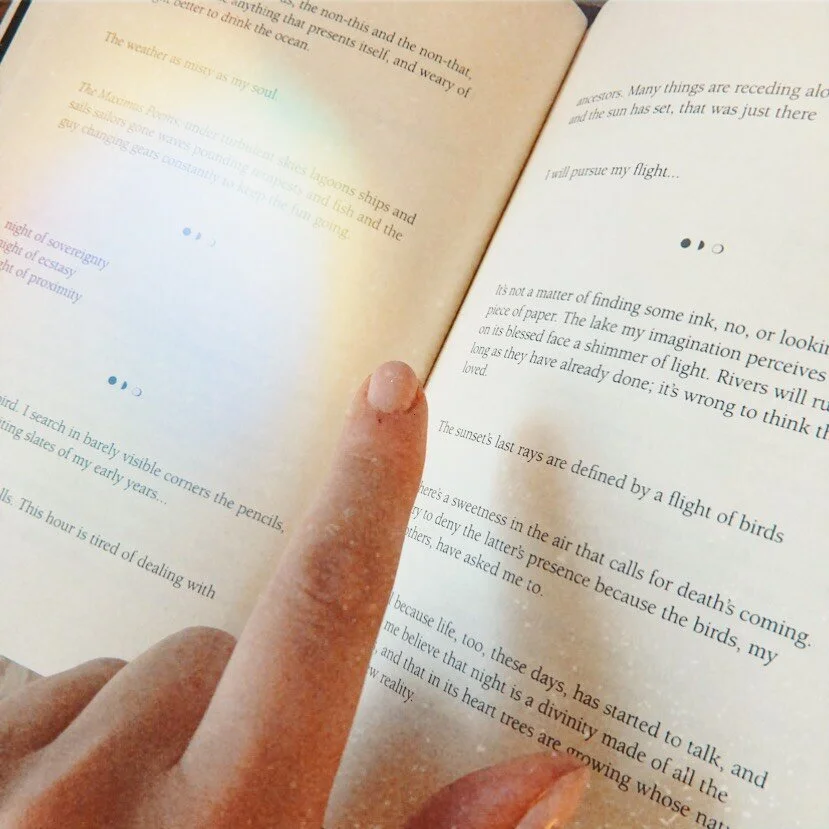
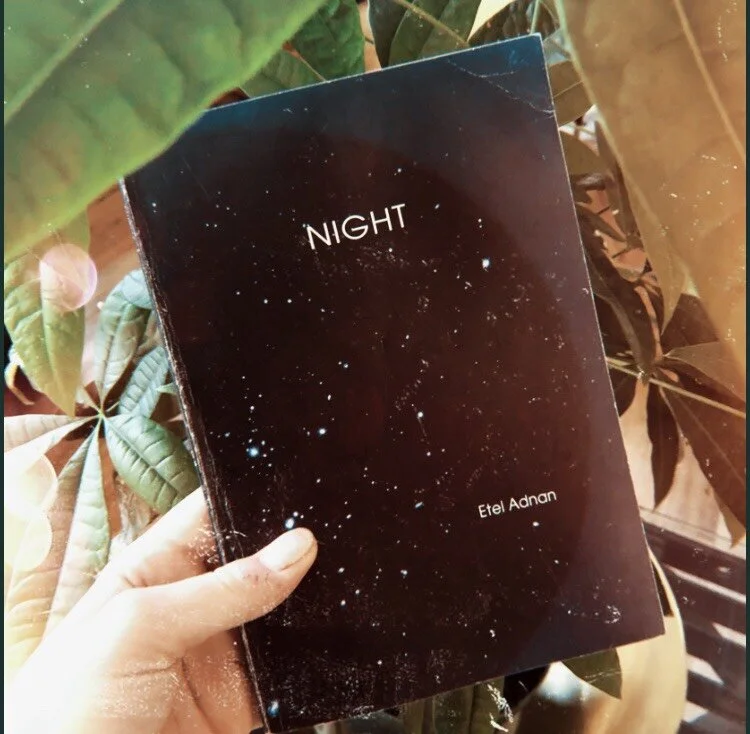
Bibliomancy with Etel Adnan’s Night. Image by Lisa Marie Basile.

Bibliomancy with Etel Adnan’s Night. Image by Lisa Marie Basile.

Bibliomancy Horoscopes: Divination With Etel Adnan's Poetry

October 18, 2019

BY LISA MARIE BASILE

Books speak to us, create worlds for us, and conjure both the questions and answers that reside within us. When we turn to books and written texts for some greater message, a message from beyond the page, we become literary witches — or bibliomancers. Bibliomancy (which goes by many other names) is the use of books in acts of divination. The goal here is to find greater wisdom, to lean into that Force or Spirit beyond and yet within the page.

Like the ancient practice of sortes (also a form of cleromancy, the use of lots for divination), the practice of divination from drawing a card or other object, bibliomancy has long had a place across cultures and in many folk traditions. Bibliomancers traditionally used the bible for divination, although grimoires and other sacred texts were also used.

According to the University of Michigan’s Romance Languages and Literatures, poetry — how delicious! — was consulted as well. The Dīvān of Ḥāfeẓ, a collection of ghazals written by the great Persian poet Hafiz, was used to seek “Tongue of the Unseen,” or messages via the poet after his death. Today, it’s still common for people to use sacred texts, like the I-Ching or the Bible to divine wisdom.

When we use poetry, of course, there is a technical term for that: Rhapsodomancy. However, bibliomancy seems to cover it for most people.

There’s even a fun intersection of the modern and the ancient over at the Bibliomancy Oracle, a simple webpage that offers up lines of poetry after concentrating and opening a “book” by clicking a button on the site. My poetry has even been included! The site says, “This Oracle selects passages from its database using a random generator. The idea being that meaningful texts are offered via synchronicity. The relevant message finds you. You only need to be open to receiving it.”

I’ve been consulting books for wisdom long before I knew what I was doing. I’d thumb through Bluets by Maggie Nelson or Rumi’s work — seeking wisdom, motivation, a message — and poetry never failed me. I’m sure you’ve done this, too, perhaps subconsciously. Not reading, per se, but seeking. Stumbling upon a stanza. It wasn’t until a few years ago that I began intentionally meditating on a question before selecting a passage and journaling about the line or stanza I’d be directed to upon asking it.

Like tarot or astrology, bibliomancy asks us to lean into the mystery and examine what we’ve been told. What is revealed? What does this revelation ask of us? What sings out when we see the words before us?

In this practice, the reader opens a book, whatever book calls out to them. As a poet, I prefer poetry. The reader then may call out to a guide or spirit to direct them to passage. Then, with eyes closed, the reader selects a page and then selects a line ( at least this is how I do it; although I am secular, so I work with no entity or deity). From there, the given line can be taken as wisdom, an omen, or a sign. Intuit this. Sometimes, people place the book on its spine and let it fall open (this was traditionally done with the bible, according to some research).

Although there are many approaches to bibliomancy, it is best that you create your own approach. Poems offer the most beautiful and mysterious answers to those questions we hold quiet and deep within us, I believe. In their ability to span the liminal parts of the self — the unsaid, the almost-said, the said-between-the-lines — poems offer great wisdom. Perhaps the spirit of the poet is there to direct you as well.

Poems are little written oceans, in which we dive deep, hungry to reach the bottom. Perhaps there is no bottom and that is the answer. Perhaps it’s the journey that matters.

When you let the book fall open, investigate what a line could mean in the context of your life. What images does it bring to mind? How does it make you feel? What does it force you to think about that perhaps you had not before? 
etel adnan

Here, I’ll be doing that for you — for each of the sun signs.

The method: I’ll be opening a poetry book every two weeks and asking for wisdom for each every sign. I will put myself into a receptive, trance-like state (I believe being loose, open, and connected yields the most accurate answers), close my eyes, call out the sign I’m asking about, thumb through the pages of a book, and let my fingers guide me to a line.

It is up to you to reflect the line assigned to your sun sign. Journal about it, meditate on it and listen to the way it reverberates through your mind. Let it stay with you. Write it down and carry it with you.

And at the very least, you’ll discover a new poet.

Our poet is Etel Adnan, and we draw on her book, NIGHT.

Aries

My breathing is a tide. Love doesn’t die.

Taurus

Memory is intelligent. It’s a knowledge seated neighter in the senses, nor the spirit, but in collective memory. It is communal….it helps us rampage through the old self, hang on the certitude that it has to be.

Gemini

What we mean by “God” is that He is night. Reality is night too. From the same night.

Cancer

Words trace their way to the ocean. From the ridge facing this house, signals take off, scaring us, but a large stride, a deep breath, restores tranquility.

Leo

Love creates sand-storms and loosens reality’s building stones. Its feverish energy takes us into the heart of mountains.

Virgo

One day, the sun will not rise at its hour, therefore that won’t be a day. And without a day, there won’t be a night either.

Libra

Are the rockets shooting for the moon killing invisible animals on their way?

Scorpio

Everything I do is memory. Even everything I am.

Sagittarius

Sometimes the sea catches fire.

Capricorn

We create reality by just being. This is also true for the owl who right now is dozing on a branch.

Aquarius

Our mind has a border line with the universe, there, where we promenade, and where tragedy resides.

Pisces

Memory is within us and reaches out, sometimes missing the connection with reality, it's neighbor, its substance.

For more on poetry, divination and magical writing, preorder my forthcoming book, THE MAGICAL WRITING GRIMOIRE.


Lisa Marie Basile is the founding creative director of Luna Luna Magazine--a digital diary of literature and magical living. She is the author of "Light Magic for Dark Times," a modern collection of inspired rituals and daily practices, as well as the forthcoming book, "The Magical Writing Grimoire: Use the Word as Your Wand for Magic, Manifestation & Ritual." She's written for Refinery 29, The New York Times, Self, Chakrubs, Marie Claire, Narratively, Catapult, Sabat Magazine, Healthline, Bust, Hello Giggles, Grimoire Magazine, and more. Lisa Marie has taught writing and ritual workshops at HausWitch in Salem, MA, Manhattanville College, and Pace University. She earned a Masters's degree in Writing from The New School and studied literature and psychology as an undergraduate at Pace University.
In Bibliomancy Horoscopes Tags The Magical Writing Grimoire, Grimoire, Bibliomancy, Rhapsodomancy, Cleromancy, Writing Magic, Etel Adnan, divination, rumi, Hafez, Horoscopes, zodiac, ritual, poetic ritual
Comment
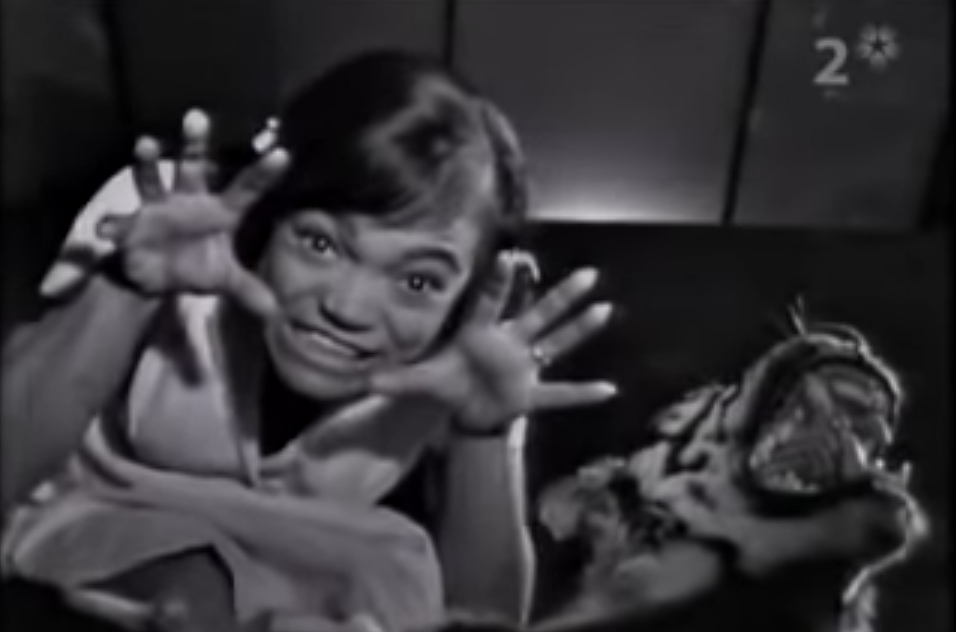
Eartha Kitt, i want to be evil

Eartha Kitt, i want to be evil

5 Songs to Get You into the Spirit of Halloween

October 17, 2019

BY TIFFANY SCIACCA

Halloween is approaching fast and although I always have a list or two of scary movies I plan to watch, I rarely think about music. Of course, there is not as big a catalog for Halloween as for Christmas but you do have the standbys like Bobby Pickett’s, Monster Mash or Ministry’s, Every Day is Halloween, though I am more partial to Siouxsie and The Banshees, Peek-A-Boo myself. I decided to explore a bit and found five songs to add to your Halloween playlist.

First, we have a band recommended to me through my YouTube recommendations. Formed in 1982, Saâda Bonaire was intended as a disco/world music band fronted by Stefanie Lange and Claudia Hossfeld. They were destined to have at least one hit single, “You Could Be More As You Are” but their A&R man grossly went over budget for Tina Turner’s, Private Dancer as well Saâda Bonaire’s debut album and EMI refused to release the single, pushing the group into obscurity. My introduction to them was, Shut the Door (1983) a nice jazz fusion song you would think was almost too bouncy to tie in with Halloween but then when the vocals start it quickly sounds like a song you’d find on the soundtrack of Vamp or The Hunger .

The second tune is familiar to most of us I think. Spooky (1967) was originally an instrumental song by Mike Sharpe and only later were lyrics added. More than 30 artists from Lydia Lunch to Andy Williams have covered it and I’m going to share the two that were unfamiliar to me.

The first version is by Martha Reeves and the Vandellas. It definitely has that signature sound with the Vandellas adding the appropriate backdrop making it a perfectly dark and sultry song with Martha taking lyrical liberties like, “Love is kind of crazy with a spooky old lady like me.”

The second cover of Spooky is by the interesting trio of Joan Osborne, Isaac Hayes, and Dave Sanborn. This video was produced at Studio 5, NYC in 1997 for David Sanborn & Friends, The Super Session. There is a little playful banter at the beginning, but then it sticks close to the best known version by the Classics IV with lyrics alluding to a “spooky little girl.”

Another oldie but goodie, I Put a Spell On You, was supposed to be the perfect love song. “What do you mean Tiffany?” You ask, “It is a perfect love song!” Well the versions we hear now, like Nina Simone’s are more than convincing, but the original version which was written by Screamin’ Jay Hawkins was recorded after a large meal consisting of too much alcohol and the final project was not the pristine song familiar to the 1950s and was banned for some time. Here is a later version but you will still get the picture, definitely has that Halloween vibe. You are welcome!

The last on the list is Eartha Kitt’s, I Want to Be Evil released in 1953 on the album, That Bad Eartha, and with lines like, “… whatever I've got, I'm eager to lose” and “The the closest I've been to a bar is at ballet class.” I Want to Be Evil” is just as fun as Monster Mash but with sharper lyrics. I hope you enjoy these 5 spooky songs as much as I did and if you have any to add, please let me know!


Tiffany Sciacca (senior staff) is a writer who has recently moved to Sicily from the Midwest. Tiffany’s work has appeared in the Silver Birch Press, SOFTBLOW, and DNA Magazine UK. When she is not learning a new language or trying to blend in, she is reading old poetry anthologies, binging Nordic Noir or of course, writing.

In Music Tags Spooky songs, spooky, halloween, halloween songs, eartha kitt, saada bonair, the vandella's, martha reeves, joan osbourne, isaac hayes, screamin' jay hawkins
Comment

Weekly Mantras for Badass Witches

October 15, 2019

Stephanie Valente lives in Brooklyn, New York, and works as an editor. One day, she would like to be a silent film star. She is the author of Hotel Ghost (Bottlecap Press, 2015) and Waiting for the End of the World (Bottlecap Press, 2017). Her work has appeared in dotdotdash, Nano Fiction, LIES/ISLE, and Uphook Press. She can be found at her website.


Read More
In Lifestyle Tags astrology, zodiac
Comment
Screen Shot 2019-10-14 at 1.16.14 PM.png

3 Poems by I.S. Jones

October 14, 2019

BY I.S. JONES

EVE

I know Death
is the undulating snake below the Great Tree.
Before Truth opened my eyes
I could do nothing but feel—
even the veil that blocked my sight
could never make me ignorant of desire.
I knew of my nakedness—
the snake’s tongue throbbing
for the meat of my thighs.
I am a feral thing; my mouth
a greedy canvas of ripened consequence.
In the garden, I pick fruit & masturbate—
worship myself in the absence of prayer.
The blackberry’s sweet nectar
indistinguishable from my own.
Fingers: blackened        Pussy: blackened
Lips the color of shadows.
All day, I dance like a rich woman
let mango drip from my chin.
You don’t know hunger,
a throat relieved of its own drought,
until your teeth tear open the wet heart of the sun
& chew through its shining meat.
I don’t know if I could have broken the snake’s spell—
or rather if I wanted to.
I followed it—sliding & sliding—
through the quiet bend
where stood God’s second head.
I pulled God’s heart down from the branches.
I sunk my teeth through salvation
& climaxed like never before.
I wept & then all the lights of heaven pierced my skull
like a dagger’s epiphany.
I know Death:
it met me at the edge of myself
gave me a new name,
then sent me back.
I woke up naked & wailing in a forest;
the faint caw of life at midday,
flies rest lazily on leaves
as shelter from the coming rain.


OYINBO

I am a spell of six letters.
I have a name that begins & ends two countries.

I am ‘Itiola’: ‘Iti’: ‘the foundation’, ‘the root’.
Ola: ‘cradle of wealth’. English is a meager language.

There is no threshold that can translate me.
No one trusts a name they can’t pronounce.

Call me ‘Stephanie’ because that’s easier.
It’s more American, meaning ‘white’.

I am so articulate; I sound like generational wealth:
the ‘burbs two cars in the driveway

manicured lawns private schools.
Like any good American, I get to complain in English.

Say: American-born Nigerian. Say: Child of Empire.
No one can make sense of what I am:

Yankee. Foreigner. Exotic fruit of the West.
I am the most foreign when I talk about Nigeria

[you don’t get to weep for a country that isn’t yours, selfish American]
I am most White when I talk about America.

I love my country though I’ve seen its hideous face:
When my parents speak in Yoruba & sound like a threat,

when Americans hear my mother’s accent & question her intelligence.
I’m used to this one-sided love, how any Empire too close to the sun

can burn.


ABEL

Baba gave me dominion over all cloven & two-legged animals.
I lift my hands & all living creatures bow.
I stir shadows & creatures plunge headfirst to salvation.
Some of us pick flowers, dream in blue & green,
others do the real work to bring home a heavy feast.
All year long, my people eat like kings.
Look at me, Cain: Baba’s most prized creation.
He made life, but I undress the light
& a village doesn’t go hungry
of the way I put my humanity on a nightstand
to do the vain, hideous things,
what sister, do you know about blood & the way it speaks…?
I remember each upon each—the knuckling, the wordless pleas,
the clean deliverance of blade upon a beast’s neck.
Flesh into flesh.
Every nation under my tending feasts until marrow
until tendon
until muscle
until blood is savior over body.
Let each column of teeth
know its guillotine weight.
Let each hungry mouth know itself to be a brief church.
O sister, praise me for the pity I have shown you
& know when life gives you poverty be grateful life gives you
anything at all.

after Phillip B. Williams


I.S. Jones is a queer American / Nigerian poet and music journalist. She is a Graduate Fellow with The Watering Hole and holds fellowships from Callaloo, BOAAT Writer's Retreat, and Brooklyn Poets. She is the 2018 winner of the Brittle Paper Award in Poetry. She is a Book Editor with Indolent Books, Editor at Voicemail Poems, freelances for Complex, Earmilk, NBC News Think, and elsewhere. Her works have appeared or are forthcoming in Guernica, Kweli Journal, The Rumpus, The Offing, The Shade Journal, and elsewhere. Alongside Nome Patrick Emeka, is she the co-editor of the Young African Poets Anthology. She is a Kemper K. Knapp University Fellowship and an MFA candidate in Poetry at UW-Madison.

In Poetry & Prose Tags Itiola S. Jones, Poetry
Comment

Weekly Mantras for Badass Witches

October 9, 2019

Stephanie Valente lives in Brooklyn, New York, and works as an editor. One day, she would like to be a silent film star. She is the author of Hotel Ghost (Bottlecap Press, 2015) and Waiting for the End of the World (Bottlecap Press, 2017). Her work has appeared in dotdotdash, Nano Fiction, LIES/ISLE, and Uphook Press. She can be found at her website.


Read More
In Lifestyle Tags astrology, Zodiac
Comment

Fiction by Helen McClory

October 9, 2019

Helen McClory's first story collection On the Edges of Vision, won the Saltire First Book of the Year 2015. Her second story collection, Mayhem & Death, was written for the lonely and published in March 2018. There is a moor and a cold sea in her heart. @HelenMcClory

Read More
In Poetry & Prose Tags Helen McClory, fiction
Comment

5 Movies to Watch This Halloween

October 8, 2019

Joanna C. Valente is a human who lives in Brooklyn, New York. They are the author of Sirs & Madams, The Gods Are Dead, Marys of the Sea, Sexting Ghosts, Xenos, No(body), #Survivor, (forthcoming, The Operating System), and is the editor of A Shadow Map: Writing by Survivors of Sexual Assault. They received their MFA in writing at Sarah Lawrence College. Joanna is the founder of Yes Poetry and the senior managing editor for Luna Luna Magazine. Some of their writing has appeared in The Rumpus, Them, Brooklyn Magazine, BUST, and elsewhere. Joanna also leads workshops at Brooklyn Poets. joannavalente.com / Twitter: @joannasaid / IG: joannacvalente / FB: joannacvalente


Read More
In Pop Culture Tags movies, films, halloween
Comment

Weekly Mantras for Badass Witches

October 2, 2019

Stephanie Valente lives in Brooklyn, New York, and works as an editor. One day, she would like to be a silent film star. She is the author of Hotel Ghost (Bottlecap Press, 2015) and Waiting for the End of the World (Bottlecap Press, 2017). Her work has appeared in dotdotdash, Nano Fiction, LIES/ISLE, and Uphook Press. She can be found at her website.


Read More
In Lifestyle Tags astrology
Comment

On Being Told I Am Haunted

October 2, 2019

Kailey Tedesco is the author of These Ghosts of Mine, Siamese (Dancing Girl Press) and the forthcoming full-length collection, She Used to be on a Milk Carton (April Gloaming Publications). She is the co-founding editor-in-chief of Rag Queen Periodical and a member of the Poetry Brothel. She received her MFA in creative writing from Arcadia University, and she now teaches literature at several local colleges. Her poetry has been nominated for the Pushcart Prize. You can find her work in Prelude, Bellevue Literary Review, Sugar House Review, Poetry Quarterly, Hello Giggles, UltraCulture, and more. For more information, please visit kaileytedesco.com. 

Read More
In Personal Essay Tags spooky, magic
Comment

Notes on Excavating Trauma

September 30, 2019

Serena Chopra has a PhD in Creative Writing from the University of Denver and an MFA from the University of Colorado at Boulder. She is the author of two full-length books of poems, This Human (Coconut 2013) and Ic (Horse Less Press 2017), as well as two chapbooks, Penumbra (Flying Guillotine Press 2012) and Livid Season (Free Poetry 2012). She is a Kundiman Fellow and a 2016-2017 Fulbright Scholar, for which she is composing hybrid writing informed by her research with queer women in Bangalore, India. She is a multidisciplinary artist, working as a professional dancer, theater/performance artist and visual artist. She is a co-founder and actor in the poet’s theater group, GASP and worked with Denver’s Splintered Light Theater on a full-length production of Ic, for which she composed the soundscore. She has an ongoing text/image collaboration, Memory is a Future Tense, with artist Lu Cong. Serena currently teaches in the MFA program at Naropa University’s Jack Kerouac School of Disembodied Poetics.

Read More
In Social Issues Tags trauma
Comment

The 3 Most Intuitive Signs, According to the Zodiac

September 27, 2019

Stephanie Valente lives in Brooklyn, New York, and works as an editor. One day, she would like to be a silent film star. She is the author of Hotel Ghost (Bottlecap Press, 2015) and Waiting for the End of the World (Bottlecap Press, 2017). Her work has appeared in dotdotdash, Nano Fiction, LIES/ISLE, and Uphook Press. She can be found at her website.


Read More
In Lifestyle Tags astrology
Comment
Joanna C. Valente

Joanna C. Valente

Survivor: An Interview With Joanna C. Valente

September 25, 2019

JOANNA C. VALENTE IN INTERVIEW WITH LISA MARIE BASILE

LISA MARIE BASILE: Let's talk about your #Survivor Book — it centers on survivors of all sorts, including survivors of body, gender, and physical trauma. It's deeply aligned with all of your work as a writer and, also, as a photographer — so, how, specifically, did this book come to fruition?

It was kind of an accident, to be honest. I was at a residency to work on writing (specifically, my novel Baby Girl and Other Ghosts) at Denniston Hill. On a whim, I brought my camera with me just to have a creative outlet other than writing so as not to burn myself out. I personally like to multitask with my creative projects, because it keeps everything fresh - and keeps me challenged. So, I ended up taking photos every day and began to focus on the energy around me and how that made me reflect on my own body and my own energy. How do those things merge, outside and internal energies? As a witch and tarot reader, I have always been preoccupied by these themes and thoughts, particularly when it comes to healing. A lot of dialogue around and within the survivor community doesn't always focus on healing itself, and often focuses on how it happens, what it looks like. Those are, of course, necessary parts of the process for us to understand.

But my focus is more on the individual and the individual's path to healing and fulfillment. As I took photos of the landscape, I thought about how we have abused that land, how that land soaks up energy from the people who have inhabited it. I sought to do the same with the body, so I began to use myself as a muse, largely focusing on empowering myself as a survivor, while also just trying to capture myself as a survivor in the moment, vulnerable and as I am - without crafting too ornate of a photoshoot that makes it something else entirely. For me, the key element to the project is its authenticity and truthfulness to the land and the body.

Joanna C. Valente

Joanna C. Valente

LISA MARIE BASILE: How did you decide to pivot from poetry to photography in this specific text? Also, cnn you talk a little more about the photos you took of yourself? Was this a move toward autonomy?

In this case, I didn't want the editorial gaze and editorialization of poetry, of language. Language is a beautiful spell, a kind of magic - but I wanted to focus on capturing something as it is, in its vulnerability and true form, rather than channeling the energy into something else entirely. In this way, however, the autonomy becomes center to it in a way that it doesn't with writing. Writing, of course, is completely controlled by its author, but a photo is an interesting, intimate collaboration between the artist and its subject, whether human or nature. In some way, it is me giving away control and autonomy to another being, and building trust, but it's also a way to gain empowering autonomy within the very choice of that relationship, and being autonomous in steering the shoot and the artistic direction.

There are captions to the photos, which does bring an element of language to the photos, to give them some context. This context, however, gives to the healing process and gives meaning to that journey. However, it doesn't give context to each survivor's journey, because those details are irrelevant. We are all survivors, and our details don't need to isolate us - however, our being and vulnerability and experience can connect us in ways that are magical. That energy is real and palpable, and we can use it for good. In a way, this book is one big healing spell, hoisting all of this energy in a hopefully positive way for people.

LISA MARIE BASILE: The idea of including an accompanying digital photo series outside of the book is lovely. It gives lots of people a chance to take part. What do you hope the overall message is, and how do you want to change the way we talk about survival and allyship?

I want to make it move beyond gender and sexuality, and those stereotypes and concepts in our head. When we talk about pain, trauma, and struggle, we often talk about it especially in those terms, which are very isolating to the queer communities. If someone, for instance, identifies as nonbinary, where do they fit into that equation? Most times, the conversation tends to focus on certain demographics and I don't think that is always the most helpful approach. I've had countless people tell me how they thought they couldn't tell anyone of their experiences, because they wouldn't be taken seriously because of their gender - or that they would be ostracized or not believed. That's incredibly painful, to feel as if you are being silenced, and then to invariably silence yourself. That creates an entirely different kind of trauma - and having a lack of support is the opposite of what should be happening.

So really, I want to break down barriers. I want people to realize anyone can be a survivor; there is no one person or body that fits the description. If we come from a place of love and empathy and compassion, rather than trying to draw boundaries and pictures of what survivors look or act like, we can unify and work together to create a better support system and community. Isn't that the point, to help each other? I realize it's not always so easy, especially because our own ideas of ethics and justice and safe spaces vary, but it's impossible, in my opinion, to build a truly inclusive and safe space if we aren't welcoming of everyone.

Joanna C. Valente

Joanna C. Valente

LISA MARIE BASILE: You obviously work with ritual and magic. Have you ever performed meditation, spellwork or ritual around body/healing/and gender and identity?

I definitely have. I meditate (mostly) every day in some capacity (usually in the morning) and definitely work with rituals and spells when I need to. Being a tarot reader has also been a miraculous journey for me in this regard. People often look at the tarot as being gendered, such as having masculine or feminine traits (such as the Empress or the Emperor cards). While I don't debunk anyone's relationship or reading to the cards, as every reader is a little different and has their own unique approach, looking at tarot as gender-fluid has been freeing for me. We can embody various "traits" while also not embodying one particular gender, for instance - and I use the cards in a way that feels authentic to that. How, for instance, are the cards showing me what my energy levels are like in a particular moment? How are they changing and what does that mean for me, as an entire being on a journey to happiness?

LISA MARIE BASILE: I think a lot about healing — one another, ourselves, the earth — from our daily traumas, generational traumas, and the trauma that humans have done to one another and the earth. I also think a lot about how art itself, and sharing it and including others, is an act of healing.

What are your thoughts on how writing and art can make us better?

I definitely am a huge proponent and believer that art as a whole heals us. It's therapeutic. How could it not be? It can allow you to become more self-aware of your motives, your emotions, your past, and how those things cause you to react. It can help you heal and work through trauma, finding a creative outlet to tunnel and channel your emotions. Channeling emotion is a form of magic; language is actualizing something into reality, and that is a form of magic. That is healing. When other people come into contact with that work, they begin their own relationship around it, and it can help them actualize their own feelings and experiences. The effect is endless, and it creates a spiritual community even if it's not something overtly on the surface. Any time we are connected deeply to ourselves and others, that's spiritual to me. We are channeling and exchanging energies - and that's life-saving. Being isolated is the worst thing that can happen to a human, and for me, art has always been the opposite of that, as a connector.

LISA MARIE BASILE: How can people learn more about your book and the series?

They can go to my website (joannavalente.com) and see photos, engage with the interview series, and get in touch with me if they want to talk about it or get involved. I also post a lot about it on my Twitter and Instagram (Twitter: joannasaid, Instagram: joannacvalente). I'm pretty easy to find these days.

LISA MARIE BASILE: If people want to learn more about you, where can they start?

Also my website! And social media. All of it is, thankfully, just my name, so it makes me easy to find.

In Poetry & Prose, Politics Tags JOANNA C VALENTE, joanna valente, Lisa Marie Basile, survivor book
Comment

Weekly Mantras for Badass Witches

September 24, 2019

Stephanie Valente lives in Brooklyn, New York, and works as an editor. One day, she would like to be a silent film star. She is the author of Hotel Ghost (Bottlecap Press, 2015) and Waiting for the End of the World (Bottlecap Press, 2017). Her work has appeared in dotdotdash, Nano Fiction, LIES/ISLE, and Uphook Press. She can be found at her website.


Read More
In Lifestyle Tags astrology
Comment

Weekly Mantras for Badass Witches

September 17, 2019

Stephanie Valente lives in Brooklyn, New York, and works as an editor. One day, she would like to be a silent film star. She is the author of Hotel Ghost (Bottlecap Press, 2015) and Waiting for the End of the World (Bottlecap Press, 2017). Her work has appeared in dotdotdash, Nano Fiction, LIES/ISLE, and Uphook Press. She can be found at her website.


Read More
In Lifestyle Tags astrology
Comment
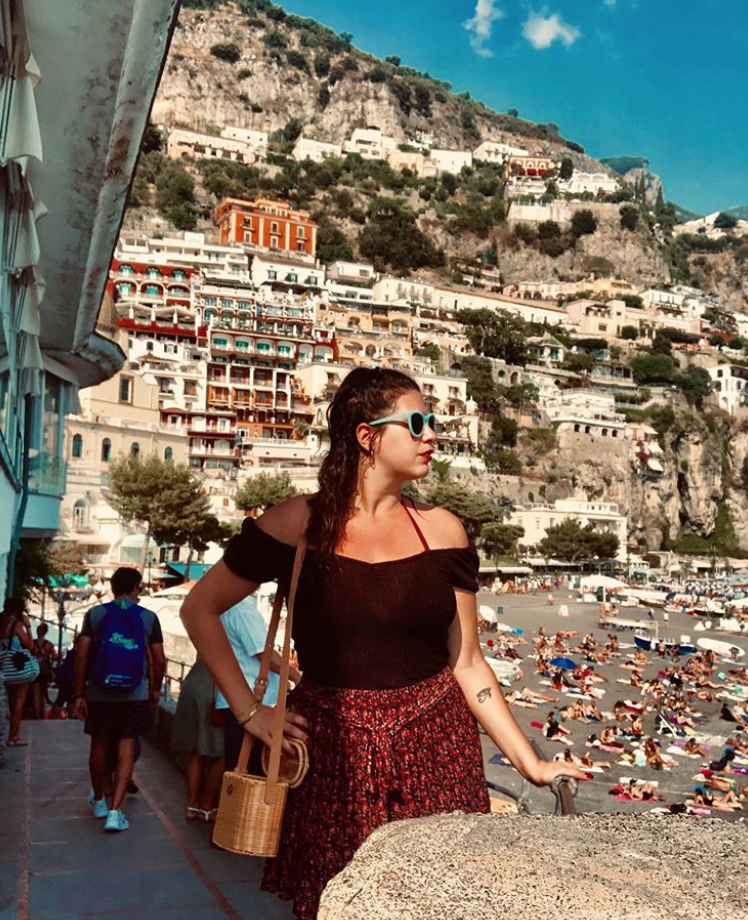
amalfi coast

Traveling Solo: Tips for Embracing Beauty & Smart Planning

September 16, 2019

BY LISA MARIE BASILE

I wanted to write this after I’d returned from solo travel — not right after, and certainly not during — because I wanted to make sure the insights I’m providing aren’t either totally obvious (“Google the location first!”) or incorrect.

Last month, I spent a little over two weeks in Europe alone. It wasn’t the longest trip I’d taken abroad, but it was the most notable in terms of personal transformation. In the past, I’d gone to Mexico on my own for a while as part of a volunteer group (no, not a missionary group!) with a group of global volunteers. I was alone — and the only American — but I was surrounded by people, so there was no sitting in my thoughts. I’d bunked with two young women from Seoul and one from Quebec, and we’d stay up all night chatting and laughing. I remember experiencing overwhelming pangs of loneliness then, but I was so young and so concerned with ‘fun’ that I let the night and my new friends whirlwind me away from my inner thoughts.

But traveling alone is so worth it, so empowering, so revealing. It goes without saying that solo travel is a journey in more ways than one. It’s a sojourn of place and self.

On this past trip, I spent a few days in a little green village just outside Windsor, England and then I took myself to Sorrento. I flew into Naples (where some of my family is from) and then drove the hour and a half into the mountains, up to what felt like the very top of a mountain in Sorrento, to a tiny bed and breakfast (converted from a 7th century church) in a silent commune. Where I stayed had just a chapel, a tiny market — where I’d by water, mortadella and lemon beer — and two small restaurants. If you closed your eyes where I stayed, you’d hear a few birds, a barking dog, and the chatter of a few people down the road. No bars, no centro, nothing.

Looking out, you could see only blue — never knowing where the sea stopped and the sky began. Only knowing that out there loomed Vesuvius, and if she exploded you’d never escape. There was one single road down the mountain and into Naples — much of it through mountains. Let’s just say it makes you think. And that was the entire point.

But onto what I learned during my solo travels…

View this post on Instagram

Cannot believe it was just a week ago I was in this fantasyland ~ that actually exists ~. I confess it; despite the beauty and magic, my Italian trip was not easy; I was alone and I fell into the well in my mind. I became weak and vulnerable. I witnessed my shadow in full force. I was unable to get out of my head, mostly at night, alone. But I’m grateful for when the daylight hit, when I watched the birds and swam; by day, everything shifted and I fell in love with every street and shoreline and untouched alleyway. I essentially wrote an entire book while there (my @clashbooks novella), rewriting huge parts of it — which take place in the exact place I visited in Italy. So, despite the cruel summery slog through my deepest and darkest thoughts and anxieties while traveling alone (we don’t give enough credit to solo fucking travelers), it was everything and more—transformative and illuminating and generative. Even if I dragged myself through long nights. My forthcoming @clashbooks novella is the product of my being holed up in an Italian room high up in the mountains, all alone. Did you expect anything less dramatic from me? . #travel #wanderlust #travelphotography #positano #amalficoast #solotravel #solotravelling #solotravelgirl @solofemaletravel @solotravelblazing @travel__etc @sorrentoitalia @sorrentovibes @amalficoast_italy #travelblogger #travelgram #wanderful_places #naturephotography #italy #italia #campania #writing #writingcommunity #bookstagram

A post shared by lisa marie basile (@lisamariebasile) on Sep 4, 2019 at 9:42am PDT

Cover the logistical basics first and never, ever make assumptions about anything

Before I get into what I personally learned, here are some foreign travel basics. If you’re traveling to any location — even popular tourist destinations — you’ll want to ensure that you understand cultural basics and prepare for logistical issues. You can still be spontaneous (like me) and impulsive and do your due diligence.

Accessibility

Are there accessible routes, travel options or places where you’re going? If you’re a wheelchair user, how friendly is the area? If walking is difficult for you, are there many steep hills or roads? Is everything cobblestone? Are the restaurants and churches all up steps?

Here are some useful resources for people who want to learn more about accessibility-friendly cities and countries for travelers: Curb Free With Cory Lee (here’s his list of most accessible beaches in the world, for example) Nomadic Matt, and Wheelchair Travel.

Diversity

Important for women, people of color and non-binary or trans individuals: How does the culture treat marginalized identities? Is it safe for you travel in the area, and if not, what steps can you take to ensure safety? This a good starting point and website regarding this all-important issue.

Getting around

Learn a little bit of the language. This helps immensely. Just get a translation app on your phone and don’t be a afraid of using it.

Register your trip with your embassy before you go. If you are American, you can do this here.

Do this location have Uber or Lyft? If not, can you catch a train or bus — and do the buses come regularly and show up at the spot they say they will? This came up a lot for me, so be prepared ahead of time. I recommended googling specific questions. I got most of this useful information ahead of my trip via forums like TripAdvisor and Rick Steves forums (most of the time you can simply Google the question, find the forum link and read it versus signing up for the forum). You’d be surprised what you’ll find when you do a little Googling. Someone somewhere took the very bus you think you need or traveled the same itinerary as you plan to.

if you have connecting flights, where do you connect? Is the terminal huge and are there usually short connections? If so, can you learn a little bit about how that specific airport works? Many airports are equipped to handle short connections, but some are notorious for causing passengers to miss flights.

If you’re going swimming, for example, can you find free or public beaches ahead of time? Most beach or coastal tourist areas will peddle pricier beach tickets. Is the free beach unsafe? (Usually, I’ve found that they’re not).

Are the footpaths near your bed & breakfast or where you’re traveling safe?

Health

Can you drink the water from the tap or in fountains?

Is there a nearby hospital? Do pharmacies offer medication (in Europe, for example, most people go to a pharmacy). Is there a service that sends doctors to your hotel or bed and breakfast?

If you use a special kind of medication — like a biologic that needs to be kept refridgerated, or, say, insulin — are there special pharamacies where you can get medication? This is especially important for longer-term travel.

Money

What kind of money does the country take? Where can you get it without getting charged an arm and a leg? One rule of thumb is that you’ll usually get the worst exchange rate when you convert money at your bank or at one of those airport money changers. Only convert smaller amounts if you’re going to. I usually use my debit or credit card to get a better exchange rate — so be sure to ask your bank about a card that doesn’t come with a wild foreign transaction fee. Some of these cards actually reimburse foreign ATM fees, otherwise you could be paying a good amount every time you withdrawal money. I’d really suggest googling this sort of thing ahead of where you’re traveling.

Oh, and be sure to let your bank know when and where you’re traveling. Being hit with a freeze while abroad is no fun.

Look into tipping etiquette for the country you’re visiting. It differs place to place and according to each service (car drivers, hotel staff, waiters, bartenders).

Cultural etiquette

This goes a long and includes issues of diversity, race, and gender — but it goes beyond that. What are some general customs that must be remembered where you’re going? What’s considered impolite or left-field? How do people see tourists from different countries? What sort of local behavior might you consider “rude” even though it’s perfectly normal? Knowing this sort of thing is helpful because we have to de-center ourselves when we travel. We can’t enter every country or culture with a myopic us-centered lens. Not only will it sully you’re experience, it’ll keep you from personal expansion.

An example: Although this wasn’t a major issue, I was made to cover my shoulders in many churches throughout Italy and Spain. Say what you will about modesty, shame, religion and all of the other stuff bubbling under that boiling surface, but knowing this before I arrived was helpful. It’s a custom that I had to understand and accept if I wanted to see the churches. Period.

View this post on Instagram

On the way to Amalfi and Positano we pass Li Galli, also known as The Sirenusas — an archipelago of little islands surrounded by cerulean water. This is where Ulysses’s sailors were sought out by the sirens, thought to be named Parthenope, Leucosia, and Ligeia. They played the flute, the lyre, and of course, they sang. Their story goes back to the 1st century, sang, and another played the flute. They are mentioned in the 1st century by the Greeks. I imagine them as women-mermaids, although the sirens were also depicted as having a bird body with human heads. . In my bed and breakfast I stayed in the Parthenope room, decorated in light blue, gold, and ivory, and of course, as a water sign — Scorpio — this was initiatory, a blood welcoming. A ritual of water and lineage. I am a siren, a descendent of Parthenope, perhaps? 🌊🧜🏽‍♀️ Parthenope sadly was said to throw herself into the sea when she couldn’t please Odysseus with her siren song. Her body was found on the shore of Naples, where my grandfather comes from. Other stories say that a centaur fell in love with Parthenope, but Jupiter couldn’t have this — and so he turned her into the city of Naples, while the centaur became Vesuvius. And when Vesuvius couldn’t have her love, he would erupt. . Virgil wrote that Parthenope nurtured him. 💧

A post shared by lisa marie basile (@lisamariebasile) on Aug 26, 2019 at 1:31am PDT

Connect with the local mythology & poetry

In Sorrento, I visited the Costa Amalfitana, and it was a land of mythology and story — and researching it helped me connect to the sky, the sea, the land, and the people. In my piece on my personal travel experience, I wrote that I stayed in a room called Parthenope, one of the sirens that sung to weary sailors (and to Odysseus, who was said to not love her voice). After that, she was said to cast herself into the sea and whose body would become the city of Naples.

This watery mythology carried me through my trip (especially as a water sign), also giving me pause to reflect on the rich history of place and the magic of the sea where I swam and daydreamed and played.

Connecting with the local mythology not only lets you experience the space on a more profound and deeper level, it can clue you into cultural behaviors and beliefs.

And please — find a book by a poetry from the region you’re visiting. I may be biased but I believe that poetry speaks the language of the people. It expresses the nuance of the land, the heart of its people. Poetry also shares what the textbooks, headlines, and tourist industries sometimes don’t. Poetry is war and sex and food and god and soil and the grittiest of truths.

Read more: Traveling To Italy Alone: On Ancestral Work, Fear, and Solitude.

Keep a journal of your experiences

There are feelings, moods, realizations and reckonings that can’t be captured on camera. There are things you won’t want to share on Instagram. There are late-at-night ideas and feelings you’ll want to better understand later. Often time, as I say, a place slices a piece of you and keeps it for itself long after you leave. That shedding happens without us noticing it, but we get glimpses of it from time to time — and all of that is worth writing down. That moment of sorrow or loneliness or fear or exhilaration or pure and total elation? All worth capturing in your own words. A place sometimes becomes more and more real after we leave it; your notes and written memories may help you decide what that place really meant when you were too stuck within the eye of the storm to really decipher it.

Be open to chatting with the locals and other tourists, but know the difference between loneliness and being alone

One of the things I learned while traveling is that i frequently thought I felt “lonely.” I was alone, yes, but I wasn’t truly lonely. I think of the generous Italian family who made me pasta and invited me to sit with them at their family table when I arrived to my bed and breakfast during siesta — without any food and no place to go to eat. I think of the Irish family who had me sit with them during a visit to a local farm at which we were plied with pasta and wine after the tour. I think of the English tourists who gave told me the best spots to see in Capri as we jumped into the sea during our boat tour. I think of the sweet young women who waited on me every night at one of the two restaurants on our little hill — who, by night three, practiced their English with me and let me speak to them in Italian. I think of the time we broke down on the mountain side coming back from Positano. I was with a group of Spanish tourists who cracked a few beers and chatted with me about global politics (and then offered to buy my book!) as we waited for a new car to pick us up.

How beautiful. Talk. Ask questions. Introduce yourself. Be open and receptive. The world is an empathic and naturally generous place if you show some vulnerability.

Be present

Listen to the birds. To the wind. To the sea. To the traffic. To the dialects. Listen to your own heart beating. Try and take a few moments each day not to experience everything and collect as many tourist stops as possible, but to be inhabited by and inhabit the spirit of the location. Let it seep into your blood and change you. Breath into the country and keep it there. All the spreadsheets and photos and Instagram poses won’t matter years from now. What will matter is how you remember the light, how the wine ran through you, how the birds seemed to follow you wherever you went.

Set an intention for your trip

Even if your intention is open-ended — to learn something new about yourself — an intention can turn your trip into a ritual itself. Acts of exploration, waking up, talking to new people, traversing new roads, trying new wines or foods all become sacred, parts of a pathway toward your intention. My intention for my last trip was to write — to get into a space where I was fully inhabited by peace and free time and my purest sense of self. And write I did — I finished my Clash Books novella. Somehow. Travel is magic.

In Place, Lifestyle Tags travel, solo travel, italy, sorrento, lubra casa relax, costa amalfitana, positano, amalfi coast, traveling, world travel, travel tips
Comment
← Newer Posts Older Posts →
Featured
‘in the glitter-open black' — poetry by Fox Henry Frazier
'poet as tarantula,  poem as waste' — poetry by  Ewen Glass
'poet as tarantula, poem as waste' — poetry by Ewen Glass
'Hours rot away in regalia' — poetry by Stephanie Chang
'down down down the hall of mirrors' — poetry by Ronnie K. Stephens
'Grew appendages, clawed towards light' — poetry by Lucie Brooks
'do not be afraid' — poetry by Maia Decker
'The darkened bedroom' — poetry by Jessica Purdy
'I am the body that I am under' — poetry by Jennifer MacBain-Stephens
instagram

COPYRIGHT LUNA LUNA MAGAZINE 2025