• Home
  • indulge
  • new poetry
    • About Luna Luna
    • resources
    • search
  • editor
  • dark hour
  • submit
Menu

luna luna magazine

  • Home
  • indulge
  • new poetry
  • About
    • About Luna Luna
    • resources
    • search
  • editor
  • dark hour
  • submit
delicious new poetry
'to anoint the robes' — poetry by Timothy Otte
Dec 19, 2025
'to anoint the robes' — poetry by Timothy Otte
Dec 19, 2025
Dec 19, 2025
'a stone portal in the woods' — RJ Equality Ingram
Dec 19, 2025
'a stone portal in the woods' — RJ Equality Ingram
Dec 19, 2025
Dec 19, 2025
'crooked castle wanting' — poetry by Lindsay D’Andrea
Dec 19, 2025
'crooked castle wanting' — poetry by Lindsay D’Andrea
Dec 19, 2025
Dec 19, 2025
'silent, Sunday morning' — poetry by Nathalie Spaans
Dec 19, 2025
'silent, Sunday morning' — poetry by Nathalie Spaans
Dec 19, 2025
Dec 19, 2025
'Time's metronome blank' — poetry by Rehan Qayoom
Dec 19, 2025
'Time's metronome blank' — poetry by Rehan Qayoom
Dec 19, 2025
Dec 19, 2025
'this strikes me as a Rorschach' — poetry by John Amen
Dec 19, 2025
'this strikes me as a Rorschach' — poetry by John Amen
Dec 19, 2025
Dec 19, 2025
'Love is a necessary duty' — poetry by Tabitha Dial
Dec 19, 2025
'Love is a necessary duty' — poetry by Tabitha Dial
Dec 19, 2025
Dec 19, 2025
'O, to bloom, to arch open' — poetry by Karen L. George
Dec 19, 2025
'O, to bloom, to arch open' — poetry by Karen L. George
Dec 19, 2025
Dec 19, 2025
'the sky violent' — poetry by Robert Warf
Dec 19, 2025
'the sky violent' — poetry by Robert Warf
Dec 19, 2025
Dec 19, 2025
'the doors of the night open' — poetry by Juan Armando Rojas (translated by Paula J. Lambert)
Nov 29, 2025
'the doors of the night open' — poetry by Juan Armando Rojas (translated by Paula J. Lambert)
Nov 29, 2025
Nov 29, 2025
'we can be forlorn women' — poetry by Stevie Belchak
Nov 29, 2025
'we can be forlorn women' — poetry by Stevie Belchak
Nov 29, 2025
Nov 29, 2025
'I do whatever the light tells me to' — poetry by Catherine Bai
Nov 29, 2025
'I do whatever the light tells me to' — poetry by Catherine Bai
Nov 29, 2025
Nov 29, 2025
‘to kill bodice and give sacrament’ — poetry By Kale Hensley
Nov 29, 2025
‘to kill bodice and give sacrament’ — poetry By Kale Hensley
Nov 29, 2025
Nov 29, 2025
'Venetian draped in goatskin' — poetry by Natalie Mariko
Nov 29, 2025
'Venetian draped in goatskin' — poetry by Natalie Mariko
Nov 29, 2025
Nov 29, 2025
'the long sorrow of the color red' — centos by Patrice Boyer Claeys
Nov 28, 2025
'the long sorrow of the color red' — centos by Patrice Boyer Claeys
Nov 28, 2025
Nov 28, 2025
'Flowers are the offspring of longing' — poetry by Ellen Kombiyil
Nov 28, 2025
'Flowers are the offspring of longing' — poetry by Ellen Kombiyil
Nov 28, 2025
Nov 28, 2025
'punish or repent' — poetry by Chris McCreary
Nov 28, 2025
'punish or repent' — poetry by Chris McCreary
Nov 28, 2025
Nov 28, 2025
'long, dangerous grasses' — poetry by Jessica Purdy
Nov 28, 2025
'long, dangerous grasses' — poetry by Jessica Purdy
Nov 28, 2025
Nov 28, 2025
'gifting nighttime honey' — poetry by Nathan Hassall
Nov 28, 2025
'gifting nighttime honey' — poetry by Nathan Hassall
Nov 28, 2025
Nov 28, 2025
'A theory of pauses' — poetry by Jeanne Morel and Anthony Warnke
Nov 28, 2025
'A theory of pauses' — poetry by Jeanne Morel and Anthony Warnke
Nov 28, 2025
Nov 28, 2025
'into the voluminous abyss' — poetry by D.J. Huppatz
Nov 28, 2025
'into the voluminous abyss' — poetry by D.J. Huppatz
Nov 28, 2025
Nov 28, 2025
'an animal within an animal' — a poem by Carolee Bennett
Nov 28, 2025
'an animal within an animal' — a poem by Carolee Bennett
Nov 28, 2025
Nov 28, 2025
‘in the glitter-open black' — poetry by Fox Henry Frazier
Oct 31, 2025
‘in the glitter-open black' — poetry by Fox Henry Frazier
Oct 31, 2025
Oct 31, 2025
'poet as tarantula,  poem as waste' — poetry by  Ewen Glass
Oct 31, 2025
'poet as tarantula, poem as waste' — poetry by Ewen Glass
Oct 31, 2025
Oct 31, 2025
'my god wearing a body' — poetry by Tom Nutting
Oct 31, 2025
'my god wearing a body' — poetry by Tom Nutting
Oct 31, 2025
Oct 31, 2025
'Hours rot away in regalia' — poetry by Stephanie Chang
Oct 31, 2025
'Hours rot away in regalia' — poetry by Stephanie Chang
Oct 31, 2025
Oct 31, 2025
'down down down the hall of mirrors' — poetry by Ronnie K. Stephens
Oct 31, 2025
'down down down the hall of mirrors' — poetry by Ronnie K. Stephens
Oct 31, 2025
Oct 31, 2025
'Grew appendages, clawed towards light' — poetry by Lucie Brooks
Oct 31, 2025
'Grew appendages, clawed towards light' — poetry by Lucie Brooks
Oct 31, 2025
Oct 31, 2025
'do not be afraid' — poetry by Maia Decker
Oct 31, 2025
'do not be afraid' — poetry by Maia Decker
Oct 31, 2025
Oct 31, 2025
'The darkened bedroom' — poetry by Jessica Purdy
Oct 31, 2025
'The darkened bedroom' — poetry by Jessica Purdy
Oct 31, 2025
Oct 31, 2025
Trevor Ketner

Trevor Ketner

Trevor Ketner Is Creating a New Poetry Press & It's Gonna Be Real Lit

May 21, 2019

Books are a joy and gift. They teach us who we are, what we are capable of, and give us valuable lessons to remember. More importantly, however, they teach us and give us insight about the lives of others. Editors, in many ways, are the facilitators of these books, different portals into another world - and are the unsung heroes of books.

Read More
In Interviews Tags skull + wind, poetry, trevor ketner, Interview
Comment

The Ultimate Playlist for Geminis

May 15, 2019

Joanna C. Valente is a human who lives in Brooklyn, New York. They are the author of Sirs & Madams, The Gods Are Dead, Marys of the Sea, Sexting Ghosts, Xenos, No(body) (forthcoming, Madhouse Press, 2019), and is the editor of A Shadow Map: Writing by Survivors of Sexual Assault. They received their MFA in writing at Sarah Lawrence College. Joanna is the founder of Yes Poetry and the senior managing editor for Luna Luna Magazine. Some of their writing has appeared in The Rumpus, Them, Brooklyn Magazine, BUST, and elsewhere. Joanna also leads workshops at Brooklyn Poets. joannavalente.com / Twitter: @joannasaid / IG: joannacvalente / FB: joannacvalente


Read More
In Music Tags music, playlist, astrology playlist
Comment
CHRISTINE SHAN SHAN HOU

Christine Shan Shan Hou In Conversation With Vi Khi Nao

May 13, 2019

BY VI KHI NAO
in conversation with CHRISTINE SHAN SHAN HOU


VI KHI NAO: How would you describe your poetry and your art (collage)? Do they seem similar to you? How close do you feel to Dadaism? Is there a particular literary movement or artistic movement you wish had been invented? 

CHRISTINE SHAN SHAN HOU: I look at both my poems and my collages like miniature worlds—each filled with their own characters, tastes, textures, and elements of strangeness and love. However, I actually feel like my poetry and collage are quite different from one another; my poetry—specifically the process of writing poetry—feels heavier, darker, whereas my collages feel lighter and more directly pleasurable. Writing poetry is hard. Collaging is fun. I don’t feel particularly close to Dadaism. I remember studying them in college and being very excited at first, but now I look at them and think: Look at all those old white men! Now that we’ve seen the first image of the black hole, I wonder: What would movement look like in a black hole?

VKN: Your collection, Community Garden For Lonely Girls, shows that you have a natural linguistic impulse to produce words/thoughts that mirror each other—as if you were trying to use the rhetoric of repetition to create content by allowing it to erase itself through doubling. For example, lines such as “my ancestors’ ghosts have ghosts” (p.3), “my split ends have split ends” (p. 4), “If I lay here, how long will I lay here?” (p. 18), “Act without acting out” (p.54), etc. Do you prefer sentences/lines that never look at each other or always look at each other? 

When you write these lines, I think that your poetry uses symmetry as a way to acknowledge the lexical self they haven’t been able to access; when a particular word repeats itself in the same context, it brings something out. What do you hope to bring out? In each other, meaning poetry and yourself. 

CSSH: I love this question, this image, of two sentences/lines looking at each other. It brings to mind an artwork by the Korean artist, Koo Jeong A. She made this one piece called Ousss Sister (2010) where two projections of the full moon are facing each other within a very narrow space. It is so bewildering, this concept of a self without eyes looking at one’s self. Is this still considered “looking” if one can’t see? Does one have to have eyes in order to have a face? I prefer sentences that look at each other, even though my sentences don’t always have eyes. Meaning arises from the act of looking. Repetition ensures its existence. Where there is existence, there is possibility bubbling beneath the surface. When I repeat words within sentence structures I am suggesting a possibility. A possibility for what? I don’t know.

When people read my poetry their hair grows a little longer. 

VKN: That is a mesmerizing image from Koo Jeong A. It reminds me of a pair of lungs. If your collages and your poems were to arm-wrestle each other and the yoga instructor/practitioner in you was forced to be the ultimate referee, who would win that tournament? And, ideally, which two aesthetic competitors would you like to see compete with each other in a match? Would you prefer to be the cheerleader or the umpire? If the winner between the two mentioned competitors (collages & poems) is the one who is able to break a reader/viewer’s aesthetic heart the fastest, which one would it be? 

CSSH: My collages would definitely win! My visual art feels lighter and not so bogged down by my past, by my thoughts, or by the heaviness of the language in the air! When I make collages, I am often listening to a podcast, or music, or have a tv show on in the background, all of which feels good for my brain, whereas when I am writing poetry, I can’t have any other distractions. I have to be very in it. One could argue that this extreme awareness of the present when writing poetry seems more mindful than the multitasking of collaging, but ultimately for me, the collage process is much more enjoyable, and the yoga instructor in me will lean towards the direction of joy. I think my collages would break the reader/viewer’s aesthetic heart the fastest. 

I would love to see film go head-to-head with any form of live art. 

VKN: Why do you want your readers’ hair to grow a little longer? I would hope it would grow shorter, to defy the law of gravity or the law of expansion. 

CSSH: Honestly, I don’t know why! It was just an image that floated into my head. I think it’s because I equate growing hair to growing older, which also means growing calmer. 

VKN: You are currently a poetry professor at Columbia. Do you enjoy teaching? Would you ever play a prank on your students? If so, what would be one prank that would bring out your impishness? What collage of yours or poem of yours would be a great example of a prank? What poem or collage of yours (or someone else’s) would be equivalent to this prank? And, what is the best way for a student of the arts or in general to express rebellion?    

CSSH: I do enjoy teaching. It is very invigorating to be in a room with young people who are as excited by poetry as me! However, to be honest, I prefer teaching yoga over teaching poetry. I’m not much of a prankster, but the poem that is closest to a prank is “Masculinity and the Imperative to Prove it” in Community Garden For Lonely Girls

That prank is very funny, but also mean. I think I’m too sensitive for pranks. I realize that makes me sound a little bit like a wet blanket, but I am ok with that. I think the best way for a student of the arts to express rebellion is to pursue the practice outside of the academic institution and at one’s own pace, whether that pace is a sprint or a crawl. 

VKN: I view pranks as one way or a tool an artist can use to express him or herself creatively in a comedic fashion. My brother sent me that prank at a sad point in my life, and it cheered me up and made me feel closer to him. I do not view it as a gesture of meanness, as in: shampoo is just shampoo and irritation is irritation and water running down one’s face excessively once every millennium is a divine act of profound charity. 

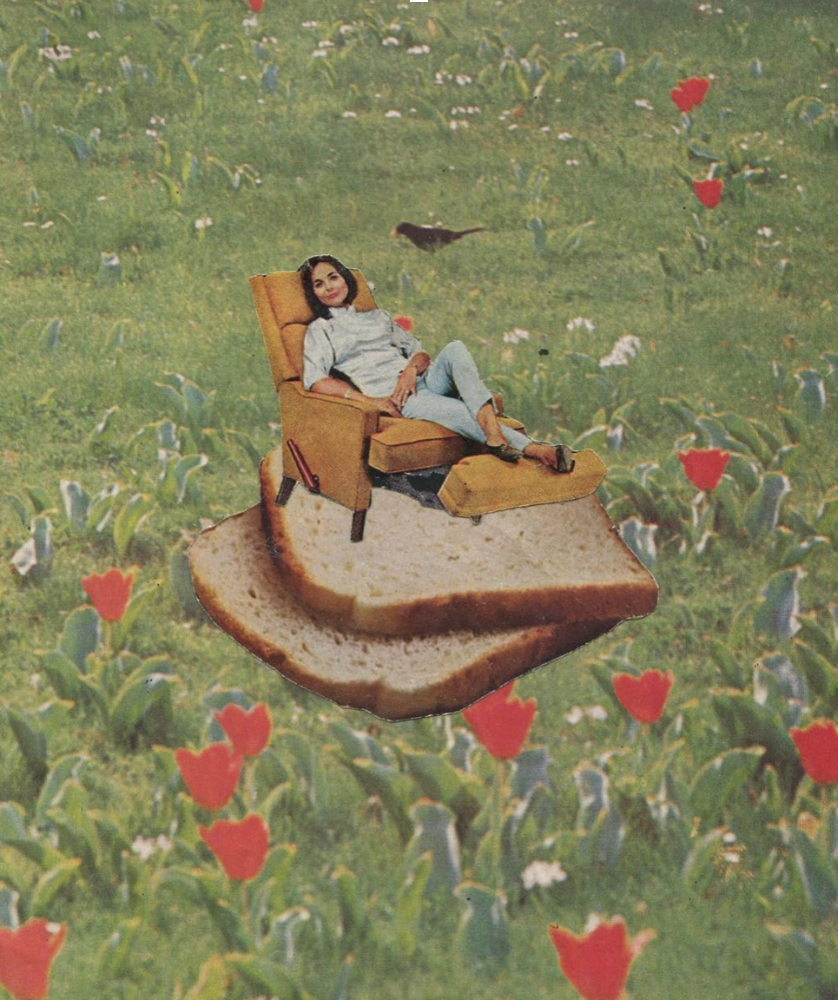
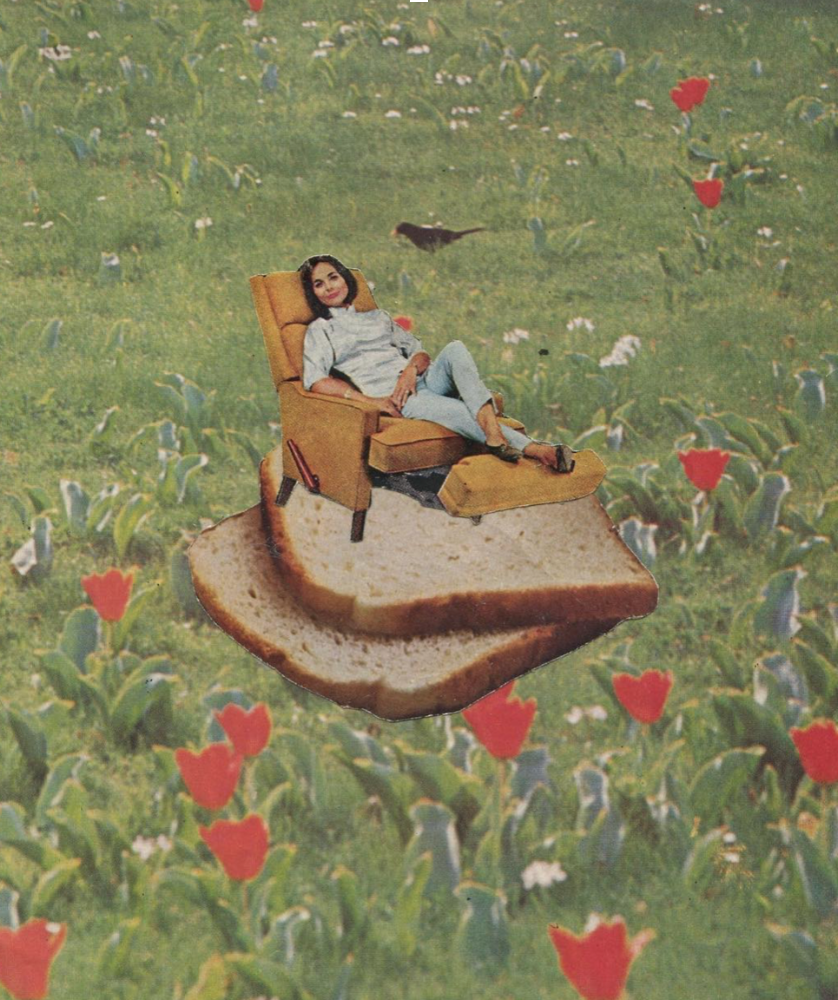
Speaking of visual or kinetic creativity, one can view your visual works on your Instagram: hypothetical arrangement. Can you talk about the piece below? Can you walk us through the process of how you created it? From seed of conception to final product? 

How often do you make your collages? I know you have one daughter, but in terms of sibling rivalry (how many of you are there, btw?), has poetry ever fought with you for creative space because you devote more time to one discipline or art form rather than another? You must understand scissors and surgical knives very well. Do you ever feel like you are a surgeon? Have you ever created a collage where you feel like you are performing a heart surgery and the life of this art piece heavily depends on how well you incise? Have you ever cut through the artery of an image and felt lost or lonely or regretful or sorrowful or overjoyed? 

CHRISTINE SHAN SHAN HOU ART

CSSH: This collage is called “Self-actualization (in recline).” When I make collages I go through old magazines and start cutting out images that speak to me. I have several categories for images and three of them are: food, women, and seascape/landscape. I don’t remember how I arrived at this final image, but I remember liking the way the red flowers contrasted with the dreary, soft slices of bread and then the ease of the woman’s posture. I like her shimmering periwinkle outfit and her pet bird in the background.

I try to make at least one collage a week, but that doesn’t always happen. I tend to make many collages in a short period of time, or even in one sitting, and then occasionally mess with them for a few minutes every few days, until I feel satisfied with them. 

I am one out of four siblings. However I do not see any “sibling rivalry” between poetry and my yoga and/or collage practice. I think they all work in harmony with one another and give each other the time and space to breathe.

Yes! I definitely feel like a surgeon when I am making collages. I use an x-acto knife so I can really get into the details. And there are so many pieces I’ve considered “ruined” or “dead” because I was too impatient with the cutting of a very precise detail. But then I immediately let it go. I try not to get too precious about paper arteries. 

VKN: Will you break down the poem “A History of Detainment” (p. 72) or (“Masculinity and the Imperative to Prove it,” or why this poem may feel pranky to you) from your collection, Community Garden For Lonely Girls, for us, Christine? Can you talk about the process of writing that poem? Do you recall writing it? What was it like? Where were you emotionally? Intellectually? Were you preparing a meal? On a train? Or what piece of writing/art inspired it? Did it take you long? And, could you talk to us about this line: “While navigating the meadow of hypotheticals, I tripped and broke my arm” (p.72). If you broke your arm, what one line from a canonized poet would you want to scribble on your cast? 

CSSH: “A History of Detainment” is so long and heavy and my brain is so tired after a full day of running around with my kid. But I can say a little bit about “Masculinity and the Imperative to Prove It”: When I was a child, my grandparents owned a Chinese restaurant called Oriental Court inside of a New Jersey shopping mall. Every Saturday night my entire paternal family—grandparents, all of their children and all of their children's children—would eat dinner after the mall's closing hours. After the meal, me, my siblings, and my cousins would run around like crazed little people in the empty mall and play all sorts of games including: "Red Light Green Light," "Red Rover," "What Time is it Mr. Fox?" and "Mother May I."

However, the golden rule was that we had to wait at least thirty minutes after eating before engaging in any physical activity, or you would get sick. When I was a young girl, I was often ashamed of my body. I used to wish that I were white so that I could fit in with the popular crowd; I would make myself throw up because I thought I was fat; and because I was sick a lot as a child, I would view my medical issues as a reflection of moral shortcomings. In other words, I was a very sad child. But at the end of the poem, the sad child is actually a fish. And we all know that a salad can be both a curse and a blessing. 

VKN: That’s a very beautiful story, Christine. I understand your tiredness. Perhaps this last question then: What do you think is the best way for one poet to feel at home in a poetry collection by another poet?

CSSH: Poetry collections are like homes unto themselves. I think the best way for a poet to feel at home in someone else’s poetry collection is by taking their time while reading it and listening closely, attentively, to what it is trying to say.


CHRISTINE SHAN SHAN HOU

Christine Shan Shan Hou is a poet and visual artist based in Brooklyn, NY. Publications include Community Garden for Lonely Girls (Gramma Poetry 2017),“I'm Sunlight” (The Song Cave 2016), and C O N C R E T E  S O U N D (2011) a collaborative artists’ book with Audra Wolowiec. She currently teaches yoga in Brooklyn and poetry at Columbia University. christinehou.com

VI KHI NAO is the author of Sheep Machine (Black Sun Lit, 2018) and Umbilical Hospital (Press 1913, 2017), and of the short stories collection, A Brief Alphabet of Torture, which won FC2’s Ronald Sukenick Innovative Fiction Prize in 2016, the novel, Fish in Exile (Coffee House Press, 2016), and the poetry collection, The Old Philosopher, which won the Nightboat Books Prize for Poetry in 2014.  Her work includes poetry, fiction, film and cross-genre collaboration. Her stories, poems, and drawings have appeared in NOON, Ploughshares, Black Warrior Review and BOMB, among others. She holds an MFA in fiction from Brown University.

In Art, Interviews, Poetry & Prose Tags vi khi nao, CHRISTINE SHAN SHAN HOU, interview, art, poetry, sheep machine, I'm sunlight
Comment
Flickr

Flickr

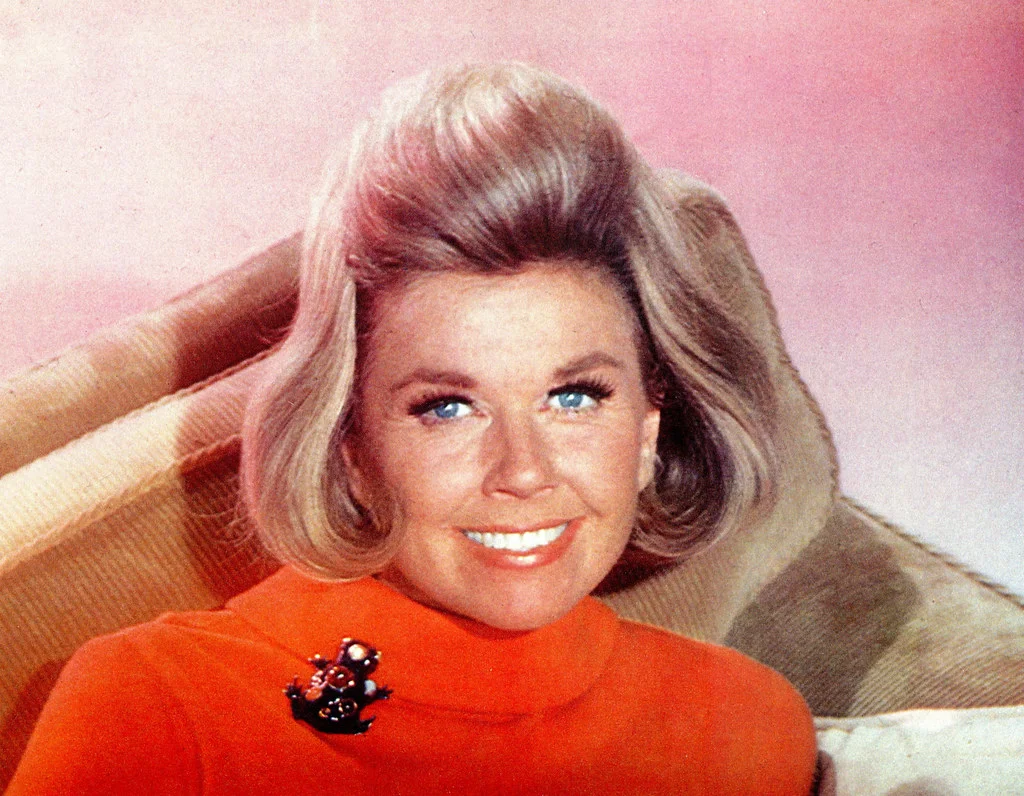
Listen to these Rare Doris Day Duets (& Some of Her Best Hits)

May 13, 2019

Joanna C. Valente is a human who lives in Brooklyn, New York. They are the author of Sirs & Madams, The Gods Are Dead, Marys of the Sea, Sexting Ghosts, Xenos, No(body) (forthcoming, Madhouse Press, 2019), and is the editor of A Shadow Map: Writing by Survivors of Sexual Assault. They received their MFA in writing at Sarah Lawrence College. Joanna is the founder of Yes Poetry and the senior managing editor for Luna Luna Magazine. Some of their writing has appeared in The Rumpus, Them, Brooklyn Magazine, BUST, and elsewhere. Joanna also leads workshops at Brooklyn Poets. joannavalente.com / Twitter: @joannasaid / IG: joannacvalente / FB: joannacvalente


Read More
In Music Tags doris day, music
Comment
milan-ahir-594733-unsplash.jpg

A Playlist Just for Virgos

May 7, 2019

Joanna C. Valente is a human who lives in Brooklyn, New York. They are the author of Sirs & Madams, The Gods Are Dead, Marys of the Sea, Sexting Ghosts, Xenos, No(body) (forthcoming, Madhouse Press, 2019), and is the editor of A Shadow Map: Writing by Survivors of Sexual Assault. They received their MFA in writing at Sarah Lawrence College. Joanna is the founder of Yes Poetry and the senior managing editor for Luna Luna Magazine. Some of their writing has appeared in The Rumpus, Them, Brooklyn Magazine, BUST, and elsewhere. Joanna also leads workshops at Brooklyn Poets. joannavalente.com / Twitter: @joannasaid / IG: joannacvalente / FB: joannacvalente

Read More
In Music Tags music, astrology playlist
Comment
plumage.JPG

This Anthology Gives Voice to Survivors of Gender Violence

April 30, 2019

Joanna C. Valente is a human who lives in Brooklyn, New York. They are the author of Sirs & Madams, The Gods Are Dead, Marys of the Sea, Sexting Ghosts, Xenos, No(body) (forthcoming, Madhouse Press, 2019), and is the editor of A Shadow Map: Writing by Survivors of Sexual Assault. They received their MFA in writing at Sarah Lawrence College. Joanna is the founder of Yes Poetry and the senior managing editor for Luna Luna Magazine. Some of their writing has appeared in The Rumpus, Them, Brooklyn Magazine, BUST, and elsewhere. Joanna also leads workshops at Brooklyn Poets. joannavalente.com / Twitter: @joannasaid / IG: joannacvalente / FB: joannacvalente

Read More
In Interviews Tags books, christine stoddard, Emma Eden Ramos
Comment
Instagram Post (1).png

Robin Sinclair Reflects on Being Genderqueer

April 29, 2019

Robin Sinclair is a queer, genderqueer writer of mixed heritage and mixed emotions, currently on the road, reading from their debut book of poetry, Letters To My Lover From Behind Asylum Walls.  Robin's work has been published in various magazines and journals, including Gatewood Journal, Across the Margin, Shot Glass Journal, Black Heart Magazine, Red Bird Chapbooks, The Cerurove, Yes Poetry, and Pidgeonholes.

Read More
In Interviews Tags robin sinclair, Interview
Comment

A Playlist for the Sagittarius in Your Life

April 24, 2019

A playlist just for you, dear mythical creature:

Read More
In Music Tags music, playlist, astrology playlist
Comment

A Playlist Perfect for Scorpios

April 23, 2019

Water babies, this is for you:

Read More
In Music Tags music, playlist, astrology playlist
Comment

Poetry Weekly: Yesenia Montilla, Martín Espada, Denise Jarrott

April 22, 2019

As the senior managing editor at Luna Luna and the founding editor at Yes Poetry, you could say writing is important to me, especially poetry. For me, it’s vital to highlight poetic voices in order to support literature, activism, and expression.

Here are three of my favorite poems I read recently.

Read More
In Poetry & Prose Tags poetry, roundup
Comment

Poetry by Annie Finch

April 16, 2019

Annie Finch is the author of six books of poetry including Eve, Calendars, and Spells: New and Selected Poems. Her books about poetry include The Body of Poetry and A Poet’s Craft: A Comprehensive Guide to Making and Sharing Your Poetry. She lives in Washington, DC. More information at anniefinch.com


Read More
In Poetry & Prose Tags poetry, Annie Finch
Comment
0_EftErjDMsvAPuwbW_.png

Melissa Goodrich & Dana Diehl Wrote a Book Together & It's Awesome

April 15, 2019

Melissa Goodrich & Dana Diehl wrote a book of stories together and it’s simply amazing, as if you found your childhood in a box. The Classroom (Gold Wake Press, 2019) focuses on growing up - and how to do in a confusing world of ethics, morality, sexuality, and modernity - all mixed together in a magic-realist landscape.

Read More
In Interviews Tags Dana Diehl, melissa goodrich, Interview
Comment

Body Ritual: Journal Prompts for Chronic Illness Exploration

April 11, 2019

BY LISA MARIE BASILE

Body Ritual is Lisa Marie Basile's column about wellness, chronic illness and finding healing and autonomy in ritual. You can follow her
on Instagram for more on this topic.

If you live with a chronic illness, or if you love someone who has one, you know the delicate balancing act it requires. Living on that liminal precipice, between doing just enough and doing too much, requires an almost spiritual focus. And it’s tiring. I know, as I have ankylosing spondylitis, a degenerative, incurable spinal disease.

Who we feel we are within our minds is not always what our bodies reflect. And sometimes, that very lack of reconciliation rewires us. We start to believe we cannot, are not, will not.

We can, we are, and we will embrace the wholeness of our limitations and our magic. It doesn’t matter if people want us to stay quiet, go away, or stop complaining. We have a right to explore what it means to experience life as we do.

Stigma, lack of education, and fear make it hard to exist in a body that exists on the margins. Sometimes all the noise and suffering keeps us at a distance from ourselves. We often are so tired from the pain or insomnia or anxiety that we smile and pretend everything is okay. We sometimes allow ourselves to be taken advantage of just so we can seem “normal.” We push the limits of our bodies and lose grip on our boundaries. Sometimes, we get through the day, and that’s it. Sometimes it’s hard to feel empowered, to feel enough, to feel that we can and are and will.

The deep and important work that goes into healing the trauma of illness is often ignored. Instead, we focus on the day to day needs. We keep our heads above the water — but the secret is that we must become the sea.

I remember one of the first days many years ago when I realized that my body wasn't working the way it was supposed to. I was doing something simple, something that should've been innate. . Climbing on a bike, I thought that my hips were off, almost as if I was completely out of alignment. The best example I can give is when your car's axle is off and it continuously steers toward the left or to the right. There was no center, no feeling of steadiness, almost as if I could split in half or split into thirds and each part of me would fall to pieces in different directions. . My #AnkylosingSpondylitis (an #autoimmune or immune-mediated, incurable, degenerative spinal disease) deeply affects my hips, which is pretty ironic because I spent many years hating them for being so wide. Because society. Because magazines. Sometimes I wonder if I poured all of my negative energy into my body, making myself sick, as if I casted a spell - but I *know* that that is not the case. . Regardless, I try to treat my body with love and respect these days - I love my hips -and I try to see those situations in which I cannot do something or cannot do something comfortably, with compassion. I am always in the pool, where I feel I am larger than life, able to move fluidly with the lower impact, made stronger by water's sneaky resistance. But there are days when I want to crawl into bed and hide forever. Sometimes I win, sometimes it does. It's a process. It is my process. . Movement is integral to my life, it is ritual. It is a song. It is the ONLY thing keeping my spine from fusing; I am literally running for my life. But it can also be painful. . So sometimes I use devices and tools to make my life a little bit easier, and I wrote all about that for @healthline - check it out in my bio. https://bit.ly/2Hw5O2q

134 Likes, 8 Comments - lisa marie basile (@lisamariebasile) on Instagram: "I remember one of the first days many years ago when I realized that my body wasn't working the way..."

Recently I decided to go inward and empower myself to make time and space for my voice and needs as someone with chronic illness. Instead of trying to blend in or assure everyone that, “I’m fine, really,” I stared down into visit the abyss. I decided to take my time, for no reason but my own needs, and look my chronic illness in its eyes.

I cut through the noise and the stigma and the denial. My body, alight and in focus.

To do this, I made a list of chronic illness journal prompts and chose a beautiful journal strictly for these questions (or you may want to type these out or dictate your answers).

So, I wrote down several questions in my journal, and attempted to answer them. At times I answered one a day. Sometimes I answered several in one go. The important thing is that you take the time to be honest with yourself.

What I learned from answering the below questions astonished me; I was able to advocate better for my needs, recognize and make space for joy and gratitude, and find the parts of myself, like glass shards, I thought I’d lost. I didn’t lose them, it turns out. They simply changed form.

Chronic Illness Journal Prompts

  • Who am I without my chronic illness?

  • Who am I with my chronic illness?

  • How did I change when I was diagnosed?

  • How did I not change when diagnosed?

  • How is my pain level today? How is my fatigue?

  • Are my basic needs met? How can I facilitate this?

  • What positive thing have I learned about myself while actively experiencing symptoms or side effects?

  • What negative thing have I learned about myself while actively experiencing symptoms or side effects?

  • What do I do during periods of remission?

  • What do I do or feel when I’m in a flare-up?

  • Are there any ways at all to bridge the gap between feeling good and not feeling good?

  • How do others make me feel about my chronic illness?

  • Who understands my illness and supports me in my experience of it?

  • How can I help others understand my illness?

  • What do I not feel comfortable explaining about my illness?

  • Where are my boundaries?

  • Where can I be more receptive or open? Is it in receiving love? Is it in talking about my needs?

  • How do my finances play into my illness?

  • Are there areas in which I am privileged and thus, have gratitude?

  • Are there community resources or other resources I can tap into for help?

  • How does my race, gender, or educational background impact my experience of chronic illness?

  • How does my illness impact my job?

  • How does my illness impact my social and/or sex life?

  • Are there other intersecting issues that impact my chronic illness?

  • What do I love about my body?

  • What do I need to feel happy on a day to day basis?

  • What do I need to feel sustainably happy in the long term?

  • Among the things I need, which do I have?

  • What are three things I am thankful for right now, in this very instance?

  • If I am not happy, what is in my power to change that?

  • What work — no matter how seemingly ‘small’ — can I do to advocate for or contribute the wellness of others who may be suffering? Would this feel gratifying?

  • What gives me hope?


Also read:

BODY RITUAL: 12 VERY REAL THINGS I LEARNED ABOUT CHRONIC ILLNESS

BODY RITUAL: GRATITUDE MAGIC

AT THE INTERSECTION OF CHRONIC ILLNESS & RITUAL


Lisa Marie Basile is a poet, essayist and editor living in New York City. She's the founding editor of Luna Luna Magazine, an editor at Ingram’s Little Infinite, and co-host for the podcast, AstroLushes. Most recently, she is the author of LIGHT MAGIC FOR DARK TIMES (Quarto Publishing/Fair Winds Press), a collection of practices and rituals for intentional and magical living, as well as a poetry collection, NYMPHOLEPSY . Her second book of nonfiction, WORDCRAFT, will be published by Quarto/Fair Winds Press in April 2020. It explores the use of writing as ritual and catharsis. Her essays and other work can be found in The New York Times, Chakrubs, Catapult, Narratively, Sabat Magazine, Refinery 29, Healthline, Entropy, Bust, Bustle, The Establishment, Hello Giggles, Ravishly, and more. She studied English and psychology as an undergraduate at Pace University, and received a Masters in writing from NYC’s The New School. Want to learn more? She’s been featured at Amy Poehler’s Smart Girls, HelloGiggles, The Cools, and more.

In Wellness, Social Issues, Lifestyle Tags chronic illness, Chronic pain, Chronic Illness, ankylosing spondylitis, journaling, Journal Writing, writing, therapy, wellness, body ritual
Comment
Screen Shot 2019-04-09 at 5.25.12 PM.png

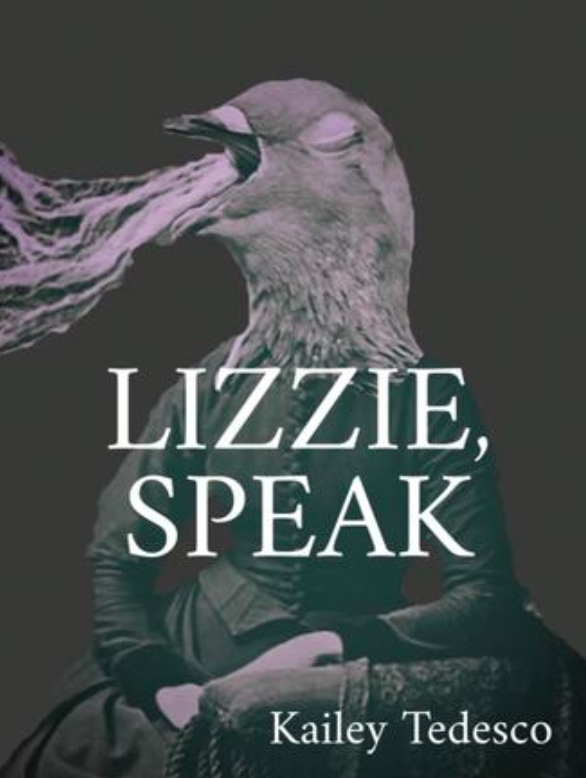
A Review of Lizzie, Speak by Kailey Tedesco

April 9, 2019

BY PATRICIA GRISAFI


In Lizzie, Speak, Kailey Tedesco attempts to communicate with the dead and discovers that the lines between past and present are perilously thin. In these poems about alleged murderer Lizzie Borden, who was accused of killing her father and stepmother with a hatchet in 1892, Tedesco invites us to imagine what Lizzie might say if we could communicate with her. Throughout the collection, Lizzie speaks in myriad ways: through found objects, supernatural means, popular culture’s numerous and contradictory impressions, and as an entity possessing the speaker. With sparse, haunting, and lyrical language, Tedesco paints a complex portrait of this mythologized woman while exploring the danger of obsession. 

Lizzie, Speak is a book about the limits of language and the fraught nature of communication — both between the living and between the living and the dead. The speaker tries to reach the dead in a number of ways: she practices psychometry, consults the Ouija board, and visits the locations Lizzie Borden is associated with — the home in which the murders took place and her final resting place at Oak Grove Cemetery. The speaker mourns — “i am so afraid everyone i love will never be a ghost.” By searching for Lizzie Borden, the speaker tries to counteract the terrifying finality of death. Finding the spirit of a notorious perhaps-murderer is preferable to the void; even more frightening is that possession by that spirit is also desired as opposed to uncertainty cosmic finality: 

i lay awake often wondering when i will do

the most terrible thing i will ever do?

how my body will react to that possession & is possession

only an excuse? 

To illustrate how the past and present collide, Tedesco combines a Victorian aesthetic and experimental poetic structure. Her language is luxurious, bathed in shades of violet and vermillion and swathed in velvet. This beautiful language juxtaposed with the dark subject matter and use of space on the page make the poems prickly and the reading experience verge on deliciously uncomfortable. The moments that feel most fraught are when technology and biography burst through the layers of Lizzie Borden’s myth. In “iOs X predictive” the speaker uses her iPhone to communicate with the dead and find out what really happened the day Abby and Andrew Borden were killed. The results are chilling and better than any ghost show on TV:  

lizzie borden hurt my face 

& now I feel better

i think it’s a bad thing

but that’s what happened last night

And in the collection’s epigraph, we’re informed that Tedesco’s great-great-grandmother was actually Lizzie Borden’s neighbor. Elsie Hawcroft makes an appearance in “In Which I Attempt to Exorcise Lizzie From Me”: 

my great great grandmother

your neighbor a child sang your poem


before anyone, maybe & you found me in that rhyme

These technological and biographical interruptions blur the boundaries between speaker and author, asking us to question how obsession begins and how a person can be haunted by history. 

Lizzie, Speak deals with both physical and metaphorical hauntings. There’s the haunting of the speaker, possessed by Lizzie Borden and trying to reluctantly free herself: 

i am in your bedroom waking to scones

my body asleep in yours your body asleep in mine. 

There’s the haunting of the Borden home, which operates as a gruesome bed and breakfast. And there’s also the haunting of American culture by Borden and her alleged crime. It was sensational to think that a young woman was capable of such a violent act. Perhaps that was why she was acquitted; to find Lizzie Borden guilty was to find Victorian women capable of masculine rage, to explode the image of the angel in the house. 

“Black Mood/Maplecroft” is the last poem in the collection and perhaps the answer to the speaker’s frantic search for the truth. Lizzie Borden narrates, post-acquittal and haughty: 

i do

not care how you know

my name only that you

do & i never had to

tell you

For this dazzling and disturbing imagining of Lizzie, the truth doesn’t matter; all that matters is she gets to tell her story the way she sees fit: “my only version.” I’m reminded of Anne Sexton, who said, “It doesn’t matter who my father was; it matters who I remember he was.” In Lizzie Speaks, it doesn’t matter who Lizzie Borden actually was — what matters is who controls of the narrative. 

PURCHASE LIZZIE, SPEAK HERE.


Patricia Grisafi, PhD, is a New York City-based freelance writer, editor, and former college English professor. Her work has appeared in Salon, The Guardian, VICE, Bustle, Narratively, Self, The Rumpus, Ravishly, and elsewhere. She is an Associate Editor at Ravishly and a contributing writer and rotating editor at Luna Luna Magazine. Trish's writing and research interests include Confessional poetry, horror and the Gothic, personal essay, feminism, and representations of mental illness in popular culture. She is passionate about pitbull rescue, cursed objects, and designer sunglasses. 

Kailey Tedesco is also the author of is the author of She Used to be on a Milk Carton (April Gloaming Publishing, 2018), and These Ghosts of Mine, Siamese (dancing girl press, 2018). She currently teaches courses on the witch in literature, among other subjects, at Moravian College. She is also an associate editor for Luna Luna Magazine and a co-curator for Philly’s A Witch’s Craft reading series. You can find her work featured or forthcoming inElectric Literature, Fairy Tale Review, Bone Bouquet Journal, Witch Craft Mag, and more

Tags Kailey Tedesco, trish grisafi, Patricia Grisafi, lizzie borden, murder, poetry, book, white stag publishing, anne sexton, Elsie Hawcroft
Comment
long live the tribe of fatherless girls

15 Books By Women We're Loving Right Now

April 9, 2019

BY LYDIA A. CYRUS

Here is a list of books written by brilliant women in non-fiction, poetry, and fiction — inspired by this past Women’s History Month.

User Not Found by Felicity Fenton 

This book is actually a tiny essay. Think: A powerful essay about the intricacies of social media and womanhood that fits in your pocket! Fenton writes about her life in social media (and out). If you’ve ever wondered about the color of apps, been sent a dick pic, or just wondered about the profundity of existing digitally in present day, this essay is for you. Fenton wonders at one point if anyone is thinking about her. This thought leads her to the realization that she is, “just a human mammal amongst billions of other human mammals. I’m dander in the corner, the buzz in the background.” Fenton’s lyrical work is biting and honest and I’ve been keeping her little book on my nightstand for those nights when I’m up too late, window shopping on Etsy and checking Twitter every five minutes. 

Goodbye, Sweet Girl by Kelly Sundberg

Sundberg’s memoir centers around the physically and mentally abusive relationship with her husband. She chronicles the life of a woman from a working-class background who aims to not only exit an abusive marriage but to also gain an education and return to herself. The memoir is a fast read, lyrical and endearing. Sundberg writes the truths that are hardest to say and quite frankly doesn’t give a damn if the truth reveals the brutality that others have hidden. She reminds the reader all along the wild, highly intelligent woman she was before the abuse never left the room and will always triumph in the end. 

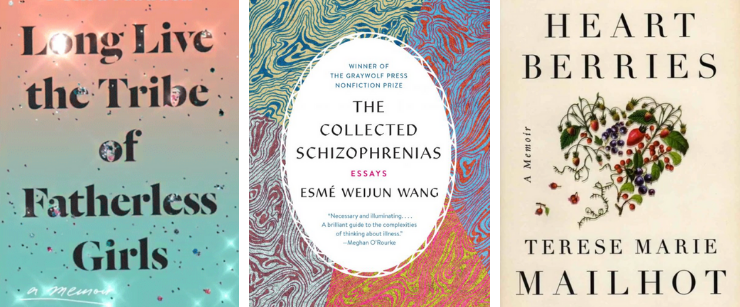
Heartberries by Terese Mailhot

Mailhot, a First Nation Canadian writer, weaves together the story of her life revealing the trauma and silence that clouded her. Her memoir welcomes the reader into the scenes of her early life with her mother and leads the reader to the revelation that perforates her story. The truth, she writes, is essential and the most powerful thing to unleash. She writes about her diagnosis of PTSD and bipolar II, the bitterness of loss in relationships, and provides insight into what the pathway to after looks like. 

Excavation by Wendy C. Ortiz

When I saw the cover of this memoir, a stunning photo of a young Ortiz at the beach, I felt compelled to look further. Excavation explores the relationship between a young Ortiz and her teacher, a man fifteen years older than her. He fuels her passion for writing and helps her to access a powerful sense of self as a teenager living with her alcoholic parents. Ortiz does the daring task of unraveling preconceived notion of what a predatory relationship is and what a victim looks like. She proves that the world and the relationships we create within it is made up of uncertainty and nothing is what it seems to be. 

Boyfriends by Tara Atkinson 

Atkinson writes about a young woman whose journey from first boyfriend, to college, to second boyfriend, and beyond. She reminds readers about what it feels like to have your first kiss, first real crush, first everything. And how, as you get older, not only do you change but your desires and wants change too. She explores what it means to be a single woman in 2019, searching in person and online for connection. It’s sweet and nostalgic in the best ways, and will make you think about what it means to be in a relationship not only with others, but with yourself too. 

Long Live the Tribe of Fatherless Girls by T Kira Madden

I have patiently awaited the arrival of this book for months. Admiring Madden through my phone screen and awestruck by the glitter on the cover of the book (it’s seriously a beautiful cover). Madden’s memoir takes you to Boca Raton, Florida where, growing up as a queer, biracial teen, her concepts of right and wrong, beauty and ruin live together. Her parents are battling their own addictions and realizations as she tries to navigate the spaces around her. Madden, an acclaimed essayist, wields her language fiercely and writes fluidly, stitching together the warm, sometimes heartbreaking, answer to the question, “what do you want to know?” 

Starvation Mode by Elissa Washuta 

I picked Washuta’s book My Body is a Book of Rules last summer and loved it so much that I read most of it in the bathtub. Washuta’s prose is so illuminating and honest that it feels like conversation between the reader and a close, trustworthy friend. In Starvation Mode, she writes about her complicated relationship with food. When nothing is in your control, how do you cope? Washuta struggles to create her body in the image of her longing while also experimenting with the genre of creative non-fiction. Both of which creates a work that stands elegantly and surely as an essential read for women who have complicated relationships with their body, their sustenance, and shattering the traditions of appearance. 

The Underneath by Melanie Finn 

Follow the trail of unsettling memories and the uncanny, as Kay, the protagonist, as she slowly unravels. While trying to reconcile a tumultuous marriage, the heaviness of motherhood, and a traumatic past event, she begins to wonder what really happened to the family that lived in her house before her. Finn’s novel is a true modern day haunting that deals not with ghosts but with the possession of the demands of being a woman. The novel investigates the things that plague Kay as she tries to solve the puzzles of her life. 

The Word for Woman is Wilderness by Abi Andrews

If you’ve ever read or watched the countless narratives about men traveling to Alaska to blow up their lives, you’ve probably wondered why it is there are so few narratives of women doing the same. Women seeking out the natural world as a means of personal growth. Andrews does just that in The Word. The protagonist is nineteen year old Erin who leaves the safety of home behind in order to discover. She questions the history of everything from nuclear warfare to birth control. Andrews tackles the old archetype of the adventure always belonging to a man. 

Brute by Emily Skaja

The highly anticipated first collection from poet Emily Skaja deals with remains of an ended relationship. Skaja carves survival and redemption into the landscape of what a women grieving looks like. She writes of pain that begins as internal and seeps into a physicality that beckons her to scale and defeat it. The universal truth of what it feels like to be abused and to move on leaks throughout the poems and enchants the reader. Skaja’s book begins with the same Anne Carson epigraph as T Kira Madden’s and positions the reader to prepare themselves for the journey. Skaja twists the plight of hurt into a weapon that strikes out as beauty and has the potential leave readers in both tears and smiles.

The Empathy Exams by Leslie Jamison 

This collection of essays considers the possibilities of what it means to care. Is it ever really possible to feel the pain of others? Over the course of several essay, Jamison depicts curious events such as the story of an actor who presents to medical students as someone with symptoms that the students must identify in order to learn. She also writes about the sense of voyeurism the plagues the pain of women in literature. This collection is an essential piece of reading for those still learning how to balance self-love and love for others too. It doesn’t ask, can you pour from empty cup? but instead defines what that cup looks like and what rests within it and why. 

Abandon Me by Melissa Febos

Febos’ first memoir Whipsmart detailed her life as a graduate student working as a dominatrix. In Abandon Me she writes about the difficult reality of longing for connection with others. What happens when you drown yourself in another? She visits relationships both romantic and not and the ways in which abandonment can strike and wound at any time, with anyone. As with Whipsmart, Febos isn’t afraid to have conversations about the elements of her life that both built and seemingly destroyed her. She writes about the longing of belonging. Seemingly asking, what does inclusion look like and how do we achieve it? 

The Collected Schizophrenias by Esmé Weijun Wang

One of the most talked about books of 2019, Collected, is a collection of essays telling about the life of a woman who suffers from mental illness and a chronic illness. Wang slices open the examination of what her diagnosis of schizoaffective disorder and examines the chaos of coping. She attests to the incredible resiliency that endures recovery and shapes the future of the diagnosed through her own experiences. When it comes to balancing a debilitating reality with the hopes of a promising future, Wang constructs an important conversation not only about mental health but also about the possibilities of life for women whose lives do not fit into one box or even two. 

Animals Strike Curious Poses by Elena Passarello 

In this collection of essays, Passarello meditates on the fascinating nature of animals and performance. She discussed what it means to be an immortal animal, placed into history by humans and how their fame came to be. Humanity commodifies the bodies animals both living and not and Passarello presents this with careful prose. She is aware of the ways in which humanity must always somehow have the position of authority over others and spares the reader nothing. She goes so far as to highlight the aftermath of the death of Cecil the Lion in 2015 by repeating the notion that the doctor who killed Cecil did not know he had a name at all. This repetition begs the question: Do we have to name an animal, give it celebrity status, and attempt to mythologize in order to respect it?

Girls Are Coming Out of the Woods by Tishani Doshi 

In her third collection of poetry, Doshi aims to rebuke the history of silence surrounding women who have survived. She pulls apart identity and trauma in order to create a space in time where silence is no longer synonymous with womanhood. The poems are constructed with careful detail and attention to movement and sound. As the title suggests, women are no longer hidden but are now returning to their lives with power and the capability of anything. 

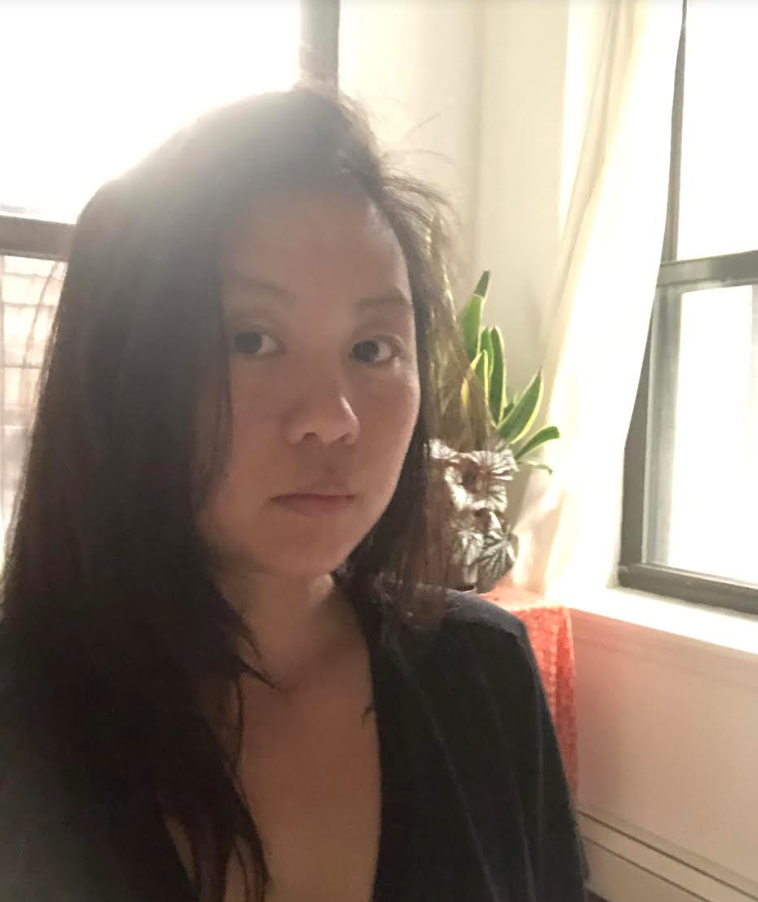
Lydia A. Cyrus is a creative nonfiction writer and poet from Huntington, West Virginia. Her work as been featured in Thoreau's Rooster, Adelaide Literary Magazine, The Albion Review, and Luna Luna. Her essay "We Love You Anyway," was featured in the 2017 anthology Family Don't End with Blood which chronicles the lives of fans and actors from the television show Supernatural.

She lives and works in Huntington where she spends her time being politically active and volunteering. She is a proud Mountain Woman who strives to make positive change in Southern Appalachia. She enjoys the color red and all things Wonder Woman related! You can usually find her walking around the woods and surrounding areas as she strives to find solitude in the natural world.  Twitter: @lydiaacyrus 
In Poetry & Prose, Personal Essay Tags women's history, books, Lydia A. Cyrus, Tishani Doshi, Elena Passarello, Esmé Weijun Wang, Melissa Febos, Leslie Jamison, Emily Skaja, Abi Andrews, Melanie Finn, Elissa Washuta, T Kira Madden, Tara Atkinson, Wendy C. Ortiz, Terese Mailhot, Kelly Sundberg, Felicity Fenton
Comment
← Newer Posts Older Posts →
Featured
‘in the glitter-open black' — poetry by Fox Henry Frazier
'poet as tarantula,  poem as waste' — poetry by  Ewen Glass
'poet as tarantula, poem as waste' — poetry by Ewen Glass
'Hours rot away in regalia' — poetry by Stephanie Chang
'down down down the hall of mirrors' — poetry by Ronnie K. Stephens
'Grew appendages, clawed towards light' — poetry by Lucie Brooks
'do not be afraid' — poetry by Maia Decker
'The darkened bedroom' — poetry by Jessica Purdy
'I am the body that I am under' — poetry by Jennifer MacBain-Stephens
instagram

COPYRIGHT LUNA LUNA MAGAZINE 2025