


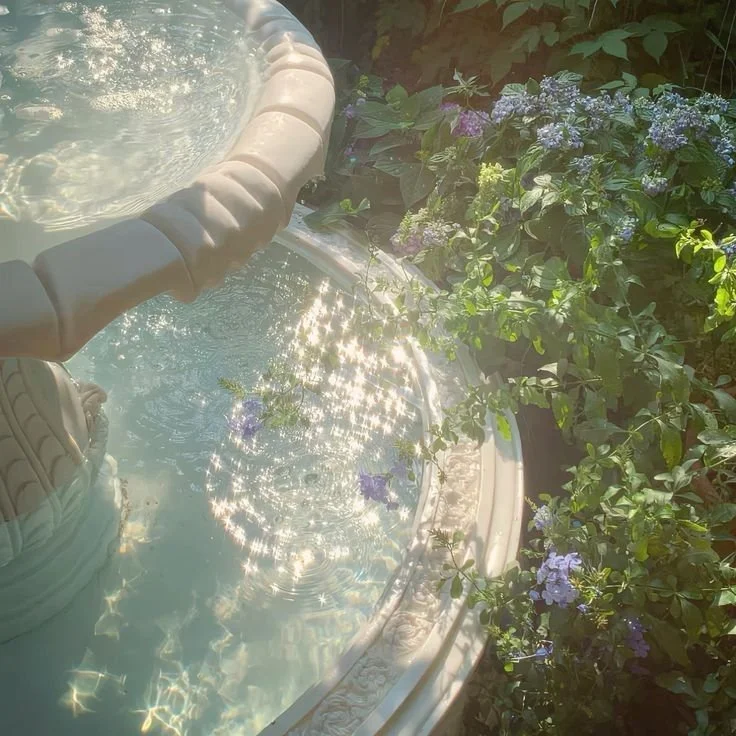







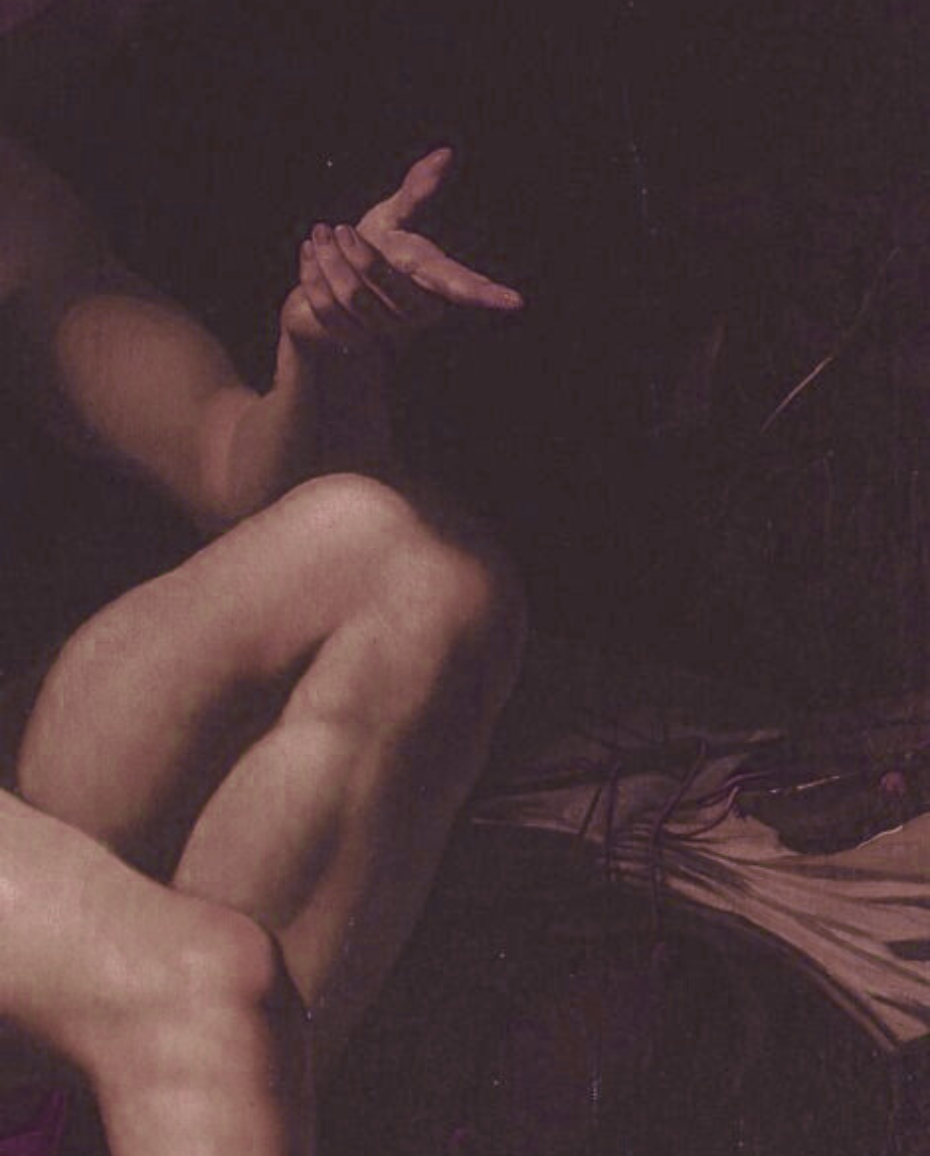

The Orchid Show at The New York Botanical Gardens creates, yet again, a world of fantasy and color in show stopping arrangements. The conservatory is transformed into a fairy tale, with color and scents in every corner thanks to the visiting clusters of orchids. The show is open until April 17th located on 2900 Southern Blvd, Bronx NY.
Read More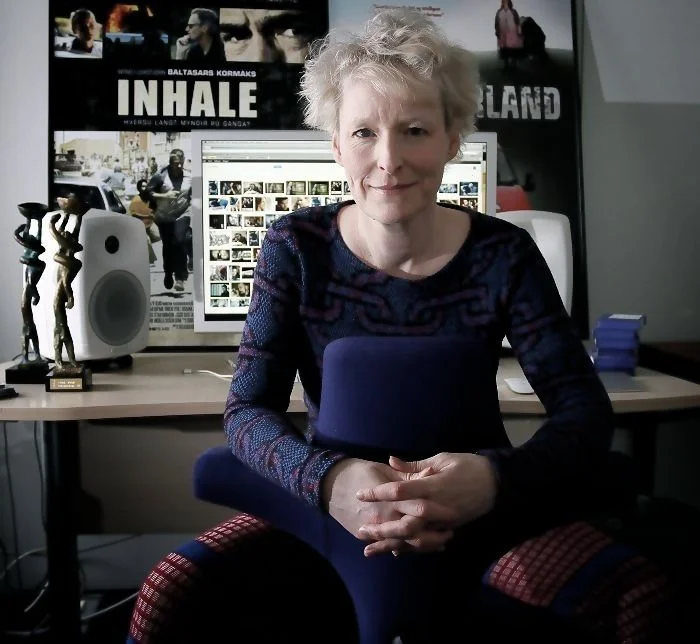
An Interview With Icelandic Film Editor Elisabet Ronaldsdottir
I’ve been editing now for almost 25 years and editing is all I need. I always have great respect for what everyone brings to the film and I put a lot of emphasis on carving out all the love; may it be the script, the costumes, the cinema photography, make up, acting etc. I consider my work to be an interpretation of the script and of the work from other key contributors who are also interpreting the script and in doing so I'm careful never to lose focus on the director´s vision. In that sense I regard editing as a valuable part of the script writing.
Read More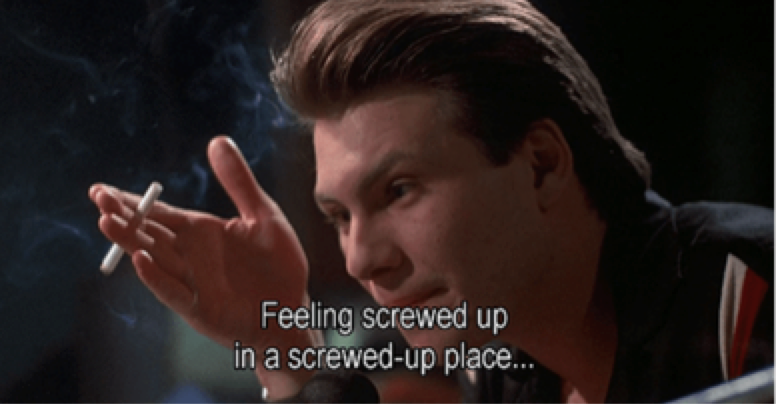
The Film Every Millennial Woman Needs to See
Lately I’ve been thinking about a recent The New York Times article about entertainment for “the Instagram age” and how this relates to Jung’s “collective unconscious” (similar now to a shared Facebook ‘feed?) and Jung’s mythical female archetypes. Somehow this inspired me to re-visit Pump Up the Volume (1990), a film that was made before social media and before Instagram. It was released in 1990, featuring kids just leaving high school and turning 18.
Read More
Rebecca Melnyk
Interview with Poet Leah Umansky About Her New Chapbook 'Straight Away the Emptied World'
Leah Umansky is a force of nature--and she's not about to be stopped either. She's the author of three collections: her full length book "Domestic Uncertainties," (Blazevox, 2013), a Mad Men inspired chapbook "Don Dreams and I Dream," (Kattywompus Press, 2015) and now her dystopian-themed chapbook "Straight Away the Emptied World," out by Kattywompus Press this month.
Read More
via Oh My Mag
The Consumer's Guide to Goth Feminism
Staying on-brand as a Goth Feminist™ is hard work. I’m writing this missive to share some of my knowledge about how to consume various items, concepts, and people in a manner consistent with the Goth Feminist™ lifestyle. Read my advice at your own peril; follow my advice for even more perilousness. Peril is feminist. Peril is goth. Consumption is perilous.
Read More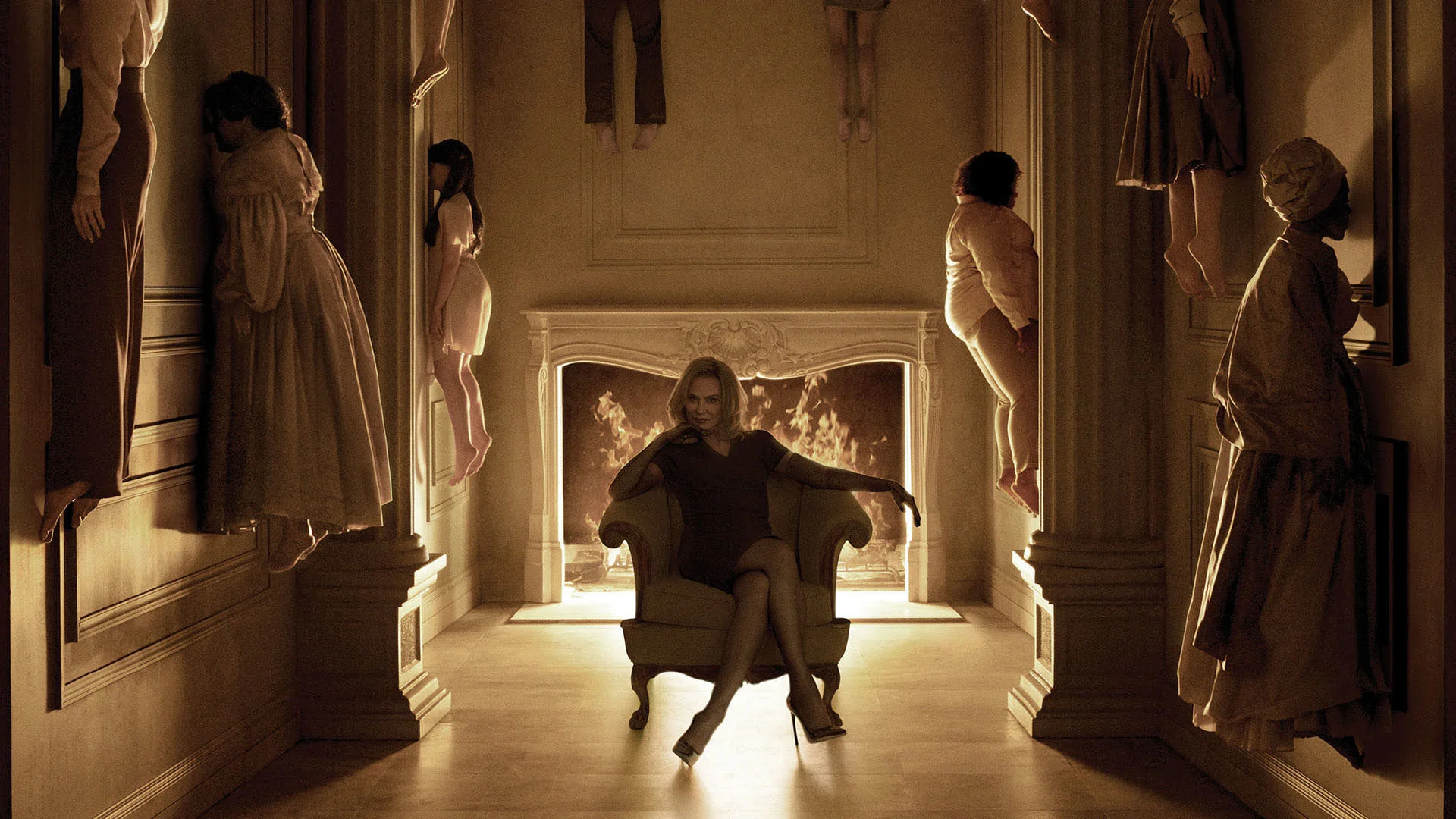
American Horror Story: The Coven
The 20 Best TV Intros of All Time
Some TV shows have opening credits that really gear you up and make you excited for the next 20-45 minutes of pure splendor. You don’t skip these intros, you don’t walk out of the room; you watch them as if they’re part of the show. Here are our favorites at Luna Luna.
Read More
This is a pic of Marguerite Duras, Luna's resident ghost
Take a Break & Read All of This: Reading Round-Up
BY LISA MARIE BASILE
Sometimes the Internet is disgusting (@realDonaldTrump), but sometimes it's an amazing place of hope and intelligence and beauty. I have this goal of creating a weekly round up of great work, and I've failed you, dearest readers. But I promise to never fail you again and deliver the very writing we're loving each week.
The Cut
The Patronizing Questions We Ask Women Who Write
"'What will your kid think?' and 'Are you worried your son is going to hate you when he grows up?' and 'Are you going to let him read it?' and 'What’re you going to do when your kid Googles you?' are all questions that, even when offered lightheartedly and in a spirit of ostensible support, feel less like genuine questions and more like a chastening. 'Remember, you’re a MOM' and 'Remember, you have a mother' both mean 'Remember, you’re a woman, and there are consequences.' We don’t ask male artists to consider the consequences of their work, we don’t reframe them as fathers or boyfriends or sons." – Meaghan O'Connell
The Rumpus
Men Explain Submissions To Me
"And remember, no one is keeping track of whether you do follow the rules, whether you patiently never query, whether you quietly accept how you are spoken to, and then rewards you for that behavior. No one. So good luck, good luck, my friends. You will no doubt come across some serious bullshit." – Sarah Blake
The Establishment
Accidental Death Among The Mentally Ill And The Tragic Case Of Elisa Lam
"Conspiracy theorists wonder if Elisa ever really existed, but having read these words and experienced depression myself, I have no doubt she did. I know the darkness she expressed; the kind that makes women board planes alone for secret destinations and reasons unknown." – Melissa Petro
The Poetry Foundation
The Vanishing Act
"I am also thinking of writers who have been vanished by being excluded, as voices who do not fit nicely into the current trends. It’s not possible to think about these things without recognizing the power structures at work and the work of gatekeepers. Writers whose experiences lie outside the white, middle class experience (the experience of most of the gatekeepers) cannot transform and become something they are not in order to be seen and heard." – Cynthia Cruz
The Cut
I’m Modeling My Marriage on Frank and Claire Underwood’s
"Of course, there’s plenty not to admire about the Underwoods. This is a couple who represents the very definition of evil. But then again — why accept evil as the goalpost? Simply move it." – Mandy Stadtmiller
xoVain
7 Weird-Ass Beauty Tricks Used By Old Hollywood Icons
"A lot of old-school Hollywood icons were rumored to have some pretty nifty beauty — read: bananas — tricks they did on the reg." – Christina Seimenis
Witchy World Roundup--March 2016
What we highlighted this month from around the web, including Ginger Ko, Natalie Eilbert, and more.
Read More
via YouTube
Mike Brown, Tamir Rice, And Contorting the Narrative
Minutes after the fatal shooting of 12-year-old Tamir Rice by two officers of the Cleveland Police Department, the narrative was tweaked in favor of the assailants. According to the LA Times, one of the officers told the dispatcher that Tamir was not a child, but believed to be “possibly 20 years old.” How can a person mistake an adolescent boy, a seventh grader, for a nearly full-grown adult?
Read More
Aela Labbe
Poems by Anne-Adele Wight
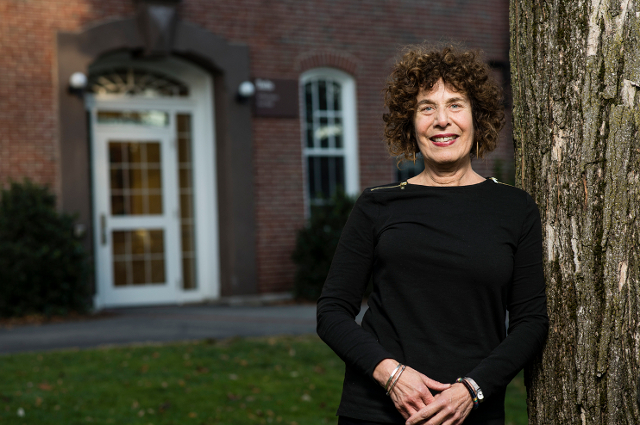
Review of Rebecca Kaiser Gibson’s 'Opinel'
While I was admiring the navy blue of the Atlantic a few weeks ago in a secluded Cape Cod house, I hungrily read Rebecca Kaiser Gibson‘s “Opinel.” It is a poetry book full of majestic, dreamlike imagery set in an all-too-real world. Published in 2015 by Bauhan Publishing, it centers around both urban and rural landscapes, mythical and mundane lives; it is a book that speaks well of loneliness, using the earth as both lover and enemy.
Read More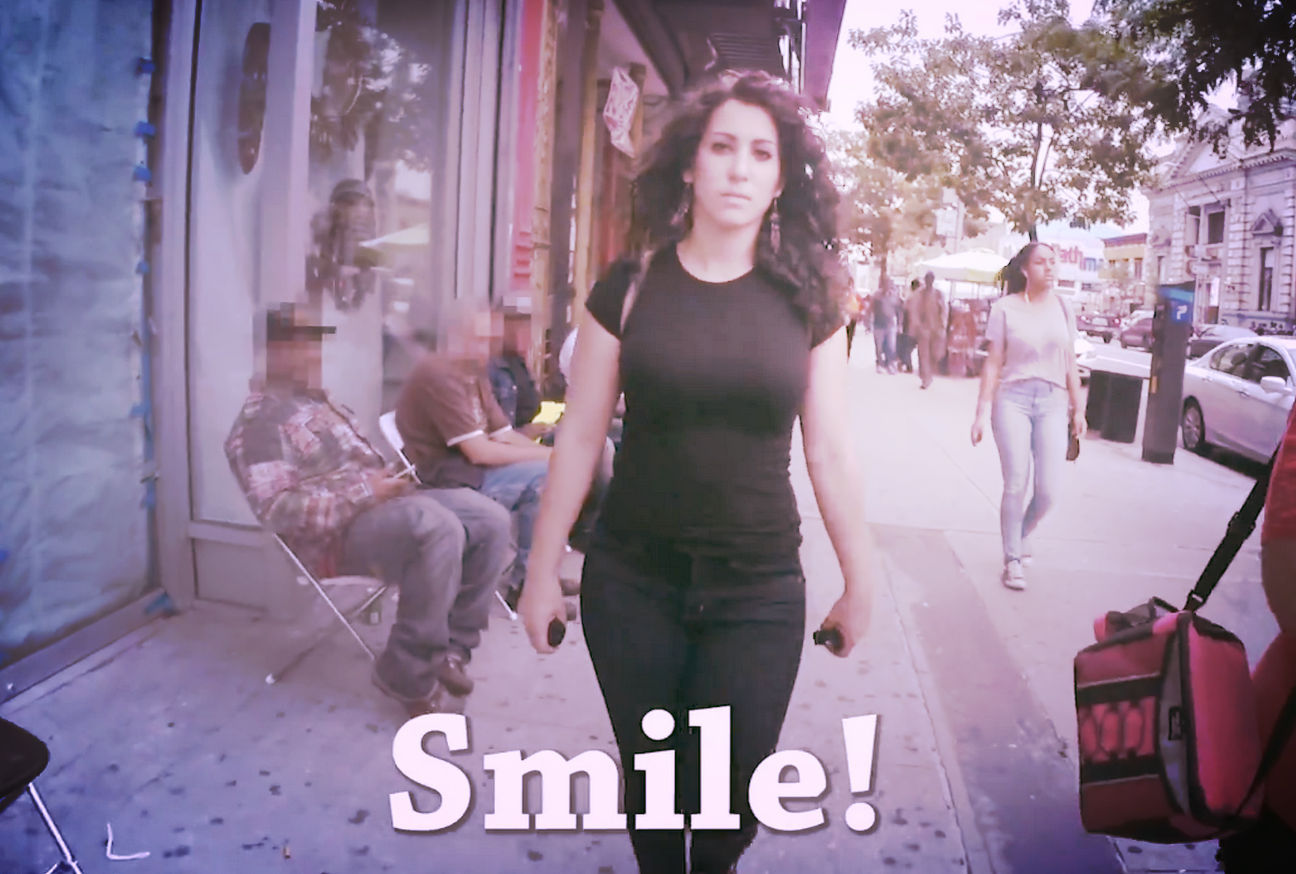
Hey Baby, How's Your Day? A Diary of Interactions With Men
BY PAIGE TOWERS
"Wow, you look delicious," he says.
It’s the first warm day of March and I’m standing on a busy corner, waiting for the light to change. I’m going home after a doctor’s appointment on the Upper East Side—walking north up 2nd Ave. The stranger who called me "delicious" is now directly beside me looking me up and down. I don’t turn to look at him but I can see him in my peripheral vision; he’s white, middle aged, wearing a suit, carrying a briefcase.
I take my phone out of my purse and text my husband.
"What is going on?" I write. "I’m being harassed constantly today. Maybe it’s the warm weather?"
The man begins to lick his lips and I’m triggered; the hair on my arms rises, my heart rate speeds up. With barely a thought, I pivot and start walking west. It’s noon and I haven’t eaten yet today; I’d planned on stopping into H&H Bagels, which would have been only one more block away on 2nd if I’d continued on my original path. But I must get away quickly.
"I want to get some of that pussy!" the man yells out at me as I walk away. I don’t look back.
Later I wondered why I didn’t turn, face this man and talk back to him. It’s unclear, but I think in that moment I was simply too tired and hungry. I was also just flat out overwhelmed. During that 35-minute walk back from the hospital to my apartment, four men commented on my appearance and/or expressed what they desired to do with me. At least five men either whistled or made some sort of tongue clicking sound in my direction. Well over a dozen men checked me out in an obvious manner—one man even leaned over and blatantly stared at my crotch for a prolonged time as I walked by.
"How you doing today?" he asked my crotch. I didn’t respond; nor did my crotch.
It didn’t matter that I looked professional, that I wore my hair in a low bun, wore a jacket zipped all the way up to my neck, black pants, flat boots, and a scarf that my husband’s mother brought home from India—I was somehow still a target.
("These pants are too tight to wear out, I guess?" I said to my husband when I got home.)
In the past I have talked back to men who harass me on the street—sometimes successfully, sometimes not. I have received quick apologies or caused men to flee the scene. I have also received extreme verbal aggression, threats of assault and have been followed. I am unsure what the best strategy is—to talk back or to ignore and avoid?—but generally I try to follow my instincts, even it leaves me feeling upset with my self-perceived weakness later.
Thus, in light of the fact that street harassment can sometimes feel like a losing battle, I’ve found another way of dealing with it. After being inspired by other women’s online accounts of men objectifying them on the street, I took to Tumblr last year by creating a blog called "Interactions With Men." It has little readership; in fact I rarely post it to my social media accounts as—I’ll admit—I’ve been discouraged by a lot of online backlash from non-feminist men (and a couple of outspoken non-feminist young women). But it’s still a way for me to record these events exactly as they happen, and there’s something empowering about that, especially considering that men on the street have sexualized me—like many other women—since age 12 and really even before, and I’m really tired of it.
What I do is carry a pocket-sized journal and pen with me at all times, and if I have a negative interaction with a man in which I feel objectified or talked down to because of my gender, I jot it down exactly as it happened. (I also occasionally just use the "Notes" function on my cellphone.) Of course, I don’t record every instance. In fact, I record very few of them, mostly—I suppose—because they happen all the time in small ways. But when an interaction immediately hits me in the gut and leaves me feeling angry or discouraged or sad, I find that writing it down exactly as it happened helps alleviate those negative feelings.
For instance, "Interaction #3" on the blog is a short entry, but it records a scenario that many women have experienced—a male stranger wanting a woman to smile for him and then turning cruel when they ignore his request. I recorded it as this:
August 2014. Vagrant man. Corner of 14th St. and 6th Ave.
Man: Smile for me, sweetheart.
Me: …
Man: C’mon baby. Just one smile. It’s a beautiful day today.
Me: …
Man: I feel sorry for you. Really, I do. I fucking do.
Me: …
Man: Stupid bitch.
It’s not lost on me that these situations are not so much interactions as they are simply, well…me being targeted and objectified by some guy. For them to become true interactions, some would say that I must do more than frown, ignore and/or walk away. Yet, my silent protest against men constantly watching and commenting on me as I move through what is perceived to be free and public space feels like the most common interaction there is: the man exerts a sense of control over the woman, the woman holds her head up and continues by, protesting through her silence. After all, do we really gain freedom and power in public space if we constantly have to be talking/fighting back? What about those times when I just want to run out and grab a quick a lunch, or want to get home after a long, stressful day?
The blog has deviated a bit in purpose as soon as I started it. My original intent was to just record the way some men talk to me on the street, but very soon I found myself wanting to write more. The way that men can sometimes talk to women—the talking down, the talking over, the "mansplaining"—these instances all left me feeling disempowered in the same way that being sexualized by a stranger on 2nd Ave. does, and sometimes even more so.
In "Interaction #5" I wrote about a security guard at a college I used to work at who loved to explain things to women, as if he was the keeper of great knowledge. When he once started to tell me about running, he neglected to listen to me repeatedly telling him that I’ve been a runner for over 15 years and have even run a marathon.
"I promise you: if I can do it, you can do it," he said at end of the interaction, still somehow refusing to hear the fact that running is a major part of my life.
In "Interaction #9" I recorded an interaction I had with a man during a business lunch in which he literally explained Amy Schumer to a female coworker and me. We both tried to jump in to the conversation as Schumer is a huge idol for both of us, but he continued to talk over us.
Here’s an excerpt:
Me: Yeah, she—
Man: It’s like, she doesn’t care what she looks like at all. She just gets up there, and doesn’t care if she’s overweight. She’s just…here’s the thing about her…(Takes sip of beer.)
Other woman: To me, Amy Schumer is a new kind of role model. She—
Man: Here’s the thing. (Sets down beer.) Amy Schumer…it’s like…She. Doesn’t. Care. And I respect that. Like, she doesn’t care what she looks like.
By the end of the interaction, it was clear that the man thought he was being feminist by pointing out that he thought it was cool that Schumer doesn’t care that she’s not pretty (in his eyes)…thus still commenting on the way she looks, instead of—I don’t know—commenting on how incredibly brilliant, funny and accomplished she is. (Or at least allowing us the chance to do so.) And yet, while I wanted to call him out on his behavior so badly at the time, the sad reality is that had I done so, I truly believe that it quickly could have turned into a conversation about the end of my position with that particular company.
I’ve made records of interactions with a male family member, a co-worker of my husband, a co-worker of my own, a deliveryman, a handyman, random men on the street, that white guy in the suit.
It’s a risky decision, I realize, as I could alienate someone close to me, or someone who has influence over my professional career. Yet, although many—no, most—of my interactions with men are neutral or positive ones, the scrutiny and misogyny I often feel during everyday activities, like boarding the subway or sitting down at a meeting, is a reminder of how far we have to go. And I’d like to make a record of where we are right now.
When I got back to my apartment after my doctor’s appointment on that warm day—still hungry, still overwhelmed—I wondered at what point I would be able to walk through public space "normally;" when would I be able to simply move forward, privileged to my own thoughts and enjoyment? I felt relief to be out of the spotlight, sure, but I was seriously defeated. So, I took out my journal, jotted down the details of a couple of those interactions that had happened on the walk home, and put them on the blog the next day.
It’s an imperfect tool, but with this blog I can, at least, provide a tiny amount of evidence to my reality. I continue on with little purpose other than wanting to provide a testimony of what being a woman can mean, although I do hope that it serves as a reminder that it’s okay not to agree with the system, with the culture, with the way things are. We can choose to talk back, or not talk back, but either way misogyny is happening—in a vast range of ways—and I have a record of events to prove it.
Paige Towers is a writer based in New York City, and her work has appeared in Bustle Magazine, The Baltimore Review, McSweeney's, Midwestern Gothic, Prime Number Magazine, Barnstorm Journal, Catch & Release: the online literary journal of Columbia University, So to Speak: a feminist journal of language and art, BioStories Magazine, and many more. You can view more here.

Via Tommy Genesis
Monday Mixtape: Heady, Airy & Pretty Songs For A Chill Morning
CURATED BY LISA MARIE BASILE
Maybe you just got barked at by the lady who sells wooden roses (they're actually pretty, though) on the 2 train? Maybe you still smell like Sunday's last-call bar-bathroom sex. Or maybe you just need a bit of a slow-start morning--something soft, something that at least sort of feels like that dreamy, colorful world you so wish you could inhabit if it weren't for your desk job. Yes?
So here's a heady, beautiful, visually-stunning video playlist (you're welcome to plug in and start your work without watching the vids) to make your fluorescent lackluster morning a bit less soulless and bit a more cooly splendid. Also, this Monday's playlist is 100% babe.
Lisa Marie Basile is a NYC-based poet, editor, and writer. She’s the founding editor-in-chief of Luna Luna Magazine, and her work has appeared in Hello Giggles, Bustle, The Establishment, The Gloss, xoJane, Good Housekeeping, Redbook, and The Huffington Post, among other sites. She is the author of Apocryphal, (Noctuary Press, Uni of Buffalo) and a few chapbooks. Her work as a poet and editor have been featured in Amy Poehler’s Smart Girls, The New York Daily News, Best American Poetry, and The Rumpus, among others. She currently works for Hearst Digital Media, where she edits for The Mix, their contributor network.

On Needing Diverse Books, Cinderella & Feminism
BY MACEY LAVOIE
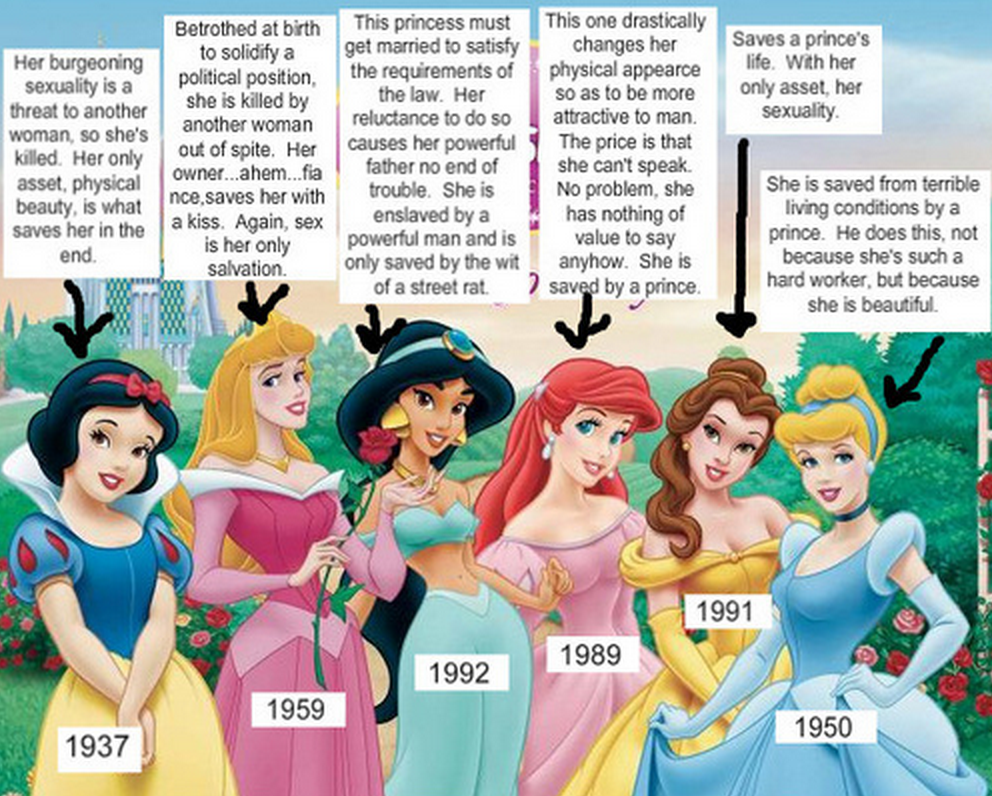
I grew up in a world of VHS tapes and Disney Classics. My collection was an impressive mass of bulky nostalgia that I packed away as DVD’s took over. I remember my favorites: the brave Mulan and the heart-wrenching tale of Simba in the Lion King. But one thing is for sure, I have always hated Cinderella.
My family would laugh at my utter lack of interest in being a Disney princess, but from a young age something about the tale of the girl in the glass slipper irritated me. Cinderella did absolutely nothing to help herself, and it could be argued that if the fairy godmother hadn’t shown up Cinderella would still be scraping the cinders out of the fire. It was a classic damsel in distress story that even as a child I couldn’t get behind.
Via here.
During that time I wanted – needed – a story that would show a healthy representation of women, especially a gay character, one who struggled and faced adversity but was able to overcome it. Such a character didn’t exist (at least to my knowledge), so I stopped reading the few LGBTQ books my friends would suggest to me.
Though my family had never spoken ill of LGBTQ individuals they didn’t outwardly advocate for them either. It was a topic that rarely found its way into conversation. I remember the truth being at the tip of my tongue, and I remembering swallowing it down as I recalled all the scenes in books where the truth caused nothing but heartache and disappointment. I would clench my hands under the table and the truth would slip back down. My mother would ask me what I was thinking and I would only shrug my shoulders: nothing much.
It wasn’t until I received a book for Christmas that my perspective of the much-loved character began to change. “Ash” by Malinda Lo is an adaptation of the Cinderella – it's got faeries and huntresses. It was this tale of magic and self-discovery that led me to consider what it would be like to put on a pair of glass slippers of my very own. Though, in this version, Ash doesn’t fall for a prince or even a man; she falls for the King’s Huntress, Kaisa.
This was my first time reading a book where the main character was bisexual and encouraged to be herself, with a complex love triangle between a mysterious faerie named Sidhean and Kaisa. I was swept up in the love story because it was something I could relate to. I identified as someone apart of the LGBTQ community and was comforted to know that – for once – the fictional characters I spend a majority of my time with reflect a part of me you don’t see represented often.
Much like Ash, I wasn’t one of those children who inherently knew about their sexuality early on. I pretty much tripped into it my early years of high school much like Ash trips into it upon discovering her romantic feelings for Kaisa. You rarely see gay characters in literature, much less a bisexual character that ends up falling for a woman.
LGBTQ books have been problematic, to say the least. The main character typically discovers their sexuality and is disowned, kicked out of their house or ostracized and bullied to the point of suicide. I remember reading this scenario over and over again until a seed of doubt was planted in my own head. Would my kind and loving family really kick me out if they knew about me? Was it that bad to be different?
Lo's version of Cinderella, however, speaks of a quiet strength, and more complexity than the original. This is a Cinderella character I could get behind. One who was kind but also brave, one who got lost in books and didn’t need to fall into the arms of a prince to be saved.
The topic of representation has been a hot spark in the publishing world for a while, as more organizations like VIDA and We Need Diverse Books gain momentum and as diverse voices are published. I can only hope that we see more writing like this come out of the woodwork.
Macey Lavoie is a new Bostonian trying to find her way around and working on her MFA at Emerson College. She has a fondness for sushi, walks on the beach, reading and mermaids. When she is not busy having crazy adventures with her friends she can be found either jotting down writing ideas in her small notebook or curled up with a book and her two cats. Her dream is to one-day change the world with a book and to own a large library.
via IMDB
Interview with Samantha Duncan on Poetry & Pregnancy in 'The Birth Creatures'
Recently, I had the privilege of reading Samantha Duncan's chapbook The Birth Creatures (Agape Editions, 2016). The chapbook is scary, poignant, and honest--it centers around a pregnant woman who is only three weeks away from giving birth. In this way, it focuses on what birth actually means, and the frightening and surreal parts of pregnancy that many women often aren't sure how to vocalize--or are too afraid to vocalize. I love how brave Duncan is by focusing on what our society cannot--that pregnancy is not always pretty and happy--and in many ways, it's a violation of a woman's body, regardless of how loving and beautiful it also is.
Read More