

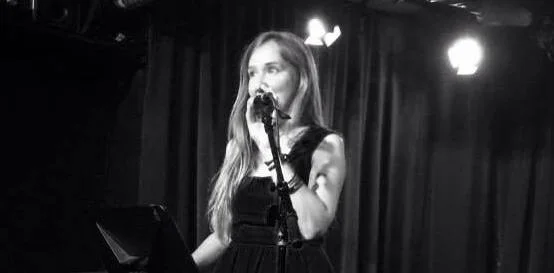
Alice in Greenpoint (Finishing Line Press, 2015) by Iva Ticic is a debut worthy of much praise. Ticic creates a landscape where the speaker is trying to find a home in a new world, so to speak, most notably in the ever-changing, strangely artificial world of Brooklyn, in America, in a land of shiny and new things. How this world appears to an outsider is fascinating, and documented poignantly in these poems.
Read More
Helmut Newton
This Is Your Hands Around Your Thigh
This is the girl who won’t eat a doughnut who won’t eat a hamburger bun. This is the little girl who doesn’t gain weight for two years I’m worried about you her mother says. This is the girl skinning the cat on the old clothesline the rusted cross poles. This means that her body is light is fit is tight an unthought-of thing it moves and prances it loves to be tickled. It lifts itself up into trees. It runs across the pasture its mother washes it and bathes it and lays out its clothes. It argues with Angela on the playground who is the fattest I am I am fatter than you it bunches up its thigh and shouts no, no, I am fatter than you.
Read More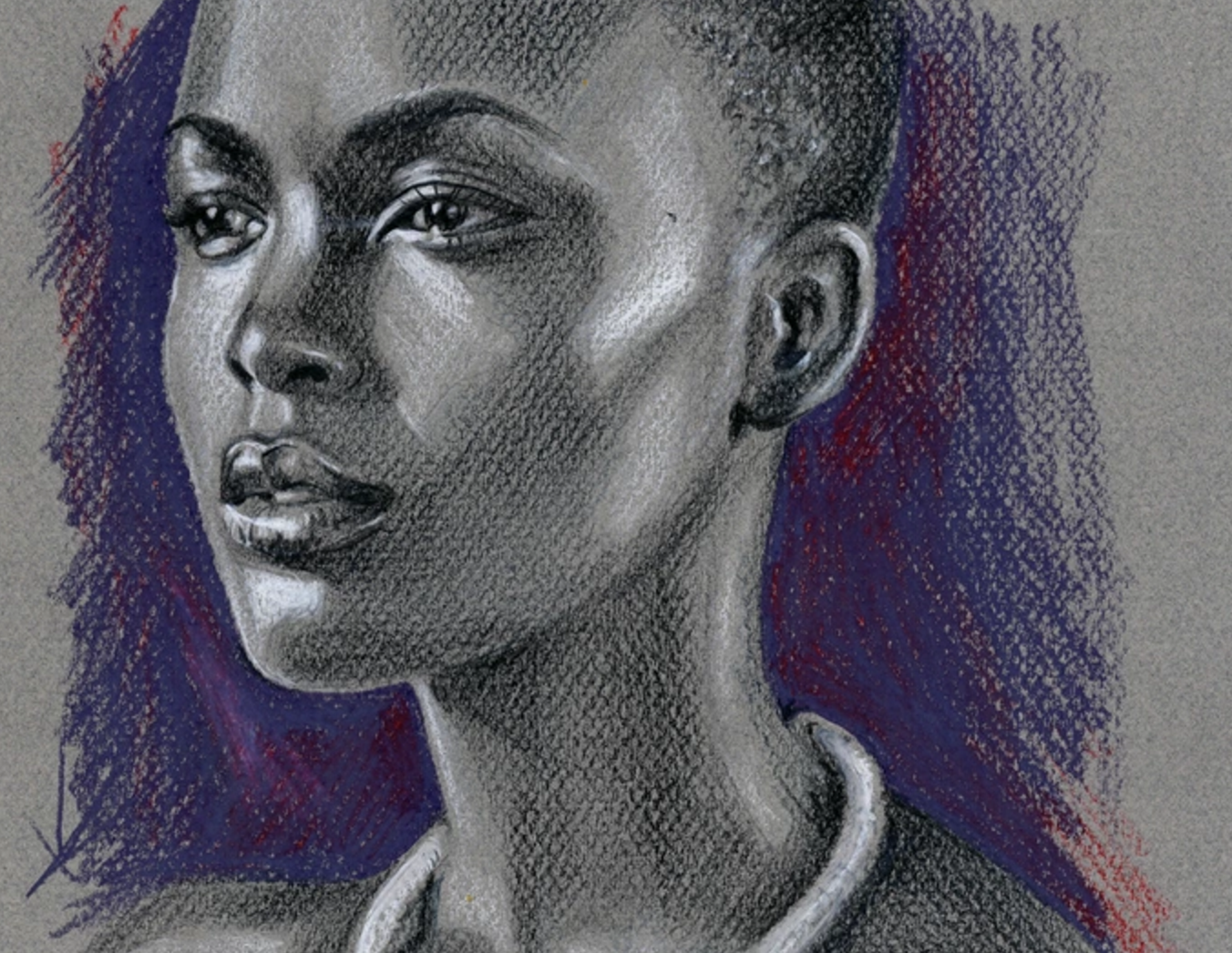
Hodaya Louis: Diary Of An Artist + Her Paintings Of Women Around The World
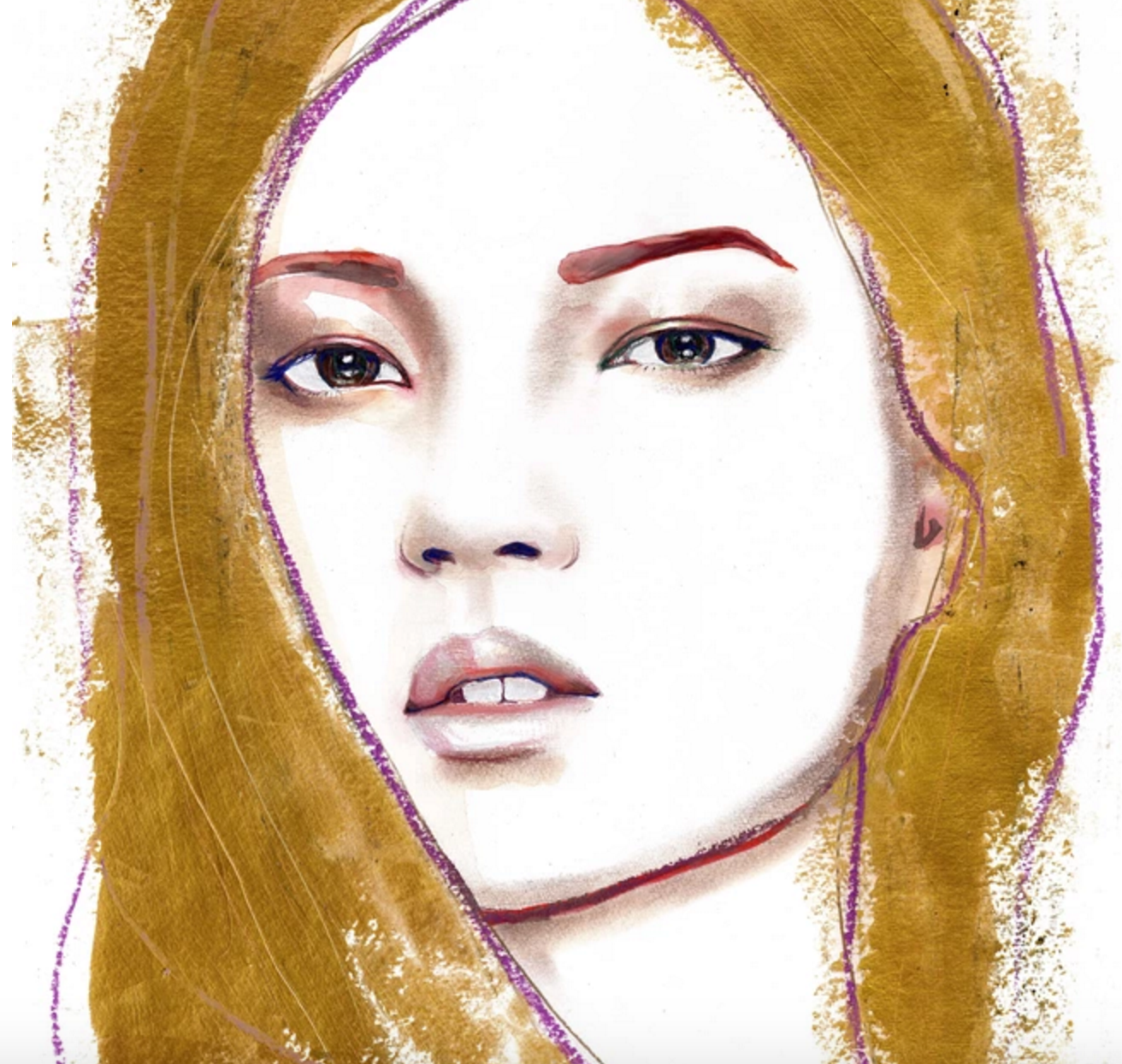
Hodaya Louis is a professional artist, fashion illustrator and designer. In 2010 she was officially recognized as a “Distinguished Artist of Israel.” She's been featured by Valentino, Glamour, Rachel Zoe, Vogue, Roberto Cavalli and plenty of others. Currently, she's working on a "collection of large-scale mixed-media paintings embracing the different faces of women around the world." You can (and should!) support that project here. Her Kickstarter is finalized in 13 days, at which time she will commence work on the sort of project that Hodaya has always been so good at: creating inspired artwork that manages to illuminate the beauty and diversity of women.
Hodays's artwork was also featured on Bravo’s Real Housewives Of Orange County, she is the winner of Next Generation Design Award from the Luxottica group, and she was a guest judge and speaker at the Fashion Institute of Technology (FIT), where she also studied. She developed her art skills with her father, David Louis, the fine artist Leonid Blaklav, as well as fashion illustration with Steven Stipelman. She went on to intern at Marc Jacobs, then was hired as a shoe designer for Payless, collaborating with designers such as Isabel Toledo, Christian Siriano and Lela Rose. From 2010 to 2013, as the head designer of an international manufacturing company, her illustrated designs and artworks were presented to the Metropolitan Museum of art, Kenneth Cole Reaction, Nine West, Bloomingdale’s, Lord & Taylor, Dillards, and OPI, among others. Her work blends art, fashion and beauty seamlessly.
I wanted Hodaya to tell her own story, and so here it is.
BY HODAYA LOUIS
It is Monday morning, I am sitting at my art studio, surrounded by paint tubes, sticks of pastels, buckets of brushes and oil paints. Some artworks are still drying on the floor, next to rolls of canvas and paper. It’s a mess, but I’m comfortable here, at my little island of art. It is a great morning, because last night I already found what I’m going to paint. Each artwork I paint is born through inspiration found after hours-long browsing of photographs.
Today, my inspiration is a photograph of actress Taraji P. Henson. The photo captures my attention immediately; black and white, close-up on her face, eyes closed, dramatic lighting. And now I’m sitting in front of a blank large paper. and I take a deep breath. It is an exciting moment, that second before I touch the paper with my brush.
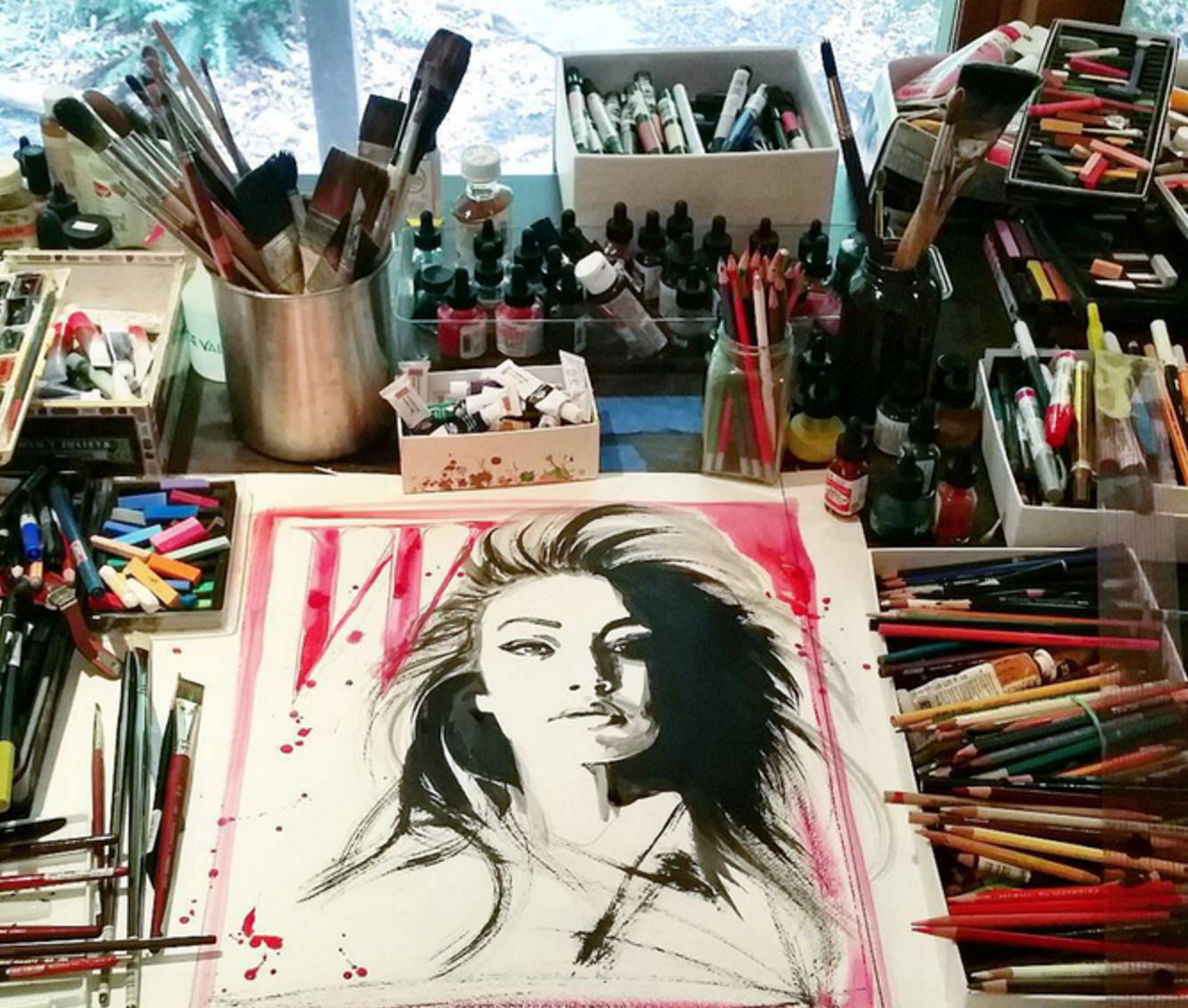
It is terrifying too. I know that with years of art lessons and practice I’ve developed the skills required to paint what I envision, but I don’t know if others will like, understand or connect to that vision. I know that in the next few hours of painting session my energy will be intense, my concentration and senses at their pick, my phone off, I will be standing up over the developing piece with tension in my muscles, working with controlled hand movements. And I love it, that exhilarating sense of something being born, of colors and strokes and lights and shadows, and with that excitement I will feel how dark clouds of doubt are forming in my mind (will they like it? will they get it? am I a good artist? will someone buy it? can I make a living as an artist?) and I keep painting and painting fighting those clouds, my brain buzzing with non-stop alarms (is this purple deep enough, should I have started with the background, what color should go next, is there harmony, oil pastel or acrylic, is the composition good, is are the proportions correct, is the yellow too red, should I add a hint of blue to cool it a bit) If I use a wet medium that requires waiting time to dry, like watercolor, I walk back and forth like in a sort of cage, counting the seconds, or impatiently grabbing a blow-drier to speed up the process, because I cannot wait any longer, I need to continue because I’m afraid that I will lose that momentum, that the vision will disappear from my brain and I will not be able to make sense of all those smudges. And when it’s done, and the piece is completed and my mind and heart stop racing, and I say loudly – done! I sit down in a slump, exhausted, smiling, in love with the world.
Being an artist, in my mind, means to create, to leave a part of you in this world. That part needs to be correct, to be a true reflection of you, otherwise it should not exist. When you do such personal act, it feels like allowing someone to sit next to you in a private theater and seeing the exclusive movie made for you only. Whatever comes out is somehow very personal, a piece of me that I share with others.
However, I if something happens during that process, a moment of distraction, a shift of mood, a second of blockage in the course of those hours of intense energy pouring out on the paper, and the artwork is not precise, it is not part of me, it failed. I might not be able to recognize the problem, to identify what makes me flinch, but something will be off and I will maybe try to redeem it but it is lost, gone. And all that amazing energy I have pumping in my veins will disappear in an almost physical pain, and like a deflated balloon I will go to my bedroom, get under the blanket, and close my eyes. That taste of failure is as strong as as a bad memory that keeps coming back, something that I am learning to accept as inevitable part of creation, like painful PMS.
I push myself to be resilient, get out of that bed of self-pity quickly. I became a full time artist two years ago, and I learned that being an artist means that every day I do not attempt to draw or paint is a wasted day. Still, picking up a pencil requires a lot of energy, positive energy. I cannot paint angry or sad. For me, a complete piece, either pretty or dark, means I produced, created, in a good state of mind, and it’s a great sense of accomplishment.
There is a harmony and balance in the face of a woman that fascinates me. Sometimes after drawing a face, I can’t bring myself to go on with hair or body because I feel that the piece is completed. As I constantly look for faces to draw, I am intrigued by studying different racial bone structures and skin tones. I love doing portraits and capturing some of the essence of my subjects.
At a show I had this summer a woman came and looked at my sketch of a woman’s head, with emphasis on the bone structure. she inspected it for a while, and then asked me if it’s a portrait of an actual person, which it was not. “So what is the purpose of this?” she asked. I realized at that moment how personal my art is. It is even act of selfishness – I like this vision, I will put it on paper. Others might not get it or not appreciate it, but it does not matter to me.
Artists that create controversial art are the same way – when an artist has a vision she/he must create it as it is, whether the viewers like it or not. Just like most artists, having my work featured publicly makes me proud. Hearing compliments and comments is amazing and gives me great sense of accomplishment. I especially love when someone finds one of my pieces “moving,” even if a stranger says that I just feel like we are connected on a personal level.
My technical skills did not come easily; I studied all forms of art for 15 years, with the Russian artist Leonid Balaklav and with the legendary fashion Illustrator Steven Stipelman among many other great teachers, and I practice almost every day. So to me, a finished piece of art is rewarding as money earned after hard work, and being able to show and share it is priceless.
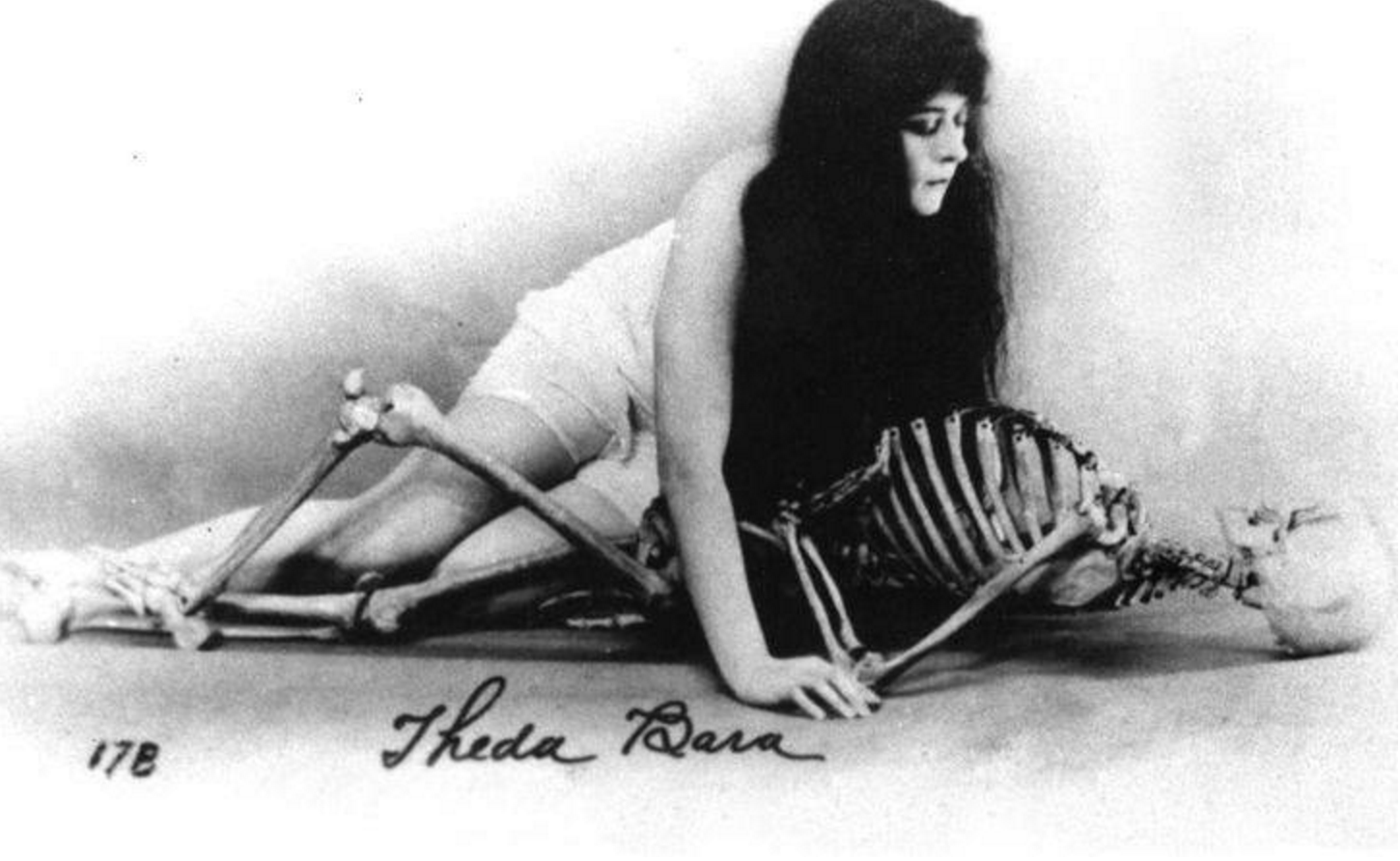
Identifying with the Vampire: Theda Bara's Century Old On-Screen Iconoclasm
More than 100 years ago, Theda Bara played a VAMPIRE on film. Yes.
Read More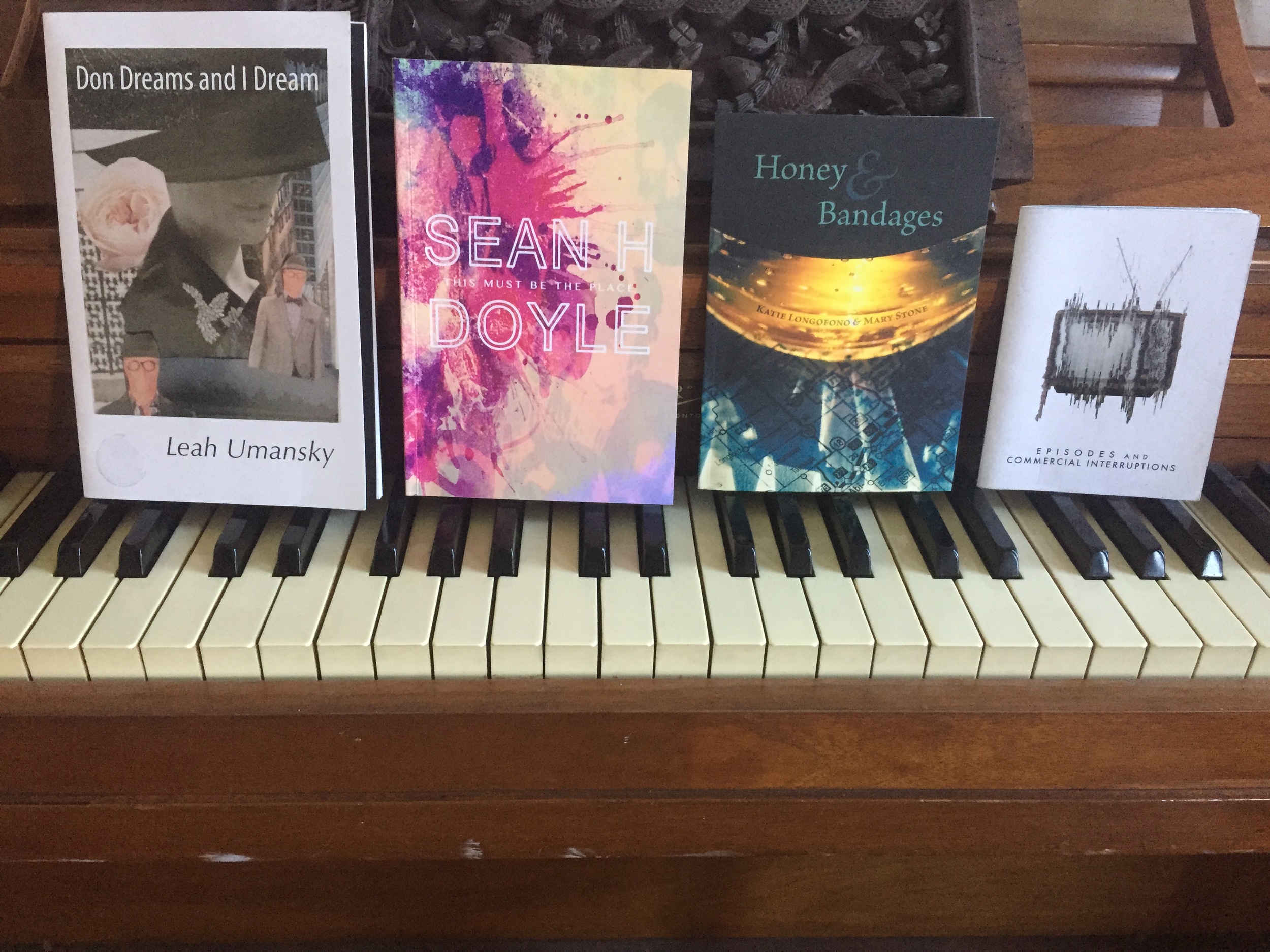
4 Indie Press Books I Read in 2015 (& You Should, Too)
Reading books in 2015 is not hard to do. We have plenty of options--public library, major & indie bookstores, e-readers, and book clubs. I'm pretty grateful, really, to live in this time. So many of us groan about how no one reads anymore and how the publishing industry sucks, but let's look on the bright side: there's a tremendous amount of indie publishers who are doing a great job. I don't need to name names or link to articles about how no one reads. We all know.
Read More
Poems by Fox Frazier-Foley
Editor's note: these poems originally appeared in the first Luna Luna. We've recently received word that they've been nominated for a Pushcart Prize, so we're republishing them here. Warmest congratulations to LL editor Fox Frazier-Foley!
The Raven-Haired Seer Dreams of a Girl Her Age, Abducted from a Nearby Road, and Keeps Such Incidents to Herself Until She Begins to Dream Instead of the Abducted Girl’s Murderer
If forty-seven locusts in my mouth I could
not talk her hair in wind like mine
If water tastes of blood we need more
water she laughed she never
looked right at me
If we are the water and the locusts
let us pray how could this how could I
how
If we are wretched wrested deep
in prayer let us I dreamed
his glasses mustache dreamed
they found him dreamed forty days
of darkness would begin if I said his name out loud They did
find him, my father said, last night while
you slept If boils burn our eyelids covered
his mouth, kept If rivers rise & loose our city
walls If God cannot bring Himself to keep
his eyes on the grey our children safe from this
being taken this
grey expanse before us.
Peter was one of four Catholic Workers in Upstate NY Who Spilled His Blood at a Military Recruitment Center in Protest of the USA’s Invasion of Iraq, and Was Subsequently Arrested and Imprisoned
strangle makes a minute
oubliette forgetting
is the war
These are waterless springs and mists driven by storm. The greatest darkness has been reserved for them.
soldier’s skull halved like melon & filled by time with rainwater
I could drink it I’m a razor blade
now no aphagia emulous
timorous tremulous
The dog laps its own vomit. The sow is bathed only to wallow again in mud. The earth was first formed in
There, there
is Atlantis.
water; the world of that time was deluged with water and perished. The present world and heavens have
ubiquitous
obsequies
what fraught
requiem
been reserved for fire. They shall be kept until the day of judgment and destruction of the godless.
It is Roanoke.
Gretchen Foggerty, Mother of the Raven Haired-Seer’s Friends Philomena and Amelia, Was Arrested for Harassing Father Roderick, Parish Priest, Who Would Years Later Be Arrested on Multiple Charges of Pedophilia and Excommunicated
she thrashed she undressed
his rectory room, shirt
by shirt shoe by shoe
This belt, my girls, keeps me chaste.
Sometimes I do feel the urge. I admit
Your beautiful faces. Examine
your conscience. The truth: What
have you wanted –
she flailed, she assaulted
homily service pews she threw
her body facedown in the aisle
he strips them in school,
she sang, dancing backwards.
Face tilted:
My child.
Who regarded us? Rapt
captives of pulpit.
Opiated. Apt. Exalted
He said suffer them unto me he said I tell you: sow a thought,
reap an action
by fountain & silence whose festering kindness
Who bled & who learned
of alchemy’s black: the sore, the burn,
that Wound plunging deep in the side
rendered whole as stained glass: bright slivers
of feather, of water, of fern
(the bullet implied)
sow an action, reap a habit
whose core cracked
sow a habit, reap a destiny
& brittle as the breast-
bone of a bittern.
The Fox-Haired Girl Visits A Spiritualist Medium in Upstate New York, and Sees One of Her Past Lives
Who was I to tamper or beg
the swannish fate of Leda? I took
the sieve, watered it, walked across
Rome with it full. It was true,
I had begun to feel my womb
hollow for a daughter. But I
would not suffer her to be buried
with me, our lungs learning dirt.
At times I turn to find the children
whose voices I have heard are
simply certain tones of wind.
The irrefutable tremor of my own
hand delivering these sacred tongues
their unborn calf, milky & still. Who
am I, now, to imagine moments
of convulsion against downy breast, or
the cleaved immortality that comes
after? And so, beloved,
I take you, he said, and meant I was
perfect, in my seven year-old body: chosen
to tend flame for you, Mother of our
hearth, who know me best – abject
in all but my appetites, smothering
under desire like smoke or wings. I stare
into the gibbous reds and yellows
as they eradicate each other, silent
save the occasional whisper, I am.
________________________________________________________________
Fox Frazier-Foley is author of two prize-winning poetry collections, Exodus in X Minor (Sundress Publications, 2014) and The Hydromantic Histories (Bright Hill Press, 2015). She is currently editing two anthologies, Political Punch (Sundress Publications, 2016) and Among Margins (Ricochet Editions, 2016).
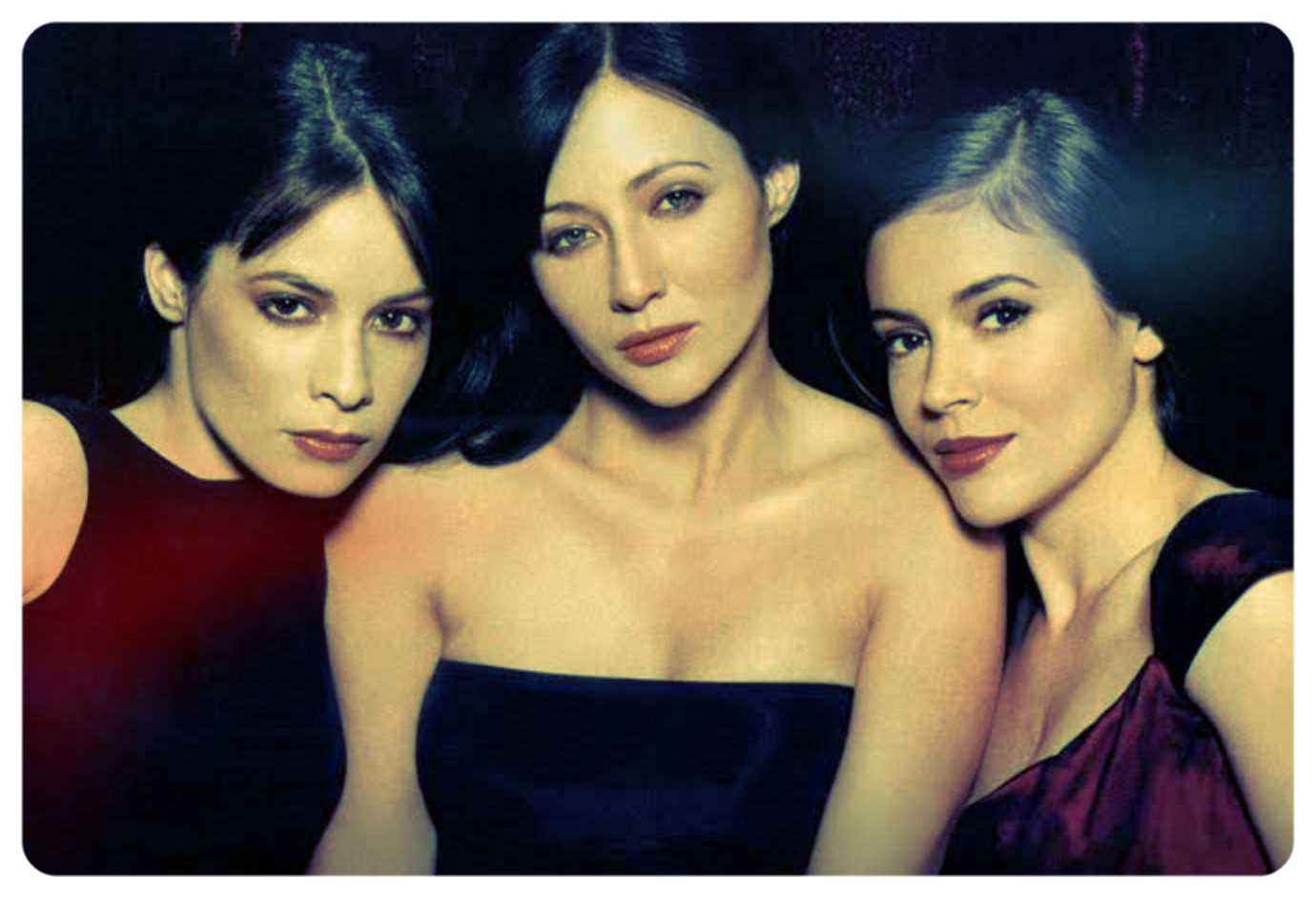
Culture Throwback: Thinking Back On How Charmed Captured Contemporary Feminism
BY SOPHIE MOSS
First airing on The WB in 1998, Charmed is the story of three sisters who discover they possess powerful magical powers and fight to defend their home city of San Francisco against the demonic population. As a curious and defiant fourteen year-old woman trying to make peace with myself and the universe, the three sisters in Charmed represented all that I looked to: they were ordinary women who possessed extraordinary mental and physical capabilities, thereby illustrating a fantastic resistance to the hegemonic gender roles that characterised much of contemporary television. For me, the sisters represented a unique brand of witchcraft, feminism and fantasy, and they did so with wisdom and flare. I saw myself as a fourth Charmed One, fighting both the demonic underworld and the gendered power structures it represented.
What is fascinating, for me, is the way the three sisters encapsulated the tensions of contemporary femininity, and they did so fiercely and unapologetically: They are desiring and desirable. They are independent and dependant. They are superhuman and human. They see and are seen. They are imperfect. They sleep with men who are rotten. They save humankind in high-heels. They are both dependent on, and dismissive of, traditional feminist ideals. It is in this historically specific period that I discovered Charmed, as a young teenager trying to figure out my own identity as a woman.
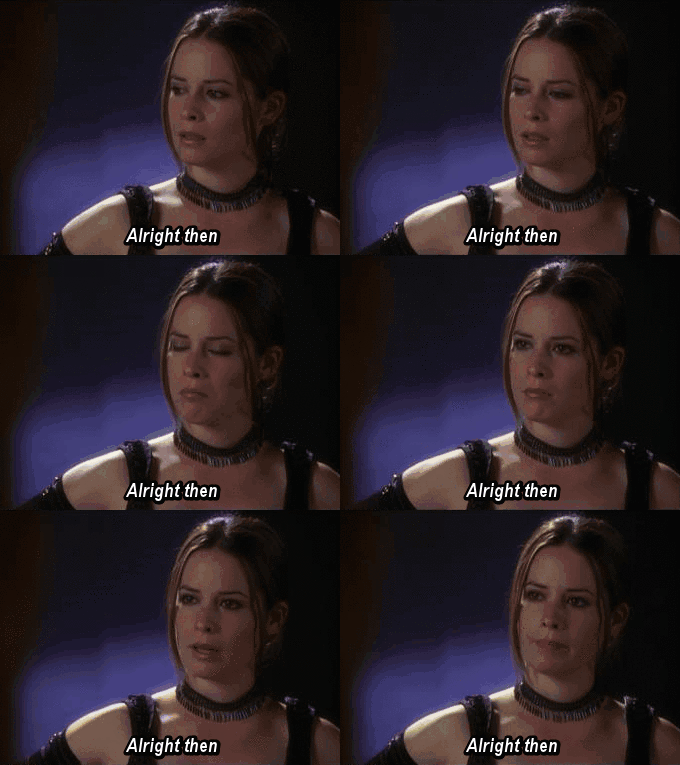
Prue, Piper, and Phoebe (and later Paige) are as much human as they are super-human. They struggled. Relationships failed. Jobs were lost. Just because Piper inherited the power of molecular manipulation, that didn’t mean her business wouldn’t threaten to go bust; while Prue could astral-project to be on two planes at any given moment, this didn’t give her the power to forgive her father for abandoning her and her sisters when they were young. Yes, witchcraft is here to protect us, and it does. But, as Almásy writes in The English Patient, “the heart is an organ of fire”, and no magic can protect that from being broken. The sisters knew that. In fact, they grappled with it frequently -- most of all, perhaps, in the season three finale, when they learned their hardest lesson to date: that magic could not save the life of their sister, Prue. It was at this moment that the audience were to understand that the Halliwell’s are not defined by their magic, or by their power, but by their humanity: they are sisters first, witches second. It was this display of solidarity, this unwavering loyalty to sisterhood, that played an important role in how I see myself as a woman, sister, and feminist.
Charmed existed in a sort of mid-90s golden-age of the super-powered female lead on television. There was Buffy. There was Sabrina. There were the Charmed Ones. What remains so unique about the latter, for me, is the show’s postfeminist values and the way it challenged traditional notions of what it meant to be a ‘strong woman.’ They were attractive, fashion-forward, individualistic, and sexually experimental. They kicked demonic ass and raised babies. They held down demanding jobs and threw fireballs at ex-boyfriends. The sisters were multifaceted, powerful women with a ‘girl-power’ rhetoric, though never entirely paradoxical to second-wave feminist ideals. What Charmed did, and did very well, was create a whole community of powerful, unique women, or, as Susan Latta writes, “[represented] the interconnection of empowered individuals and collective action.” Power, style, sin, sisterhood, desire: suddenly, these tough girls with innate supernatural capabilities found themselves understood within the wider context of contemporary feminism.
But Charmed wasn’t merely concerned with a popular mediation of femininity. Rather, the show is unique in its representation of an alternative, often marginalised religious paradigm in contemporary media. Focusing specifically on Wiccan philosophy rather than ‘witchcraft’ as an umbrella term, the sisters’ magic is rooted in the beliefs, structure and limitations of Wicca. Granted, there was glitz, glamour and special effects to-boot, but Charmed worked hard to represent the Wiccan faith with respect and accuracy. As Michaela D.E Meyer notes in her essay “‘Something Wicca This Way Comes’: Audience Interpretation of a Marginalized Religious Philosophy on Charmed”, the show’s writers were particularly skilled at weaving Wiccan philosophies into the narrative, such as not using magic for personal gain and an understanding that magic comes at a price.
For me, though, as a young woman obsessed with locked doors and unknown worlds, I found this popular representation of witchcraft entirely accessible. It was as though everything suddenly clicked into place. I devoured all that I could on Wiccan philosophy and Pagan cultures. I created my own Book of Shadows, a grimoire full of awkwardly written spells and uncomfortable rhymes. I would lay an atlas on my bedroom floor and scry for family members. I would stare at glass vases and wait for my powers of telekinesis to kick in. I can still recite “Dominus Trinus”, the spell to invoke the sisters’ powers (In this night and in this hour / We call upon the Ancient Power). As fervently as I waited for my Hogwarts letter, I waited for my powers to come.
But, eventually, that curious young girl would grow into an adult woman with a registry for darkness. While I follow no set religious path, I recognise and honour an innate spirituality. Witchcraft, ritual, spell-casting, the Occult -- these are all important to how I see myself as a woman and writer. I practice the tarot. I collect moon water. I celebrate the seasons. I’m constantly learning to better work with my own spiritual source. Constantly learning to be a better feminist. A better person.
It is this sense of constant growth and personal reinvention that characterises much of Charmed. A recurring theme throughout the series is that of reconciling their witchcraft with their personal selves, their womanhood, and the consequences that come from this. They aren’t perfect versions of themselves, by any means. They make bad decisions and have been known to choose themselves over the Higher Cause. They can be selfish. Piper chooses to marry Leo in secret, against The Elders’ rules. Phoebe falls in love with Cole, a half-demon and later The Source of All Evil, despite her sisters’ disapproval. In many ways, Phoebe is the most feminist of the three sisters, in spite and because of her many imperfections. We see her evolve from a reckless young girl with few prospects into this fierce, successful, loyal woman with great spirit. She put herself through school, worked hard to get a job she loved, and she did it entirely on her own. She grew up fast and hard and well, and did so in a universe filled with demons, death, and madness. But for me, it was her imperfections that made her who she was. She screwed up. Routinely. Fantastically. Sure, she married the Source of All Evil and became the Queen of the Underworld, but she sure as hell came to her senses and vanquished his demonic ass, too.
That’s what’s so great about the Charmed Ones: they never claim to have it all figured out. They’re always learning, questioning, struggling, and they take responsibility for their actions. They know that what’s coming will come, and they face it when it does. That is what I took from Charmed: that to be imperfect is okay. To be human in a world of chaos is okay. I might not be the best version of myself, but I am, much like the Halliwell sisters, an unstoppable cyclone of female strength and femininity, and that’s all my fourteen year-old self could ever have asked.
Sophie E. Moss is a dark witch & literary maven. She writes essays for Luna Luna and poetry for all the people she used to be. @Sophiedelays
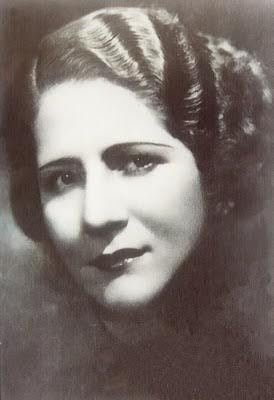
Laura Victoria’s Poetry of the Pagan & the Maternal
In my previous post about the poetry of Eliana Maldonado Cano, I mentioned that an epigraph to one of her poems came from the work of Laura Victoria, pseudonym of Gertrudis Peñuela, a twentieth-century Colombian poet. I was intrigued by the epigraph (“Come closer, / Bite into my skin / With your dark hands”), and decided to follow my curiosity with this post in order to learn more about the poet behind the pseudonym.
Read More
Multi-Voiced Sonnets by Simone Muench and Dean Rader
Editor's note: these poems originally appeared in the old/previous Luna Luna
Now I see them sitting me before a mirror
Now I see them sitting me before a mirror.
Whispers. A sound like grinding. Candles. Soap.
Black lines on the skin over my heart. Someone’s
god in the air above my head. A cup
next to an ax. The night’s bridal chamber
shuts me in. Seizure of wind. An entropy
within these walls. I cast spells on the copy
of myself— marionette for a stranger
stage, string and retraction of string. Spotlight
and trapdoor. Hooks and rope. Pain is a mask
we all wear; regret a gun we’ve all shot.
Collared in loneliness, an odalisque
on display. They douse me in rosewater,
burn my writings, doll me up for slaughter.
You thought I was the kind of animal
You thought I was the kind of animal
who would first purr, splay my belly before
I bite. I am not feline or femme fatale,
despite your desire for me to be your
feral other. But, this is no cartoon.
You’re not in some fairy tale. You’re in line
seven, and my claws are sharp. Here, feel. Soon,
it will be time to eat, and you look divine.
Succumb to my wolf face, your own savage
sweet tooth. Lick my fur until there’s nothing
but flesh, no more facade, no camouflage,
only revelation—the heart’s reddest
rifle. Let’s be honest: you love hiding
but I love hunting. Let’s see who’s the best.
She will not ask of aliens, but of friends
She will not ask of aliens, but of friends
to prove that she is not alone. How often
have we all begged the sidereal to bend
to our will? All we want is to begin.
To follow the red fox into the forest,
into the dizzy faultless wilderness
where animals welcome us as their guest
and the stars become our only dress.
We wear what the dead discard, if not this
day then the next. Time is the one garment
we never grow out of. If the abyss
is feral company, then what of ascent?
Can we yoke our flesh to celestial splendor
and still save our beautiful bestial nature?
Are you having a good time?
Are you having a good time? Are you
traveling toward your own disappearance?
Your absence is a ritual dance
of damage I can’t seem to undo
or unfix or unplay or unspin. Are
you still on the on? Are you still? If you
make a mark on a circle, it’s no longer
a circle but a broken line. Are you
a theory of silence, or just quietness?
You are past tense and I am past shadow.
In the winter air’s marrow, we undress—
bodies flashing like frost in the window.
Are you mint and clover? Are you savage sea?
Are you wrist and vein? Blade? Are you ready?
___________________________________________________________________
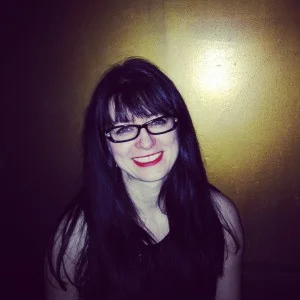
Simone Muench is the author of five books, including Lampblack & Ash(Sarabande, 2005), Orange Crush (Sarabande, 2010), and Wolf Centos (Sarabande, 2014). Her chapbook Trace received the Black River Award (Black Lawrence Press, 2014). Some of her honors include an NEA fellowship, Illinois Arts Council fellowships, Marianne Moore Prize for Poetry, Kathryn A. Morton Prize for Poetry, PSA’s Bright Lights/Big Verse Contest, and residency fellowships to Yaddo, Artsmith, and VSC. She received her Ph.D from UIC, and is Professor of English at Lewis University where she serves as chief faculty advisor for Jet Fuel Review. Collaborative sonnets, written with Dean Rader are forthcoming inThe American Poetry Review, New American Writing, Zyzzyva, Blackbird, POOLand others.
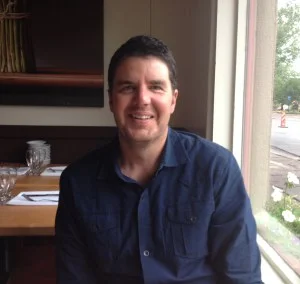
Dean Rader’s debut collection of poems, Works & Days, won the 2010 T. S. Eliot Poetry Prize. His most recent book, Landscape Portrait Figure Form, was named by the Barnes & Noble Review as one of the best poetry books of the year. Recent poems appear or will appear in Best American Poetry, Kenyon Review, Southern Review, Boston Review, and Zyzzyva, which ran a folio of his poems in their fall 2013 issue. 99 Poems for the 99 Percent: An Anthology of Poetry, which Rader edited, appeared in July and is currently #1 on the SPD Poetry Bestseller List. He is a Professor of English at the University of San Francisco.
Nardo Lilly’s Debut Album Takes Wing
BY COLLEEN FOSTER
Brushing off those pop culture paradigms, she defies classification in any either/or, black/white, good girl/bad girl dichotomy. As the title track of The Wing Woman LP goes: “For once could I be the love interest / As well as the comic relief?”
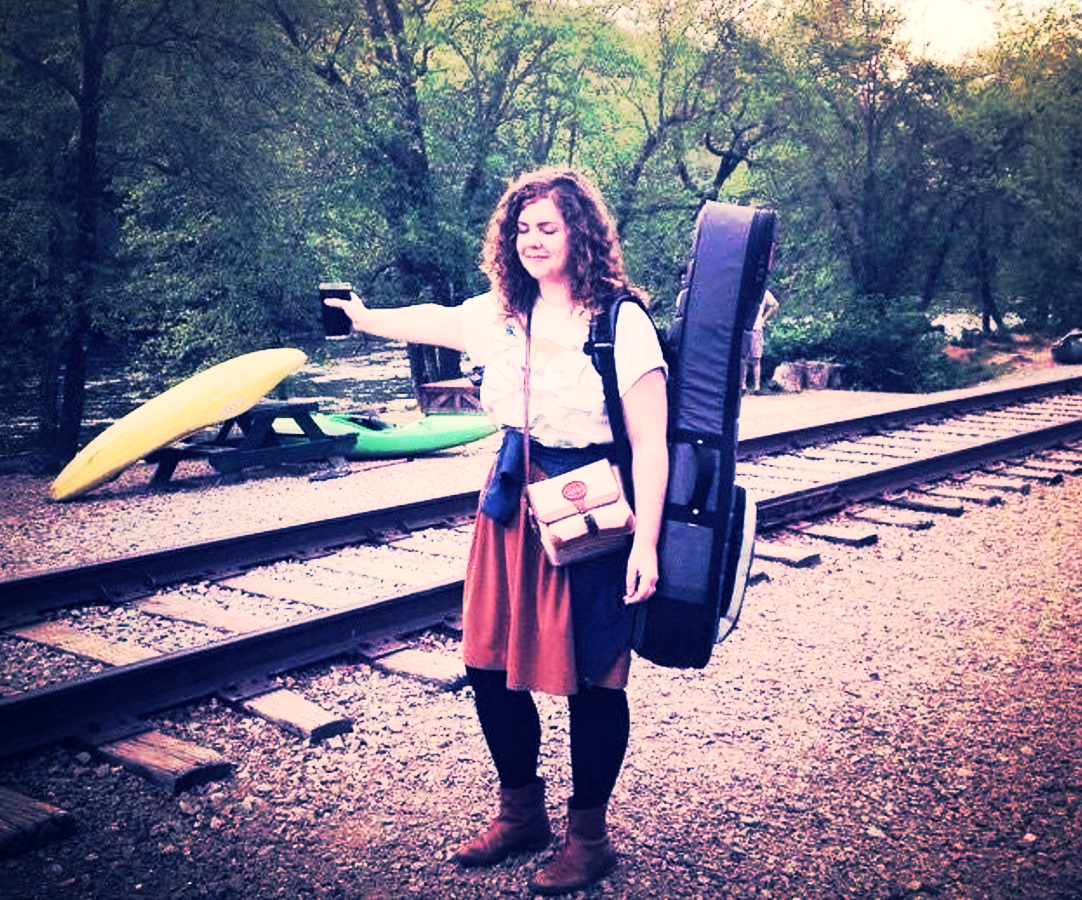
Listening to her inaugural studio release, it’s easy to picture this singer-songwriter nailing that “As well as.” But not by hiding her goofy whims -- rather, boldly using them to fuel our collective crush on the lion-maned, guitar-strumming bundle of paradoxes that is Nardo Lilly.
Northern Virginia native Annie Nardolilli, whose surname-bending musician identity is further evidence of her creativity, is clearly educated in ways that go far beyond her Temple University Bachelor’s degree. From Les Misérables to Yuri Gagarin, Smokey the Bear to Neil deGrasse Tyson, the breadth of her allusions shows off an eclectic pop culture palate.
And, like a spicy food whose capsaicin has a delayed kick a minute after you bite in, the punchlines of her songs sneak up on you. For example: with a slick bluesy electric bass riff, the perennial crowd favorite “Benedict Cumberbatch” enumerates all the traits she desires in a boyfriend. It’s a hefty shopping list, from “look[ing] like David Beckham in his underwear” to “all that 1940s Humphrey Bogart swag.”
But then she flips the switch: “But if I’m supposed to look like the girls in magazines / Then I’ll hold men up to the standards they set up for me / So if you’ve gotta’ have your model / I’ve gotta’ have Benedict Cumberbatch.”
Ha. This is no pining ingenue. The joke’s on you. Or even better, you’re in on it.
Performing live, these twister lines come with a sly smile that pops the bubble. Gigs have included Libertine, Acre 121, and Ebenezers in Washington, D.C., the IOTA Club & Café in Arlington, Virginia, and World Cafe Live in Philadelphia, Pennsylvania.
This whimsy translates effortlessly on the recording, available as of a month ago on iTunes, CD Baby, and Spotify and intended soon for an old-school compact disc. It is the long-awaited culmination of a summer in the studio under the tutelage of producer and engineer Ken Barnum at Recording Arts in Springfield, Virginia.
Her own guitar and vocals shine center stage, a lyrical pop/folk alto reminiscent of Ingrid Michaelson and Vanessa Carlton. She is backed up on all nine original compositions by Kyle Harlos’s smooth strums on the bass, Corie Schofield’s soulful violin that can morph into a good ole fiddle when it needs to evoke the 1860s (check out “Appomattox”) and Ethan Drake’s reliable percussion.
“Kitty Hawk” has a pensiveness to her future, an earnest recognition of where she is but reminding any standby not to underestimate her. “Don’t think that just because I’ve found my wings / Means I’m going anywhere anytime soon / But now you see I can fly across the beach / And in due time / I’ll make it beyond the moon.” Alright, then. We are buckled in and ready for takeoff. Let’s go along for the ride.
PS: Follow Nardo Lilly’s Facebook page and Twitter to stay on top of her performance schedule and new song releases.
Colleen Foster is a freelance writer, editor, artist, and language teacher in Arlington, Virginia. She carries Bachelor's degrees in Spanish and English from Shenandoah University, and her work previously appeared in Luna Luna in "10 Signs You're A Politi-Kid."
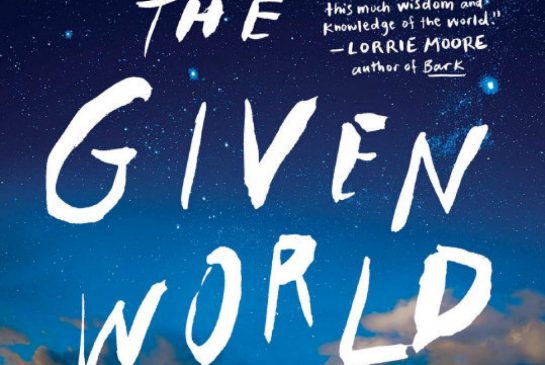
Marian Palaia's The Given World Is A Must Read
The Given World by Marian Palaia opens time capsules like Maruschka dolls: First, it is late 80’s in Siagon. Swiftly, it is 1968 Montana, and Riley, the protagonist, is a little girl whose world is about to be blown open.
Read More
Poems Written Under The Skin: Eliana Maldonado Cano
BY EMILY PASKEVICS
Eliana Maldonado Cano (Medellín, Colombia, 1978) studied petroleum engineering at the National University of Colombia, and she currently works in the field of Geoscience Consulting. Her poems have appeared in Punto Seguido, Quitasol, Prometeo, and Los Papeles de Babel. She participated in the 11th International Poetry Festival of Medellín (2006), and her poem “Fuera del Paraíso” (“Outside of Paradise”) won first place in the Jazz-eros poetry contest through the National University of Colombia (2005). The following poems are translated from her first collection, Bajo La Piel (Under the Skin), published in 2007 by Hombre Nuevo Editores.
Bajo la Piel is a small book, only about as tall as my hand. It is divided into four parts, translated as: 1) The Body Owns Reason; 2) The Soul Owns Madness; 3) The Earth Owns Those Who Walk; and 4) Dreams, Uncertain Truths.
The first poem of the collection, “La Manigua” (“The Jungle”), is epigraphed with a quote from Laura Victoria, pseudonym of Gertrudis Peñuela, a popular early twentieth century poet whose work is also characterized by a strong erotic tone: “Come closer, / Bite my skin / With your dark hands.” Cano’s response or extension of this lure-to-feast clearly plays with the familiar trope of the female body as a landscape, something to be wary of and, where possible, tamed. She closes with a menacing tone:
Ven, acércate mas,
acércate,
cartographia mi paisaje,
no tengas miedo,
ya no quedan fieras
en la manigua.
Come, come closer,
closer,
map my landscape,
don’t be afraid,
there are no more beasts
in the jungle.
Throughout the collection, Cano plays with, scorns, accepts, kills, and rebirths familiar metaphors for women’s bodies. From the first poem, then, the reader enters into a discussion of desire, earth-toned or half-dreamed, with the object—the satisfaction, the truth—never quite reached.
Oasis
Tengo sed,
sed de tu saliva
de tu sudor
de tus cálidos fluidos.Tengo hambre,
hambre de tu piel
de tu lengua
de tu carne ardiente en mi garganta.Muero de inanición,
qué hacer
qué hacer con esta hambre
esta sed
esta fatiga de no tenerte.
Oasis
I’m thirsty,
thirsty for your saliva
for your sweat
for your hot fluids.I’m hungry,
Hungry for your skin
for your tongue
for your flesh burning my throat.I’m dying of starvation,
what to do
what to do with this hunger
this thirst
this exhaustion of not having you.
Cano’s poems tend to be short and slim, simple and open in language, musicality, and rhythm. These are poems of body and desire, often quite explicitly so. In the two-line piece titled “Abro las piernas,” for example, the speaker quietly summarizes the rise and fall of an intimate encounter:
Abro las piernas
tan llenas de mis hijos
y tus muertos.
I open my legs
so full of my children
and your little deaths.
Her poetry tends to convey a strong eroticism, often drawing metaphors from biblical and natural worlds in order to create a poetry of deep sensuality, where both the body and the reader emerge as the main actors in various encounters. As hissed in the abovementioned “La Manigua”: “Come closer, / closer… don’t be afraid” (17). At the same time, sometimes the body is broader, geographical or historical. Sometimes it’s a body dreamed or imagined, scripted or reinvented, sought but not quite reached; it is a body living, hunted, or dead. It is a body abandoned or sacrificed—someone else’s, hers, or your own.
Ella
Ella huele a sal
a sudor
a deseoElla inspira carne
PlacerElla es simplemente
Un aroma
Un tormento.
She
She smells of salt
of sweat
of desireShe breathes flesh
PleasureShe is simply
A scent
A storm.
The interplay of desire and objectification is a constant tension, or “red thread,” throughout the book (“Hilo rojo,” 34). The speaker sometimes toys with the idea of being objectified: “I am your object of desire / faithful four-legged table…” (“Objecto de deseo,” 19), or relishes it, describing her own smooth skin and dark hair. At other times, the speaker appears to accept being conquered, as in with the closing lines of “La Conquista” (31), where the question is hinted at but not fully asked: “Where and when will you conquer me, / [and] change my language.”
At other times, the speaker pushes against objectification, with a hint of violence:
Golpe de Suerte
Doy la espalda a mi enemigo,
sé que observa mis pasos quedos,
cada movimiento de mis brazos,
como un tigre, todo su cuerpo
se tensa frente a la presa,
me acerco
lentamente,
siento su aliento,
el cuchillo,
la sangre que mana,
el cuerpo que cae,
lo miro largamente yacer en el suelo.
Al final para mí
la vida,
la noche negra.
Stroke of Luck
I turn my back on my enemy,
I know he watches my soft steps,
every movement of my arms,
like a tiger, his whole body
tenses before his prey.
I approach
slowly,
sensing his breath,
the knife,
the blood that flows,
the body that falls.
I watch it lying on the ground.
Finally for me:
life,
the black night.
The two main threads, the visceral and the dreamlike, carry throughout the collection.
Eliana Maldonado Cano’s second poetry collection, Lunas de sombra (Moon Shadows), was published by Sílaba Editores in 2010.
Review of Nikay Paredes' 'WE WILL SEE THE SCATTER'
There are few times when I read poetry and feel as though my perspective is truly changing. We Will See the Scatter (Dancing Girl Press, 2014) is one of those brilliant exceptions. As a poet, I read verse all the time, and while I often feel mesmerized by so much of it, I rarely feel as though my world has altered--that the world as a whole will benefit from the brevity of meaning.
Read More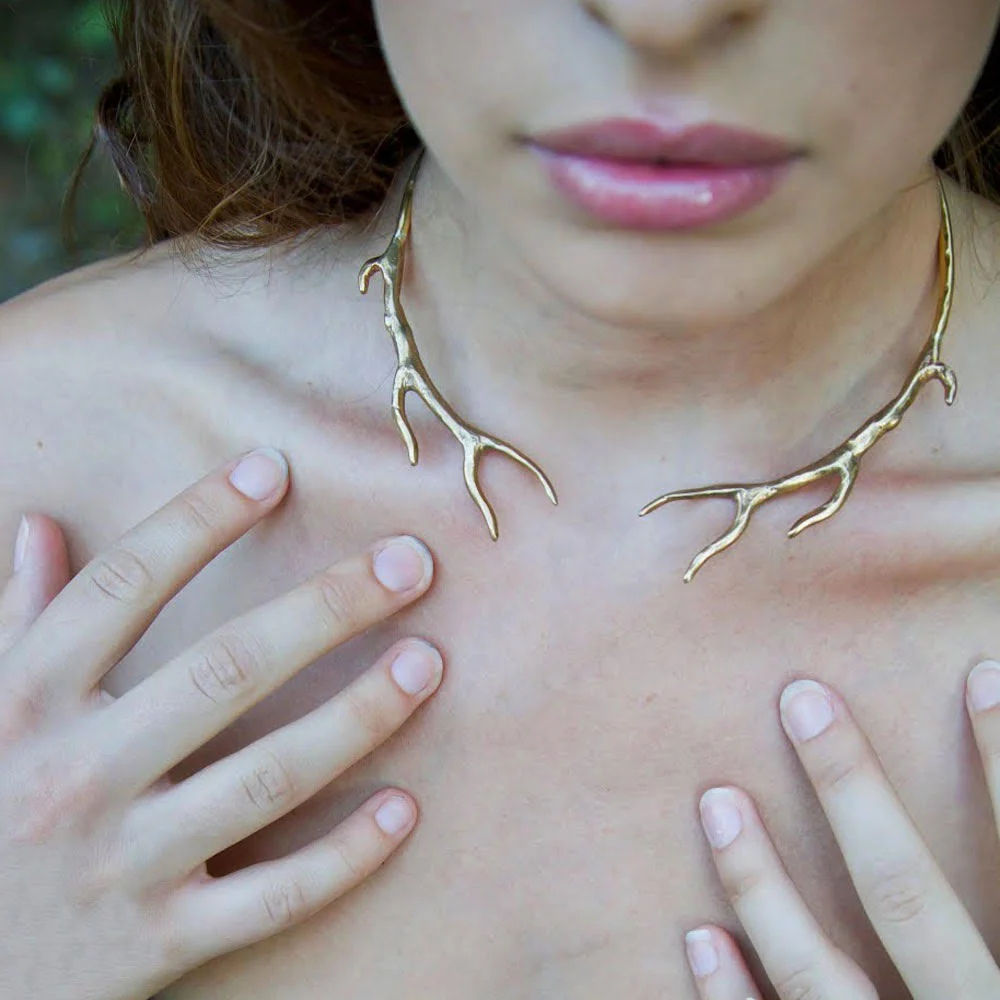
Hebel Design's Gorgeous Literary Jewelry
BY MACEY LAVOIE
Viviane Hebel’s story (and her inspiration) began six years ago when she picked up City of Bones, the first book In Cassandra Clare’s Shadowhunter Chronicles series. She fell in love with the world and the rune designs. Since then she has added countless book-inspired pieces to her website, each one as magical and inspiring as the last.
I was first introduced to her work when I was hunting on the Internet for the perfect Jade pendent. I wanted one that was similar to the one described in my favorite book. Hebel Design appeared and was filled with jewelry from some of my favorite books. If you’re looking for a little piece of literary magic, this is the place for you.
What got you started in the art of jewelry making? And what inspired you to make book-related jewelry?
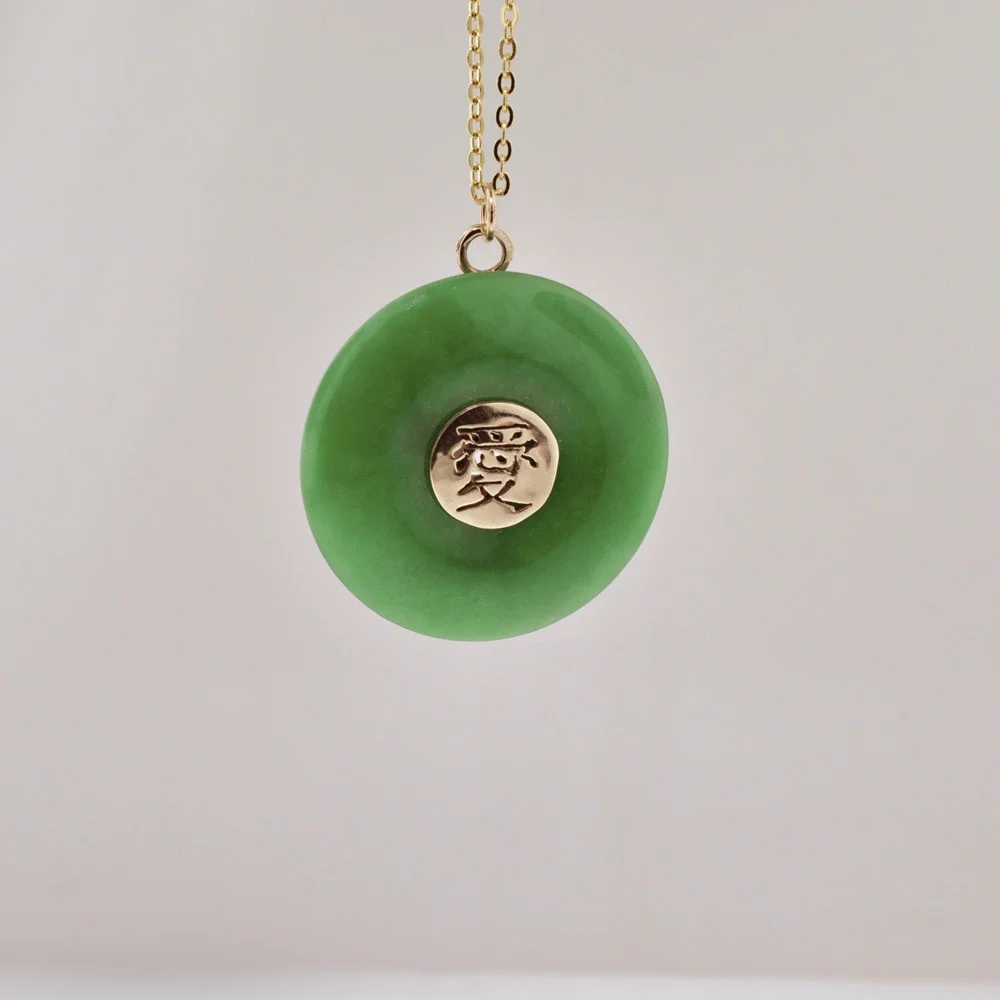
Jewelry began as a challenge about 13 years ago, when a friend liked a very pricey necklace she saw at a trendy store window. I said: "I can make that for you,” and so it began. Of course that was only assembling ready-made components. Soon I had the need to make my own pieces and so I got into metal-smithing and then I got hitched for life. About six years ago, I read Cassandra Clare’s City of Bones and I fell in love with the world and the Runes, I had to make them and luckily she let me bring them to life!
How long have you been making jewelry?
For over 12 years now.
How do you find so many unique materials and metals for your pieces?
I have several suppliers for all my jewelry-making needs and then it’s a lot of research online and the streets to find the right piece! I can say that I have bought materials from every continent. The Internet is a magical place.
Do you have a particular favorite among the book series you draw inspiration from? A favorite piece?
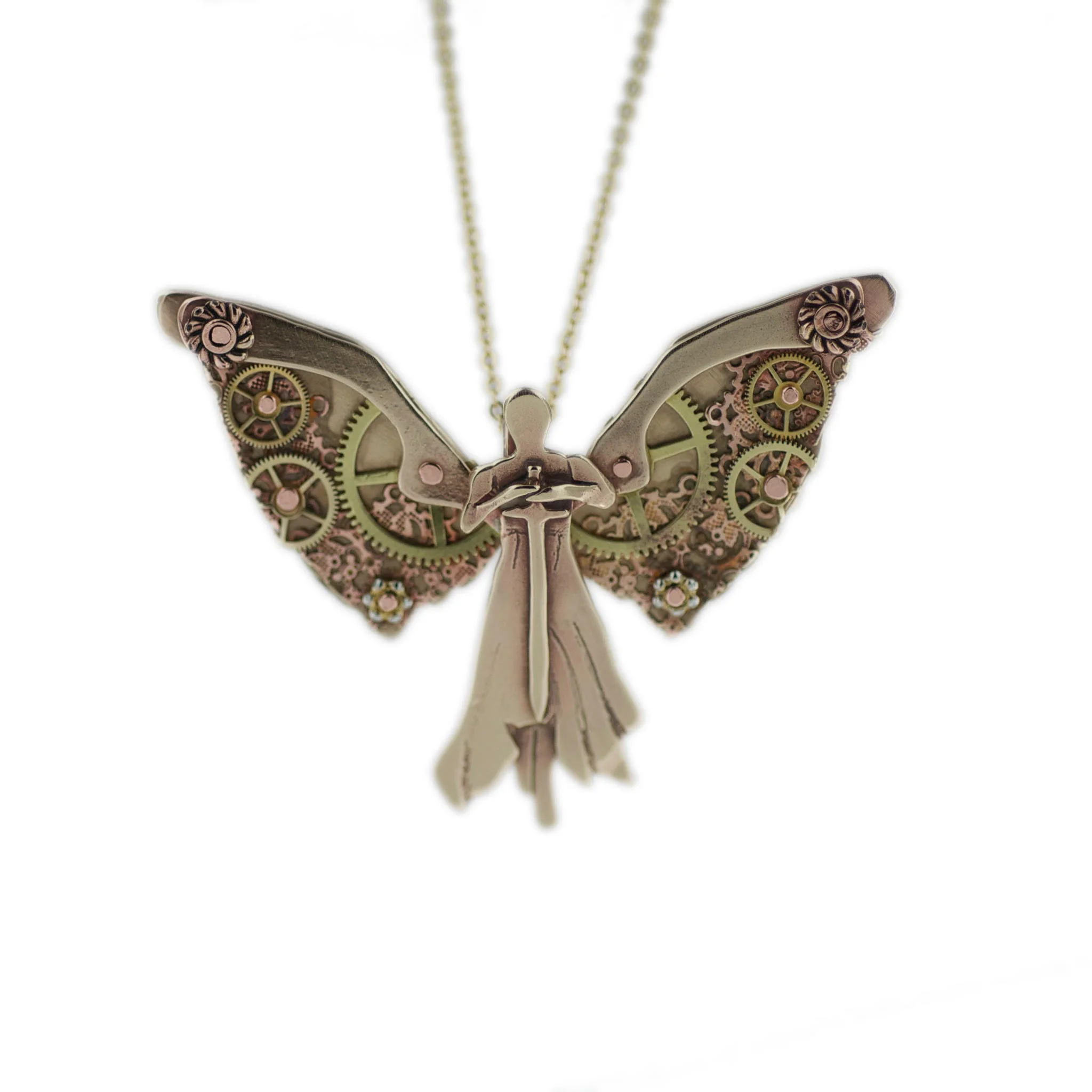
They are all kind of my children so it’s hard, but I always tend to like the pieces that were more challenging to develop. The Morozova Collar, The Clockwork Angel, The Nephilim Wing (Jace’s Wings). Also, the bigger the world, the bigger the possibilities!
Are you working on any new pieces? Are you adding to the list of book series you work with?
Yes and yes, I am always on the works! Everything is to be revealed soon.
Have you ever gotten feedback from authors about the pieces you create?
Always, I never list anything without author consent. The collaboration has to be close to stay true to the stories.
I noticed you support the organization We Need Diverse Books. What got you involved?
Because we are all different and we all like to read stories that touch us in a way. For that, we need diversity!
Anything else you think we should know?
I love my job! And I it makes my day that I can make other people happy with my work. I really love to hear the feedback I get and how my jewelry turns into little amulets of some sort. Lucky charms or cherished heirlooms someday. The little treasures that give meaning to life.
You can visit Viviane's website here.
Via Hubpages
6 Online Lit Mags For Ladies Who Love Creepy Poems
When I first started reading literary magazines in college I really had no idea how to go about finding ones that would actually have poetry in them I would enjoy and connect with, let alone that would make me think of my own poetry enough to want to submit. As a lady whose poetry has been compared to French horror films, I more often than not found myself wanting for poetry to read that had the same dark sensibilities as my own. Since my college years I’ve discovered any number of fine feminist lit mags that fit this bill fabulously.
Read More