• Home
  • indulge
  • new poetry
    • About Luna Luna
    • resources
    • search
  • editor
  • dark hour
  • submit
Menu

luna luna magazine

  • Home
  • indulge
  • new poetry
  • About
    • About Luna Luna
    • resources
    • search
  • editor
  • dark hour
  • submit
delicious new poetry
'the doors of the night open' — poetry by Juan Armando Rojas (translated by Paula J. Lambert)
Nov 29, 2025
'the doors of the night open' — poetry by Juan Armando Rojas (translated by Paula J. Lambert)
Nov 29, 2025
Nov 29, 2025
'we can be forlorn women' — poetry by Stevie Belchak
Nov 29, 2025
'we can be forlorn women' — poetry by Stevie Belchak
Nov 29, 2025
Nov 29, 2025
'I do whatever the light tells me to' — poetry by Catherine Bai
Nov 29, 2025
'I do whatever the light tells me to' — poetry by Catherine Bai
Nov 29, 2025
Nov 29, 2025
‘to kill bodice and give sacrament’ — poetry By Kale Hensley
Nov 29, 2025
‘to kill bodice and give sacrament’ — poetry By Kale Hensley
Nov 29, 2025
Nov 29, 2025
'Venetian draped in goatskin' — poetry by Natalie Mariko
Nov 29, 2025
'Venetian draped in goatskin' — poetry by Natalie Mariko
Nov 29, 2025
Nov 29, 2025
'the long sorrow of the color red' — centos by Patrice Boyer Claeys
Nov 28, 2025
'the long sorrow of the color red' — centos by Patrice Boyer Claeys
Nov 28, 2025
Nov 28, 2025
'Flowers are the offspring of longing' — poetry by Ellen Kombiyil
Nov 28, 2025
'Flowers are the offspring of longing' — poetry by Ellen Kombiyil
Nov 28, 2025
Nov 28, 2025
'punish or repent' — poetry by Chris McCreary
Nov 28, 2025
'punish or repent' — poetry by Chris McCreary
Nov 28, 2025
Nov 28, 2025
'long, dangerous grasses' — poetry by Jessica Purdy
Nov 28, 2025
'long, dangerous grasses' — poetry by Jessica Purdy
Nov 28, 2025
Nov 28, 2025
'gifting nighttime honey' — poetry by Nathan Hassall
Nov 28, 2025
'gifting nighttime honey' — poetry by Nathan Hassall
Nov 28, 2025
Nov 28, 2025
'A theory of pauses' — poetry by Jeanne Morel and Anthony Warnke
Nov 28, 2025
'A theory of pauses' — poetry by Jeanne Morel and Anthony Warnke
Nov 28, 2025
Nov 28, 2025
'into the voluminous abyss' — poetry by D.J. Huppatz
Nov 28, 2025
'into the voluminous abyss' — poetry by D.J. Huppatz
Nov 28, 2025
Nov 28, 2025
'an animal within an animal' — a poem by Carolee Bennett
Nov 28, 2025
'an animal within an animal' — a poem by Carolee Bennett
Nov 28, 2025
Nov 28, 2025
‘in the glitter-open black' — poetry by Fox Henry Frazier
Oct 31, 2025
‘in the glitter-open black' — poetry by Fox Henry Frazier
Oct 31, 2025
Oct 31, 2025
'poet as tarantula,  poem as waste' — poetry by  Ewen Glass
Oct 31, 2025
'poet as tarantula, poem as waste' — poetry by Ewen Glass
Oct 31, 2025
Oct 31, 2025
'my god wearing a body' — poetry by Tom Nutting
Oct 31, 2025
'my god wearing a body' — poetry by Tom Nutting
Oct 31, 2025
Oct 31, 2025
'Hours rot away in regalia' — poetry by Stephanie Chang
Oct 31, 2025
'Hours rot away in regalia' — poetry by Stephanie Chang
Oct 31, 2025
Oct 31, 2025
'down down down the hall of mirrors' — poetry by Ronnie K. Stephens
Oct 31, 2025
'down down down the hall of mirrors' — poetry by Ronnie K. Stephens
Oct 31, 2025
Oct 31, 2025
'Grew appendages, clawed towards light' — poetry by Lucie Brooks
Oct 31, 2025
'Grew appendages, clawed towards light' — poetry by Lucie Brooks
Oct 31, 2025
Oct 31, 2025
'do not be afraid' — poetry by Maia Decker
Oct 31, 2025
'do not be afraid' — poetry by Maia Decker
Oct 31, 2025
Oct 31, 2025
'The darkened bedroom' — poetry by Jessica Purdy
Oct 31, 2025
'The darkened bedroom' — poetry by Jessica Purdy
Oct 31, 2025
Oct 31, 2025
'I am the body that I am under' — poetry by Jennifer MacBain-Stephens
Oct 31, 2025
'I am the body that I am under' — poetry by Jennifer MacBain-Stephens
Oct 31, 2025
Oct 31, 2025
goddess energy.jpg
Oct 26, 2025
'Hotter than gluttony' — poetry by Anne-Adele Wight
Oct 26, 2025
Oct 26, 2025
'As though from Babel' — poetry by Fox Henry Frazier
Oct 26, 2025
'As though from Babel' — poetry by Fox Henry Frazier
Oct 26, 2025
Oct 26, 2025
'See my wants' — poetry by Aaliyah Anderson
Oct 26, 2025
'See my wants' — poetry by Aaliyah Anderson
Oct 26, 2025
Oct 26, 2025
'black viper dangling a golden fruit' — poetry by Nova Glyn
Oct 26, 2025
'black viper dangling a golden fruit' — poetry by Nova Glyn
Oct 26, 2025
Oct 26, 2025
'It would be unfair to touch you' — poetry by grace (ge) gilbert
Oct 26, 2025
'It would be unfair to touch you' — poetry by grace (ge) gilbert
Oct 26, 2025
Oct 26, 2025
'Praying in retrograde' — poetry by Courtney Leigh
Oct 26, 2025
'Praying in retrograde' — poetry by Courtney Leigh
Oct 26, 2025
Oct 26, 2025
'To not want is death' — poetry by Letitia Trent
Oct 26, 2025
'To not want is death' — poetry by Letitia Trent
Oct 26, 2025
Oct 26, 2025
'Our wildness the eternal now' — poetry by Hannah Levy
Oct 26, 2025
'Our wildness the eternal now' — poetry by Hannah Levy
Oct 26, 2025
Oct 26, 2025

Before I Was Born by Kate Leffner

October 19, 2022

BY KATE LEFFNER

[content warning: domestic violence]

Before I Was Born

I finally left home when I was twenty-two. My father moved me to Boston so I could attend a master’s program and in two days, drove us six states in a pick-up truck from Wisconsin to Boston. I didn’t know how to drive and still don’t have a license, but since I’d always lived in cities as an adult, it never seemed to matter. It was summer when we left and when we passed through Chicago, hot and congested with tourists and buses, I started to roll down the window. Don’t, my dad told me. I’ll put on the air conditioner. I didn’t know how to say that I also just wanted to suck in breath from the city, just one last time. I attended undergrad in Chicago and I felt my chest tighten when we passed the apartment where I lived alone.

The apartment, more of a room than anything else, had felt like the inside of my mind. I kept it so clean, in the hopes of mitigating my panic attacks, that it barely looked like I lived there. I was obsessive about my eating, I thought that food was something that could also be kept clean, and only ate eggs, spinach, avocados, or nothing at all. When I first toured it with my father, the real estate woman whispered to me, “Seems like your daddy takes care of his little princess,” a line straight out of a B-rated movie.

“Are you sure you want to go?” my dad asked me. Right before I left, my mother raced out of the house with a weekend bag she had recently bought for herself. She pressed it to me with tears in her eyes. Take it, she said as memories flooded in. I saw her explaining Kierkegaard to me when I was a kid, drawing with pastels in the kitchen. I saw her screaming and my father punching a wall but when I blinked they were gone, buried deep. I thanked her and pressed the bag close.


Before I went to Chicago for college, my father said he’d get his shotgun during an argument. Afterward, I was claustrophobic and would take the stairs instead of the elevator, convinced strangers had guns in their pockets. In my first year of college, I sent my mother an email that said that I wouldn’t come home until my father went to therapy.

My mother told me to bring it up with my father. I did not. Instead, I would wait for my parents to pick me up for the holidays in the lobby with my bags under my arm and fresh cookies in a Ziploc bag.


In the parking lot of a gas station in Ohio, with the lamplight flickering on and off, my father nodded off. I read a romance novel my mother packed into my bag. It was about a woman who escaped a domestic violence relationship with her husband and fell in love with a policeman in a beach town. My mother read a lot of these books.

When the woman was in the bath, the ex-husband snuck into her house. The policeman appeared and pointed a gun at the ex-husband. The woman cried and the policeman held her gently and told her he loved her as the ex-husband was carted off to jail. When I was a kid, my mother closed the curtains when my father started to raise his voice. When I suggested we leave, go to a shelter, or call the police she told me that I didn’t understand what it was like out there, in those places. Even when he called us cunts and charged, sending us spiraling to the

floor, even then she told me not to call. Having a home, and private schools, gave us a certain safety, and the love we had for him, the intense empathy that started conversations: he was tired. He was overworked. He didn’t know how to handle his feelings because of the way he was raised. He didn’t hit us like that. At times, I would convince myself of these things and ask her to stay, fearful of the outside world, only to spiral into a panic that we had to leave, and then into a deep suffocating sense that there was nowhere we could go.

Often, I felt sorry for him because he couldn’t control himself. I remember holding him while he cried.

“Where are we?” my father said in his sleep. I shushed him. He told me to just leave him alone, God, why wouldn’t I just shut up? He needed to sleep.


I had a difficult time making friends. I felt that I was always missing cues, and the closeness I felt in my family felt impossible to replicate. How would anyone understand the incredible safety of hearing my mother affectionately call my father an asshole after a fight and hearing him laugh instead of scream? Or understand the fierce loyalty I felt toward my brother when he shoved my dad when he went to hit me?

My mother, when she was feeling particularly resentful, would say I was cold to others. When she was feeling more generous, she said I just didn’t know how to let people in. This changed in my first year of college. I fell in love with a woman in my Russian literature class. She was in her junior year and had a full-time job, gave out practical advice, and had a dry sense of humor. We wrote each other letters in the summer about Checkhov, Putin, and Dostoevsky, which felt like discussing my unformed thoughts, unspeakably intimate. Once one of the letters arrived right before my father started getting worked up and I remember holding the letter tight to my chest like a talisman while he shouted. I felt that the way my friend loved me and the way my father loved me were inexplicably different but I didn’t know how to articulate it. At night, I started Googling phrases I previously ignored: learned helplessness, Stockholm Syndrome, trauma. I circled around the word abuse but could not land. That was something that had happened to my mother and my grandma, to other women, to people whose fathers’ didn’t move them into apartments or cook them dinner at night. Wasn’t I too functioning to be abused? Wasn’t I too privileged?


The first time my father hurt me, I was five. It is one of the clearest memories I have. I was sick and my throat was scratchy. My parents were renovating their bedroom and were sleeping in the living room on a pull-out bed. I shook my father’s bare sweaty shoulder and his hand shot out and gripped my neck. He stood up fast and held me up in the air. I grabbed his hand and tried to speak, but couldn’t get anything out. His eyes were open but he made no sound and eventually my mother woke up and said his name. He let me down. Sleep apnea, my mother said the next day after furiously researching.


There was a bridge to pass over to get from New York to Massachusetts. My father laughed in a nervous way. He hated heights but loved nature and the mountains we passed through looked like something out of a magazine, green and purple, close enough to touch.

“It’s beautiful,” he said. “Why don’t we do more things like this?”

“I'm hungry,” I said, digging through my backpack.

“You are a brave, brave girl,” he said to me. He was crying. “How are you so sure?”

“I believe in God,” I said, though I didn’t and the words felt false on my lips. But it was something to say, something with power behind it. If I told him I believed in myself, it didn’t feel like something he would understand.

“You are braver than me,” he said. The comment should have made me feel closer to him, flattered even. Instead, it made me angry. I could feel him leaving in the way he didn't look in my eyes. I didn’t realize it would be this easy, all I would have to do was not need him, and suddenly he would become small and quiet.


In the apartment, he set up my DVD player and bed as I put away groceries.

“It’s ugly,” he said. “I can’t leave my daughter in a place like this.”

“I like it,” I said. “It’s okay.”

“It’s not,” he said. His face was red and it seemed as though I was both the daughter he wanted to protect and the one who put her in danger. I was both an extension of him and an enemy.

“Why are you never happy?” I said. At that moment I remembered a story I heard on a holiday with his family. When he was a kid, he wrapped his younger brother up in a blanket and threw him out of a window. Often I can’t tell what my father did or has done, there are too many stories that shift in his or his family’s retelling, and the uncertainty and the love I had for him kept it shrouded with confusion. But there was something about his reddening face that made me think of this story at that moment.

He stopped fighting his brother when he grew up. I had thought this was a sign of maturity, but now I wondered if it was because he could fight back. I had taken it so personally when he wanted to hurt me. I thought it was because I had been pushy or demanding. It was clear now watching him and the familiar narrowing lips that he had been battling something long before I was born.

When he left, he told me to text but I could see something had changed in his eyes.

“Sure,” I said and locked the door.


Years later, after my parent’s separation and his jail time, I learned to sleep in my bed throughout the night and got a new phone number. After I became someone else, poorer but self-efficient, an average girl fading into a street of people like at the end of a Meg Ryan film, it finally feels safe to let myself remember the things I liked about him: cooking squash and watching TV. In the aftermath, I let myself miss him.


Please consider making a donation to the National Coalition Against Domestic Violence.

Kate Leffner is a writer and marketing specialist in Boston, MA. Her writing focuses on intergenerational trauma, grief, queerness, and radical self-care. She has an MFA from Emerson College and has featured in The Femme Edition and The Dillydoun Review. She lives with her girlfriend and their two cats, Orchard and Phoebe.
In Poetry & Prose, Personal Essay Tags Kate Leffner
Comment

Poetry by Jordan Cameron

October 19, 2022

BY JORDAN CAMERON

imagined teacups

how can you see a memory that doesn’t belong to you?

with an earthbound combination of intuition and influence
thin floral air inspires blood / vessels for someone else to speak—
my very own seance

i listen and create a picture of a self i never knew
alone and pointing
know without thinking that she understands something you cannot

ask me to describe the smell of lilac
and i can only offer you the memory of open windows

Ask me about the taste of chamomile
and I can only describe the feeling it leaves in my newly warmed mouth
after it has disappeared down my throat.

I have imagined teacups
pink milk glass once served in your home

I breathe deep and answer with honey crackling from my throat
Redefined ectoplasm

The sweetness smothers me

But I am not afraid of drowning as you press your hands against my shoulders and whisper gurgling I
love yous

Until I return, gasping fresh lilac air
And rinse meaningful dregs from my cup


i came from the garden

“I feel a thousand capacities spring up in me….I am rooted but I flow.” - Virginia Woolf, The Waves

I reach into the soil, searching for bursting seeds
buried deep beneath the surface.
The soft and mealy earth parts around my fingers
and I am tangled in roots.

They return my grasp;
we are inseparable &
Underneath my skin
the roots substitute my veins

Someone else planted me here
Wanting more of a good thing
Heavy-headed pink returns, nodding to sleep in the rain

Long after the gardener left her home
I became part of the design
Like the painting in the stairwell
And the stains on the floor
I was there to see everything else change

How can I go on without spilling any blood?
The ritual calls for a sacrifice
and I oblige from below lilies of the Valley

I rise from the soil, searching for rolling skies
stretching far beyond the horizon.
The warm and crumbling earth clings to my hardened skin
and roots are tangled in me.


Jordan Cameron is a New Englander living in Philadelphia. She is a photographer and writer, exploring and expanding perception. Her work has been featured in Dream Pop Journal, Eclipse Lit, Ghost City Review, and elsewhere. She has exhibited her photography in Philadelphia and Abington, PA and her poetry has been nominated for the Pushcart Prize. You can find her on instagram and twitter at jordanofjune and on any given night walking around with a camera at sunset.

In Poetry & Prose Tags Jordan Cameron
Comment

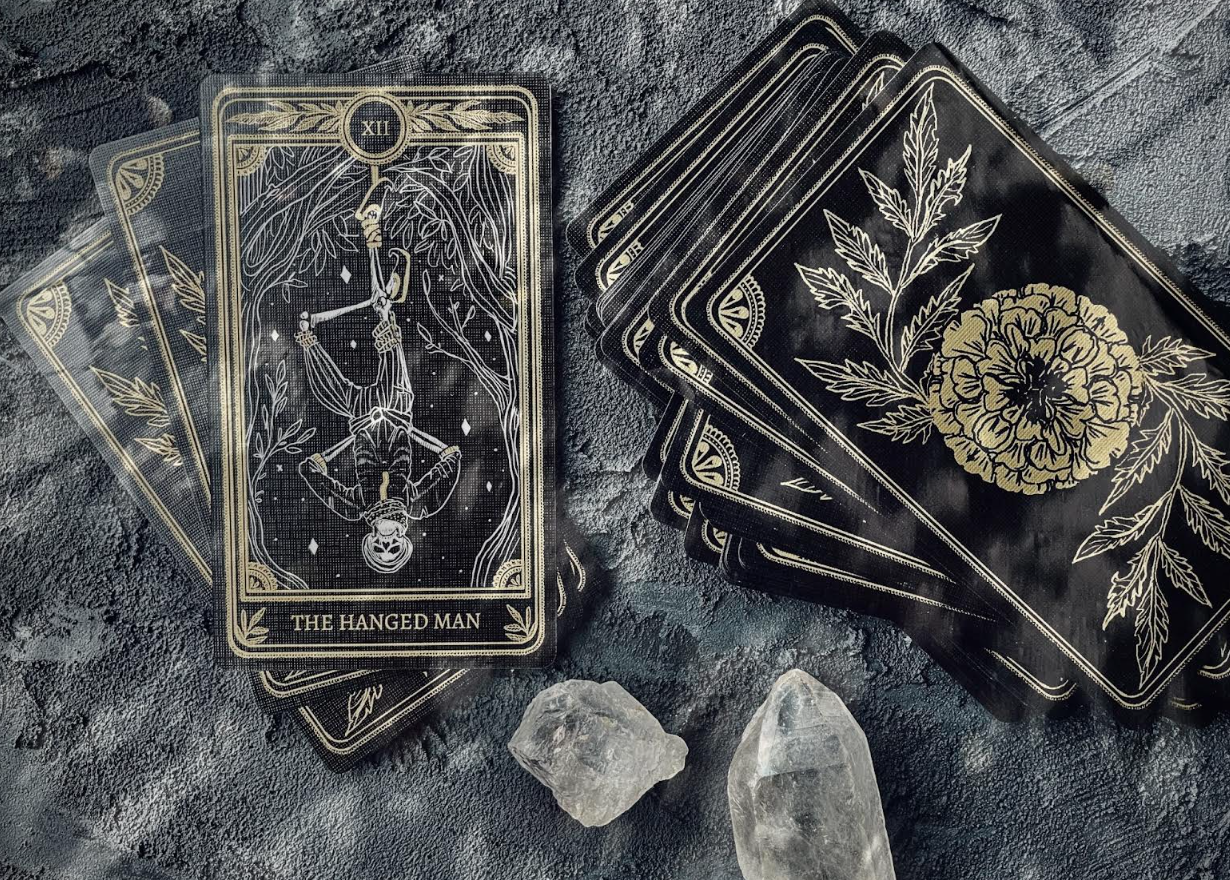
The Hanged One Season, by Meg Wall Jones

October 6, 2022

BY MEG JONES WALL

The Hanged One Season


I don’t understand sleep: how it works, where people go, how anyone learned to travel in this manner. The closing of eyes, the quieting of mind and body, the ability to sink into that strange unknown world of mystery and memory, weaving souvenirs from our consciousness into tangled webs of sense and nonsense — it’s a skill I lack, a capacity for release that I have never been able to master. 

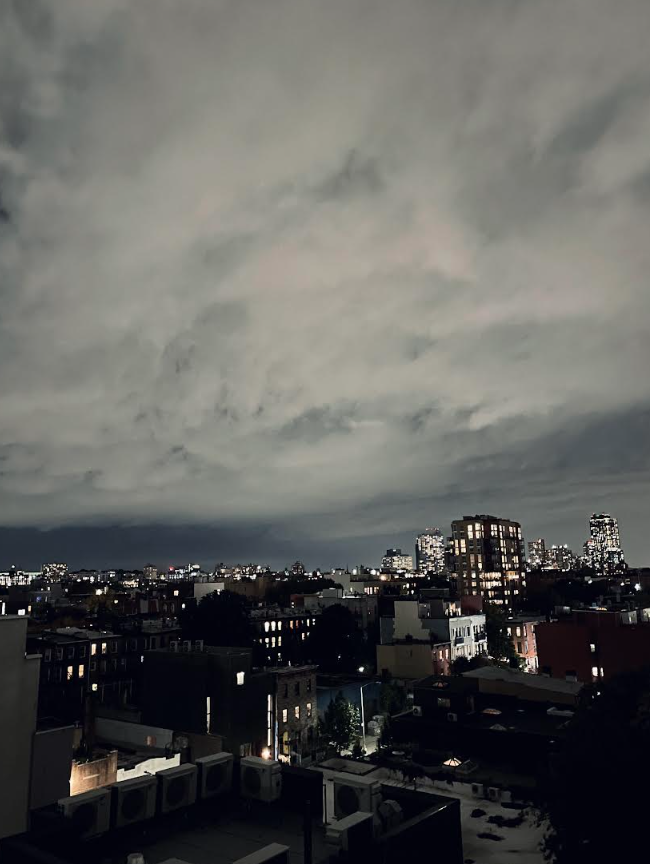
Photo by Meg Wall Jones

Sleep is a forced pause, a time of stillness and surrender. It’s a liminal space that still manages to feel commonplace for most; a regular part of daily cycles that provides comfort, recovery, clarity. Every night is an opportunity to slip into darkness, to find a gentle temporary death, to embrace liminality and adventure to far-off, unknown spaces within the self.

But most nights, I lie awake, alone, listening to sirens and alarms, the stirrings of the city outside my window, the side effects of so many people living in such a relatively small space. Most nights, I watch the stars come and go, the moon rise and fall, wait patiently for the sun to break the horizon and usher in a new morning. Most nights, I fail to find that strange, mysterious place, unable to reach the beckoning grasp of slumber and make my way into those shadowed lands.

Sleep doesn’t make sense to me. There’s no map to reference, no hand to hold, no path to follow. It’s just me and my insomnia against the eternal night, the twinkling stars and city lights, watching one another, uncertain of what to do next. Sometimes days go by before I find rest, before my body is so exhausted that it drags me under, before I stumble into that unfamiliar place and hope that eventually I’ll be able to claw my way out again.

Photo by Meg Wall Jones

In autumn, when the veil is thin, when the shadows have lengthened, when the nights slowly gobble up the hours and greedily swell with excess, sleeplessness becomes seasonal. The heaviness and humidity of the air slipping into crisp coolness, leaves slowly rotting into spectacular decay, shadows thickening and loosening. It feels correct to bear witness to the longer nights, to consciously wander through thoughts and ideas rather than getting swept up into memory. The world feels restless and I can explore my own mysteries, can make my own liminal space, can serve as a guide for those who haven’t been to this particular crossroads before. We all hover at the veil together, contemplating how and when we will pass through. 

It’s Hanged One season, autumn: a time of sacrifice and release, an opportunity to let something wither in the most beautiful way so that new growth can eventually emerge. The Hanged One is a necessary, inevitable clearing; the pause before winter’s Death, the moment when expansion ceases, when we observe what happens when our movement halts and our effort stills. It’s the deep breath before hibernation, the slackening of muscles, the willingness to take brittle air into our lungs and let it simultaneously soothe us and wake us up. What have we been doing, building, becoming? What have we been working towards, and where does this pause land in our own personal cycle? Who did we used to be? Where are we being called to let go of a dream, a pursuit, a version of self? And what happens if we don’t give that thing up easily, if we refuse to surrender?

Autumn is for harvest, for celebration – but it’s also for slowing down, releasing, honoring. Winter may be the full stop, the recovery, but autumn hints at the bend in the road, gives us daily reminders to contemplate the slow rot and decay that surrounds us. All that blooms eventually returns to the earth, dust to dust, year after year. Whether we cling desperately to summer or welcome winter with open arms, we have no control over the cycle, the seasons, the change. Either way, we become the Hanged One, powerless and patient, silent, observing: waiting for whatever comes next, even if we already know what is ending.

Photo by Meg Wall Jones

It’s strange but beautiful, not unlike all of those orderly, sleepy little deaths. Autumn isn’t bothered by our feelings or desires, our fears or uncertainties, and neither is sleep. It simply comes when it’s time, holds us in our waiting, lets us feel whatever we need to feel. Autumn lets us stand quietly, in awe of its power and grace, whether we’re ready to slow down or not.

Sleep, seasons, stillness, all feel out of my grasp these days. This strangeness that I feel every night when I crawl into bed, lying still, hoping that slumber won’t notice me creeping around the edges and trying to slip in silently, stealing a few hours of temporary death: it’s uncomfortable, difficult to define or describe. My mind and body, fighting a battle I don’t understand, unwilling to accept the reality of the Hanged One, wishing somehow to overcome exhaustion and live beyond cycles, beyond sleep.

Autumn reminds me that rebirth is always around the corner, that an awakening beyond the physical can happen at any part of the cycle, that giving up control can be a necessary breaking point rather than something to fear. 

Every morning, and every night, is a new chance to surrender. And perhaps this year, autumn’s shadows will help clear out my own.


In Poetry & Prose, Personal Essay, Magic Tags magic, tarot
Comment

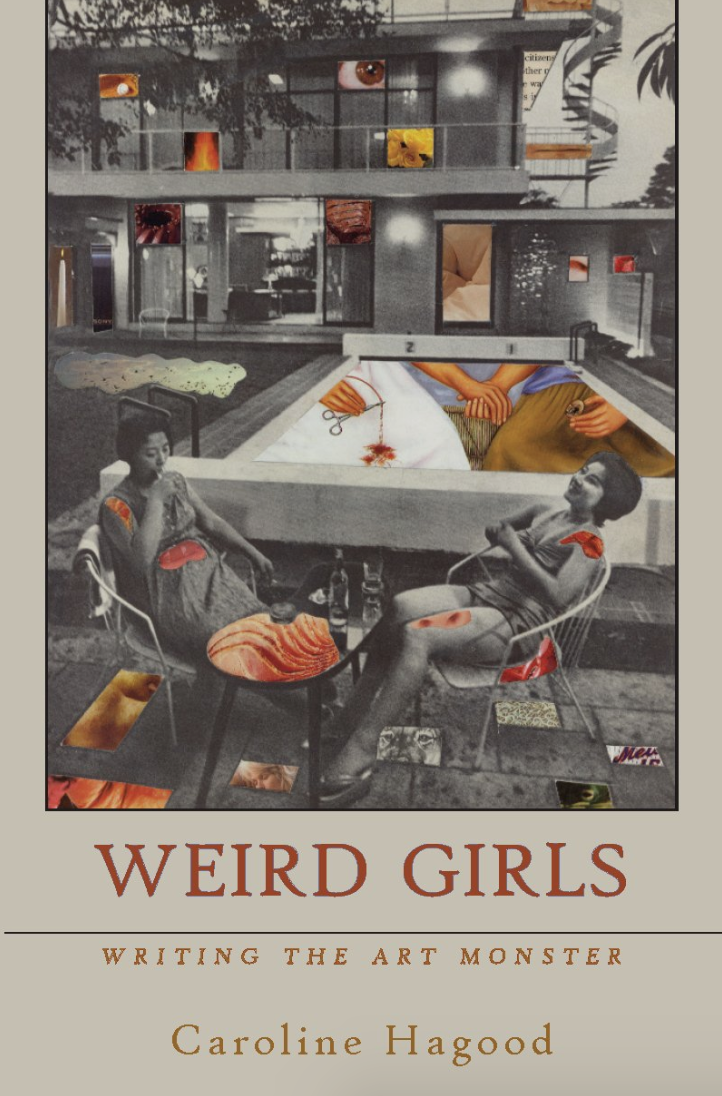
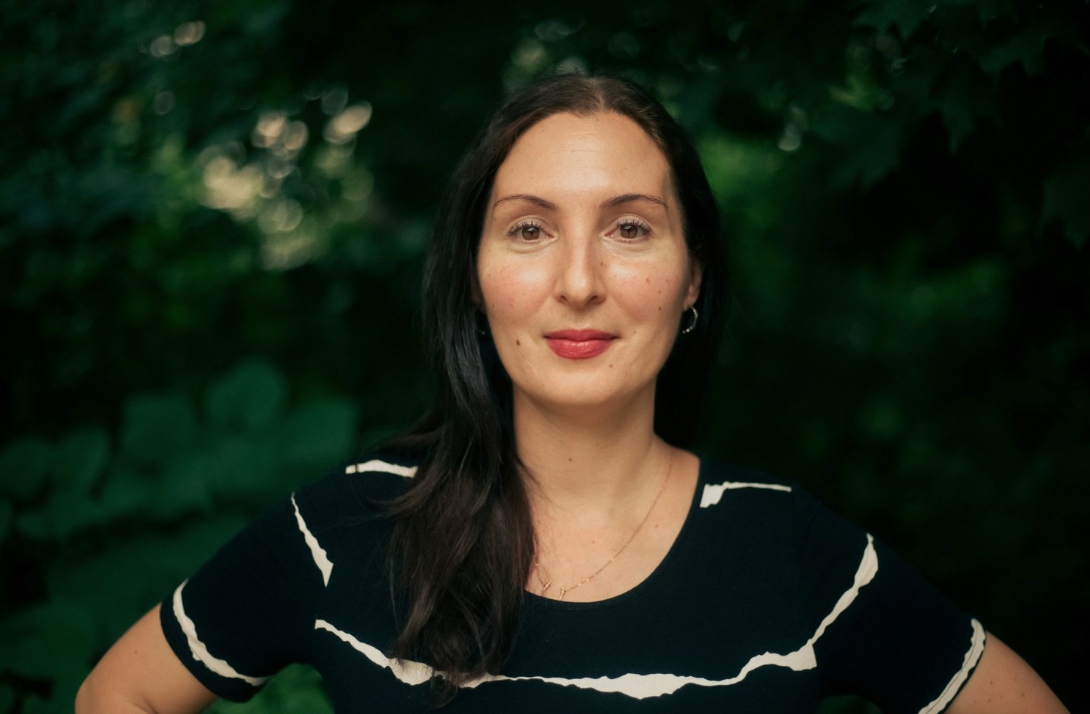
Caroline Hagood on Weird Girls and the Inner Monster

October 2, 2022

An interview with Caroline Hagood
by Lisa Marie Basile

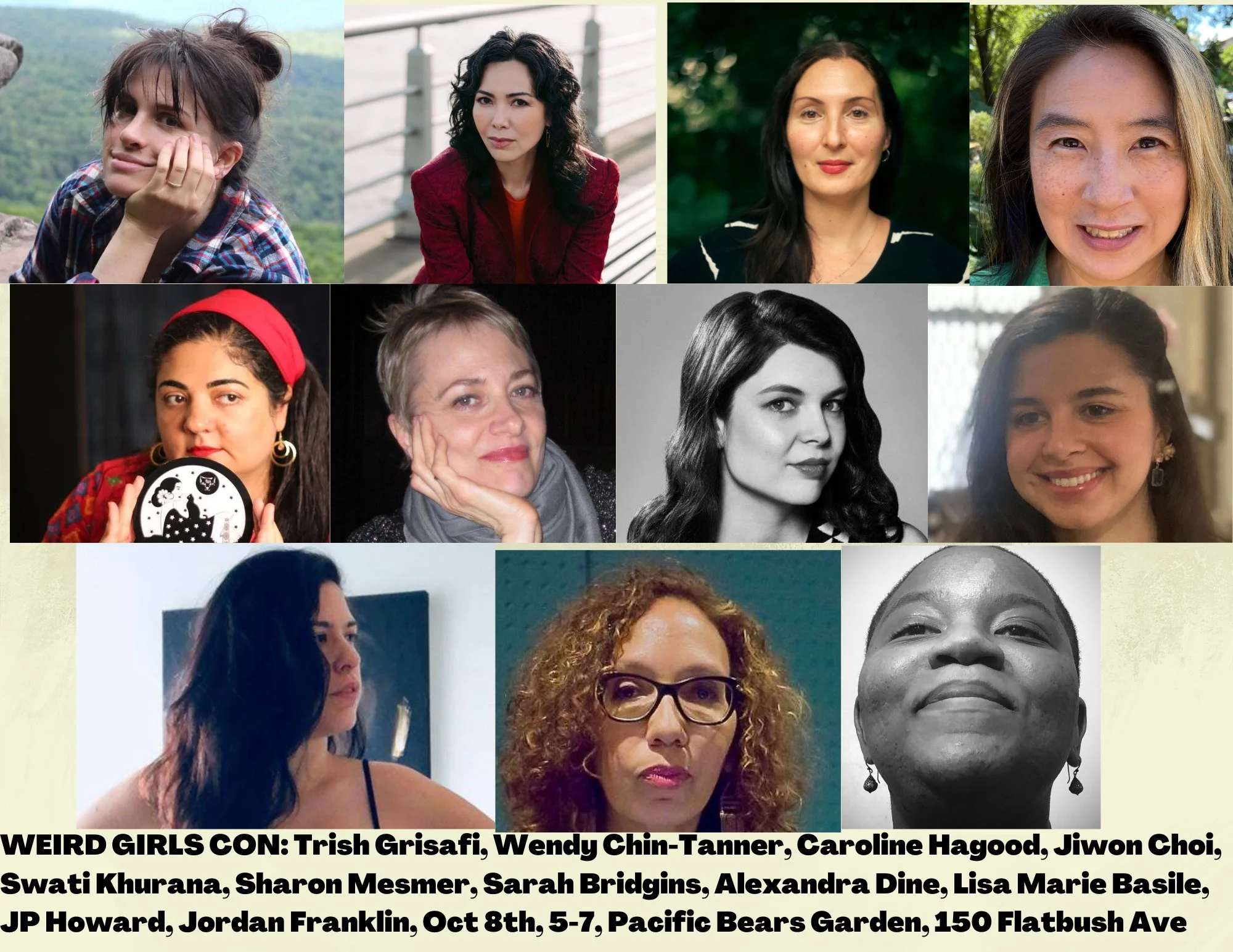
Lisa Marie Basile: Can you tell us all about Weird Girls: Writing The Art Monster? I am so intrigued by it (as a self-professed weird girl, of course) and so excited to read it. I’m also excited to read with you (and so many other incredible talents) at your reading event, Weird Girls Con.

Caroline Hagood: WEIRD GIRLS: WRITING THE ART MONSTER is an essay collection or book-length essay, depending on how you see it. It's a collection of different essays, but they all overlap, and circle back on one another. I was inspired to write the book since I've always been a weird girl, haha. But, seriously, after reading Jenny Offill's Dept of Speculation, I saw that so very many women writers were suddenly writing about the "art monster," or the writer who gets to focus monomaniacally, monstrously on his or her own work—but the catch was that the ones who usually got to do this were men. I have always been obsessed with the topics of creativity and monstrosity, and so this book came to be.

Ah! I'm so interested in the inner art monster — how it shows up, how it's praised, how it's rejected (so oft by men), and why it's so alluring. Sometimes, I think the inner monster is the only thing that keeps me writing — that fiendishness, that obsession. I especially sync with the art/creativity monster as a Capricorn Rising, the archetype that is often associated with obsessive Doing. It's interesting because on one hand, there's the oft-critiqued "girl boss" archetype — yet on the other, the obsessive, frenzied woman who wants to learn and do more is something that should be embraced. Why do you think so many people are exploring woman as art monster?

I love these questions so much. Yes, I absolutely share your fascination with the inner monster/the obsessive and passionate pursuit of art. It’s at the core of my writing practice. I think the woman who has had to fight tooth and nail for her creativity, and even the concept of the art monster, is as old as time, but I think Jenny Offill put a name (and connected story) to it in her 2016 novel Dept of Speculation.

Since 2016 I’ve been seeing women/femme/nonbinary writers grappling with this concept constantly. Then I think movements such as #metoo and sociocultural situations such as the way women and mothers have been impacted by COVID-19, for instance, coalesced with the whole art monster narrative to form a super-monster that’s trying to claw its way out of every text I pick up these days. I always pull this art monster out of there, and I’m so happy to see her.

Who are some of your artistic influences, and how do they appear or work their way into your own work?

I guess I would say I'm a fan of the obsessives when it comes to literature and creativity in general—the creators who just don't know where to stop, who exist in ways that are determined to be "too much," who write or film or paint in ways deemed to be "too much," and so forth.

I also love my hybrid people, those who write things where you go, "wait, is this a poem, a novel, an essay, and do I even need to know? Nope!" Those are my favorite works of art. I used to co-run a reading series called Kill Genre, and I have an upcoming panel with the same title because I guess that's my thing. :)

I also love hybrid people. I'm over strict genre separation and definitions, although I see why people often turn to them. What would you tell a writer who is anxious about or hesitant to cross-play or blend genres?

I would be like, “Wait, what is this genre you speak of? I’ve never heard of it.” Then I would quote Lady Gaga, “So there's nothing more provocative than taking a genre that everybody who's cool hates—and then making it cool.”

But seriously, I would invite this writer to step out of this limiting way of thinking of writing. I would say not to worry about playing with genre and, ideally, to focus on inventing her/his/their own new genre.

How does lineage or culture shape your work? It’s a question I ask every writer. I love to see how the threads come together.

My mother is a very powerful, wonderful, difficult woman who worships literature, and I really do think of myself as carrying on this piece of our family heritage. She was a businesswoman who wrote and painted on her own time and would take me outside to look at the moon at night to get inspired. I love her for this.

Can you share with us some of your writing rituals? What are the little things you do to collaborate with the Muse?

Well (and I'm pretty sure nobody at all will care about this little detail) I absolutely must have my hair up. I can't explain it, but I cannot write without this whole situation being taken care of. Then I really like to listen to weird jazz without lyrics because it inspires me without distracting me with words.

Then I know it always sounds creepy, but I like to look at the photographs I have of women writers around my work area, such as the one of Mary Shelley writing with a quill. If I don't feel in the mood to write, I just look over at them and it gets me going. They are my coven, and they don't even know they serve this purpose for me (the living ones I mean). I promise I"m not as creepy as I sound.

Um, looking at women writers. NOT CREEPY AT ALL. Gasp! I love it. This is a certain kind of summoning, an odd little ritual where you call forth their essence. Can you tell me why the Mary Shelley image speaks to you so much? Paint the moment for us. 

 I just love the concept of Shelley being dared to write a ghost story and creating this book about a monster who epitomizes the way I view creativity itself: monstrous, sewn together from the “bodies” of so many different artifacts, well-read, obsessive, creative, poetic, tender, full of longing, misunderstood, comedic, lonely.

Who are some contemporaries who have inspired or helped you in your creative journey?

When I was at Fordham, I felt very inspired and supported by what I called my creative writing ladies, professors who participated in the dark arts of, well, creative writing: Elisabeth Frost, Heather Dubrow, and Sarah Gambito.

Then, lately, I've been working with Patricia Grisafi on some really fun witchy projects. I was also recently bowled over by the kindness of Erika Wurth. I've never met her in person (we are "social media" close), but she was still incredibly generous with literary advice and contacts because that's what she believes in. And it's what I believe in, too, very much so.

Join the WEIRD GIRLS CON event
Saturday, October 8th from 5-7 PM EST
Pacific Bears Community, Brooklyn, NY

Caroline Hagood is an Assistant Professor of Literature, Writing and Publishing and Director of Undergraduate Writing at St. Francis College in Brooklyn. She is the author of the poetry books, Lunatic Speaks (2012) and Making Maxine’s Baby (2015), the book-length essay, Ways of Looking at a Woman (2019), and the novel, Ghosts of America (2021). Her book-length essay Weird Girls is forthcoming from Spuyten Duyvil Press in November. Her work has appeared in publications including Creative Nonfiction, LitHub, the Kenyon Review, Hanging Loose, the Huffington Post, the Guardian, Salon, and Elle.

In Poetry & Prose, Politics, Social Issues, Interviews Tags Caroline Hagood, Weird Girls, Weird Girls: Writing The Art Monster, Hybrid, Writing, Mary Shelley
Comment

Poetry by Robin Sinclair

September 29, 2022

BY ROBIN SINCLAIR


A Farewell Letter

One day, sooner than we're willing to prepare for

there will be one diagnosis too many for bones to carry

and the flesh will tumble to the floor.

Wooden railroad ties overtaken by the forest and

Annabelle, below the garden.

An eight line poem in a pocket, in an armoire,

perhaps tucked away within the wooden parlor grand

where I sang myself to sleep.

Robin Sinclair (they/them) is a queer, trans writer of poetry, fiction, and nonfiction. Their chapbook, SOMEONE ELSE’S SEX (Bull City Press, 2023), is about living and surviving as a damaged trans person in a damaged world. It is about sex, the commodification of queer history, the collateral damage of the closet, bigotry, finding love, and trying to heal. It is about queer liberation. All author proceeds are donated to the Transgender Legal Defense & Education Fund. RobinSinclairBooks.com

In Poetry & Prose Tags Robin Sinclair
Comment

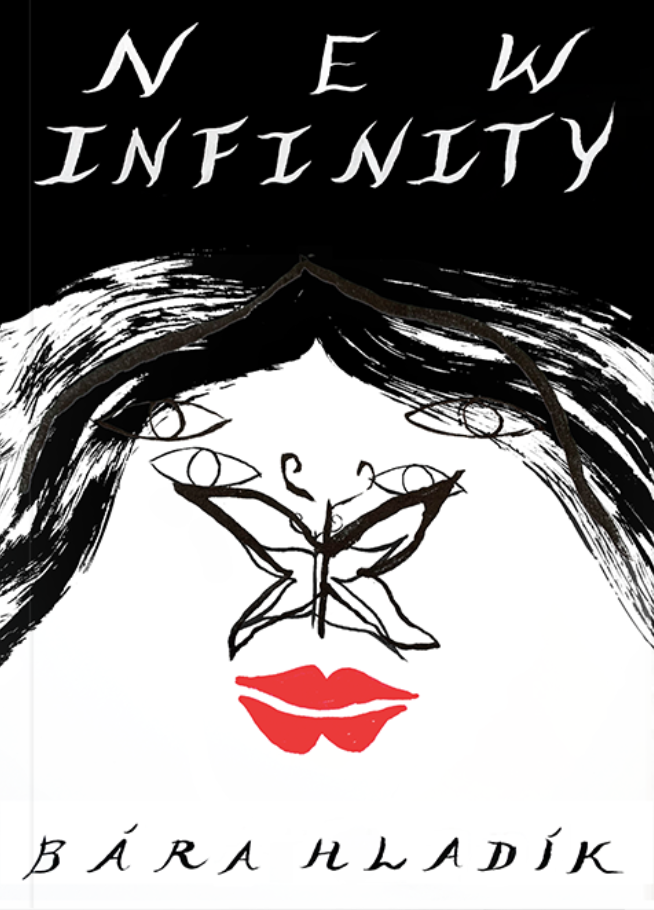
Bára Hladík on 'New Infinity,' Disability, & Folklore

September 2, 2022

AN INTERVIEW WITH BÁRA HLADÍK
BY LISA MARIE BASILE

Your newest book, New Infinity, so deeply speaks to me — not just as a reader and writer (and human!) but also as someone with Ankylosing Spondylitis. It’s so rare to see the very thing that’s changed one’s life come to shape in a literary setting — and done so beautifully. Can you tell us all about it?

My latest book is a hybrid experimental novella about a woman living with Ankylosing Spondylitis, a disease that I also live with. It is an ode to the existential experience of degenerative disease and a philosophical reckoning of a woman in pain. It chronicles moments of her life as she tries and fails to connect, have relationships and make ends meet. It ponders the meaning of existence, life, and failure as she gathers notes from medical literature and self-help books to understand her existence.

The book is inspired by ten years of living with the disease myself, and although fictionalized, the story draws from my own experiences. I created a nameless woman as a way to revisit myself, as well as observe her from a distance. The book blends surrealist stories with poems created from found medical literature, self-help books, books about the cosmos, and journals.

I was inspired to create a literary work that centred the woman in pain as philosophically and existentially significant. I wanted to take her out of the attic, and out of the trope of 'hypochondriac woman' so common in the history of literature, and create a literary work that not only expressed her experience accurately, but portrayed it as a radical experience that challenges the very structures of our society and philosophies.

I can't tell you how affirming it is to speak to another writer with Ankylosing spondylitis — and your writing about it is so potent! 

I've personally found the disease really hard to write about. At first, I thought "this is too specific to really share; no one will 'get' it." Over the years, though, I've realized how the disease had filled in so many of the cracks of my life....and it was nearly impossible to avoid writing about. 

This disease feels like it wants to trap you, physically and emotionally, and that is something that I have felt drawn to exploring in a literary sort of way. But it's been a long journey in figuring out how. What's the lesson? What's underneath the desire? How did you come to write about AS and pain and women, specifically, and was it hard for you to share something so intimate and challenging with the world? 

It means so much to me to hear that, thank you! Seeing your work about AS encouraged me to write more specifically about the disease and share publicly. It is definitely a challenge to write about the realities of Ankylosing Spondylitis. Most of the time I don't want to even share with the closest people in my life, so writing publically about it is hard.

But as you said, it is nearly impossible not to write about it. There are so many silencing and isolating aspects of living with this disease that in some ways I have a need to express a primordial scream of this unrelenting physical and emotional pain. Just as birds who made it through another night of darkness call out to each other in the morning, writing is a way to express existence. 

I turned to reading more and more as my illness took hold and I found I was reading a lot of philosophy. At the same time, most of the stories I encountered about illness, women were framed as 'hysterical' or 'hypochondriacs.' I wanted to challenge this narrative and write a story that centered the sick woman as a philosopher. A story where the experience of sickness was in fact a philosophical act that gives insight into the very meaning of existence. So while the disease is specific, the questions about existence are universal. 

Do you ever feel like disability gives you a new lens, a sort of expanded eye, through which to see the world anew? While illness may bind us (and others) in many ways, it also sort of necessarily stretches how we approach creativity and expansion.

For me, yes. I often feel that although my illness is difficult and painful, it also forces me to stop and deeply consider my place on this earth and in the cosmos pretty regularly. If it wasn't for the fact that at times I have to spend a lot of time recovering from basic tasks, I would be a pretty different person. I have become wiser, resilient, and in some ways more at peace with the chaos of the world.

It forces me to find transformation in the most minute of movements or motions, such as creativity or dreaming or simply breathing. Because I can't 'go for a run' to clear my head, I have to find other ways to move through emotions. This is the source of much of where my creativity is born. It is often in moments of pain in which I can only express existing.

Who or what are some of your recent influences?

This book is heavily influence by Slavic writers - Franz Kafka, Karel Čapek, Jana Benova, as well as surrealist/magic realist writers such as Jorge Luis Borges and Gabriel Garcia Marquez. My linguistic style definitely draws from the fact that Czech is my first language, and the way we play with structure, sarcasm and storytelling is much for fluid and malleable than english. I grew up reading Czech folk stories that blended magic and realism, and Czech new wave films that masterfully played with nihilism, sarcasm and surrealism. These influences all bleed into my work.

I love to learn about how culture or identity shapes a writer’s creative approach and work. I’d love to hear more.

My parents fled occupied Czechoslovakia shortly before I was born. Growing up in rural so-called Canada, my culture was often misunderstood as scary. I learned to walk through several co-existing worlds, always turning back and searching for where I came from. I grew up watching and reading Czechoslovakian books and movies, which are so creative, dark, mystical and wise. My parents are creative and resilient people, and I am constantly inspired by them. There is a saying, that Czechoslovakians have 'golden hands', in that we can create something out of nothing. This is from where I create, creating something out of nothing so that we may learn where we came from and where we are going.

What are some of the Czech folk stories that stayed/stays with you, and perhaps influences you as of late?

There are so many! Czechs are truly folklore encyclopedias. One of my favourites is the Vodník, who is a mythical slavic water spirit. He is a toad-like man, usually dressed in a tweed suit, who sits by the edge of a pond waiting for children to wander by so he can capture their spirits in tiny porcelain pots at the bottom of the pond. There are many great Czechoslovakian films about Vodník and his family, with shots of water people appearing out of sinks and toilets in tailored suits perfectly dry.

Do you turn to any sort of writing rituals or practices? I’m always so interested in how people approach their work and what that process looks like, especially when the writer creates across genres.

Much of this work was written in my head. With my illness, I am often bound by the limits of my body and must spend large amounts of time recovering. This means I am unable to move much for several days. So in these moments, I dream and write in my head. I imagine stories, themes, images. Often, the story is very formed once I hit the paper. I jot down notes of themes or ideas I want to weave throughout and then I sit down and write it start to finish. I then leave it be as I think through problems, and then I ruthlessly edit. Poetry is different. For me it is more of a ritual or practice. Many of the poems in my book were created by physically cutting up books that I found at the thrift store for under 5$.

I found medical books, self-help books, stories and beyond, then cut out individual words or sections of words. I did this all with meditation or images in mind. Then I would mix them into a special wine glass, and draw the cut words into a divinatory reading, similar to drawing playing cards or tarot cards. This practice is very specific and personal to my artistic work so this is all I will share here, but eventually, a poem would come to life.

Was there an certain ‘a-ha’ moment that led you to writing or creating? Was there an experience that reaffirmed what you do and why?

A babysitter once told me that I told her I was going to be a novelist when I was 7 years old. In grade 5, I was writing a story and every week the class would ask me to read the new chapter. It was a story about a family of six women surviving world war 3. Following these years I had a lot of doubt and anxiety as to where I was going or what I was doing, but thinking back to these moments always reminds me that this is part of me whether I resist it or not.

Who are some of the people you look up to or admire?

Thank you to disabled writers @leahlakshmiwrites @bighedva @pchza.

I’d love to hear one piece of writing advice that you think is essential for other writers.

Focus in on your work, your voice, your style. As much as we can learn from others, stay true to your vision. Be confident that what you are creating is important, even if you don't quite see how, yet. Do it for yourself. You're own satisfaction, sanity, passion, whatever. Do it for you.

Bára Hladík is a Czech-Canadian author, artist and facilitator.

Lisa Marie Basile is the founding editor of Luna Luna Magazine. She’s also the author of a few books of poetry and nonfiction, including Light Magic for Dark Times, The Magical Writing Grimoire, Nympholepsy, Andalucia, and more. She’s a health journalist and chronic illness advocate by day. By night, she’s working on an autofictional novella for Clash Books.

Her work has been nominated for several Pushcart Prizes and has appeared in Best Small Fictions, Best American Poetry, and Best American Experimental Writing. Her work can be found in The New York Times, Atlas Review, Spork, Entropy, Narratively, and more. She has an MFA from The New School.

In Poetry & Prose, Interviews Tags Bára Hladík, disability, ankylosing spondylitis, disability poetics, novella, new infinity
Comment

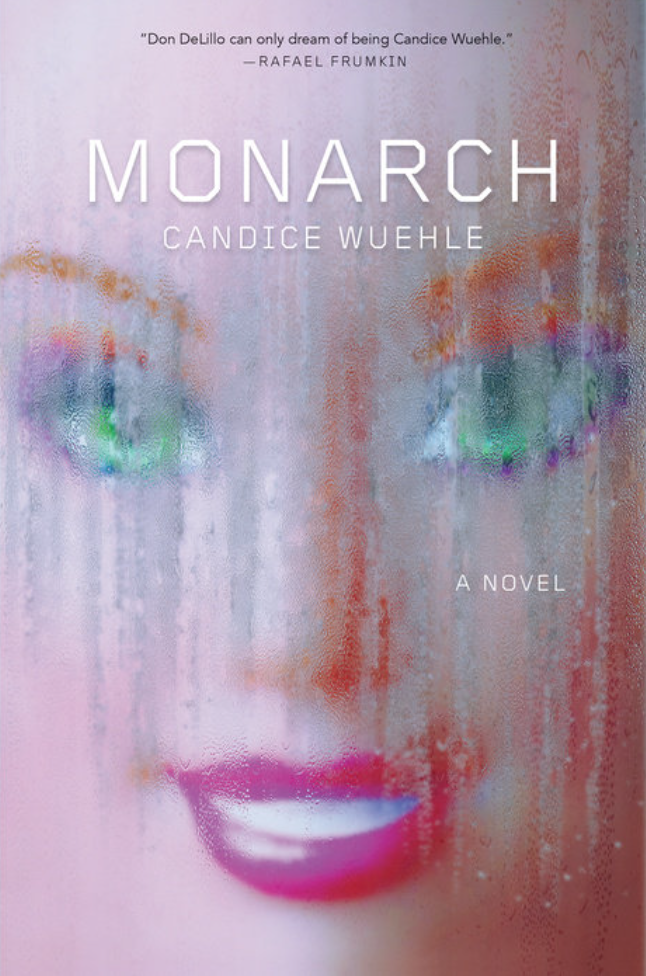
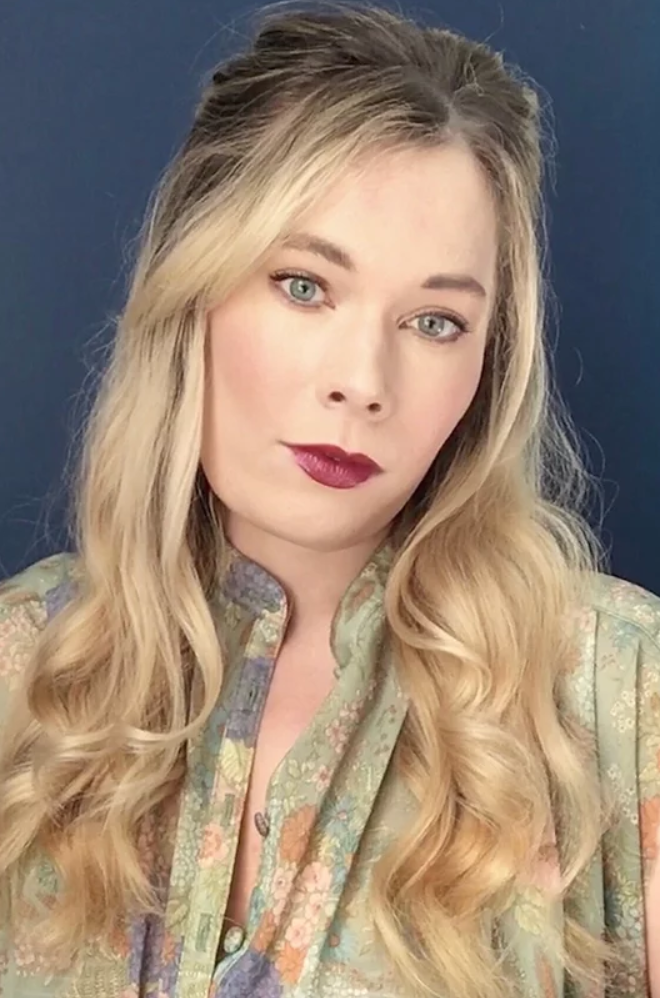
Candice Wuehle on 'Monarch,' Ritual, and Rejecting Writing Rules

August 29, 2022

An Interview with Candice Wuehle
by Lisa Marie Basile

Lisa Marie Basile: Tell us all about your new work. I am a huge fan of your gorgeous poetry and prose, from your genre-shifting/blending to your exploration of the glittery and the gritty. Can you tell us about your newest work, Monarch?

Candice Wuehle: My most recent novel, MONARCH came out in March. The idea for it came from an actual conspiracy theory that claims MKUltra has a secret division called Project MONARCH that recruits children and teens from beauty pageants to become sleeper agents.

They specifically recruit beauty pageant contestants because of their natural (or studied!) charm, conventional attractiveness, physical aptitude and stamina, and their strong propensity for obedience. This theory asserts that MONARCH agents are programmed using trauma-based mind control techniques. I was just finishing up my dissertation on memory and trauma studies for my PhD and the MONARCH theory became a perfect metaphor for a lot of what I’d been thinking about regarding how much of consumer culture (especially culture aimed at women and body image in the ‘90s) is a kind of trauma-based social programming.

The first beauty pageant contestant I always think of—the one imprinted on my own psyche—is JonBenét Ramsey. A plot about a teen queen reminiscent of Ramsey, but who has lived, grown up, and is now seeking revenge captured my imagination.

The real quest of MONARCH, though, is the main character’s journey to figure out who she is—what part of her is really “her” when it seems so much of her personality has been programmed.

For me, the technology that delivers that answer comes through divinatory practices, so there are scenes of tarot and especially séance in MONARCH that are intended to get at the occulted side of the self. Not occulted as in spooky, but occulted as in: hidden even from yourself.

Currently, I’m working on a collection of short stories that’s a sort of Internet gothic—haunted apps, poltergeist algorithms, a GPS that leads to another dimension.

Lisa Marie Basile: What are some creations that light you up? How do they influence your work as a writer or creative?

Candice Wuehle: For the last few years, I’ve been really inspired by contemporary fiction (mostly written by women). For me, there was a bit of a shift in the literary landscape after Eileen by Ottessa Moshfegh was published that made room for the kind of books I’ve really wanted to read all my life.

Many of my favorite books of all time have come out in the last ten years—books that are often marked as “unhinged” but that are irreverent, angry, hilarious, politically and culturally subversive, and deeply intelligent. I’m so inspired by creators who can dialogue with the current moment, or, more likely, who are willing to say something so out of the moment—out of any moment—that when it arrives it feels utterly new.

To name just a few, I love A Touch of Jen by Beth Morgan, New Animal by Ella Baxter, Luster by Raven Leilani, Nightbitch by Rachel Yoder, Self Care by Leigh Stein, the novels of Lucy Ives and Melissa Broder and Mona Awad.

Reading very recent work that has an intentional disregard for certain craft conventions, that refuses to be totally “done” or to “make sense” gives me a sense of community and makes me feel more tethered in time than I normally am.

Poets write collections that include aporia, void, and contradiction and that’s understood, but it’s rarer to see that kind of insistence on the truth of personal expression—of a writer’s inherently complex and often incompatible belief systems—represented in the novel form.

“Poets write collections that include aporia, void, and contradiction and that’s understood, but it’s rarer to see that kind of insistence on the truth of personal expression—of a writer’s inherently complex and often incompatible belief systems—represented in the novel form. ”
— Candice Wuehle

Lisa Marie Basile: You shift between genres and seem to do it very naturally. I think a lot of writers feel they must select a lane and stick to it. 

And, as you said, "Poets write collections that include aporia, void, and contradiction and that’s understood, but it’s rarer to see that kind of insistence on the truth of personal expression—of a writer’s inherently complex and often incompatible belief systems—represented in the novel form."

Perhaps there are a few questions here, but how do you approach the concept of genre, and how do you approach giving the same permissions to the novel as poets might inherently have? (I say that as someone who has complex thoughts on what 'genre' means). 

Candice Wuehle: Thank you for this question. So, the truth is I write what I write, and then I see what genre it seems to look like after. The other truth (and I’m going to contradict myself immediately, but that’s part of my point) is I don’t write poetry and prose at the same time.

I haven’t written any lineated poetry since 2019. It doesn’t worry me. I never thought I’d write prose, then I tried to write a poem that showed up as a novel. I’m sure I’ll sit down one day with an expectation to write in one genre and end up doing something else. It seems like most people write to express themselves or to understand themselves. I understand that and I love that and I find kinship and solace and truth in writers who write from that place. But I write to surprise myself.

Since this is Luna Luna, I know readers will understand it when I say I write to see my shadow. That’s meaningful to me because I know others see my shadow and recognize it in themselves; that my work is shadow work for me and for others. What does that have to do with genre? I guess just that if you go into shadow work expecting to see shapes you already know, you aren’t prepared.

So I let the narrative shape arrive the way it presents itself and then I make choices on the second draft that might lend the shape to something more recognizable to a reader, but only if I think that serves the highest goal of the project.

“I write to see my shadow. That’s meaningful to me because I know others see my shadow and recognize it in themselves; that my work is shadow work for me and for others.”
— Candice Wuehle

Lisa Marie Basile: Can you tell us a bit about your general creative process? What sort of rituals or practices do you adopt? Or, you know, have you struggled with creativity at all as of late?

Candice Wuehle: The pandemic has been devastating for my ritual practice, to be honest. During my most creative periods, my ritual was a walk to the university library where I would sit with a cold brew in a jelly jar while listening to colored noise and write (or not write). Equally important to the ritual was the walk back home. I didn’t know that at the time—that the walk back home after writing was the same as Shavasana for me.

A period where what I had worked on integrated into me and began to braid into the next time I wrote. Now, my walk is simply to my home office, a space I love but that I haven’t fully imbued with the elements I think of as important to a sacred space.

I think it has a lot to do with buffering between acts of creation, which is hard to do when there are no imposed restrictions on how long I can write or when.

To put this in kind of crass sports terminology—I’m trying to figure out “how to get in the zone” but it’s tough because the zone is everywhere. Both my psychic and spiritual hygiene have been taxed by the upheaval of the world over the last few years, I suppose.

Lisa Marie Basile: It is clear that you're very interested in the liminal, the magical, the numinous — do you ever approach writing through a divinatory or occult lens/means?

Candice Wuehle: Yes, always, but my practice is very simple. I believe in the vibrations of a space, so light, sound, and the flow of air is important to me. Candles and incense create a sort of spiritual hygiene, while sounds help me to keep my mind flowing at an even pace. I usually listen to pink or white noise to try to stay engaged in flow state. The most significant aspect of my divinatory practice, however, is something I learned from the woman who taught my yoga teacher training, which is whenever you can’t figure something out just sit until it comes to you.

Once I started doing this, I noticed how important gazing is to me. I keep an obsidian egg and a quartz globe on my desk to look at. In other words, most of the time I spend writing looks like doing nothing. Which is, I guess, a sort of trance state.

Lisa Marie Basile: And how does how culture/identity/place/belief bleed into what you write?

Candice Wuehle: For the last few years, ideas of culture, identity, and belief have really consumed my work in the sense that I’ve been fixated on how we come to accept cultural beliefs as integral to our identities, especially in a late Capitalist culture that largely only presents beliefs intended to get us to buy stuff and conform to a dominant narrative that benefits…those already dominant. A lot of my sense of self and spirituality is born of trying to DIY ways to avoid these pervasive belief systems.

So, for example, I heard an interview with former The X-Files’ researcher and current paranormal investigator, John E.L. Tenney, where he said that beings or events we term supernatural (ghosts, UFOs, witchcraft) are actually ultra-natural in the sense that they’re more real than what we perceive to be real. He says, for this reason, they’re desperate to be seen and remembered; to inscribe themselves in space or narrative.

I think the threads of my work — and especially of MONARCH — pull together out of a desire to reflect a more ultra-natural world. A lot of MONARCH is about how our bodies remember what we don’t and how “the body keeps the score” as the trauma researcher Bessel van der Kolk would say.

In this sense, messages from the body that come out as anxiety or physical ailments might feel like they come from nowhere when in fact, they’re realer than what we’ve told ourselves is real in the sense that these messages are coming from an experience we haven’t yet processed.

I think a lot of cultural messaging also works in this way—folklore and fairy tales as examples of commonly held, deeply integrated beliefs about familial and romantic relationships that have a blatant falseness to them: Eternal sleep, love at first sight, talking animals. We accept those elements as fantastic, but weirdly not the messaging behind them.

So, this is a little bit of a backward answer to your question in the sense that I’m saying belief systems and culture influence my work in a sort of inverse way; that I’m really more invested in unraveling and questioning than I am in determining any kind of personal or cultural or spiritual Truth.

Who are the writers making an impact on you right now?

Candice Wuehle: Currently, I’m really inspired by Jessica DeFino, a beauty culture critic and author of the newsletter “The Unpublishable.” Her ability to deconstruct the beauty and wellness industry in order to point to its colonialist, patriarchal, and capitalist roots/motivations is just so precise and breathtaking.

Much of what she argues about how denatured our ideas of beauty are—how, for example, makeup is often an erasure similar to the death drive—resonates so deeply with what I was thinking through in MONARCH.

Another Jessica—tarot reader/social worker Jessica Dore. Her wonderful book Tarot for Change and her Instagram account are such a gift. She integrates philosophy, clinical psychology, and myth in order to interpret Pamela Coleman Smith’s deck with such fresh, mind-bendingly deep interpretations.

A friend gave me one of her classes for my birthday last year. In the class, she said something about the intersection of social work and tarot reading that I’ve applied to my own life in a radical way: “you should never be working harder than the client.” Which I took as a mantra while I was teaching creative writing—as in, you can’t do someone else’s creative or emotional work. You can only listen and try your best to hear what they’re trying to express.

Finally, I want to mention Beth Morgan and her novel A Touch of Jen again! There’s a list of things I think about all the time, but I don’t know why (a Buzzfeed “Who Said It” quiz that listed quotes from Don Draper and Sylvia Plath that I failed; Britney Spear’s thousand sit-ups a day; the time my high school English teacher wore a veil to teach Hawthorne).

Anyway, A Touch of Jen is on the list of things that I think of every day. This book is so compelling, so funny and smart, yet it refuses to adhere to a single genre convention while obviously being aware of every genre convention. It’s a book that makes perfect effectual sense, and very little logical sense. Like life!

“When I finally stopped trying to write what I thought a poem or a novel was supposed to look like and wrote what I’d really want to read—which for me meant beauty culture, witchcraft, rage, trash, unlikable emotions, and philosophy presented in a way that some people find pretentious—I felt like I had touched the source.”
— Candice Wuehle

Lisa Marie Basile: Finally, what is one piece of writing advice you live by and would give others?

Candice Wuehle: This is so simple that it doesn’t feel like advice to me, but I notice students and lots of other writers don’t seem to follow this philosophy, so here it is: only write what you really want to read. I come from the most traditional possible writing environment and I became a writer with the idea that only the “major themes” are worthy of “serious literature.”

When I finally stopped trying to write what I thought a poem or a novel was supposed to look like and wrote what I’d really want to read—which for me meant beauty culture, witchcraft, rage, trash, unlikable emotions, and philosophy presented in a way that some people find pretentious—I felt like I had touched the source. I become obsessed with returning to my creative work and it took on a devotional quality.

Candice Wuehle is the author of the novel MONARCH (Soft Skull, 2022) as well as the poetry collections Fidelitoria: Fixed or Fluxed (11:11, 2021); 2020 Believer Magazine Book Award finalist, Death Industrial Complex (Action Books, 2020); and BOUND (Inside the Castle Press, 2018). Her writing has appeared in Best American Experimental Writing 2020, The Iowa Review, Joyland, Black Warrior Review, Tarpaulin Sky, The Volta, The Bennington Review, and The New Delta Review. She holds an MFA in poetry from the Iowa Writers’ Workshop and PhD in Creative Writing from the University of Kansas.

Lisa Marie Basile is the founding editor of Luna Luna Magazine. She’s also the author of a few books of poetry and nonfiction, including Light Magic for Dark Times, The Magical Writing Grimoire, Nympholepsy, Andalucía, and more. She’s a health journalist and chronic illness advocate by day. By night, she’s working on an auto-fictional novella for Clash Books.

Her work has been nominated for several Pushcart Prizes and has appeared in Best Small Fictions, Best American Poetry, and Best American Experimental Writing. Her work can be found in The New York Times, Atlas Review, Spork, Entropy, Narratively, and more. She has an MFA from The New School.

In Interviews, Poetry & Prose Tags Candice Wuehle, Monarch, Genre, Writing rituals, Iowa, Fidelitoria
Comment

Jonny Black on Writing What Feels Right To *You*

August 16, 2022

An Interview with Jonny Black
by Lisa Marie Basile

This interview is part of our new Creator Series, a series of Q&As designed to help you get to know people who are writing, making, and doing beautiful things.

I discovered Jonny Black’s poetry in an issue of Ghost Bible — a truly gorgeous literary journal — and was immediately struck by her lush language and her bio’s mention of poltergeists (yes, please, always poltergeists). I was lured in!

Jonny Black is currently working on a novel (I secretly think poets make the best novelists, shh), and can be found at @jonnyblackwrites. In this chat, we discuss her influences, inspirations, and writing the kind of work that truly matters to you, despite what might be popular or expected of you.

I know you write in a few genres, so what are you working on at the moment?

I've got this novella/novelette that I've been working on for what seems like a third of my life at this point! I've been calling it Death and The Necromancer for lack of a better title. It's about Death seeking out a Necromancer to resurrect a cat. I wanted to write something that didn't take itself too seriously, something that was silly even, and it ended up being too real, especially during the pandemic.

I've only just come back to it after about a year. I'm also working on a poetry collection called The Apocalypse Journals. I have about four in the collection and they all happened to be written while listening to Daft Punk's Random Access Memories. I was sad to hear about the dissolution of the band earlier this year. I realized that I'd unintentionally written odes to many of their songs, so I want to keep writing a few more and dedicate it to the band. Each poem is an entry in the various journals of those who have survived the apocalypse and are wandering about the deadened earth and its empty cities.

I am always interested in learning about how writers approach their craft. I think we all get caught up in these ideas of a perfect writing ritual, sharing only when we’re prolific—but I’ve been asking writers to share even the messy parts. What’s your creative process?

Well, I used to write every day in college in my black notebook and I miss doing that. When I was working at a beauty store, I used to eat breakfast in the Del Taco across the street.

I would sit there for an hour or two sometimes, because I had to share a car with my mother, so I arrived very early.

I'd order their chorizo breakfast wrap, cheddar potato poppers (God, please bring those back soon!) and the huge 1-dollar iced tea. Then I'd write until my shift started.

Usually, I had my earphones in and either Kiasmos, Daft Punk, or Rhye blasting away. Now, I try to just write down thoughts I have whenever I get something good. Sometimes I'm able to make the time to write, but working remotely has made it hard for me to compartmentalize my time—I'm often distracted by other things I think I should be doing, and other ways I think I should be productive. I hope that I can get the courage again to go out, sit somewhere way too early in the morning, order some greasy breakfast food, and write.

Who are some of your influences?

Well, Daft Punk is definitely in my top ten, if not top five! Blade Runner, Tron and Tron: Legacy are also huge aesthetic inspirations. I've also been heavily influenced by Sonya Vatomsky's work: Salt is For Curing was my first real poetry book that I dove into and tried to understand.

My insta feed is also a huge inspiration: @brookedidonato, @KylejThompson and Madeline Garner are big ones. I'm also inspired by the cinema and art installations in general. One of the big things I've tried to do with my poetry is make choices like I would if I were directing a film: I think about aesthetic and drama and movement. I try to create a 3D experience with my work.

How does your culture or identity shape your work?

I got the impression that if I didn't write about my brown pain, I wasn't... representing myself, or that I wasn't enough as a writer.

OH BOY, do I have some thoughts. During my education — both high school and college — I got the impression that if I didn't write about my brown pain, I wasn't... representing myself, or that I wasn't enough as a writer.

I struggle with connecting to my own culture and identity because I'm what my sister (and many chicana/o's) calls a "coconut" — brown on the outside, white on the inside. And I'm not very interested in writing about that. I want to write about apocalypse worlds and vampires and gods that live in backyard ponds!

But I'm all too familiar with the concept of poetry as therapy, so I'm sure I'll get there someday. Most of the stories I write do have indigenous main characters, though. It's important to me that I write about characters like myself. And if I can't do it in poetry, I can at least do it in fiction, vicariously, through a character — you know?

With regards to faith, I like to think of myself as a combination of Jane Eyre and Emily Dickinson. She wrote a poem about how her church was out in nature. That really resonated with me. I have a small collection of poetry that is something of a...mary sue fan-fiction take on a chapter in the bible. It's very small, and it was written a very long time ago, but I'll revisit it someday.

Who are some of your mentors or contemporaries?

Reading Salt is For Curing was like a revelation, and I knew that if Sonya could write like this, with this much gothic drama and color, then so could I. I didn't have to write "contemporary" poetry that I'd seen in journals. I could write mine.

I've already mentioned Sonya Vatomsky! I just really just adore their work. Reading Salt is For Curing was like a revelation, and I knew that if Sonya could write like this, with this much gothic drama and color, then so could I. I didn't have to write "contemporary" poetry that I'd seen in journals. I could write mine.

A huge mentor for me has been Nalo Hopkinson because she was my professor at UCR! I wrote my thesis (also includes an apocalypse, ha!) under her guidance and took both a class on comics and class on fantasy fiction with her. she's such a wealth of knowledge and truly a joy to learn from.

I had another professor — I don't know if I should list her name — at a community college, my first poetry professor. I wrote my first real poems in her class. She gave us such a welcoming and warm environment to learn and write in and I learned so much about what could be done with the form in her class. I feel like I was born there. No, I came into my own there and found my voice.

I have very fond memories from that class, including looking out the dark windows into the near-empty parking lot, espresso chocolate cookies, writing my first chapbook, and very lovely classmates.

Jonny Black is a writer living and working in SoCal. She’s been published in Ghostbible Zine, The Roadrunner Review, and The Spectre Review. When she isn’t working on her novel, she’s usually curled up with a good crochet project watching Vincent Price movies. More of her work can be found on Instagram, @jonnyblackwrites.

In Interviews, Poetry & Prose Tags Jonny Black
Comment

Gustavo Barahona-Lopez: On Poetry, Masculinity, and Heritage

August 11, 2022

An interview with Gustavo Barahona-Lopez
by Lisa Marie Basile

This interview is part of our new Creator Series, a series of Q&As designed to help you get to know people who are writing, making, and doing beautiful things.

Gustavo Barahona-López is a writer and educator from Richmond, California. He is the author of the poetry chapbook, "Loss and Other Rivers That Devour,” and in 2023 his debut full-length collection will be published by FlowerSong Press. I wanted to chat with him about his work and influences.

Lisa Marie Basile: Tell us a bit about what you’ve written — and what we can expect from you going ahead.

My chapbook, “Loss and Other Rivers that Devour” centers on my mourning my father’s death and how my identity and sense of self shifted along with the process of grieving. I wanted to write about the complexity of our relationship and my grief. Just as there is love so too is there hurt and actively pulling away from my father’s example.

I never felt that I fit my father’s narrow view of masculinity and part of my journey of grieving included forging my own sense of manhood.

In 2023 I will also publish my debut full-length collection with FlowerSong Press. It centers on themes of language, heritage, colonial erasures, trauma, and some speculative imaginings of the future.

Lisa Marie Basile: Can you tell us a little more about how identity or culture plays into your work?

I am the son of Mexican immigrants to the United States and that has a huge influence on my writing. This is in terms of language (in my case Spanish), cultural references, and experiences. Growing up as part of this community has also inspired me to write about the many abuses perpetrated against migrants to the United States.

For instance, I wrote a microchap centered on migrant children dying on the U.S.-Mexico border. Additionally, I write a lot about masculinity and how I have sought to undo a lot of the gendered socialization that my parents impacted upon me.

Lisa Marie Basile: Looking back to your point about gendered socialization, you said, "I never felt that I fit my father’s narrow view of masculinity, and part of my journey of grieving included forging my own sense of manhood."

I'm wondering, as a poet, does writing about the complexity of family, grief, and gender (re)open these wounds, or does it help you confront, synthesize, or articulate the nuances of it all? I know some poets find writing about traumatic issues cathartic while others find it tricky — a sort of Pandora's box, if you will.

It’s a mixture of both for me. Writing poetry has been key for me to process my feelings around my father’s death and my relationship to his teachings on gender. Since part of my socialization was to repress my feelings to the point that I have trouble recognizing them, expressing myself in my poetry led me to realizations about my own emotions.

While in some ways it is cathartic to write about past trauma there have been multiple times where I have cried after writing a line or a poem because I touched a particularly tender part of my past.

“Since part of my socialization was to repress my feelings to the point that I have trouble recognizing them, expressing myself in my poetry led me to realizations about my own emotions. ”
— Gustavo Barahona-Lopez


Lisa Marie Basile: Are there other authors who you enjoy and who also handle masculinity in a way that resonates with you?

The author that comes to mind when thinking about complicating masculinity is the work of Tomas Moniz and his book “Big Familia.”

Lisa Marie Basile: And what does your writing process look like? I’m always curious to hear how other writers tend to their craft.

I write best when I have an extended period of time to myself. Preferably this would be outside of my home like a local coffee shop. Since my wife and I’d baby, Issa, was born a year ago though time to myself has been scarce so I usually write late night after the kids have gone to bed these days.

Lisa Marie Basile: Can you share some of your general inspirations and influences with us?

My literary influences include Martin Esparza, Tomas Rivera, Sandra Cisneros, Eduardo Corral, Vanessa Angelica Villarreal, Jose Olivares, Marcelo Castillo Hernandez, Alan Chazaro, Muriel Leung, Lupe Mendez, Pablo Neruda, Federico Garcia Lorca, and Gloria Anzaldua.

Lisa Marie Basile: And who are some contemporary creators, writers, or peers that you look up to on the regular?

Muriel Leung, Alan Chazaro, and Gustavo Hernandez.

Gustavo Barahona-López is a writer and educator from Richmond, California. In his writing, Barahona-López draws from his experience growing up as the son of Mexican immigrants. His poetry chapbook, "Loss and Other Rivers That Devour," was published by Nomadic Press in February 2022. Barahona-López was a finalist for the 2021 Quarterly West poetry prize and was awarded a Sundress Academy for the Arts (SAFTA) residency fellowship. A member of the Writer's Grotto and a VONA alum, Barahona-López's work can be found or is forthcoming in Quarterly West, Iron Horse Literary Review, Puerto del Sol, The Acentos Review, Apogee Journal, Hayden’s Ferry Review, among other publications.

Lisa Marie Basile is the founding editor of Luna Luna Magazine. She’s also the author of a few books of poetry and nonfiction, including Light Magic for Dark Times, The Magical Writing Grimoire, Nympholepsy, Andalucía, and more. She’s a health journalist and chronic illness advocate by day. By night, she’s working on an autofictional novella for Clash Books.

Her work has been nominated for several Pushcart Prizes and has appeared in Best Small Fictions, Best American Poetry, and Best American Experimental Writing. Her work can be found in The New York Times, Atlas Review, Spork, Entropy, Narratively, and more. She has an MFA from The New School.


In Interviews, Poetry & Prose, Place Tags Gustavo Barahona-Lopez, mexico, masculinity, poetry
Comment
mediterranean nature

Andi Talarico on Magic, Writing, and Italian Inspiration

August 8, 2022

An Interview with Andi Talarico
by Lisa Marie Basile

This interview is part of our new Creator Series, a series of q&as that are designed to help you get to know people who are writing, making, and doing beautiful things.

Andi Talarico (she/her) is a Brooklyn-based writer, poet, and self-proclaimed witchy poo (astrology, tarot, ritual work). She’s the co-founder of Writing The Cosmos (which I have the great fortune of running with her). As an endlessly fascinating human with a great deal of knowledge about all things literary, magical, and mystical, I wanted to chat with her about her creative inspirations and her upcoming workshop Luna Le Vag, a holistic spa in Brooklyn, NY.

In this interview, we discuss her workshop, influencers, inspiration, and how her culture shapes her work.

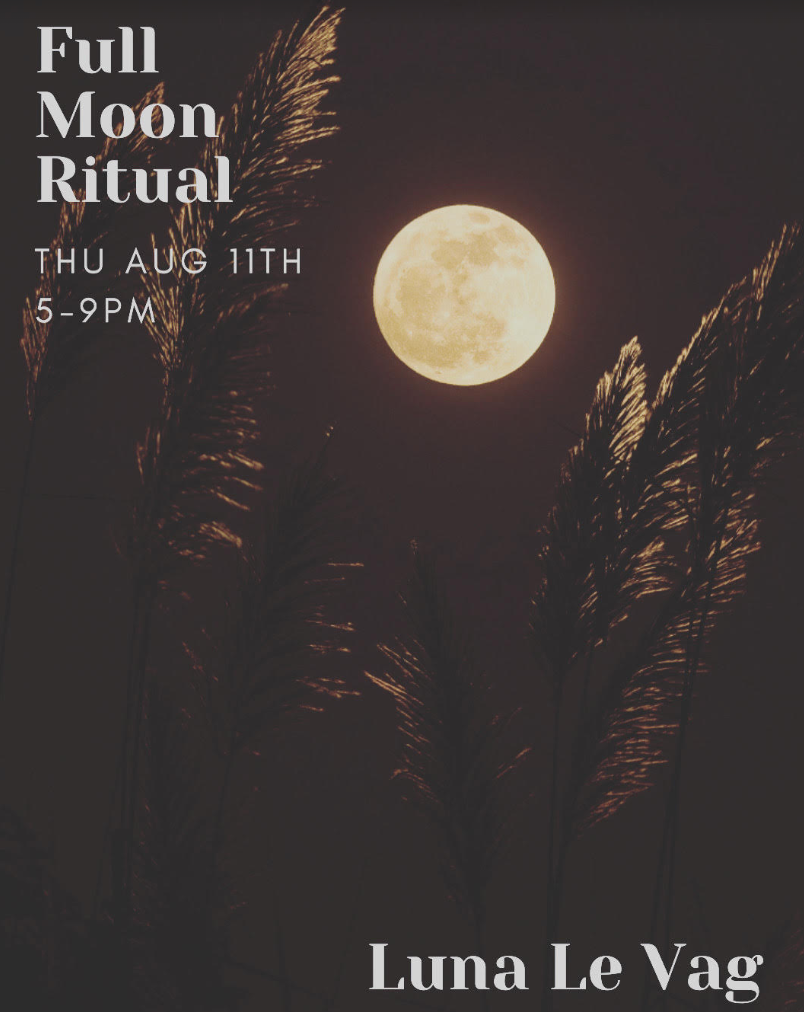
Lisa Marie: Tell us a bit about your recent creative project, the Full Moon Ritual workshop you’re holding in Brooklyn this month.

The idea for this workshop came from my frequenting of this lovely Brooklyn business called Luna Le Vag, a holistic spa in Brooklyn that’s run by two inspiring young women, Jordan and Naomi. Their spa does a lot of work with natural care (and pampering!) for the vagina (hence their name) but there’s more to it than that - I could tell that they cared about community-building, networking with other businesses run by women and people of color, and I started to think about a way that I could possibly contribute. I noticed that Luna Le Vag was already offering classes in workshops in areas of interest to me: healing arts, reiki, energy readings, intentional cannabis use, and more.

Because my hobbies revolve around things like the study of astrology, tarot, and ritual, I thought it could be useful - and hopefully fun! - to offer a workshop based around the Full Moon and ways to harness its energy for use in reflection, self-care, and intentionality. All of these practices are beneficial, but I find it especially important to have conversations around and engage with these rituals as part of building community. The more we practice intentionality, the more we participate in our lives fully and authentically. The idea for the workshop is twofold:

First, we’ll be performing ritual as a group, which is its own healing and community-building modality, but Second, I’ll be sharing ways in which all of these practices can be personalized to benefit each person, so they can take these skills and apply them authentically in their own lives, whether alone or with others.

All of this is done in tandem with the good people of Luna Le Vag who will be there to participate, contribute, host, and share their beautiful space with us, as well as their food and refreshments, as this workshop will run all evening, in order to give us time to relax into things in a more organic way. To sum that all up, I’m running a Full Moon Ritual workshop on Thursday, August 11th, from 5-9pm, at Lune Le Vag at 1096 Broadway in Brooklyn. Attendees are encouraged to bring their own tarot deck but we will have extras on hand. No prior knowledge of tarot, astrology, or spirituality is needed to participate.

Lisa Marie Basile: Who are some of your creative favorites? Who lights you up?

Oh wow, what an enormous (and great) question! As it relates to my ritual-craft, I find a lot of inspiration in the words and writing of people like Patti Smith, Maggie Nelson, Anne Carson, Sappho, Jeanette Winterson, Kim Addonizio, Diane di Prima, Gabriel Garcia Marquez, Toni Morrison, Isabelle Allende - people who suffuse their work with a type of magic and openness, who use language as a way to get to truths both known and not. The reading of tarot is a narrative structure; the joy of Astrology comes from mining its depths for meaning; a guided meditation is a way to marry language and imagination. At the bedrock of all of these things is language, incantation, possibility — my love of writing directly feeds my study of the esoteric and magical, and vice versa.

“The reading of tarot is a narrative structure; the joy of Astrology comes from mining its depths for meaning; a guided meditation is a way to marry language and imagination. At the bedrock of all of these things is language, incantation, possibility — my love of writing directly feeds my study of the esoteric and magical, and vice versa.”
— Andi Talarico

Lisa Marie Basile: I’d love to hear about your writing process, struggles, or any rituals you turn to when creating. How are things going?

It definitely depends. There are days when all I need is to take my laptop to a coffeehouse and immerse myself in the din of the city to feel inspired. Other days, it’s much more introverted: I need every single detail of my home to be in order before I’m able to sit down, light some incense, turn on some beautiful, wordless music, make myself the perfect cup of coffee, and then sidle up to the page. Some days I need to write by hand.

Other days I feel the need to type. I try to listen to my needs and balance them with what I’m trying to get done. I do think I write more now, in these past few years, than I used to, likely because I started practicing better life habits more intentionally and tracking them.

It also became easier when I (mostly) shut off the constant inner critic and understood that Prolific usually beats the hell out of Perfection. If I don’t consider every word precious, I can let them all spill out onto the page and then parse them later. You can’t edit from nothing, but you can always edit from an imperfect something.

Lisa Marie Basile: Tell us a bit about how culture, identity, place, or belief inspires or influences your work?

I believe my heritage deeply informs my work - and by work, I mean writing as well as magic-making as well as the way in which I move through the world. While I’m proudly of mixed ethnicity and heritage, I was raised Catholic with a strong emphasis on our Italian-American side of the family, and though I’ve loooong been lapsed in the practice of the Catholic religion, I do still carry an abiding love for ritual, ambience, the mysteries of the spirit, even prayer as it corresponds to incantation. And incense. That one definitely stuck, haha. There’s a certain type of bloody passion that exists at the heart of Catholicism that still speaks to me and through me.

Though my craft has many influences and forms, the majority of the rituals that I practice come from the folk magic traditions of southern Italy. I’ve always felt more attached to the folk magic that took places in kitchens and gardens and bedrooms than the high magic traditions, especially those which exist within a hierarchy. And frankly, if I wanted some man wearing fancy robes to tell me how to live my life, I would have just stayed in the church. I respect the freedom, feminism, and resourcefulness of folk traditions and that love informs much of how I live and work.

Lisa Marie Basile: Who are some contemporary creators, writers, or peers that you look up to on the regular?

I think we’re in a really interesting time in history as far as witchcraft and ritual are concerned and I find a lot of inspiration from the people sort of heading up that public discourse. The work of Pamela Grossman comes to mind, as does Mary-Grace Fahrun, the astrological writings of Chani Nicholas and Gala Mukomolova. I deeply appreciate the life work and educational offerings from Marybeth Bonfiglio at Radici Siciliani, Herban Cura, and Mallorie Vaudoise.

Andi Talarico (Cancer sun/Pisces moon/Sagittarius rising, she/her) is a Brooklyn-based writer, poet, and general witchy poo (astrology, tarot, ritual work.) She’s taught and coached poetry/performance in classrooms as a rostered artist, as well as tarot and astrology workshops through WORD Bookstore and more. In 2003, Paperkite Press published her chapbook, Spinning with the Tornado, and Swandive Publishing included her in the 2014 anthology, Everyday Escape Poems. She also penned a literary arts column for Electric City magazine, and curated the NYC-branch of the international reading series, At the Inkwell, from 2016-2019. Her work has appeared in The Poetry Project, Luna Luna Magazine, Brokelyn, Yes, Poetry, amongst others.

Lisa Marie Basile is the founding editor of Luna Luna Magazine. She’s also the author of a few books of poetry and nonfiction, including Light Magic for Dark Times, The Magical Writing Grimoire, Nympholepsy, Andalucia, and more. She’s a health journalist and chronic illness advocate by day. By night, she’s working on an autofictional novella for Clash Books.

Her work has been nominated for several Pushcart Prizes and has appeared in Best Small Fictions, Best American Poetry, and Best American Experimental Writing. Her work can be found in The New York Times, Atlas Review, Spork, Entropy, Narratively, and more. She has an MFA from The New School.


In Interviews, Magic, Poetry & Prose Tags Creator series, andi talarico, italian folk magic, Writing, astrology
Comment

A Review of Hannah Emerson’s ‘The Kissing Of Kissing: Poems’

February 1, 2022

Kate Horowitz is an autistic and disabled poet, essayist, and science writer in Maine. Her work has appeared in Rogue Agent, The Atlantic, and bitch magazine; on tarot cards and matchboxes; and in anthologies on inanimate objects, pop culture, and the occult. You can find her at katehorowitz.net, on Twitter @delight_monger, and on Instagram @kate_swriting. She lives by the sea.

Read More
In Poetry & Prose Tags kate horowitz, hannah emerson, poetry, Review
Comment

Reconstructing History: Lauren Russell’s 'Descent'

November 8, 2021

Veronica Silva is a Provost Fellow at the University of Central Florida, where she is currently pursuing her MFA in poetry. Her work has appeared or is forthcoming in PANK Magazine, The Acentos Review, The Blood Pudding, and Pleiades.

Read More
In Poetry & Prose Tags Lauren Russell, Books, Review
Comment
unsplash-image-UFoaSrG4zs4.jpg

Poetry by Fox Henry Frazier

October 13, 2021

The Fox-Haired Seer Makes A Pilgrimage to Devil’s Elbow, NY, Where in 1932 A Steam-Shovel Operator Discovered the Skull of an Axe-Murdered Young Woman; and Listens

Not unlike the Vestals in their forced 

walks across Rome to prove their bodies


unviolated by men, I conduct my promenade

these nights: my body both water and sieve, 


both returned to the earth and ignited

by rage. I pause, lift my skirt to avoid


stepping on it, extend my hand to passing cars. The luckiest

among them will keep driving. Those less fortunate


will deliver me, hot tongue spreading

to all-consuming inferno, the offering of their


human hearts still beating, skulls spiderwebbed

apart by force of impact. Smiling, I’ll thumb


their eyes shut as they rest like unborn

calves against the steering wheel: milky, still. 


A precious few will stop for me in rain, open

the door as though to a carriage, their exposed


hearts pure as a distilled spirit, as violent white powder. 

I can’t take them. They’ll blink & find my voice 


was merely certain tones of wind, curves and visage

a mistake in the brain—hallucinatory 


patterns made by wind in a blizzard, or their own 

rich somnambulant vision. They’ll scurry


home to their dark houses, light a room, wrap themselves

in blankets, and dream of a paper doll transforming


into smoke, set alight by a brutal boy after he’d made her

scraps with his blade. My last moments illuminate like Leda’s 


smothered convulsions against downy breast

and the cleaved immortality that comes


After.    And so I take you, beloved, the men used 

to say to the young girls they chose to serve Vesta.


Sometimes, I change my clothes, as bored

girls are wont to do: sequins and tulle, late for prom; car


trouble in a taffeta ball gown; or wandering in my own 

true Victorian garb, corseted, each breath controlled, abject


in all but my appetites. I stare

into myself—this fury I ignite, what


gift to my daughters who walk 

home alone at night: gibbous 


reds and yellows eradicating 

each other   within  let tongues    


consume the lamb  

flickering   ravenous     silent


save the sporadic, inveterate     

ferocious          susserate     I am


Fox Henry Frazier is a poet and essayist whose first book, The Hydromantic Histories, was selected by Vermont Poet Laureate Chard deNiord as recipient of the 2014 Bright Hill Poetry Award. Her second, Like Ash in the Air After Something Has Burned (2017), was nominated for an Elgin Award. She edited the anthologies Among Margins: Critical and Lyrical Writing on Aesthetics and Political Punch: Contemporary Poems on the Politics of Identity.

Fox was graduated Phi Beta Kappa from Binghamton University, and was honored with fellowships at Columbia University, where she received her MFA. She was Provost’s Fellow at the University of Southern California, where she earned a PhD in Literature and Creative Writing, and served as Poetry Editor of Gold Line Press and a Founding & Managing Editor of Ricochet Editions. 

Fox created the small literary press Agape Editions, which she currently manages with the poet Jasmine An. She lives in upstate New York with her daughter, her dogs, her gardens, and her ghosts.

In Poetry & Prose Tags fox henry frazier, poetry
Comment
BoatBurned.jpeg

Burning the Boats that Brought Us Here: Madeleine Barnes Interviews Kelly Grace Thomas

October 5, 2021

BY MADELEINE BARNES & KELLY GRACE THOMAS

Boat Burned by Kelly Grace Thomas 
YesYes Books, 2020
110 pages, $16.20


In Boat Burned, Kelly Grace Thomas’ debut poetry collection (YesYes Books, 2020), we join a perceptive, vulnerable, authentic speaker in confronting and untangling the effects of generational and collective trauma on the body. In “Vesseled,” the first poem in the book, she writes: “He boarded me. I burned.” This truth is one she “can’t throw overboard,” and the ocean is her witness as she observes what remains of her. 

Thomas’ poetry invites us back to the sea, and its stillness invites us to reflect on tensions that cast shadows over our lives: chaos and order, self-punishment and worth, violence and liberation, trauma and recovery. The speaker desires “to divorce the earth,” and studies leaving “like a chart.” For Thomas, family is a synonym for “horizon.” In the speaker’s family, three women privately struggle with eating disorders but never talk about it—she longs to leave, but struggles to find the exit ramp. It is critical for her to go beyond the horizon, and through interrogations and deconstructions, she attempts to recover. She endures the mangling effects of self-surveillance; secrecy is a lack of oxygen.

Drowning remains a possibility, but the third and final section of the book reveals the beginning of the speaker’s journey toward a reconciliation with her body: “Body, why can’t I remember you / right? I know you’re no life / boat.” Here, the narrative transforms into one of triumph, asking us a critical question—when we are at sea, how do we want to drift? What structures and pressures make this choice ours and not ours?

In writing this book, Thomas endeavored to “recover from womanhood,” and in this interview, she reveals more about what this means to her. She also offers words of encouragement and gives thanks to poets who write about similar themes. She reminds us of all the ways that capitalism profits from our inability to love ourselves; self-love is a life-sustaining skill that no one teaches us. Reading her book, I was reminded of Alice Walker’s assertion that “telling and honoring the truth carries the possibility of transformation and delight.” Thomas uses both metaphor and direct language to deliver her truth. Her candid poetry strikes back against the layers of stigma, silence, and misinformation that compound trauma. “They can’t sink us,” she writes, “if we name ourselves / sea.”  

MB: Boat Burned (YesYes Books) openly examines private struggles with trauma and the body. You write with incisive clarity and strength about conditions that thrive in secrecy and are still stigmatized, even in literature. In “Where No One Says Eating Disorder,” you write about a family in which everyone is struggling privately: “When I was young, I pretended / we weren’t sick. Three women. / Three rooms.” We watch the woman in this family struggle in silence and isolation. The poem concludes, “We were so hungry / for anything / to love us back.” Why was it important to you to include your family members’ experiences of trauma and disordered eating in this book, real or imagined?

KGT: Plain and simple: I had to. This story, this struggle, is so much bigger than me. That was important for me to recognize share with readers. So many elements of disordered eating are shrouded in isolation and shame, and that’s what the disorder feeds on, how it survives. Eating disorders are sustained by silence. The less we talk or write about it, the sicker we remain. It took me years to admit that I was punishing myself and trying to control the world around me with food.

Carolina Public Health Magazine states, “A shocking sixty-five percent of American women between the ages of 25 and 45 have disordered eating behaviors, according to the results of a new survey sponsored by the University of North Carolina at Chapel Hill and SELF Magazine.” That means roughly every two out of three women struggle with this. There is so little education and prevention, let alone conversation. I wrote this poem to show readers that this disorder is one that affects many. Growing up, every woman in my household had an eating disorder. We did not admit this to anyone, not even to each other, until almost twenty years later. We spent two decades suffering in isolation. The important question is: Why? 

I’d always wanted to write openly about body image issues and eating disorders. This plagued me, but I worried that writing about my body made me a cliché. Women have been programmed to equate their appearance with their intrinsic worth. Industries thrive on women’s insecurity. The less we love ourselves, the more companies profit.  This narrative is changing, but progress is slow because these conversations are often had in private. It’s time to start figuring out how we can help—it’s time to heal. It felt irresponsible not to contextualize my own eating disorder within my family—all of us were suffering, yet felt so isolated.

MB: You’ve spoken in the past about metaphor, and this book does a wonderful job of using metaphor to describe a struggle with the body. You write, “I thirst for shelter / I have no faith in. My body: a church / where no one prays.” We watch the speaker “confuse body / for boat.” A mother “unzips the body. / Passes it down. You also show us that there are no metaphors for some aspects of living with an eating disorder. In “No Metaphor For My Mouth,” you write, “I have no more lines memorized. // Nothing dainty // to make you // weep.” Did you make conscious decisions about balancing metaphor with direct description in this book? Recovery-wise, what is the benefit of setting metaphor aside and facing the reality of an illness, however stark?

KGT: What a great question. I don’t think this balancing was conscious, but as I wrote, my writing became more direct. In “Where No One Says Eating Disorder,” it was important to me to depict silence before the first line. In my view, metaphor makes hurt accessible. Metaphor gave me the key to enter the house; it also gave me the hammer. Once inside the house, I could stare at the walls and try understand why I built them before tearing them down. 

When I first started to write poetry, I questioned lines that spoke directly. I thought that perhaps they lacked the musicality or depth necessary to capture pain. I have come to realize that there is nothing more vulnerable than letting a simple, direct statement hang in the air, unadorned. It lets readers look pain in the eyes.

MB: In the incisive poem “In An Attempt to Solve For X: Femininity As Word Problem,” you write, “The difference / between shame and guilt is showing / your work.” Shame and guilt continually provoke the speaker, who fights to “turn this shame to sanctuary.” In “At The Bar My Friend Talked of Bodies,” shame is a toxin: “No stomach can digest / shame: a congregation // of rocks. Patient in a / poisoned well.” Does writing play a role in mitigating or coming to terms with shame?

KGT: Yes, writing is an investigative path out of shame. We can’t conquer what we don’t understand. Just like fixing a crack in a foundation, I needed to find the first fracture. When compiling the collection, I noticed that many of my poems speak directly or indirectly about the shame I felt about womanhood, which in turn was linked to my body and perpetual guilt. I have listened closely to the world while taking notes on why shame can sometimes feel like an appropriate response to what the world tells women.

So often I am quick to swallow blame, and the lines you referenced are an attempt to show the reader I know what it is like to live as an apology. It was a chance to call myself out on the page, publicly, directly; it was a promise to write myself stronger. Boat Burned let me identify the guilt and find a path out of the shame. By the time I finished the book, I was no longer ashamed of who I am.

MB: In a recent interview published in [PANK], you spoke about water: “Water will always be stronger than boat. Stronger than gender. It is the hands that hold us, the mother that covers us, the power and grace, that allows us.” What is the relationship between water, control, fertility, and recovery in your work?

My relationship with water is one of the most important relationships in my life. There is a quote by Isak Dinesen: “The cure for anything is saltwater — sweat, tears, or the sea.” This is one of my core beliefs—we came from the sea, and my body and soul are always trying to return. 

Growing up, there was a lot of adventure and uncertainty in my life. There was bankruptcy, divorce, eviction, addiction, and of course, eating disorders. The water felt like the only thing that could hold me without making me feel like a burden. I spent a lot of time on boats, sometimes in the middle of nowhere with nothing to do but stare at the sea. Its steady quiet always returned my gaze, pulled me into the peace of a blue horizon, and challenged me to sit with what I was running from. I couldn’t have accessed this stillness without water.

I use water to think about the ebb and flow of life. The ocean holds an understated power. It breaks and breaks, yet still survives. Its breaking is inevitable. We cannot change or influence the ocean; we cannot prevent low tide. The ocean is not concerned with us, and I love that. I reach for water for strength, and to heal whatever is breaking within me. There is so much healing to be done, and water reminds me that healing and recovery are possible.

MB: Eating disorders are still deeply misunderstood and stigmatized. In what ways did you choose to push back against stereotypes or tropes surrounding eating disorders in your writing?

KGT: It is counterproductive to talk about shame and without mapping the origin. Women especially have been programmed to hate their bodies. In The Self Love Experiment by Shannon Kaiser, I read that a whopping 90% of women hate their appearances. This breaks my heart daily. Eating disorders are not only stigmatized but glamourized. In the media, eating disorders are portrayed as a phase. There are so many after-school-special-like tropes I wanted to avoid in my writing: the teenager working out until she passes out, the bathroom scale with its cold steely gaze. These tropes aren’t inaccurate—but so often, movies on this subject are made by people who don’t suffer from eating disorders, and they wind up creating caricatures of sufferers’ pain. Plot points can occlude the real story. Sometimes, a character’s eating disorder is “cured” in an episode or a season. 

After 20+ years, I still suffer from ED-related thoughts. Some people who have eating disorders think they are fat, which can lead to feelings to worthlessness, because this country and the media has linked body size to worthiness. We have also been told that shame isn’t sexy, so we punish ourselves further for feeling shame, which buries us further in stigma and silence. At 39, I am still struggling with the relationship I have with my body, which will continue unless I do the work of active unlearning and reprogramming. I am learning not shudder at bad lightning or inquiries about my weight. I want to show people that eating disorders are not rooted in vanity. They are rooted in feelings of unworthiness—so many feel unworthy love and so much more. 

Like so many people, I felt unlovable in the body I was in. I wanted to feel like I was worth something, and when I developed an eating disorder, I felt like it was making me worthy of the love I sought. When I would lose a lot of weight, I got lots of positive reinforcement. The problem is that this is an illness. It took me forever to admit that. 

MB: Are there any writers who deal with the body in their work in ways that influence you? Conversely, is there anything that frustrates you about other people write or talk about eating disorders?

KGT: There are so many poets who write about the body beautifully. One poem that comes to mind is Jennifer Givhan,’s “I Am Fat, & When You Read this Poem, You Will Be Too.” This poem should be required reading. I also think of the book Helen or My Hunger by Gale Marie Thompson, and To Know Crush by Jennifer Jaxson Berry. Courtney LeBlanc also writes about the body, disordered eating, and body dysmorphia. These poets are outstanding. It frustrates me when people view body image issues as temporary, like a haircut. I’m reminded of Lucille Clifton’s poem, “i am running into a new year.” She writes: “it will be hard to let go / of what i said to myself / about myself / when i was sixteen and /twentysix and thirtysix / even thirtysix.” At 39, I am still trying to heal, still trying to let go and forgive. People don’t understand that this is a long road.

MB: Section IV, the final section, has so much momentum—poems like “How to Storm,” “New/Port,” and “The Only Thing I Own” show us a speaker who finally allows herself to rage. She finds motivation to recover: “There is a part of me / worth keeping.” She implores the body: “Let’s hold each other // honest as wind.” In “Boat/Body,” you write, “I will not kneel / for a man’s affection,” and “They can’t sink us / if we name ourselves / sea.” Can you speak to your experience of writing section four, and the role of anger in both writing and recovery?

KGT: The last section of this book, which I view as a nod toward acceptance or forgiveness, was the hardest section for me to write. While in the middle of writing Boat Burned, I told a young woman friend that I was writing a collection of poems “to try and recover from womanhood,” and “to teach myself how to love myself.”

She asked me if it was working. I was honest and told her it wasn’t. At that point, I wasn’t sure it was possible to recover from womanhood through writing. But I knew that I couldn’t finish this collection in the same place I started. I needed to burn the boats that brought me here, and to walk away and never look back. So I kept on writing and revising until something inside me changed. Silence and subordination were no longer compelling. 

In every Speilberg movie, you never see the monster until the end. When we can’t see it, the monster remains terrifying. Writing the last section was about confronting the monster to make it less menacing. The more honest I got in these poems and the more I sent them into the world, the less scary these monsters became. When I am too afraid to address something in my life, I need to put it in a poem. A poem is the first step toward confrontation, the first brick in the road to recovery. This book took about 3 years to write. I am no longer the person I was when I started writing it. I had to chase the why, to unpack every lie I swallowed, to take off the sadness that wore me like a dress, before I could heal. 

 MB: You run a series called Body of Art where you talk to other poets about the body and its role in their work. Are there any takeaways from your conversations with other creators that stand out to you?

KGT: Oh my gosh, there are so many takeaways, the biggest one being that no one teaches us how to love ourselves. I believe that there is a direct correlation between loving oneself and leading a fulfilling, liberating, and conscious life. We learn Algebra and the Periodic Table, but no one teaches us how to love ourselves. Every day I study and practice how to be kinder gentler toward myself. Like so many around me, I need more practice. It shouldn’t be such a struggle, but it is. 

MB: Are there any words of encouragement that you might offer to a creative person who is struggling with an eating disorder? What you would tell someone who is on the verge of seeking treatment, but hesitating and doubting the value of their voice?

KGT: I would tell them that there is another side, but there will be a crossing over within yourself—you will need to decide that recovery is worth it. You will have to unlearn everything the world has told you. I would also shout from the rooftops: Write. About. That. Shit. I remember when “Where No One Says Eating Disorder” was published. I was flooded with messages from so many women saying things like, “You have no idea how much I relate to this.” Or “Thank you, no one ever talks about this.” Women ages 18-65 thank me every time I read a poem about an eating disorder. 

Whoever needs to hear this: You are not alone. You are not your reflection. You do not need to be what the world tells you to be. Talk and write about what you are going through. There is freedom in language. If you need someone to listen, find me on social media. I’m here if you ever want to talk about the other side. 

Kelly Grace Thomas is an ocean-obsessed Aries from Jersey. She is a self-taught poet, editor, educator and author. Kelly is the winner of the 2020 Jane Underwood Poetry Prize and a 2017 Neil Postman Award for Metaphor from Rattle, 2018 finalist for the Rita Dove Poetry Award and multiple pushcart prize nominee. Her first full-length collection, Boat Burned, was released with YesYes Books in January 2020. Kelly’s poems have appeared or are forthcoming in Best New Poets 2019, Los Angeles Review, Redivider, Muzzle, Sixth Finch, and more. Kelly is the Director of Education for Get Lit and the co-author of Words Ignite. She lives in the Bay Area with her husband Omid. www.kellygracethomas.com.

Madeleine Barnes is a doctoral fellow at The Graduate Center, CUNY. She is the author of You Do Not Have To Be Good, (Trio House Press, 2020) and three chapbooks, most recently Women’s Work (Tolsun Books, 2021). She serves as Poetry Editor at Cordella Magazine, a publication that showcases the work of women and non-binary creators. She is the recipient of a New York State Summer Writers Institute Fellowship, two Academy of American Poets Poetry Prizes, and the Gertrude Gordon Journalism Award. Her criticism has appeared in places like Tinderbox Poetry Review, Split Lip Magazine, and Glass: A Journal Poetry. www.madeleinebarnes.com.

In Interviews, Poetry & Prose Tags Madeleine Barnes, Kelly Grace Thomas, burning the boats
Comment
Unsplash/Canva

Unsplash/Canva

Join Our Witchy Book Challenge!

September 3, 2021

This autumn, join our witchy Instagram & Twitter book challenge!


WHAT TO DO:

To celebrate autumn, we’re asking you to take a picture of your fave witchy read (any book you love, or that you’ve written) and tag #LLWitchyReads on Instagram and/or Twitter so we can find and see it. Bonus if you share a bit about why you love it and tag the author if possible. Authors love the love.


TAG:

Tag as many pics with #LLWitchyReads as you’d like. Just be sure you drop the hashtag in the caption, not the comment. You can also tag @lunalunamag.


WHAT COUNTS:

Nonfiction, grimoires, magazines, academic works, fiction, poetry - it’s all welcome! And hell, even though we’re focusing on reads, you can tag podcasts too! We’ll share them as well.

You can share books you love, books you’ve written yourself (please do!), and books that are brand new or canonical or basically unknown. Folk magic, trad witchcraft, poems inspired by the archetype of the witch — it all works; this is pretty open!

WHAT IS THIS FOR?

Book love, basically. Community. Crowdsourcing recommendations. We’ll be sharing & reposting these pics of books simply to send them love — *and* we’ll be compiling some of them in an article published in October, which aims to share our community’s fave witchy reads. We’ll be linking to those books on @bookshop_org so you can pick ‘em up.

NOTE: For some reason, tagging hashtags in Instagram comments is not letting us see them, so you’ve got to take a pic and use the hashtag on IG in the caption. You can post to Twitter too!

We’re hoping to see new books, your fave classics, & works by BIPOC & LGBTQIA+ authors, who are underrepresented in the witchy world of books.

Let’s spread some magic. 🤎🍂🙏🏽

In Poetry & Prose, Magic Tags Witchy Books, #LLWitchyReads
Comment
← Newer Posts Older Posts →
Featured
‘in the glitter-open black' — poetry by Fox Henry Frazier
'poet as tarantula,  poem as waste' — poetry by  Ewen Glass
'poet as tarantula, poem as waste' — poetry by Ewen Glass
'Hours rot away in regalia' — poetry by Stephanie Chang
'down down down the hall of mirrors' — poetry by Ronnie K. Stephens
'Grew appendages, clawed towards light' — poetry by Lucie Brooks
'do not be afraid' — poetry by Maia Decker
'The darkened bedroom' — poetry by Jessica Purdy
'I am the body that I am under' — poetry by Jennifer MacBain-Stephens
instagram

COPYRIGHT LUNA LUNA MAGAZINE 2025