• Home
  • indulge
  • new poetry
    • About Luna Luna
    • resources
    • search
  • editor
  • dark hour
  • submit
Menu

luna luna magazine

  • Home
  • indulge
  • new poetry
  • About
    • About Luna Luna
    • resources
    • search
  • editor
  • dark hour
  • submit
delicious new poetry
'the doors of the night open' — poetry by Juan Armando Rojas (translated by Paula J. Lambert)
Nov 29, 2025
'the doors of the night open' — poetry by Juan Armando Rojas (translated by Paula J. Lambert)
Nov 29, 2025
Nov 29, 2025
'we can be forlorn women' — poetry by Stevie Belchak
Nov 29, 2025
'we can be forlorn women' — poetry by Stevie Belchak
Nov 29, 2025
Nov 29, 2025
'I do whatever the light tells me to' — poetry by Catherine Bai
Nov 29, 2025
'I do whatever the light tells me to' — poetry by Catherine Bai
Nov 29, 2025
Nov 29, 2025
‘to kill bodice and give sacrament’ — poetry By Kale Hensley
Nov 29, 2025
‘to kill bodice and give sacrament’ — poetry By Kale Hensley
Nov 29, 2025
Nov 29, 2025
'Venetian draped in goatskin' — poetry by Natalie Mariko
Nov 29, 2025
'Venetian draped in goatskin' — poetry by Natalie Mariko
Nov 29, 2025
Nov 29, 2025
'the long sorrow of the color red' — centos by Patrice Boyer Claeys
Nov 28, 2025
'the long sorrow of the color red' — centos by Patrice Boyer Claeys
Nov 28, 2025
Nov 28, 2025
'Flowers are the offspring of longing' — poetry by Ellen Kombiyil
Nov 28, 2025
'Flowers are the offspring of longing' — poetry by Ellen Kombiyil
Nov 28, 2025
Nov 28, 2025
'punish or repent' — poetry by Chris McCreary
Nov 28, 2025
'punish or repent' — poetry by Chris McCreary
Nov 28, 2025
Nov 28, 2025
'long, dangerous grasses' — poetry by Jessica Purdy
Nov 28, 2025
'long, dangerous grasses' — poetry by Jessica Purdy
Nov 28, 2025
Nov 28, 2025
'gifting nighttime honey' — poetry by Nathan Hassall
Nov 28, 2025
'gifting nighttime honey' — poetry by Nathan Hassall
Nov 28, 2025
Nov 28, 2025
'A theory of pauses' — poetry by Jeanne Morel and Anthony Warnke
Nov 28, 2025
'A theory of pauses' — poetry by Jeanne Morel and Anthony Warnke
Nov 28, 2025
Nov 28, 2025
'into the voluminous abyss' — poetry by D.J. Huppatz
Nov 28, 2025
'into the voluminous abyss' — poetry by D.J. Huppatz
Nov 28, 2025
Nov 28, 2025
'an animal within an animal' — a poem by Carolee Bennett
Nov 28, 2025
'an animal within an animal' — a poem by Carolee Bennett
Nov 28, 2025
Nov 28, 2025
‘in the glitter-open black' — poetry by Fox Henry Frazier
Oct 31, 2025
‘in the glitter-open black' — poetry by Fox Henry Frazier
Oct 31, 2025
Oct 31, 2025
'poet as tarantula,  poem as waste' — poetry by  Ewen Glass
Oct 31, 2025
'poet as tarantula, poem as waste' — poetry by Ewen Glass
Oct 31, 2025
Oct 31, 2025
'my god wearing a body' — poetry by Tom Nutting
Oct 31, 2025
'my god wearing a body' — poetry by Tom Nutting
Oct 31, 2025
Oct 31, 2025
'Hours rot away in regalia' — poetry by Stephanie Chang
Oct 31, 2025
'Hours rot away in regalia' — poetry by Stephanie Chang
Oct 31, 2025
Oct 31, 2025
'down down down the hall of mirrors' — poetry by Ronnie K. Stephens
Oct 31, 2025
'down down down the hall of mirrors' — poetry by Ronnie K. Stephens
Oct 31, 2025
Oct 31, 2025
'Grew appendages, clawed towards light' — poetry by Lucie Brooks
Oct 31, 2025
'Grew appendages, clawed towards light' — poetry by Lucie Brooks
Oct 31, 2025
Oct 31, 2025
'do not be afraid' — poetry by Maia Decker
Oct 31, 2025
'do not be afraid' — poetry by Maia Decker
Oct 31, 2025
Oct 31, 2025
'The darkened bedroom' — poetry by Jessica Purdy
Oct 31, 2025
'The darkened bedroom' — poetry by Jessica Purdy
Oct 31, 2025
Oct 31, 2025
'I am the body that I am under' — poetry by Jennifer MacBain-Stephens
Oct 31, 2025
'I am the body that I am under' — poetry by Jennifer MacBain-Stephens
Oct 31, 2025
Oct 31, 2025
goddess energy.jpg
Oct 26, 2025
'Hotter than gluttony' — poetry by Anne-Adele Wight
Oct 26, 2025
Oct 26, 2025
'As though from Babel' — poetry by Fox Henry Frazier
Oct 26, 2025
'As though from Babel' — poetry by Fox Henry Frazier
Oct 26, 2025
Oct 26, 2025
'See my wants' — poetry by Aaliyah Anderson
Oct 26, 2025
'See my wants' — poetry by Aaliyah Anderson
Oct 26, 2025
Oct 26, 2025
'black viper dangling a golden fruit' — poetry by Nova Glyn
Oct 26, 2025
'black viper dangling a golden fruit' — poetry by Nova Glyn
Oct 26, 2025
Oct 26, 2025
'It would be unfair to touch you' — poetry by grace (ge) gilbert
Oct 26, 2025
'It would be unfair to touch you' — poetry by grace (ge) gilbert
Oct 26, 2025
Oct 26, 2025
'Praying in retrograde' — poetry by Courtney Leigh
Oct 26, 2025
'Praying in retrograde' — poetry by Courtney Leigh
Oct 26, 2025
Oct 26, 2025
'To not want is death' — poetry by Letitia Trent
Oct 26, 2025
'To not want is death' — poetry by Letitia Trent
Oct 26, 2025
Oct 26, 2025
'Our wildness the eternal now' — poetry by Hannah Levy
Oct 26, 2025
'Our wildness the eternal now' — poetry by Hannah Levy
Oct 26, 2025
Oct 26, 2025
Andrew Amistad

Andrew Amistad

Poetry by Phoebe Rusch

October 26, 2016

Phoebe Rusch is a Zell fellow in fiction at the University of Michigan, where she has received Hopwood awards in screenwriting and non-fiction. She is working on her first novel. Her essays also appear on the World Policy Journal blog and in Luna Luna. She blogs at https://phoebecrusch.wordpress.com/

Read More
In Poetry & Prose Tags poetry, Donald Trump
Comment
Evelyn Garcia

Evelyn Garcia

Flash Fiction by Valerie Marie Arvidson

October 25, 2016

Marianna, Yevda, and Nadya are shivering up there in the sky, (like three jewels jittering inside their flying crowns, or coffins, depending on their fate). Marianna is known as the Sapphire because she is blue eyed; Yevda is the Emerald, green eyed, and Nadya is the Ruby (with brown eyes and red hair). Their fairy tale is one of war and of witches, of poverty and prettiness, of lightness and speed, of secret terror and secret victory. Their enemies call them the Nachthexen: night-witches.

Read More
In Poetry & Prose Tags Flash Fiction, Fiction, Literature, Witches, Magic, Science, Valerie Marie Arvidson
Comment

A Look Back at AWP 2016 Through Caramel-Colored Glasses

October 20, 2016

BY MIGUEL PICHARDO

Outrage is exhausting. Three-day conferences in a different time zone are just as taxing. With plenty of collective outrage leading up to the 2016 AWP (Association of Writers and Writing Programs) Conference in Los Angeles, I had to conserve my energy. 

I understand that there was plenty to rail against—culturally-deficient committees, poor accessibility, the tactless exploitation by Vanessa Place made worse by Kate Gale’s ranting—but I didn’t travel across the country to be swept up in polemics. When holding a conference in such melting pot of a city whose history has been marred by racial tumult, the Association could no longer afford to ignore the groups they’ve alienated in past years. And I couldn’t bring myself to knock the Association for trying. So, I loosened my brown fist into an open hand, tucked my soapbox under the table at my lit mag’s exhibit, and prepared to make the most of a conference where, for once, I felt welcome.

If you’ve ever been to an AWP Conference, you know that there are so many panels and events going on at the same time that you might wonder how far human cloning technology has come in recent years. Had I a team of extra Miguels, I would’ve attended everything on the schedule that spoke to me as Latino writer of poetry and fiction—maybe. Here’s some of what one Miguel managed to catch at the 2016 AWP Conference:

Panel Discussion: “Creating Opportunities for Writers of Color: A Continued Urgency”

Seated at the head of a hotel conference room were Reginald Flood, Diem Jones, Elmaz Abinader, Angie Chuang, and Angela Narciso. All of these authors have in one way or another dedicated their writing lives to circumvent “the perils of publishing in white institutions.” Abinader and Jones are two of the four founders behind VONA Voices, the only writing conference/workshop in the US that focuses on multi-genre work produced by writers of color. As of last summer, VONA left San Francisco and has made Miami its new home. Flood, Chuang, and Narciso have been involved with Willow Books, an independent press that strives to promote diversity in publishing by recognizing outstanding writers of color.

The panelists asserted that, as a community, writers of color can work towards creating an “alternate canon” worthy of inclusion in national and literary discourse. The aim then is not “diversity”—a word the panelists agreed is white, politically correct code for racism—but “equity,” as put forth by Narciso. Chuang then spoke on how writers of color should avoid becoming monoliths, self-absorbed loners who have forgotten that art can build bridges between communities. 

When Jones pointed out that traditional pedagogy sometimes doesn’t work for writers of color, I realized that instead of writing for just anyone who will read our work, we should be writing for readers of color instead. Before I penned my first poem, I was an English major who couldn’t stomach the Bard and whose aspirations were forever changed after reading Junot Diaz’s Drown. I didn’t find this collection in any classroom; it switched hands between me and some of my Dominican friends at St. John’s University. I then passed it on to a group of high school students I was mentoring at the time. Re-education is not only possible; it’s necessary if we wish to turn the status quo on its head.  

Before fielding questions from the audience, Abinader urged the writers of color in the room to fill in the “hollowness of diversity’’ by nurturing their individual voices and to always “make them [white people] uncomfortable.” 

Will do, Elmaz. After all, change is hardly change unless it’s uncomfortable.

Reading: “Throwback Thursday: Four Forms of Performance from the Early 90s Nuyorican Poets Café”  

Four years ago, when I still lived in New York, I’d often check out a reading or a slam contest at the hallowed literary hub that is the Nuyorican Poets Café. I’d sometimes take my high school students along as a field trip. More than once, they left the café so inspired that they’d recite their own poems on the R train back to Queens. The panel at this year’s AWP showed me that the Nuyorican still has that same impact on young poets.

An institution of Manhattan’s Lower East Side, the Nuyorican has been home to a community of poets since 1975. The AWP readers—Xavier Cavazos, Ava Chin, Crystal Williams, and Regie Cabico—represented a living snapshot of the Nuyorican’s 90s heyday. Since then, they’ve earned fellowships and PhDs, won national slam competitions, appeared on HBO’s Def Poetry Slam and NPR’s Snap Judgment, and of course, published multiple books. However, they all agreed that none of their achievements would’ve been possible without the Nuyorican, their “first MFA.” 

Each poet recited a piece and followed it with some recollection of what the Nuyorican did for them as budding artists. Cabico, a queer Filipino American slam poet, said that without the Nuyorican he would have been a massage therapist or a lawyer. Chin credited the Nuyorican with giving her the space to explore language as a first generation Chinese American. Williams broke down the three lessons she learned about slam at the Nuyorican:

1. If you’re going to read a poem, then read a poem. Make sure that it has all the craft and technical considerations that go into creating poetry that is meant to be read aloud. 
2. Slam with the intention to connect with your audience. 
3. Come original. Be your full-throated self. 

Last, and most memorable, was Cavazo’s reading. Taking a cue from Williams’ lessons, he launched into a hilarious poem titled “Motherfuckers” without the delay of unnecessary preamble. The piece was a tirade against Miami Marlins’ former manager, Ozzie Guillen. No matter where I go, the 305 follows. But his poem is not what stuck with me. Recalling his days as an addict, Cavazo said he owes his life and his sobriety to the friends he made within the Nuyorican’s brick walls, his fellow panelists. Teary-eyed, he reminded us that, “Slam is not an aesthetic; it’s a community. Keep it whole. Keep it beautiful.” 

A Q&A followed, unlike any I’d ever seen. A Japanese American teen from Orange County raised his hand not to ask a question, but to make a request. He had a slam competition coming up, and was wondering if he could practice his piece for the audience. The panelists could not have been happier to oblige and invited him on-stage. As he read, I was reminded of my students back in New York. It was a relief to see, to hear that the oral tradition of slam poetry is alive and well from coast to coast, as relevant today as it was in the 90s.

The Latino Caucus

This year, the Association’s efforts to be more inclusive were apparent without coming off as pandering. Special accommodations were made for disabled attendees and panel titles were rife with acronyms like WOC and LGBTQ. The most apparent reforms could be seen in this year’s caucuses. At the end of the conference’s first two days, caucuses were held where groups of writers communed to discuss the challenges and opportunities their demographics face in the current publishing landscape. Caucus groups included writers in low residency MFA programs, Indigenous American writers, Asian American writers, and writers in recovery. One caveat about these caucuses was that many were held simultaneously. So someone who identified as say, a queer woman who teaches high school, would’ve had to prioritize one of these identities as her way into a larger community of writers.   

I attended the Latino caucus where each panelist represented a different facet of the literary world. Emma Trelles, an alumna of FIU’s MFA program, spoke for the journalistic obligations a community of Latinx writers has in order to foster an atmosphere of good literary citizenship. She urged us to query editors for reviews on books by Latinx authors, and to cover each other’s events. Francisco Aragon, director of Letras Latinas at Notre Dame, suggested ways we can foster relationships with existing institutions in order to create literary programming and events focused on works by Latinx authors.  Co-founder of the poetry workshop CantoMundo, Deborah Paredez invited us to “self-interrogate” in our work as a means of surveying the isolation we experience inside and outside of institutions. Moreover, she reminded us that “we are not exceptional Latinos; we’re representative of them.” 

Lorenzo Herrera y Lozano, editor of several Latinx anthologies, posed the important question: “What would it take to publish ourselves into being?” The answer was provided by the following panelist, Ruben Quesada. Representing the literary magazine world, Quezada has held decision-making positions for publications like Codex Journal and the Cossack Review. Whenever he noticed a lack of Latinx representation in literary magazines, he either started his own or changed a predominately white one from the inside through what he called “deliberate editing.” 

Quezada’s talk resonated with me especially. As the Latino editor of a literary magazine, I’d love to edit deliberately, but we simply don’t receive too many submissions from Latinx writers. During the Q&A, I made this known to a room full of strangers who looked like me, who spoke my first language. Before the Latino Caucus was over, my magazine’s Facebook page saw a surge in likes and the inbox was hit with questions about submission guidelines and book review queries. 

If that’s not community, I don’t know what is. 

Despite the overwhelming kinship and empowerment I felt in that room, I knew this could be the first and last Latino Caucus to ever be held at an AWP Conference. Sure, Latinx authors are as visible as ever, but being visible and being sustainable are two different feats. Before this caucus becomes an annual event, the Association asks that we jump through a series of hoops. For one, there must be panelists to preside over future Caucuses, each of whom have to have attended the last three consecutive AWP conferences as paying members. Also, the Association wasn’t concerned with how many people attended the Caucus; they just wanted the minutes when it was over. Only after the third Latino Caucus, to be held in 2018, does it become a permanent panel on the conference schedule. 

Regardless of the shaky foundation the Latino Caucus stood upon, I still felt that I’d found my literary tribe, one I never knew could be available to me. 

Off-site Event: The Bash hosted by The Conversation

This event could not be found on any official AWP listing. Invite only. I came as a dear colleague’s plus one. After enduring a lame, ill-planned reading, we called an Uber to take us to Ladera Heights, AKA the Black Beverly Hills. Live drums and saxophones could be heard as we pulled into the driveway of one of the nicest houses I’d ever been invited to. We were greeted at the door by our co-host’s father, Mr. Barnes. Inside, the rooms were adorned with paintings and wall-to-wall bookshelves brimming with knowledge. I imagined that this must’ve been such a nurturing environment for a poet like Aziza Barnes to call home.

I leaned over to my colleague and whispered, “I wish Mr. Barnes was my dad.”

Mr. Barnes gave us the lay of the land: where to find the booze, the coffee, the snacks, and the pièce de résistance, the taco bar. The hospitality was on one hundred thousand; I was exactly where I needed to be. 

The band played Motown classics as I made trip after trip to the taco bar. I spoke with young black, white, and Latinx poets from all over the country. I even reunited with a poet from Mississippi I met during the 2015 conference.  We agreed that the Association had taken the hint since last year in Minneapolis, where the melanin-deficient panels and attendees made us seriously question what we were doing there in the first place. 

I struck up another conversation with a black poet and PhD candidate from Flint, Michigan. Maybe it was the festivities, but like me, he was overjoyed to see so many writers of color sharing such a memorable night.  He told me about Claudia Rankine’s moving keynote address, which I’d missed the night before. We exchanged email addresses and poems. The band played their last notes and then we heard the announcement, “They’re going to read.”

An unveiling was upon was, the reason why we’d all come together. Nabila Lovelace and Aziza Barnes had organized The Bash as the joyful inauguration of a new literary institution they’d founded and dubbed “The Conversation.” The organization’s mission is to “carve out a space for Black Americans to contend with their Blackness and its infinite permutations in the South.” Lovelace and Barnes wanted to turn the literary conference model on its head, and by throwing The Bash, they had done so beautifully, in a manner no POC I know could resist: the house party.

Our hosts stood silently in front of their mic stands, commanding us with their presence before either of them spoke. Lovelace’s head was wrapped in a soft cloth and Barnes wore a plaid blazer, dreads draped over her shoulder. Barnes thanked all of us for attending and stressed the importance of coming together outside of the Association’s confines. She went on to read a poignant piece about being harassed by LAPD outside of the very house we were gathered in—the house she grew up in. 

After the reading, the band packed up their equipment. Yet, the party was far from over. A DJ set up his gear and turned the Barnes living room into one of those basement parties from my high school days. The lights were low, the floor was shaking, and bodies moved to anthems like Montell Jordan’s “This Is How We Do It” and Juvenile’s “Back That Azz Up.” When Dark Noise Collective poets Danez Smith and Nate Marshall busted out a flawless “Kid ‘n Play” in the middle of the dance floor, the crowd lost it. 

I swayed to the music, getting by on my two left feet and reveling in the ruckus we were busy making. Amid a conference that was anything but silent, the noise of change had been a low hum since I arrived in Los Angeles. Here, at The Bash, it reached its crescendo.

The DJ threw on Kendrick Lamar’s “Alright,” and played it loud. All of us chanted the chorus together, “We gon’ be alright/ Do you hear me, do you feel me? We gon’ be alright.” 

I couldn’t agree more.
Like this article? You should try: Breaking the Cultural Ties That Bind Us


Miguel Pichardo is a Dominican/Ecuadorian writer out of Miami. His poetry has appeared in Duende and Literary Orphans. He is currently an MFA candidate at Florida International University and the editor of Fjords Review. 

In Poetry & Prose Tags awp, diversity, writing, latino caucus, race, the conversation, Latinx, nuyorican, slam poetry
Comment

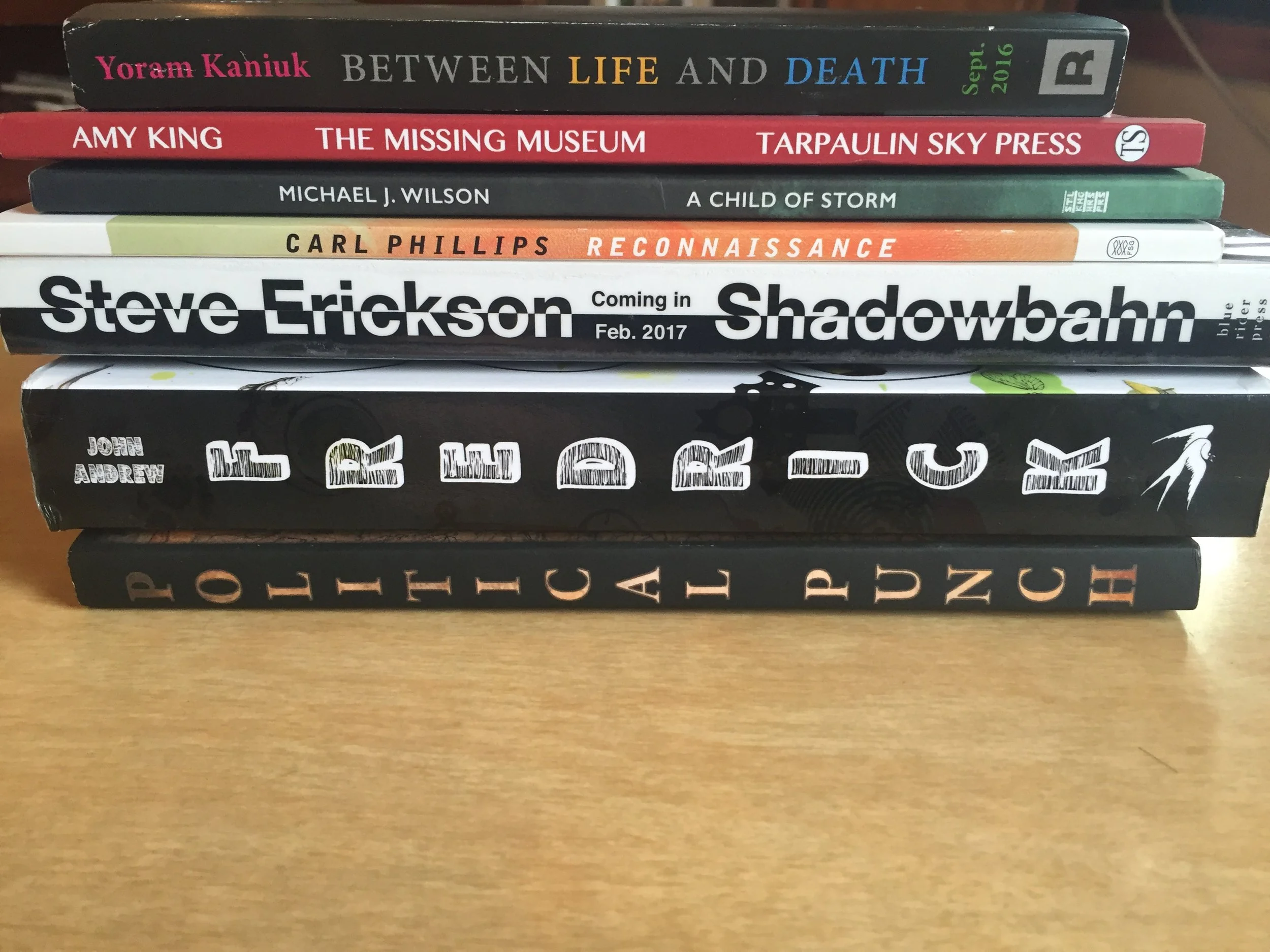
7 Books You Should Read If You Want to Be Human

October 20, 2016

BY JOANNA C. VALENTE

1. Between Life and Death - Yoram Kaniuk (Restless Books, 2007/2016)

Excerpt from Lit Hub:

"Near the house, right across from the calm hidden beauty where I searched for a gutter to play me the lullabies of my childhood, a little bit of sea is still open. Moshe my father would swim in it every day at exactly five in the afternoon, after most of the swimmers had already gone home, because he loved having the sea all to himself. In the spring and fall, the sea was sparkling and smooth and soft, and sometimes in the morning, on the way to school, we’d walk barefoot in the sand along the shore, and under the hewn-limestone wall, we’d take off our shoes, hang them by the laces on our shoulder, put our schoolbags on our heads like the Arab women who carry ewers of water and bundles of wood to the ovens, and we’d walk in the shallows lined with seashells, some were broken and cut our little feet, until we came to the sand dune across from the Model School."

2. The Missing Museum - Amy King (Tarpaulin Sky Press, 2016)

From TS' site:

"AND THEN WE SAW THE DAUGHTER OF THE MINOTAUR

Poet, comma. It is thus the delay,
which is also a beginning. That we can link eyes
across her time-space continuum is another hyena.
The female elongates, bares fangs, and a trash
compactor recycles. Hyena gives
in the recycling fashion. Phoenix, no more false
flight from holes; now balloons eating decay.
Hunger denuded us, too. But will you give
up your death for me? With surgery, I outright hollow
the monster to breathe across windows. I don her hollow
whole. She writes back in the pauses of haze.
Her and her tragic magic. We are all cross-dressing
in tiny wings with the machines of bones to go on."

3. A Child of Storm - Michael J. Wilson (Stalking Horse Press, 2016)

Sensitive Skin Magazine published four poems from the collection:

"Edwin Davis & The Electric Chair

Brown came with a crate.
The kind milk bottles condense in.

He sat it down. In the center of the room.
I had spent the day clearing cobwebs, a rug.

I used parts of the crate to make the chair.

Stringing the wires, using the Edison diagram
The Brown instructions.

I shot 1000 volts through Kemmler
then again until he burst to flame.

The skin around the metal became leather.
        They would have done better using an axe.

I shot volts into a woman. Into the man who shot McKinley.

I got to meet J.P. Morgan. Twice.

           Every time –

The smell –"

4. Reconnaisance - Carl Phillips (FSG, 2015)

ead an interview with Phillips at NPR:

"I have, from the start, been writing about the body and power. And maybe more specifically, the gay male body, and power in intimate relationships, but I feel as if there's a lot of overlap with society's views of how different bodies are treated. So to that extent, I think there's always a kind of political resonance to the personal, and then vice versa."

5. Shadowbahn - Steve Erickson (Blue Rider Press/Penguin, 2017)

It's exactly what we need right now - a book set in a tragic political landscape along to a playlist to give song to the time we live in now - one of strange turmoil and uncertainty. All of the characters are on a journey of self-discovery, and the reimagined Twin Towers represent this. It's definitely a book to pick up once it's released this February.

6. The King of Good Intentions II - John Andrew Fredrick (Rare Bird Books, 2015)

 Read an interview with Fredrick at LARB:

"I think the books are failures too. Brilliant failures, of course. And again I don’t mean brilliant in the look-at-me sort of way, but brilliant in the sense that parts of them (and I hope the preponderance of them) truly shine. As comedy. And very very human and humanist. Isn’t that enough? Yes, I revised the first King five times. The hardest work I have ever done. Much harder than writing a dissertation on Ford Madox Ford and Virginia Woolf. I just got sick of looking at The King II, I revised it so much. I’m a Jamesian and a Joycean. I could revise all day — trying to lift the prose into poetry, trying to make the jokes zanier and tighter. There’s nothing wrong with failing. Failing is an energy. And in a way, paradoxically, the books are not failures and I am being very disingenuous about the records. You shouldn’t trust me; I’m an unreliable narrator in real life, too."

7. Political Punch: Contemporary Poems on the Politics of Identity - Edited by Fox Frazier Foley & Erin Elizabeth Smith (Sundress Publications, 2016)

Read an interview with both editors over at VIDA about how the anthology came to be. Foley stated:

"My feeling about this are complicated, and kind of conflicted. I think of poetry in the same way that I think of prayer. I’m a religious person, so to me, prayers are actually a significant factor in seeking any type of progress, including political or social progress. Prayer and poetry, to me, are both ways of centering your consciousness, and raising both your focus and your energy. They are both, on some level, ways of howling down the parts of the Universe that we don’t entirely understand (I mean, we might name them, or tell stories about them—but I think all religious apparatus is really just a way of making somewhat intelligible to us the forces that are beyond our rational comprehension) to please come to our aid in helping us fix this situation. Prayer and poetry both bring people together, too—one person’s words can forge connections among many people, so that ultimately both a poem and a prayer can result in focusing the energy and consciousness of larger groups, in a way that creates a feeling of solidarity. To me, all of that is integral to political and social progress. I understand that not everyone sees it that way, but speaking for myself and my own lived experiences, that’s how I understand it."

 CA Conrad's poem in the collection is amazing; excerpt from “act like a polka dot on minnie mouse’s skirt:”

"i am not a

family friendly

faggot i tell

your children

about war

about their tedious future careers

all the taxes bankrolling a

racist tyrannical military."


Joanna C. Valente is a human who lives in Brooklyn, New York. She is the author of Sirs & Madams (Aldrich Press, 2014), The Gods Are Dead (Deadly Chaps Press, 2015), Marys of the Sea (forthcoming 2016, ELJ Publications) & Xenos (forthcoming 2017, Agape Editions). She received her MFA in writing at Sarah Lawrence College. She is also the founder of Yes, Poetry, as well as the managing editor for Luna Luna Magazine. Some of her writing has appeared in Prelude, The Atlas Review, The Huffington Post, Columbia Journal, and elsewhere. She has lead workshops at Brooklyn Poets. joannavalente.com / Twitter: @joannasaid / IG: joannacvalente


In Poetry & Prose Tags books, fox frazier foley, erin elizabeth smith, john andrew fredrick, amy king, steve erickson, carl phillips, poetry, fiction, michael j wilson, yoram kaniuk
1 Comment
via Women of Faith

via Women of Faith

Poetry by deziree a. brown

October 14, 2016

deziree a. brown is a black queer woman poet, scholar, activist and self-proclaimed “social justice warrior” from Flint, MI. They are currently a MFA candidate at Northern Michigan University in Marquette, MI, and often claim to have been born with a poem written across their chest. Their work has been recently published in the anthology Best “New” African Poets 2015, Duende, Crab Fat Magazine, and Razor. Twitter: @deziree_a_brown

Read More
In Poetry & Prose Tags Poetry, Poet, deziree a. brown
Comment
Adrien Coquet

Adrien Coquet

Poetry by Meg E. Griffitts

October 13, 2016

Meg E. Griffitts' work has appeared or is forthcoming in Hypertrophic, Evening Will Come, The Colorado Independent, andBlazeVOX. 

Read More
In Poetry & Prose Tags Meg E. Griffitts, poetry
Comment

#TrumpTapes Erasure, Poetry by Meghann Plunkett

October 12, 2016

Meghann Plunkett is a poet, performer, coder and feminist.  Her work has appeared in national and international literary journals including Muzzle Magazine, The Paris-American, Simon & Schuster's anthology Chorus, and Southword. She teaches creative workshops at Omega Institute and co-directs a children's summer camp called Writers' Week Aboard the Black Dog Tall Ships in Martha's Vineyard. Currently, Meghann is an MFA candidate at Southern Illinois University. 

Read More
In Poetry & Prose Tags meghann plunkett, poetry, Donald Trump
Comment

Interview with Michael J. Seidlinger on GIFs, Gender & the Apocalypse

October 11, 2016

Everyone seems to know who Michael J. Seidlinger is, even if just by name. Seidlinger is a ghost — the kind of ghost who messes up you book case and reorders everything so you can't actually find what you're looking for. But then when you actually look back at all of the reordered books, you find something beautiful stuck in there that you hadn't seen before. 
Read More
In Poetry & Prose Tags Michael J. Seidlinger, interviews, literature, books, fiction
1 Comment
El Yas

El Yas

Portrait of a Fat Girl

October 10, 2016

Sometimes, I feel sad when I look back through old photo albums. There are so few of me beyond the age of 12 that it is occasionally difficult to even remember what I was like then. What happens, because I am so undocumented, is that all I remember is being sad, fat, unhappy, uncomfortable. I know that’s not how I felt every day. Yet, it’s all I’m left with.  

Read More
In Poetry & Prose Tags Fat-Shaming, Body Positivity, Body Image, Self-Love, Non Fiction
2 Comments

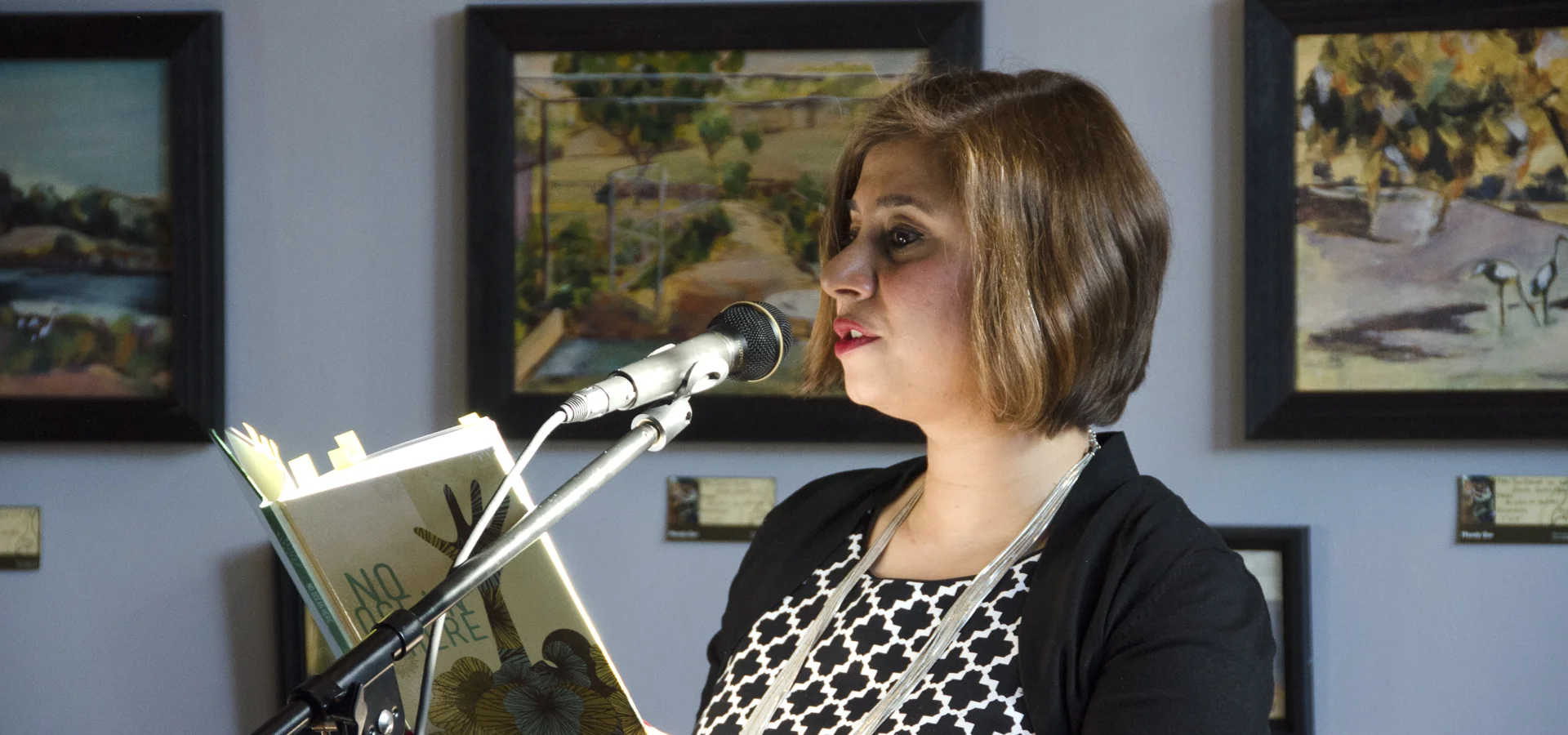
Interview with Sweta Srivastava Vikram

October 4, 2016

In 2013, Indian poet Sweta Srivastava Vikram published a collection of poems titled No Ocean Here. Published by Modern History Press, No Ocean Here documents the stories of oppressed women living in different parts of Asia, Africa and the Middle East. Following an itinerary made up of narrative poems, the reader travels to countries including Singapore, Bangladesh, and Cameroon, coming face-to-face with patriarchal tyranny. Vikram takes her readers on an emotional and geographical journey. She writes,

I walk humbly through cultures,
documenting stories

for women without a voice.
-"No Ocean Here"

Read More
In Interviews, Poetry & Prose Tags Sweta Srivastava Vikram, Daria Popov, Emma Eden Ramos, Chapbook, Poetry, No Ocean Here, Oppression, Patriarchy
Comment
Cole Patrick

Cole Patrick

The Spectator, Nonfiction by Carly Susser

September 29, 2016

I’m walking with Rob outside a little league field in Hoboken on a Saturday night when a groundskeeper drives up to the curb and disembarks. I trust his red jacket and white hair, his saunter up the grassy hill, and the way he already seems to know what I need.

Read More
In Poetry & Prose Tags carly susser, nonfiction
Comment
Ginette Brosseau

Ginette Brosseau

Poetry By Marina Carreira

September 28, 2016

Marina Carreira is a feminist Luso-American writer from Newark, NJ. She holds a MFA in Creative Writing from Rutgers University. Marina is curator and co-host of "Brick City Speaks," a monthly reading series held in the LIPS studio of the Gateway Project Spaces art gallery in Newark, NJ. Her work is featured or forthcoming in The Acentos Review, The Writing Disorder, Naugatuck River Review, Writers of the Portuguese Diaspora: An Anthology, The Fem, Paterson Literary Review, Rock and Sling, Bluestockings Magazine, Pittsburgh Poetry Review, and Pif Magazine, among others.

Read More
In Poetry & Prose Tags Marina Carreira, Poetry, Poet, Poems
Comment
Via here.

Via here.

Poetry by Jennifer Maritza McCauley

September 27, 2016

Jennifer Maritza McCauley is a writer, teacher and Ph.D. candidate in creative writing at the University of Missouri. She is also an editorial assistant at The Missouri Review, a reviews editor at Fjords Review and an associate editor of Origins Literary Journal. Her most recent work appears or is forthcoming in editions of The Los Angeles Review, Jabberwock Review, Split this Rock's "Poem of the Week," Puerto del Sol, The Feminist Wire, New Delta Review, Rain Taxi, The Boiler, and Literary Orphans, among other outlets.

Read More
In Poetry & Prose Tags Jennifer Maritza McCauley, poetry
Comment

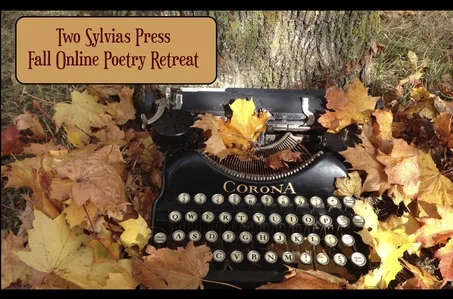
5 Reasons You Should Join the Two Sylvias Press Online Poetry Retreat This Fall

September 22, 2016

This July, I participated in the Two Sylvias Press Online Retreat for four weeks, and it rocked my poem world.

Read More
In Poetry & Prose Tags poetry, workshops
Comment

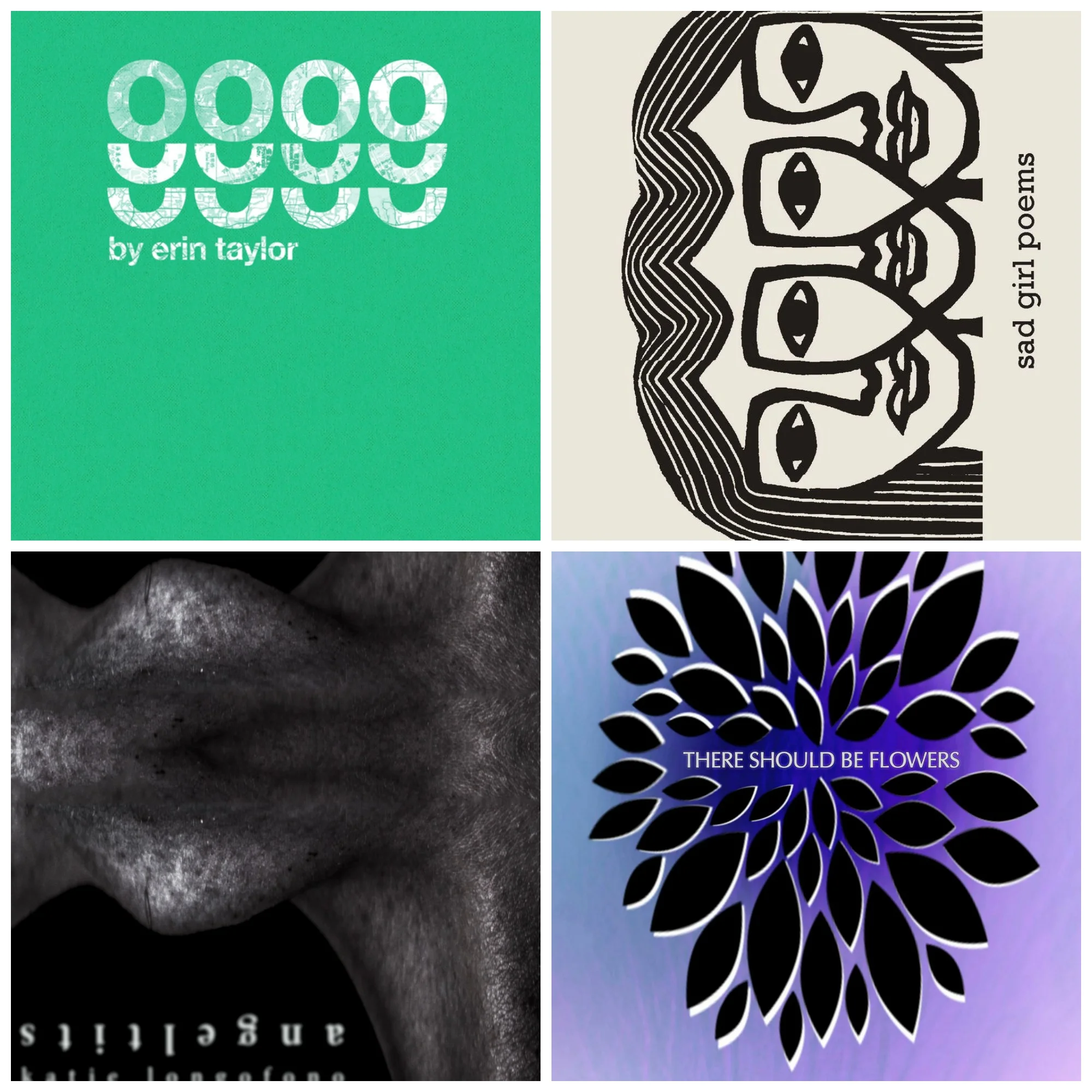
4 Poetry Collections That Will Give You All the Feelings Ever

September 20, 2016

Reading is kind of my jam. It was the thing I did ever since I could remember, especially when I was feeling sad and lonely and needed to feel like the world was an OK place to be. These four collections have done just that for me, and for that, I'm ever grateful to the poets who wrote them and birthed them into the world.

Read More
In Poetry & Prose Tags christopher soto, katie longofono, erin taylor, joshua jennifer, joshua jennifer espinoza, bottlecap press, ccm, sibling rivalry press, sundress publications
Comment
← Newer Posts Older Posts →
Featured
‘in the glitter-open black' — poetry by Fox Henry Frazier
'poet as tarantula,  poem as waste' — poetry by  Ewen Glass
'poet as tarantula, poem as waste' — poetry by Ewen Glass
'Hours rot away in regalia' — poetry by Stephanie Chang
'down down down the hall of mirrors' — poetry by Ronnie K. Stephens
'Grew appendages, clawed towards light' — poetry by Lucie Brooks
'do not be afraid' — poetry by Maia Decker
'The darkened bedroom' — poetry by Jessica Purdy
'I am the body that I am under' — poetry by Jennifer MacBain-Stephens
instagram

COPYRIGHT LUNA LUNA MAGAZINE 2025