





Alice in Greenpoint (Finishing Line Press, 2015) by Iva Ticic is a debut worthy of much praise. Ticic creates a landscape where the speaker is trying to find a home in a new world, so to speak, most notably in the ever-changing, strangely artificial world of Brooklyn, in America, in a land of shiny and new things. How this world appears to an outsider is fascinating, and documented poignantly in these poems.
Read More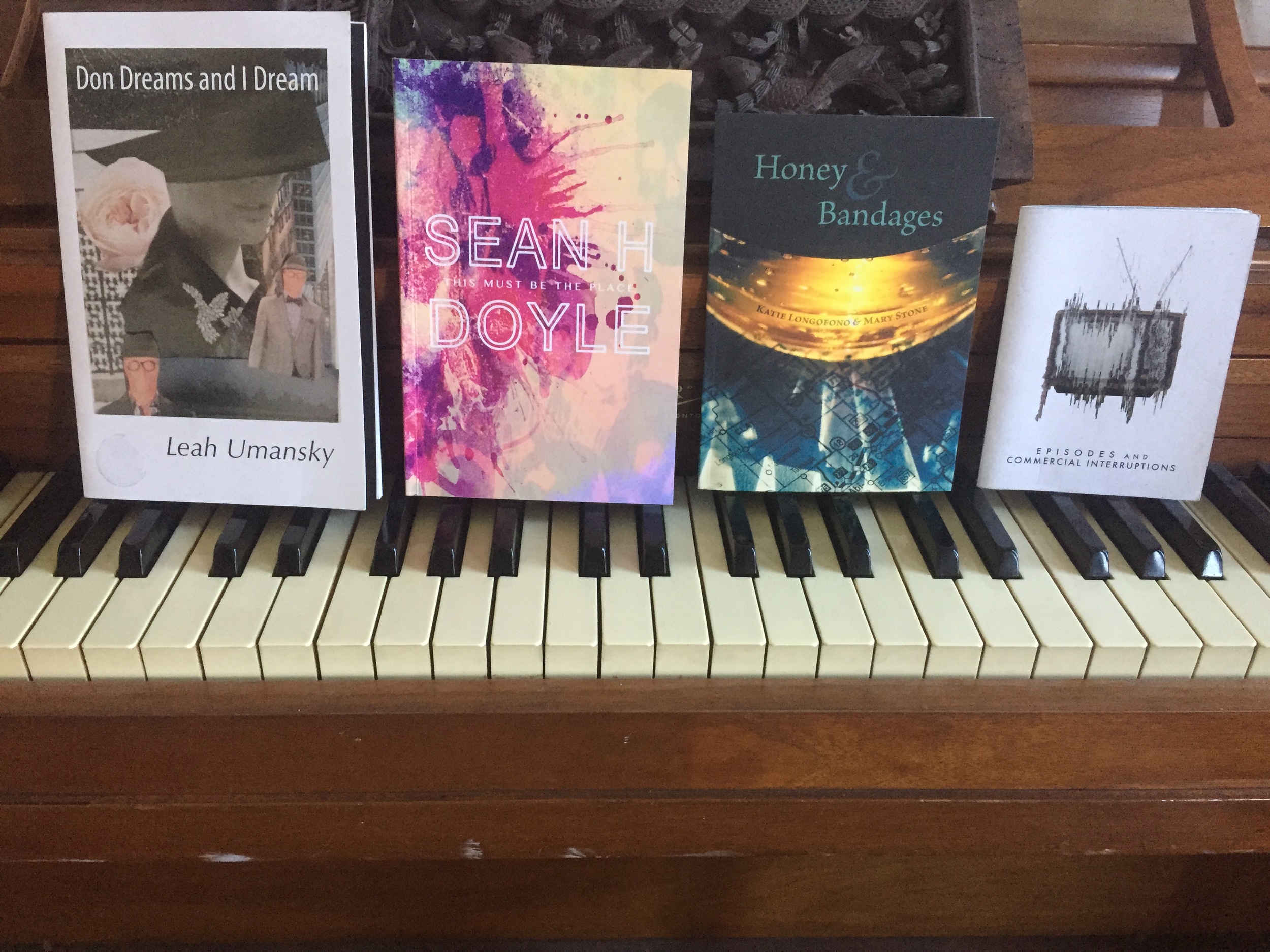
4 Indie Press Books I Read in 2015 (& You Should, Too)
Reading books in 2015 is not hard to do. We have plenty of options--public library, major & indie bookstores, e-readers, and book clubs. I'm pretty grateful, really, to live in this time. So many of us groan about how no one reads anymore and how the publishing industry sucks, but let's look on the bright side: there's a tremendous amount of indie publishers who are doing a great job. I don't need to name names or link to articles about how no one reads. We all know.
Read More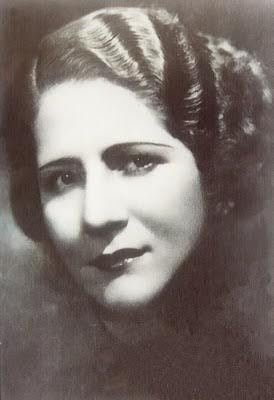
Laura Victoria’s Poetry of the Pagan & the Maternal
In my previous post about the poetry of Eliana Maldonado Cano, I mentioned that an epigraph to one of her poems came from the work of Laura Victoria, pseudonym of Gertrudis Peñuela, a twentieth-century Colombian poet. I was intrigued by the epigraph (“Come closer, / Bite into my skin / With your dark hands”), and decided to follow my curiosity with this post in order to learn more about the poet behind the pseudonym.
Read More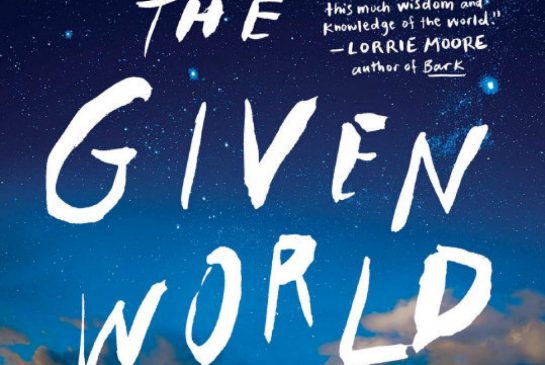
Marian Palaia's The Given World Is A Must Read
The Given World by Marian Palaia opens time capsules like Maruschka dolls: First, it is late 80’s in Siagon. Swiftly, it is 1968 Montana, and Riley, the protagonist, is a little girl whose world is about to be blown open.
Read More
Poems Written Under The Skin: Eliana Maldonado Cano
BY EMILY PASKEVICS
Eliana Maldonado Cano (Medellín, Colombia, 1978) studied petroleum engineering at the National University of Colombia, and she currently works in the field of Geoscience Consulting. Her poems have appeared in Punto Seguido, Quitasol, Prometeo, and Los Papeles de Babel. She participated in the 11th International Poetry Festival of Medellín (2006), and her poem “Fuera del Paraíso” (“Outside of Paradise”) won first place in the Jazz-eros poetry contest through the National University of Colombia (2005). The following poems are translated from her first collection, Bajo La Piel (Under the Skin), published in 2007 by Hombre Nuevo Editores.
Bajo la Piel is a small book, only about as tall as my hand. It is divided into four parts, translated as: 1) The Body Owns Reason; 2) The Soul Owns Madness; 3) The Earth Owns Those Who Walk; and 4) Dreams, Uncertain Truths.
The first poem of the collection, “La Manigua” (“The Jungle”), is epigraphed with a quote from Laura Victoria, pseudonym of Gertrudis Peñuela, a popular early twentieth century poet whose work is also characterized by a strong erotic tone: “Come closer, / Bite my skin / With your dark hands.” Cano’s response or extension of this lure-to-feast clearly plays with the familiar trope of the female body as a landscape, something to be wary of and, where possible, tamed. She closes with a menacing tone:
Ven, acércate mas,
acércate,
cartographia mi paisaje,
no tengas miedo,
ya no quedan fieras
en la manigua.
Come, come closer,
closer,
map my landscape,
don’t be afraid,
there are no more beasts
in the jungle.
Throughout the collection, Cano plays with, scorns, accepts, kills, and rebirths familiar metaphors for women’s bodies. From the first poem, then, the reader enters into a discussion of desire, earth-toned or half-dreamed, with the object—the satisfaction, the truth—never quite reached.
Oasis
Tengo sed,
sed de tu saliva
de tu sudor
de tus cálidos fluidos.Tengo hambre,
hambre de tu piel
de tu lengua
de tu carne ardiente en mi garganta.Muero de inanición,
qué hacer
qué hacer con esta hambre
esta sed
esta fatiga de no tenerte.
Oasis
I’m thirsty,
thirsty for your saliva
for your sweat
for your hot fluids.I’m hungry,
Hungry for your skin
for your tongue
for your flesh burning my throat.I’m dying of starvation,
what to do
what to do with this hunger
this thirst
this exhaustion of not having you.
Cano’s poems tend to be short and slim, simple and open in language, musicality, and rhythm. These are poems of body and desire, often quite explicitly so. In the two-line piece titled “Abro las piernas,” for example, the speaker quietly summarizes the rise and fall of an intimate encounter:
Abro las piernas
tan llenas de mis hijos
y tus muertos.
I open my legs
so full of my children
and your little deaths.
Her poetry tends to convey a strong eroticism, often drawing metaphors from biblical and natural worlds in order to create a poetry of deep sensuality, where both the body and the reader emerge as the main actors in various encounters. As hissed in the abovementioned “La Manigua”: “Come closer, / closer… don’t be afraid” (17). At the same time, sometimes the body is broader, geographical or historical. Sometimes it’s a body dreamed or imagined, scripted or reinvented, sought but not quite reached; it is a body living, hunted, or dead. It is a body abandoned or sacrificed—someone else’s, hers, or your own.
Ella
Ella huele a sal
a sudor
a deseoElla inspira carne
PlacerElla es simplemente
Un aroma
Un tormento.
She
She smells of salt
of sweat
of desireShe breathes flesh
PleasureShe is simply
A scent
A storm.
The interplay of desire and objectification is a constant tension, or “red thread,” throughout the book (“Hilo rojo,” 34). The speaker sometimes toys with the idea of being objectified: “I am your object of desire / faithful four-legged table…” (“Objecto de deseo,” 19), or relishes it, describing her own smooth skin and dark hair. At other times, the speaker appears to accept being conquered, as in with the closing lines of “La Conquista” (31), where the question is hinted at but not fully asked: “Where and when will you conquer me, / [and] change my language.”
At other times, the speaker pushes against objectification, with a hint of violence:
Golpe de Suerte
Doy la espalda a mi enemigo,
sé que observa mis pasos quedos,
cada movimiento de mis brazos,
como un tigre, todo su cuerpo
se tensa frente a la presa,
me acerco
lentamente,
siento su aliento,
el cuchillo,
la sangre que mana,
el cuerpo que cae,
lo miro largamente yacer en el suelo.
Al final para mí
la vida,
la noche negra.
Stroke of Luck
I turn my back on my enemy,
I know he watches my soft steps,
every movement of my arms,
like a tiger, his whole body
tenses before his prey.
I approach
slowly,
sensing his breath,
the knife,
the blood that flows,
the body that falls.
I watch it lying on the ground.
Finally for me:
life,
the black night.
The two main threads, the visceral and the dreamlike, carry throughout the collection.
Eliana Maldonado Cano’s second poetry collection, Lunas de sombra (Moon Shadows), was published by Sílaba Editores in 2010.

Review of Nikay Paredes' 'WE WILL SEE THE SCATTER'
There are few times when I read poetry and feel as though my perspective is truly changing. We Will See the Scatter (Dancing Girl Press, 2014) is one of those brilliant exceptions. As a poet, I read verse all the time, and while I often feel mesmerized by so much of it, I rarely feel as though my world has altered--that the world as a whole will benefit from the brevity of meaning.
Read More
Via Hubpages
6 Online Lit Mags For Ladies Who Love Creepy Poems
When I first started reading literary magazines in college I really had no idea how to go about finding ones that would actually have poetry in them I would enjoy and connect with, let alone that would make me think of my own poetry enough to want to submit. As a lady whose poetry has been compared to French horror films, I more often than not found myself wanting for poetry to read that had the same dark sensibilities as my own. Since my college years I’ve discovered any number of fine feminist lit mags that fit this bill fabulously.
Read More
Emily Raw
Review of Natalie Eilbert's 'AND I SHALL AGAIN BE VIRTUOUS'
I have a huge crush on Natalie Eilbert. It's hard not to have a crush on Natalie Eilbert when she writes such raw yet tightly-knit poems that push my heart into oblivion, because it was demolished by an ocean of words. Her chapbook, AND I SHALL AGAIN BE VIRTUOUS (Big Lucks Books), was recently published, and rightly so: the world needs to hear the outrage of women, and they need to hear it right now.
Read More
Dear Poet Who Never Wrote Me Back
BY JENNY MACBAIN-STEPHENS
There were so many times when I read your poems and the images on the page were little bombs going off in my head. I thought, little dark waste-land misgivings can be the subjects of poems? These jewels of weirdness that I totally recognize? Yes. I couldn’t get enough of your surreal mistakes.
So, I sent you an e-mail, gave you a tasteful compliment and asked about the availability of one of your chapbooks. My e-mail was a fist bump. Days went by. Weeks. Who the fuck doesn’t bump back? I went through excuses on why you didn’t write back. Why I didn’t receive a simple, “thanks for the kind words.” That would have sufficed. I told myself, he’s traveling, he deleted the message by accident, he forgot. But I had to come to terms with the blow-off.
It took me a little time to pick up one of your books again, but I did. I tried to lose myself in the text but it was a little harder this time. It was harder to get lost in your woods, your ponds, your opera singers, your lumberjacks, and the still pieces of furniture that displaced themselves with other pieces of furniture. Six months later, when I read that you were touring select cities in America, and if people wanted you to come to their city, to E-MAIL you with a reading venue suggestion I swallowed my pride and sent a damn e-mail with a reading venue suggestion. No return message.
When I read this line****, I thought, “So am I.” We are of mental kin. The speaker does not need to exist in the universe as we know it. This idea thrilled me and I wrote a poem in the middle of the night that was accepted quickly—the poem as drunk off fiery inspiration as I was. Your work existed on a different plane. However, I still couldn’t help but think that we existed on the same plane—the earth—a seasoned writer and a novice writer, and still no contact.
I know from reading an interview that you appreciated your mentors and even name them in dedications, revealing that you understand how important encouragement is to a new poet. To capture my emotional core I will use your words from “What I Did With The Rock.” What have I done?
I mentioned this lack of correspondence to my therapist. (Yes, I have a fucking therapist.) Your lack of response made me question me. In my mind I had become the woman with gigantic tree-trunk legs (who makes an appearance in your third book,) who strangles you with her thighs until you suffer convulsions and are hospitalized. Was I being a stalker? No. Had I “stalked” before? No. Had I obsessive thoughts? Yes. But doesn’t every writer? Why would someone display their g-mail address in a twenty point font size on their web page if they didn’t want any discourse? Is that just for editors to solicit work?
I am not trying to fuck you. I am married. I have children. I have self-worth. At this point, I didn’t want to say screw off—I still want to review your catalog (several chaps and now four, five? full collections to date,) and draw inspiration from them—but I have to say, as much as I try to not let it affect me, as much as I try to “forget,” you blowing me off—your work is burning less bright in my heart. Again, I will use your words to capture how I felt/feel: (From your poem “The Woman Who Falls From the Sky”).
You have inspired me with your words, and maybe you will continue to do just that. I look back at how it all began. I came across your first book at the Mission Creek festival and it was a wondrous surprise. Your editor was there, and out of all the books on the table, he picked up yours, and said, “Start with this.” I was intoxicated. But then I was rejected by you. We, writers, who have to face rejection from our e-mail in-boxes every day, this one stank like rotten milk. Go on with your life, your readings, your tours, your creative poem-ic films. I wasn’t even a blip on your radar.
Now I’ve become this person writing about you in an online lit mag. I know one day we will meet. I’ll have a couple of books under my belt—or just one. But I will be reading somewhere. You will come up to me, afterwards—a glass of wine in hand, say you like my work, and then I will have a choice to make. Do I bring up how you were a dick who never wrote me back? Will I take that out of my back pocket like a smelly sardine and lay it on your silver platter? Or will I rise above, clink my glass to yours, and just know- know that I will always have this over you.
Sincerely,
J.M.
Jennifer is a writer who currently works at a scientific journal. She just moved to Virginia with her family. She grew up in Michigan and went to New York University where she studied three subjects: Drama, English, and Journalism. She has also lived in California, London, New York, and Iowa City for various periods. There are lots of hills and green foliage here in VA. All of the roads look the same to her. If you see her in the wrong lane somewhere, don’t bother honking, she already knows she is in the wrong lane. The only thing keeping Jennifer going at the moment is writing about herself in the third person, making collages, and writing poetry.

10 Distinctive & Offbeat Lit Mags That Want Your Work
BY ANA PRUNDARU
For new writers and those pursuing alternative fields, the submission process can be quite nerve wracking, if not straight up soul crushing. Various journals have incredibly strict guidelines about what kinds of works and writers they strive to publish, while others contain a contributor’s list boasting so many intimidating crème de la crème journals that it will likely deter most emerging writers from submitting. Whether found poetry is your thing, or you like to write on prompts, the magazines listed here celebrate the craft of writing in its variety, while welcoming contributors from all walks of life.
After the Pause
After the Pause explains its name as follows: Life throws pauses at us, art follows the pause. Thus, whether your piece was inspired by a beautiful experience, or an unforgettably sad event, as long as it explores the human condition, they want to see it. This journal publishes mainly online, but has a print anthology scheduled for 2016. Their aim is to feature diverse and experimental pieces from the Midwest and the world. AP warmly welcomes emerging writers.
Unlost Journal
For the sister site of Unbroken Journal, editor R.L. Black is looking for various types of found poetry, as well as artwork. Previous poems range from humorous to poignant, come in all forms and sizes and were created from Google searches, novel chapters, song lyrics and other sources.
Souvenir Lit Journal
This beautifully curated journal features adventurous and well crafted prose and poetry next to each writer’s depiction of his or her favorite souvenir. Souvenir Lit invites new and emerging writers to submit and is open to all forms and topics that stir a strong emotion from the reader.
Found Polaroids
Kyler Zeleny has collected thousands of unidentified Polaroid images over the years, eventually deciding to launch a site that celebrated and honored the legacy of those portrayed in them. Writers are invited to browse the online album for inspiration, pick a photograph and deliver a micro narrative uncovering such questions as who they were, what their motivation was and where they were going. The mission, in Kyler Zeleny’s words, is to ‘give life back to images that might otherwise find themselves in a waste bin.’
Visual Verse
Another venue for works inspired by artwork is Visual Verse. An anthology of art, fiction, nonfiction and poetry, they offer a unique writing experience, in that they supply an image and the writer has one hour to come up with a matching written work of 50-500 words. The resulting pieces both surprise and delight with their diversity of aesthetics and innovation.
Queen Mob’s Teahouse, Misfit Documents
This online magazine is the sister site of Berfrois and publishes bold new writing on a daily basis, covering a broad range of topics that stretch from politics to pop culture. Absolutely no limits are set for the Misfit Documents section. Different voices, ideas, perspectives and esthetics are encouraged to submit their unconventional visual and written works.
101 Words
With a goal of promoting short-form prose, this journal delivers fresh works of exactly 101 words to your mailbox and on their site. The publication has a dynamic and accessible community-feel to it, where readers can comment on stories or peruse an assortment of eloquently written flash fiction from other literary magazines, weekly curated by a different guest editor. Moreover, 101 words regularly runs contests, as well as book giveaways.
People Holding
Those of you who enjoy writing to prompts will want to consider submitting to this edgy magazine from NY. Their mission is straightforward: To display gorgeous, sharp writing inspired by an image of an individual that is holding something in his or her hand. Potential contributors are asked to send an e-mail and then submit a piece inspired by the image they received as a prompt.
Star 82 Review
Brought to life by Alisa Golden, senior adjunct professor for the Printmaking Program at California College of the Arts, this magazine wants hybrid forms, including postcard literature, erasures and collages. Leafing through their aesthetically pleasing, experimental, yet not too abstract back issues, it is clear that the magazine values quality storytelling in the most creative way possible. Contributors come from near and far, giving the impression of genuine inclusiveness.
LossLit
Against the backdrop of the site’s minimalist, but sublime design, a diverse range of voices give insights into one of the most drastic human experiences; that of loss and grief. For its exemplary contribution to the literary sphere, LossLit – despite being around for only a year – has already been short listed for the Saboteur Awards.
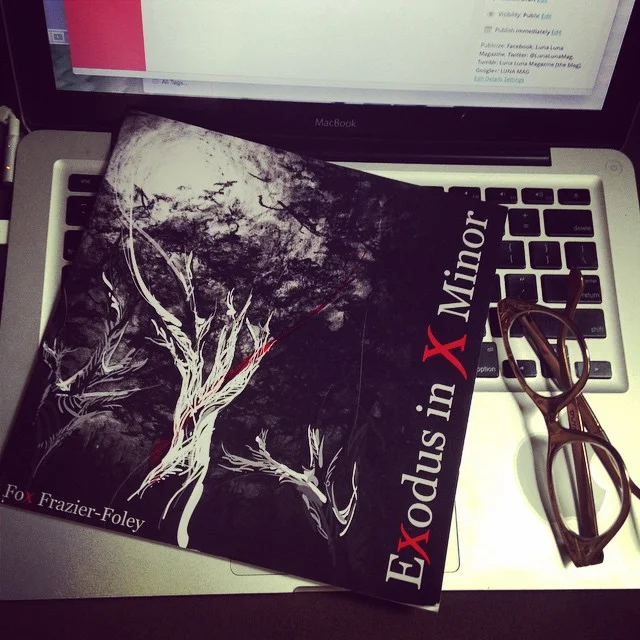
Review of Fox Frazier-Foley's 'EXODUS IN X MINOR'
There are few times in life where you truly understand & connect to a piece of writing as if you wrote it yourself, where you stop yourself multiple times mid-read & think: "Wait, this is actually kind of scary...This could be me." This is exactly how I felt when I read Fox Frazier-Foley's EXODUS IN X MINOR (Sundress Publications). The book is a loose narrative detailing bits & pieces of the speaker's life; it is ambiguous enough that the reader can easily insert themselves in the emotional anguish of each isolated moment, but still specific enough where a vivid world is brought to life by verse.
Read More
Review of Lauren Gordon's 'KEEN'
It's hard not to fall in love with a collection of poetry that starts with the line: "Nancy meets her robot." Instantly, the reader is hooked, or rather, grabbed by the throat & propelled into each new line with a ferocious curiosity. The relationship between the two characters, Nancy & Ned, is immediately introduced in "Chapter 1," as voyeuristic and somewhat distant.
Read More
Poet Abigail Welhouse on 'BAD BABY'

Nicole Ross Rollender on 'Louder Than Everything You Love'
The sheep assemble: the near-dark: their hooves knocking on dirt: they look for the dead:
Read More
This Week's Reading List: Lynch, Life Advice, Tarot & Hillary Clinton
There's so much out there to read, we know. So we rounded up a few of the best things we've read, just for you. And, like us, they're all weird or neurotic or dark. Happy Monday, darling.
Ask Polly: Am I Too Smart for My Own Good? - The Cut, New York Magazine
"You are not a crazy genius or an irredeemable asshole or a misfit who's damned for all time. You are just a person."
David Lynch's Elusive Language - The New Yorker
“No matter how weird something is, no matter how strange the world is that you’re making a film about, it’s got to be a certain way. Once you see how that is, it can’t be another way or it’s not that place anymore. It breaks the mood or the feeling.”
Guillermo del Toro’s Guide to Gothic Romance - Rookie
"Guillermo has curated a syllabus of the Gothic and Gothic romance novels, short stories, and engravings that influenced the making of the film [Crimson Peak]."
Not Looking To Predict “Outcomes” In Tarot? Try These Ideas Instead - Autostraddle
"So what do you do if you’re a non-predictive kinda tarot reader? How do you reconcile your feelings that tarot can’t foretell future events with the fact that the very last card in your reading is purporting to do exactly that?"
Deadly Maidens - Death & The Maiden
"This experimental short really opened up my ideas towards imagery and
nonlinear narratives. A mirror faced, hooded Grim Reaper-like figure haunts the waking dreams of a young woman."
We Were (Sobbing? No, Not Yet): On Jennifer L. Knox’s Days of Shame & Failure - Weird Sister
"While many of Knox’s speakers are misfits of some sort, Knox herself has appeared more and more in poems, an autobiographical impulse that is not so much confessional as it is a means to ground us amongst the more absurd situations Knox’s speakers get into, such as the corporate lawyer in “Between Menus” who talks to bees or the old volunteer clown who sodomizes a Siberian tiger in “I Cast the Shadow of a Sword over Sky & Sea.”
The Black Girl Dangerous Podcast 10.15.15: Why We Don’t Trust Hillary - Black Girl Dangerous
"She will sort of start off like she’s talking to Black people but then it will just veer right off. You know like, we’ve left her mind and she’s talking to white people and it’s just the weirdest thing. I mean, not weird, because white, whites. But it’s still fascinating to watch."