• Home
  • indulge
  • new poetry
    • About Luna Luna
    • resources
    • search
  • editor
  • dark hour
  • submit
Menu

luna luna magazine

  • Home
  • indulge
  • new poetry
  • About
    • About Luna Luna
    • resources
    • search
  • editor
  • dark hour
  • submit
delicious new poetry
'the doors of the night open' — poetry by Juan Armando Rojas (translated by Paula J. Lambert)
Nov 29, 2025
'the doors of the night open' — poetry by Juan Armando Rojas (translated by Paula J. Lambert)
Nov 29, 2025
Nov 29, 2025
'we can be forlorn women' — poetry by Stevie Belchak
Nov 29, 2025
'we can be forlorn women' — poetry by Stevie Belchak
Nov 29, 2025
Nov 29, 2025
'I do whatever the light tells me to' — poetry by Catherine Bai
Nov 29, 2025
'I do whatever the light tells me to' — poetry by Catherine Bai
Nov 29, 2025
Nov 29, 2025
‘to kill bodice and give sacrament’ — poetry By Kale Hensley
Nov 29, 2025
‘to kill bodice and give sacrament’ — poetry By Kale Hensley
Nov 29, 2025
Nov 29, 2025
'Venetian draped in goatskin' — poetry by Natalie Mariko
Nov 29, 2025
'Venetian draped in goatskin' — poetry by Natalie Mariko
Nov 29, 2025
Nov 29, 2025
'the long sorrow of the color red' — centos by Patrice Boyer Claeys
Nov 28, 2025
'the long sorrow of the color red' — centos by Patrice Boyer Claeys
Nov 28, 2025
Nov 28, 2025
'Flowers are the offspring of longing' — poetry by Ellen Kombiyil
Nov 28, 2025
'Flowers are the offspring of longing' — poetry by Ellen Kombiyil
Nov 28, 2025
Nov 28, 2025
'punish or repent' — poetry by Chris McCreary
Nov 28, 2025
'punish or repent' — poetry by Chris McCreary
Nov 28, 2025
Nov 28, 2025
'long, dangerous grasses' — poetry by Jessica Purdy
Nov 28, 2025
'long, dangerous grasses' — poetry by Jessica Purdy
Nov 28, 2025
Nov 28, 2025
'gifting nighttime honey' — poetry by Nathan Hassall
Nov 28, 2025
'gifting nighttime honey' — poetry by Nathan Hassall
Nov 28, 2025
Nov 28, 2025
'A theory of pauses' — poetry by Jeanne Morel and Anthony Warnke
Nov 28, 2025
'A theory of pauses' — poetry by Jeanne Morel and Anthony Warnke
Nov 28, 2025
Nov 28, 2025
'into the voluminous abyss' — poetry by D.J. Huppatz
Nov 28, 2025
'into the voluminous abyss' — poetry by D.J. Huppatz
Nov 28, 2025
Nov 28, 2025
'an animal within an animal' — a poem by Carolee Bennett
Nov 28, 2025
'an animal within an animal' — a poem by Carolee Bennett
Nov 28, 2025
Nov 28, 2025
‘in the glitter-open black' — poetry by Fox Henry Frazier
Oct 31, 2025
‘in the glitter-open black' — poetry by Fox Henry Frazier
Oct 31, 2025
Oct 31, 2025
'poet as tarantula,  poem as waste' — poetry by  Ewen Glass
Oct 31, 2025
'poet as tarantula, poem as waste' — poetry by Ewen Glass
Oct 31, 2025
Oct 31, 2025
'my god wearing a body' — poetry by Tom Nutting
Oct 31, 2025
'my god wearing a body' — poetry by Tom Nutting
Oct 31, 2025
Oct 31, 2025
'Hours rot away in regalia' — poetry by Stephanie Chang
Oct 31, 2025
'Hours rot away in regalia' — poetry by Stephanie Chang
Oct 31, 2025
Oct 31, 2025
'down down down the hall of mirrors' — poetry by Ronnie K. Stephens
Oct 31, 2025
'down down down the hall of mirrors' — poetry by Ronnie K. Stephens
Oct 31, 2025
Oct 31, 2025
'Grew appendages, clawed towards light' — poetry by Lucie Brooks
Oct 31, 2025
'Grew appendages, clawed towards light' — poetry by Lucie Brooks
Oct 31, 2025
Oct 31, 2025
'do not be afraid' — poetry by Maia Decker
Oct 31, 2025
'do not be afraid' — poetry by Maia Decker
Oct 31, 2025
Oct 31, 2025
'The darkened bedroom' — poetry by Jessica Purdy
Oct 31, 2025
'The darkened bedroom' — poetry by Jessica Purdy
Oct 31, 2025
Oct 31, 2025
'I am the body that I am under' — poetry by Jennifer MacBain-Stephens
Oct 31, 2025
'I am the body that I am under' — poetry by Jennifer MacBain-Stephens
Oct 31, 2025
Oct 31, 2025
goddess energy.jpg
Oct 26, 2025
'Hotter than gluttony' — poetry by Anne-Adele Wight
Oct 26, 2025
Oct 26, 2025
'As though from Babel' — poetry by Fox Henry Frazier
Oct 26, 2025
'As though from Babel' — poetry by Fox Henry Frazier
Oct 26, 2025
Oct 26, 2025
'See my wants' — poetry by Aaliyah Anderson
Oct 26, 2025
'See my wants' — poetry by Aaliyah Anderson
Oct 26, 2025
Oct 26, 2025
'black viper dangling a golden fruit' — poetry by Nova Glyn
Oct 26, 2025
'black viper dangling a golden fruit' — poetry by Nova Glyn
Oct 26, 2025
Oct 26, 2025
'It would be unfair to touch you' — poetry by grace (ge) gilbert
Oct 26, 2025
'It would be unfair to touch you' — poetry by grace (ge) gilbert
Oct 26, 2025
Oct 26, 2025
'Praying in retrograde' — poetry by Courtney Leigh
Oct 26, 2025
'Praying in retrograde' — poetry by Courtney Leigh
Oct 26, 2025
Oct 26, 2025
'To not want is death' — poetry by Letitia Trent
Oct 26, 2025
'To not want is death' — poetry by Letitia Trent
Oct 26, 2025
Oct 26, 2025
'Our wildness the eternal now' — poetry by Hannah Levy
Oct 26, 2025
'Our wildness the eternal now' — poetry by Hannah Levy
Oct 26, 2025
Oct 26, 2025

Hair Jewelry, Post Mortem Photographs and iPhones - A Lineage Of Haunting & Desire

November 5, 2015

BY LIZ VON KLEMPERER

To love someone is to want to give them your body.  To love someone is to want to be given their body.

No one illustrates this point more grotesquely and tenderly than The Victorians, who bundled the hair of their lovers and wove it into jewelry.  Men, for example, often braided their lovers’ hair to secure watches to their wrists.  Women adorned themselves with coiled wisps in glass lockets.  These would be worn on low hanging chains, allowing them to rest right over the heart.  Hair jewelry, as it is commonly called, was a display of affection and devotion to both living and deceased lovers.  Mourners incorporated these strands of the dead into black material such as jet, or more inexpensively, vulcanite (a hardened rubber) and bog oak.
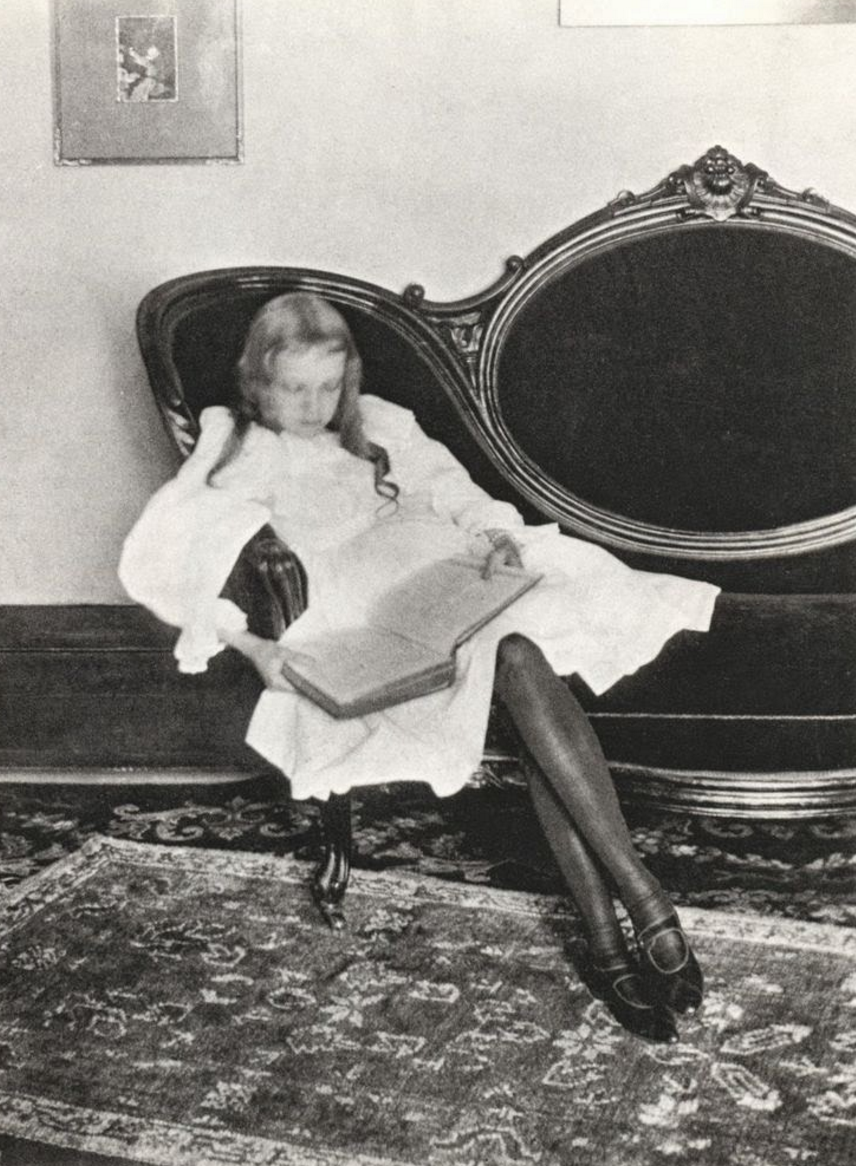
This practice offers a variant spin on our current conception of the phrase “to have” someone.  The Victorians claimed ownership over the bodies of their beloveds by transforming them into ornament.  Not only was this ownership asserted very visually and concretely to others, it also symbolized a triumph over the inevitable: estrangement, death.  Everyone knows that hair is dead from the moment it becomes visible on the scalp, but even so, The Victorians so delicately curated these lustrous and dead clumps to symbolize vivacity, sexuality, and the eternal.

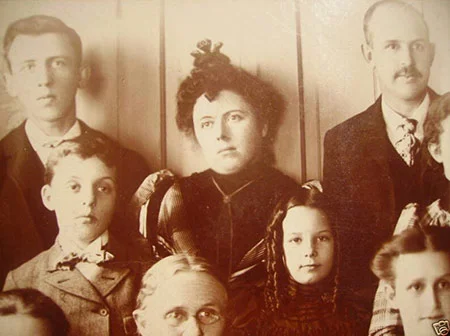
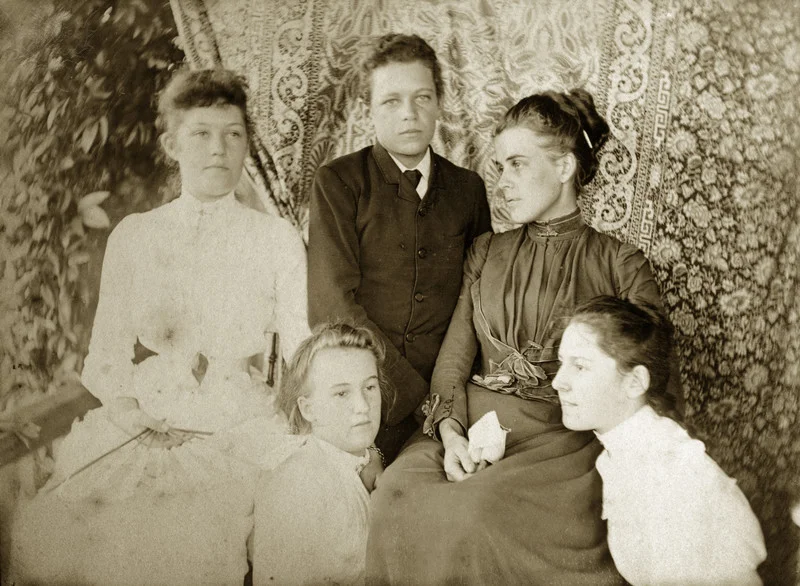
Soon after the invention of the daguerreotype in 1839, however, hair jewelry became less trendy.  People could now carry flattened, shrunken images of their loved ones.  By the mid 1840’s, the middle of The Victorian era, the daguerreotype was made relatively accessible and affordable to the public.  

The slow shudder speed, however, forced subjects to sit still for uncomfortably long periods of time.  Thus, the daguerreotype was initially used to memorialize the dead, who had no qualms sitting without blinking for over a minute.  Photographers concocted methods of propping up corpses or shrouding them in blankets to make it appear that they were leaning on a sofa or merely resting.  Mothers could carry the black and white image of their deceased children with healthy rouge superimposed on their cheeks.  In this way we got closer to our ultimate desire to possess the people we love, to own them in a constant, albeit fabricated, state, to lessen the sting of death and departure.  Desire shape-shifted into a new era.
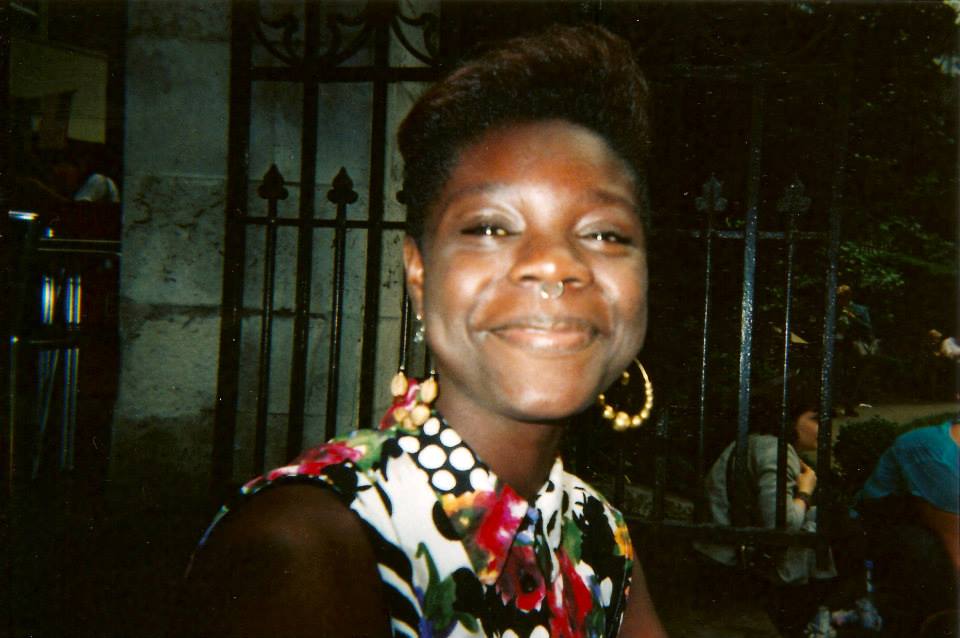
A century goes by.  Our preoccupations morph but never evolve.  Tonight, I fall asleep cradling my phone, which contains thousands of images of my former lovers.  Now they are ghosts, swirling under a blackened glass frame.  Sometimes the ghosts talk to me.  Not to me, exactly, but at me.  Your ex lover is 5 miles away from you now, my machine chirps.  There she is now, for 6 seconds only, an apparition, a puff of smoke.  Tonight, I am fed this video: she is smiling garishly against the flash before tilting her device upwards to capture the sea of revelers behind her.  The scene ends abruptly as someone utters her name, and I am in the dark again.  I know that my machine gains nutrients from the outlet it is plugged into, and that comforts me.

We’ve worked for centuries to keep the dead alive, and now they are, almost.  The frame updates.  Mechanisms work silently inside, allowing us to see those who have departed us laugh, drink, and stare with an agonizing adoration at a face that is not our own.
In the continuing lineage of desire, we have become the designers and facilitators of our own haunting.  And everyone knows the secret to a good haunting is to make the mind play tricks on itself.  Now instead of the illusion of eternal life, we have fabricated the illusion of eternal closeness. Death is not solely the passing of the body but also a severance of ties.  We are haunted by the living dead, by the people who have vanished from our daily lives but not from our consciousness.  In my desire to possess my beloved, I know where she drank coffee this morning. I have read the article she skimmed on her lunch break.

I try to put away this vehicle of my own haunting.  I try not to carry it to bed.  Still, it feels as though I am relishing the image of a corpse as I go to refresh my newsfeed on some park bench during my lunch break.  It is noon, and I am drowsy, hungry, and seeking the comfort of a screen that contains all my bright and illuminated dead behind it.


Liz Von Klemperer is the author of the unpublished novel "Human Eclipse."  She also writes for Art Report, and has work forthcoming in Autostraddle.  When she's not writing or tweeting at @lvonklemp, she coordinates events at The Powerhouse Arena in Dumbo, Brooklyn.
In Art, Lifestyle Tags Victoriana, Post Mortem, Victorians, iPhone, Death, photography
Comment

Am I Queen? Beauty Privilege and Its Discontents

November 3, 2015

“You know, I can just tell you are a true African Queen.”

Read More
In Lifestyle, Social Issues Tags Feminism, Race, Beauty, confessions
Comment

An Introvert’s Halloween with Kiki du Montparnasse et la Bête!

October 31, 2015

BY STEPHANIE SPIRO

If you’re like me, you probably cringe at the thought of dressing up only to freeze your butt off at a party or a parade, dodging monster masks and ducking spilled cocktails. Parties exhaust me, but Halloween is wonderful. And you can celebrate in your skivvies, in the warmth of your own home.

This post is for to the pathological introvert who secretly loves the quiet and still wants to dress up in kinky clothes, sip cocktails, and bask in the magic of All Hallow’s Eve.

First, a perfect last minute costume idea: 1920 French muse, Kiki du Montparnasse. She was a model for artist Man Ray and many others who made up the Dadaist movement in Paris. There’s a lingerie shop [http://kikidm.com] called Kiki du Montparnasse in New York, dedicated to selling chic and chichi undergarments inspired by the knickers Kiki made famous in the cafes of Paris. I have visited many of these legendary cafes, and Kiki’s spirit still lingers.

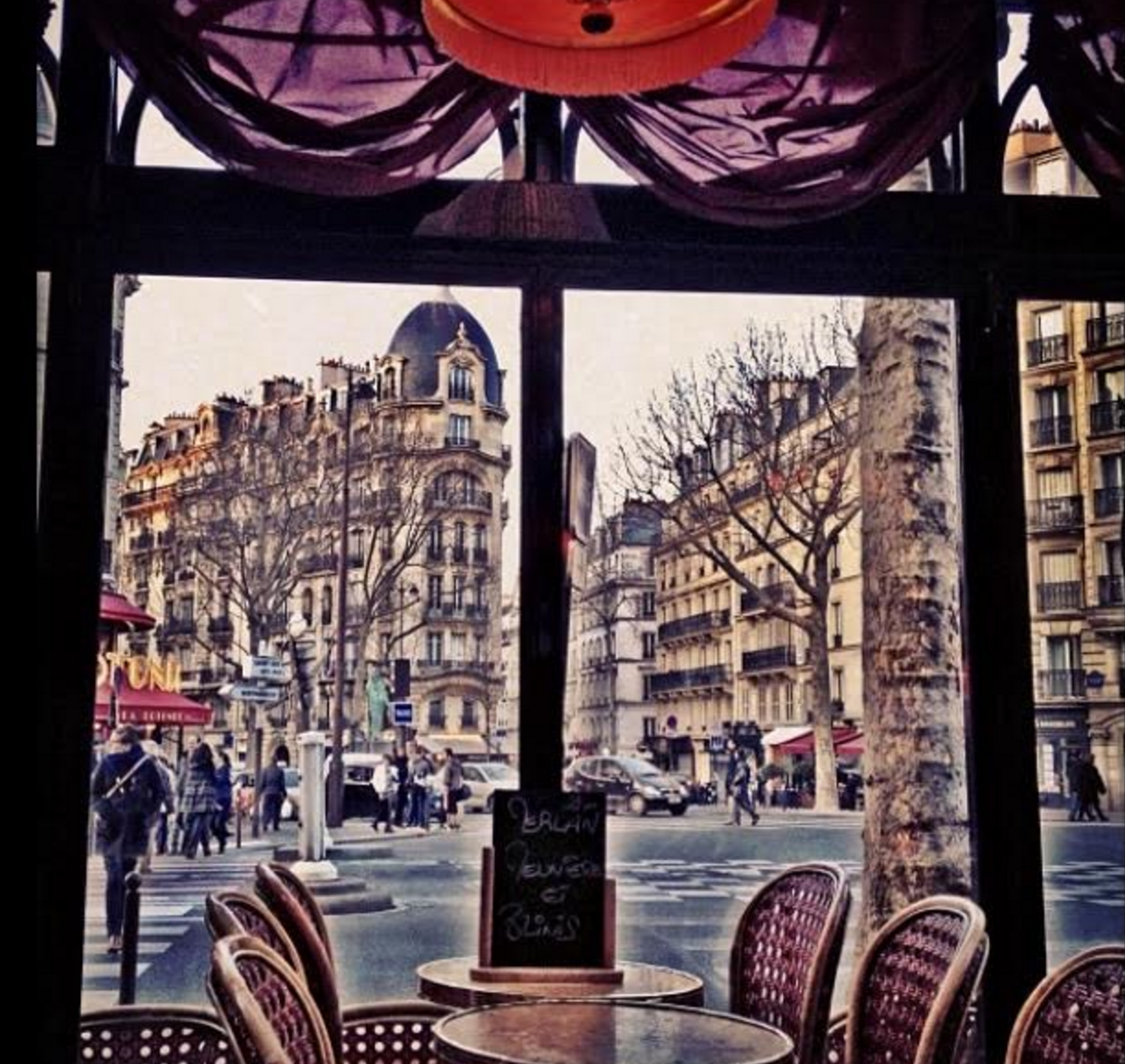
Think of this: Drinking champagne at La Coupole or guzzling coffee at Le Dôme Café… you can feel the ghostly spirit of a girl with bobbed hair, fan-kicking on tabletops, the light from the windows making lace patterns along the bodice of her dress.

If you don’t have time to visit Kiki’s in New York, your “costume” can be lingerie, anything you have. Step into some fishnet, snap on the garter, and recline in your favorite chair with your new favorite book. This year you won’t be cold because you’ll be sipping warm red wine (Kiki’s favorite “tonic”).

The book I recommend is Catel and Bocquet’s graphic novel Kiki du Montparnasse, a wonderfully risqué recounting of Kiki’s exciting and tragic life.

Kiki was born Alice Prin, and unlike the famous Alice, Kiki never found Wonderland. Instead she became wonderland. Kiki inspired many a collective hallucination as a vision in surreal photos and paintings. She was “the Muse of Montparnasse.” Dancing cabaret at the Jockey, she used her body to seduce and inspire so many. She had a lifelong partnership with Man Ray, but she mostly lived in squalor, jumping from one love affair to the next, an alcoholic and drug addict, constantly tearing off her clothes and singing for her supper.  
One of the many men Kiki inspired was the poet and surrealist filmmaker, Jean Cocteau. Kiki recalled that: “Cocteau and I had the same passion for all that comes from the sea…" The fluidity and grace of Kiki’s ghostly existence made her seem like the dark side of Venus. She was an apparition of the goddess of love, rising from the sea mermaid-like on a half-shell, but never fully realizing her place as a mortal here on earth. Instead she shimmered in the shadows, dangling out of clothing, submerged in a surreal fantasy on canvas or in flickering light and shadow.  

In the following, Kiki’s watery, translucent torso is immortalized in Man Ray’s short film, Le Retour a la Raison (1923), 2 Dadaist minutes of glitter and nails:

Cocteau’s classic film, Beauty and the Beast (1946) perfectly complements the Kiki graphic novel.


La Belle et la Bête is romantic and gorgeous and twisted. You can stream it as a part of the Criterion Collection on Hulu or you can watch the full film with an intoxicating accompanying opera by Philip Glass for free on YouTube.

In Cocteau’s version of the classic fairy tale, the beast was born gory and smokin’ hot (literally). He gorged on deer in the forest and came home covered in blood like a real, rugged mountain man. He had the face of an animal and he lived in isolation in a perfectly gruesome mansion that also happened to be the ultimate bachelor-pad. This was truly a curse.

Beast’s walls were lined with human-arm candelabras and statues with human faces and spooky moving eyes. Beast was the pearl-whisperer. Jewels collected in his palm to form gaudy and delectable treasures. Mind-powered magic doors opened on a whim and a white horse with a dazzlingly bedazzled mane did the Beast’s bidding.

When Belle went to live with Beast inside his magic world, she was transported on an enchanted conveyer belt to a bedroom with a furry-live duvet that slithered to the floor. She had a magic mirror to see beyond the bachelor pad. She cried diamonds. The beast gave her a golden key to carry in her cleavage.

We all know the story, and this rendition is glorious. It’s easily accessible online and perfect for any magical lady in a lace robe who wants to immerse herself in an eerie Halloween romance from another era.

With Kiki et la Bête in your goodie bag this year, you’ll only need to put on your highest heels and your most scandalous lingerie. You won’t be walking in the cold, introverts, so toss the candy and buy an extra bottle of warm red wine. Intoxicate yourself this Halloween, in more ways than one.

In Art, Lifestyle Tags Introvert, Halloween, Graphic Novel, Kiki de Montparnasse, Paris, Dada, Beauty and the Beast, Jean Cocteau, Man Ray
Comment
← Newer Posts
Featured
‘in the glitter-open black' — poetry by Fox Henry Frazier
'poet as tarantula,  poem as waste' — poetry by  Ewen Glass
'poet as tarantula, poem as waste' — poetry by Ewen Glass
'Hours rot away in regalia' — poetry by Stephanie Chang
'down down down the hall of mirrors' — poetry by Ronnie K. Stephens
'Grew appendages, clawed towards light' — poetry by Lucie Brooks
'do not be afraid' — poetry by Maia Decker
'The darkened bedroom' — poetry by Jessica Purdy
'I am the body that I am under' — poetry by Jennifer MacBain-Stephens
instagram

COPYRIGHT LUNA LUNA MAGAZINE 2025